
Breed profile · Working Group · the largest of the three schnauzers
Giant Schnauzer
The Giant Schnauzer — the largest of the three schnauzer breeds, a bold and valiant working dog from Bavaria — is a cattle drover turned guard dog, show dog, and family companion. The AKC recognized the breed in 1930, and the Giant Schnauzer Club of America runs the national specialty every year — a full week at Purina Farms, where the 2026 national ran October 11–17. In 2025 the breed had its biggest show-ring year yet: Monty, a black Giant Schnauzer, won Best in Show at Westminster, the first Giant Schnauzer ever to do so.
Help us improve it. This is one of ThePetAdvisor’s breed profiles, built from public sources with generous links to the people who actually own this breed’s knowledge. If something’s off or missing, the parent club can claim the page and set it straight — see the bottom of the page.
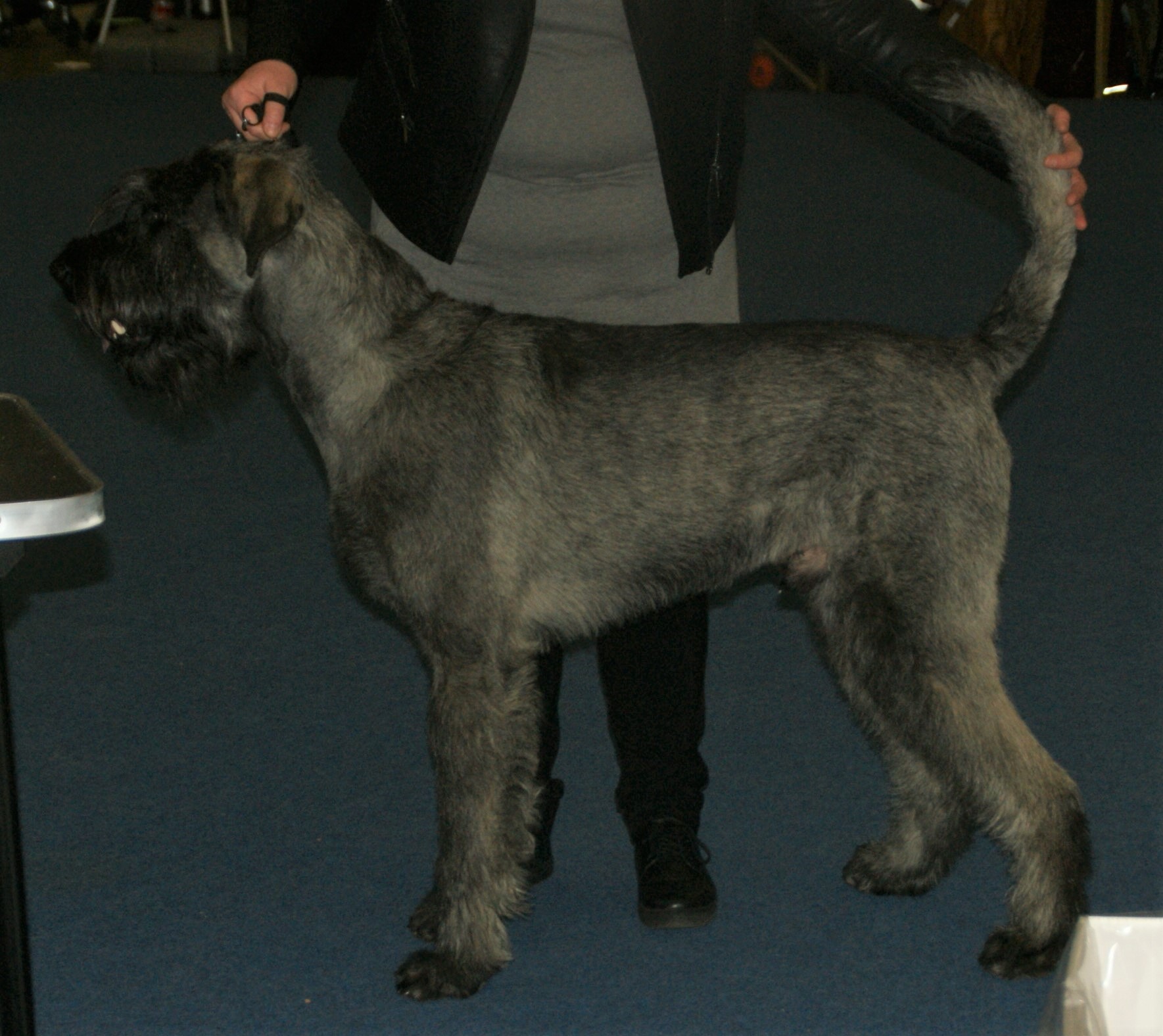

Do you have a better photo of a Giant Schnauzer in the American show ring? If you have a show photo you’d let us use, email it to [email protected] — tell us the dog’s name and the show, and it may be featured here. Please only send photos you took yourself or have the photographer’s permission to share, and tell us the photographer’s name.
1. Breed at a glance
Working Group; AKC-recognized since 1930
Dogs 25½–27½ in, bitches 23½–25½ in; 55–80 lb (AKC Library & Archives)
Hard, wiry, very dense double coat; solid black or pepper and salt
10–12 years (AKC)
Composed, watchful, courageous, easily trained, deeply loyal
Giant Schnauzer Club of America, Inc.
2. History: the Munich Schnauzer
The Giant Schnauzer — Riesenschnauzer in German, also called the Munich Schnauzer or Munchener — was developed in Bavaria in the mid-19th century as a multipurpose farm dog: driving cattle to market and guarding the farmer’s property. The AKC Library & Archives traces the breed’s ancestry to the Standard Schnauzer, the Bouvier des Flandres, and the black Great Dane, and the dogs worked herding cattle mainly in Upper Bavaria before moving into the cities — Munich above all — where by the turn of the 20th century they were watchdogs at factories, breweries, butcheries, and stockyards.
The breed was little known outside Bavaria until it became a military and police dog in the World Wars. The first Giant Schnauzers reached the United States by 1925 — James Mitchell Hoyt imported Argo v. Kurhessen that year — and the AKC recognized the breed in 1930. The dogs stayed rare in America until the 1960s, when registrations began to climb; the Giant Schnauzer Club of America, the AKC parent club, was founded in 1962.
The breed’s recent show-ring peak came in 2025, when the black Giant Schnauzer Monty — GCHG CH Hearthmore’s Wintergreen Mountain RI CGC TKN FITB, handled by Katherine Bernardin — won Best in Show at the 149th Westminster Kennel Club Dog Show, the first Giant Schnauzer ever to take Westminster’s top honor. Monty had won the Working Group at Westminster in 2023, 2024, and 2025, and Best in Show at the 2024 AKC National Championship; a Giant Schnauzer named Bayou (GCHG CH Lagniappe’s From The Mountains To The Bayou) had been the first of the breed to win the AKC National Championship, in 2021. And a Giant Schnauzer named Dino won the Working Group at the 2025 National Dog Show.
3. The standard: a bold and valiant figure
The AKC standard was approved on October 11, 1983. It opens with the general description: “The Giant Schnauzer should resemble, as nearly as possible, in general appearance, a larger and more powerful version of the Standard Schnauzer, on the whole a bold and valiant figure of a dog. Robust, strongly built, nearly square in proportion of body length to height at withers, active, sturdy, and well muscled.”
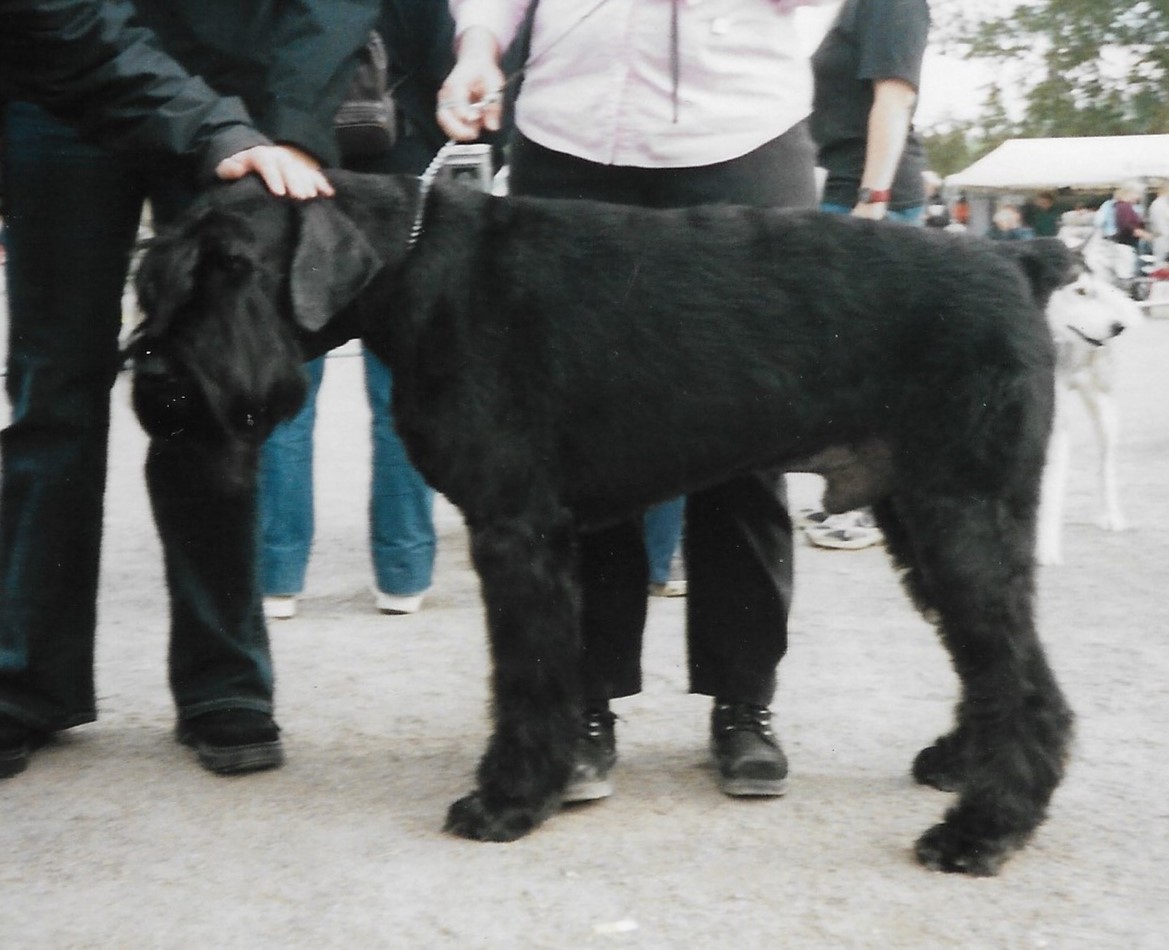

Size. Dogs 25½ to 27½ inches at the shoulder, bitches 23½ to 25½ inches, with the mediums desired — and the standard is blunt that size alone should never take precedence over type, balance, soundness, and temperament. The height at the withers equals the body length, so the dog is nearly square, and the weight runs about 55 to 80 pounds.
Head and body. The head is strong, rectangular in appearance, and elongated, narrowing slightly from the ears to the eyes and again to the tip of the nose; the total head length is about one-half the length of the back. The harsh beard and eyebrows are the Schnauzer hallmark. The eyes are medium, dark brown, and deep-set; the nose is large, black, and full; the bite is scissors, with a full complement of sound white teeth. The tail is set moderately high and should be docked to the second or not more than the third joint.
Coat and color. The coat is hard, wiry, and very dense — a soft undercoat under a harsh outer coat that stands slightly up off the back when seen against the grain, lying neither smooth nor flat. Color is solid black or pepper and salt, and only those two. A black dog is truly pure black, with a small white spot on the breast permitted; pepper and salt is an outer coat of banded hairs that reads gray from a short distance, ideally an intensely pigmented medium gray with a dark facial mask. The hard lines: overshot or undershot bite is a disqualification, and so are markings other than specified.
4. Temperament: composed, watchful, deeply loyal
The standard’s temperament paragraph is the whole pitch: “Temperament which combines spirit and alertness with intelligence and reliability. Composed, watchful, courageous, easily trained, deeply loyal to family, playful, amiable in repose, and a commanding figure when aroused.” The AKC sums it up the same way: great intelligence and loyalty make the Giant a stellar worker and companion.
That is a working dog’s temperament, and it comes with a working dog’s demands. Giants were bred to drive cattle and guard property, and they still want a job: training, long daily work, and a household that gives them something to do. They are deeply loyal to their own people and naturally watchful with strangers, which makes early and ongoing socialization non-negotiable. A Giant that is trained and worked is a composed, amiable companion at home; a Giant left alone in a yard with nothing to do will find its own work, and it will not be what you had in mind.
With children, the honest note is size and strength: a playful, loyal Giant is a wonderful family dog, but a 25-inch, 70-pound dog that leans and plays hard needs supervision with small children and training that starts the day the puppy comes home. Give a Giant daily work, consistent training, and a place beside its people, and it gives back a devotion that is hard to match — for 10 to 12 years.
5. Grooming and everyday care
The wiry double coat is the practical part of the breed: the harsh outer coat sheds dirt and water, the soft undercoat insulates, and the dog needs regular brushing to keep the undercoat from matting — plus professional grooming to keep the coat in shape. The beard and eyebrows are the hallmark, and they are also the maintenance: the beard picks up water and food, so it needs wiping and combing after meals and drinks.
Exercise is not optional, and that is the real commitment. A Giant is a large, powerful working dog that needs daily work — long walks, training, swimming, and a job — not a lap around the block. A securely fenced yard is a convenience, not a substitute: what a Giant really needs is structured activity with its people, every day.
Feeding is straightforward but scaled to a large dog: a good-quality food, measured meals, and a lean weight at about 55 to 80 pounds. Extra weight makes the joints work harder, and a Giant that is allowed to get fat is a Giant heading for the vet. Because the breed is food-motivated and always ready to work for a reward, watch the treats — you should be able to feel the ribs without pressing hard under the coat.
6. Health: the tests that matter
The Giant Schnauzer Club of America takes part in the Canine Health Information Center (CHIC) program run by the Orthopedic Foundation for Animals, and three tests are required for a CHIC number: a hip evaluation, an eye examination (CERF), and a thyroid evaluation — the club’s own health statement says its screening recommendations are covered by its CHIC requirements. A CHIC number means the tests were done and published by the OFA — it does not mean the dog passed them.
The tests point at the breed’s known weak spots: hips, eyes, and thyroid. Hip dysplasia is the joint concern that comes with a dog this size, eye disease is what the annual eye exam watches for, and thyroid testing watches the thyroid. As with any large, deep-chested breed, bloat is a risk to know the signs of — talk to your vet about feeding and exercise around meals. The AKC lists the breed’s lifespan as 10 to 12 years.
7. The annual Giant Schnauzer specialty dog show
A specialty is the breed’s All-Star show — its Super Bowl. Once a year, the best Giant Schnauzers from across the country, and often from around the world, come together in one place.
The Giant Schnauzer Club of America’s national specialty: one national event each year, a full specialty week built around conformation, sweepstakes, and junior showmanship, with performance events alongside. The 2026 national ran October 11–17 at Purina Farms in Gray Summit, Missouri, with the conformation specialty on Saturday, October 17, and the Giant Invitational Gala — the year’s top ten Giants, judged by a three-person panel of a breeder, a handler, and an AKC judge — on Thursday evening. The 2027 national: not yet announced.
The standard, in brief: the largest of the three schnauzer breeds, a bold and valiant figure of a dog, nearly square in proportion, 25½ to 27½ inches at the shoulder for dogs and 23½ to 25½ for bitches, with a hard, wiry, very dense double coat, the harsh beard and eyebrows that are the Schnauzer hallmark, and a solid black or pepper and salt coat. The temperament is composed, watchful, courageous, easily trained, and deeply loyal to family.
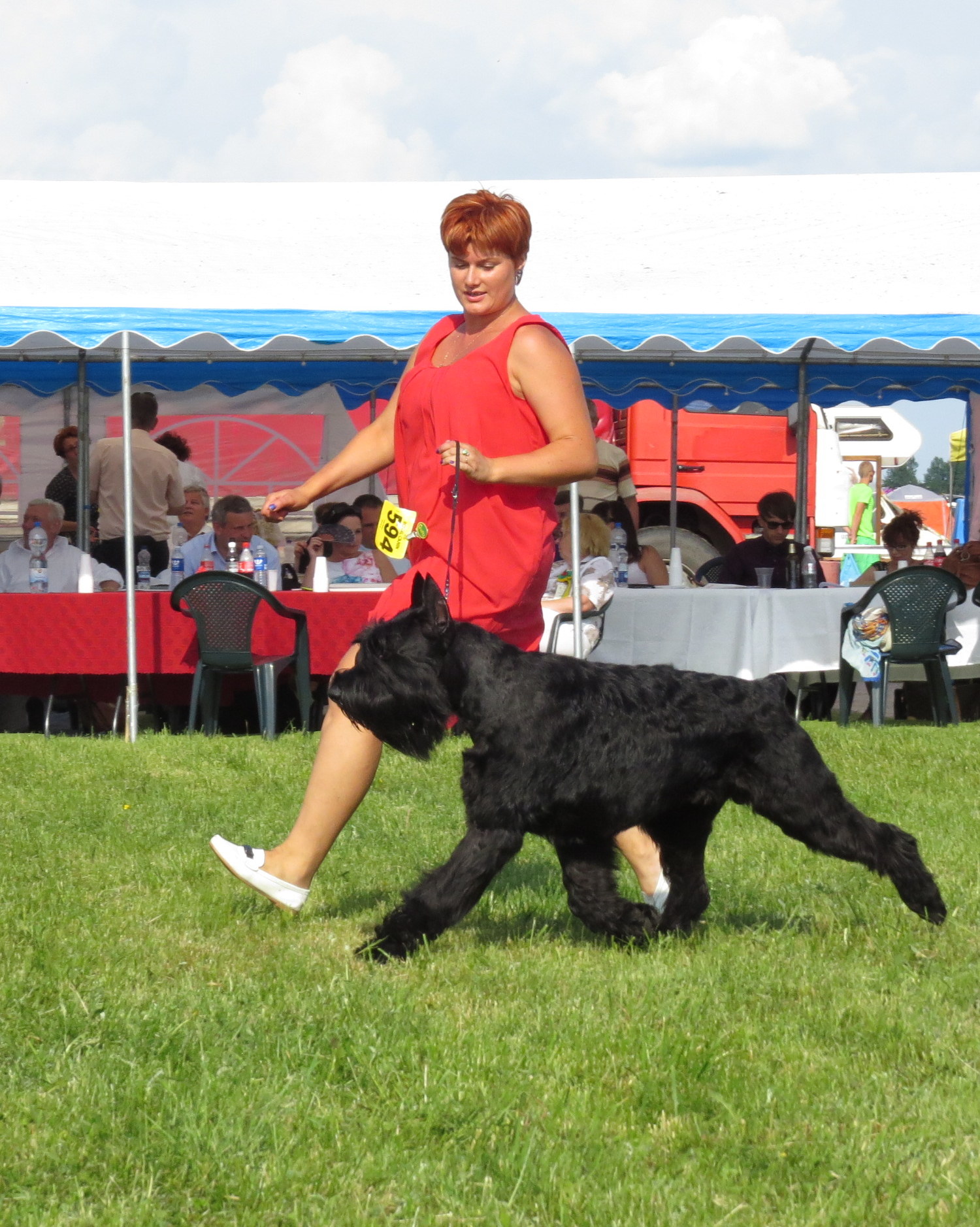

The 2026 GSCA National Specialty — Sunday, October 11–Saturday, October 17, 2026, at Purina Farms, 300 Checkerboard Dr & Highway MM, Gray Summit, Missouri 63039, held in collaboration with the American Bouvier des Flandres Club. The national specialty was dedicated in memory of longtime member Enid Lagree. Conformation ran Wednesday, October 14 through Saturday, October 17. Entries closed Wednesday, September 30, 2026, at noon CDT. Event Chair: Frank Lavoie. Superintendent: Onofrio Dog Shows, LLC. The host hotel was the Wildwood Hotel, 2801 Fountain Pl, Wildwood, Missouri.
The week ran the full Giant program: scent work, agility, and carting on Sunday and Monday; obedience and rally, Fast CAT, the Parade of Titleholders, the Breeder’s Sweepstakes (judge Steve Fox), and the welcome party on Wednesday, October 14; the Western Regional (judge Sandy Weaver), the annual meeting, judges education, and the Giant Invitational Gala on Thursday, October 15; the Midwest Regional — sweepstakes judged by Dayl Phillip, breed judged by Bill Shelton — plus handling and structure seminars on Friday, October 16; and the national itself on Saturday, October 17, with sweepstakes judged by Lance Carter, the breed judged by Janine Starink, junior showmanship judged by Dayl Phillip, and the awards banquet in the evening. The entry counts had not been published in an official source as of November 2026.
Results (2026 national). Best of Breed and the other top winners had not been published in an official source as of November 2026 and will be added here when they are.
The dates for the annual 2027 Giant Schnauzer specialty dog show had not been announced as of November 2026. The AKC’s Upcoming National Specialties list, which runs through October 2027, carries no Giant Schnauzer Club of America entry. This page will be updated when the club announces the 2027 national.
The national has been held at Purina Farms in Gray Summit, Missouri, in both 2024 and 2026, so the 2027 location is the detail to watch for.
Past national specialties: 2024
Giant Schnauzer Club of America — giantschnauzerclubofamerica.com
8. Regional specialties through the year: smaller regional shows
The national is the anchor, but the breed’s year also runs through regional specialties — smaller regional shows, not the national — held around the country, including the regional specialties that run with the national. These are the 2026 regionals verified from club and AKC sources.
Regional Giant Schnauzer specialties verified for 2026:
- Western Regional Specialty — Thursday, October 15, 2026, Gray Summit, Missouri: at Purina Farms with the national specialty week, judged by Sandy Weaver (AKC event 2026066510).
- Midwest Regional Specialty I — Friday, October 16, 2026, Gray Summit, Missouri: at Purina Farms with the national specialty week; sweepstakes judged by Dayl Phillip, breed judged by Bill Shelton (AKC event 2026066511).
Other 2026 regional specialties had not been verified from club or AKC sources as of November 7, 2026.
More regional specialties will be added here as their programs are verified — this section is built from show data, not guesswork. Browse upcoming show weekends →
9. Clubs
The Giant Schnauzer Club of America, Inc. (GSCA) is the AKC parent club for the breed in the United States, founded in 1962. It is the guardian of the breed and determines the official breed conformation standard, runs the national specialty every year, and promotes responsible breeding, education, research, and rescue. The club’s 2026 officers: President Chris Reed, Vice President Robin Henderson, Treasurer Howard Postovit, Secretary Laurie Mason, and AKC Delegate Steve Sansone. The club’s website is at giantschnauzerclubofamerica.com.
Regional clubs around the country run the regional specialties and the local life of the breed, among them the clubs behind the Western, Midwest, and Southern regionals that run with the national specialty week. The breed also has a working-dog community of its own: the Working Riesenschnauzer Federation, the American Working Dog Federation club for the breed, runs Schnauzerfest, its annual IGP championship trial and conformation show.
10. Rescue
The main breed-specific rescue is the Hertha Thomas-Zagari Giant Schnauzer Rescue (HT-Z), founded in 2000 by Carolyn Janak in memory of Hertha Thomas-Zagari. It is a 501(c)(3) nonprofit that runs as a volunteer network of foster homes throughout the United States, rescuing, screening, and placing Giant Schnauzers in suitable homes — the only Giant Schnauzer rescue that serves all 50 states. Every dog is spayed or neutered, microchipped, and up to date on shots before adoption, and adoption fees run from $300 to $800 depending on the dog’s age and health. Contact: htzrescue.com, surrender phone 859-979-0773.
A rescue Giant is usually an adult whose temperament and training are already known, which matters with a breed this powerful: you will know how the dog is with people, other dogs, and children before you commit. Expect an application, references, and a home visit — the rescue works to place each dog with the most suitable home from its pool of screened applicants. A rescue Giant still needs the same things a puppy does: daily work, consistent training, and a household that understands a working dog.
11. Breeder vs. rescue: honest guidance
Either route starts with the same question: has this dog’s health been tested? From a breeder, ask for the CHIC numbers of both parents — the hip evaluation, the eye examination, and the thyroid evaluation — and check them on the OFA database yourself, by the parents’ registered names. Ask what health issues the breeder sees in their stock, and meet at least the dam. And be honest with yourself about the work: this is a large, powerful working dog, and a breeder who asks what you will do with the dog is doing you a favor.
From rescue, expect an adult dog whose temperament and training are already known, placed by a program that will match the dog to your life rather than the other way around. Budget for the same things either way: joint, eye, and thyroid care, and the time a working dog demands every single day. Whichever route you take, the dog that fits is a composed, watchful, deeply loyal Giant that wants to work with its people — and will be happiest doing exactly that.
12. Claim this page
This page was built from public sources — the AKC standard, the parent club’s own material, AKC event records, and the rescue program’s site — and it is a starting point, not the last word. If you are with the Giant Schnauzer Club of America or a regional club and something here is wrong or missing, you can claim this page and set it straight: email [email protected] and tell us what needs fixing. Corrections from the people who own the breed are how this page gets better.
Sources
- AKC, Giant Schnauzer
- AKC, Official Standard of the Giant Schnauzer (approved October 11, 1983)
- AKC Library & Archives, Giant Schnauzer Club of America records
- Giant Schnauzer Club of America
- Giant Schnauzer Club of America, 2026 National Specialty
- Giant Schnauzer Club of America 2026 national premium (Onofrio)
- Giant Schnauzer Club of America 2024 national premium
- AKC event search, GSCA national, October 17, 2026 (event 2026066512)
- AKC, Upcoming National Specialties list
- Giant Schnauzer Club of America health statement (August 28, 2018)
- Hertha Thomas-Zagari Giant Schnauzer Rescue (HT-Z)
- AKC, Giant Schnauzer ‘Monty’ Wins 2025 Best in Show at Westminster
- AKC, Giant Schnauzer ‘Monty’ Wins Best in Show at 2024 AKC National Championship
- Purina Pro Club, 2025 Westminster Kennel Club Best in Show Winner
- National Dog Show 2025 results (Giant Schnauzer wins Working Group)
- Wikimedia Commons, Riesen-pepper&salt1 (Canarian, CC BY-SA 4.0)
- Wikimedia Commons, DocFile Riiseni (Canarian, CC BY-SA 4.0)
- Wikimedia Commons, Giant Schnauzer Moletai May 2014 (Томасина, CC BY-SA 4.0)