
Breed profile · Hound Group · the scent hound with the world’s best nose
Bloodhound
The Bloodhound is the world’s great scent hound — a large, gentle, wrinkled tracker whose nose has found lost people, solved crimes, and, in 2022, carried Trumpet to the first Bloodhound Best in Show in Westminster history. The American Bloodhound Club runs the national specialty every year, and the 2026 national ran October 23 in Broken Arrow, Oklahoma.
Help us improve it. This is one of ThePetAdvisor’s breed profiles, built from public sources with generous links to the people who actually own this breed’s knowledge. If something’s off or missing, the parent club can claim the page and set it straight — see the bottom of the page.
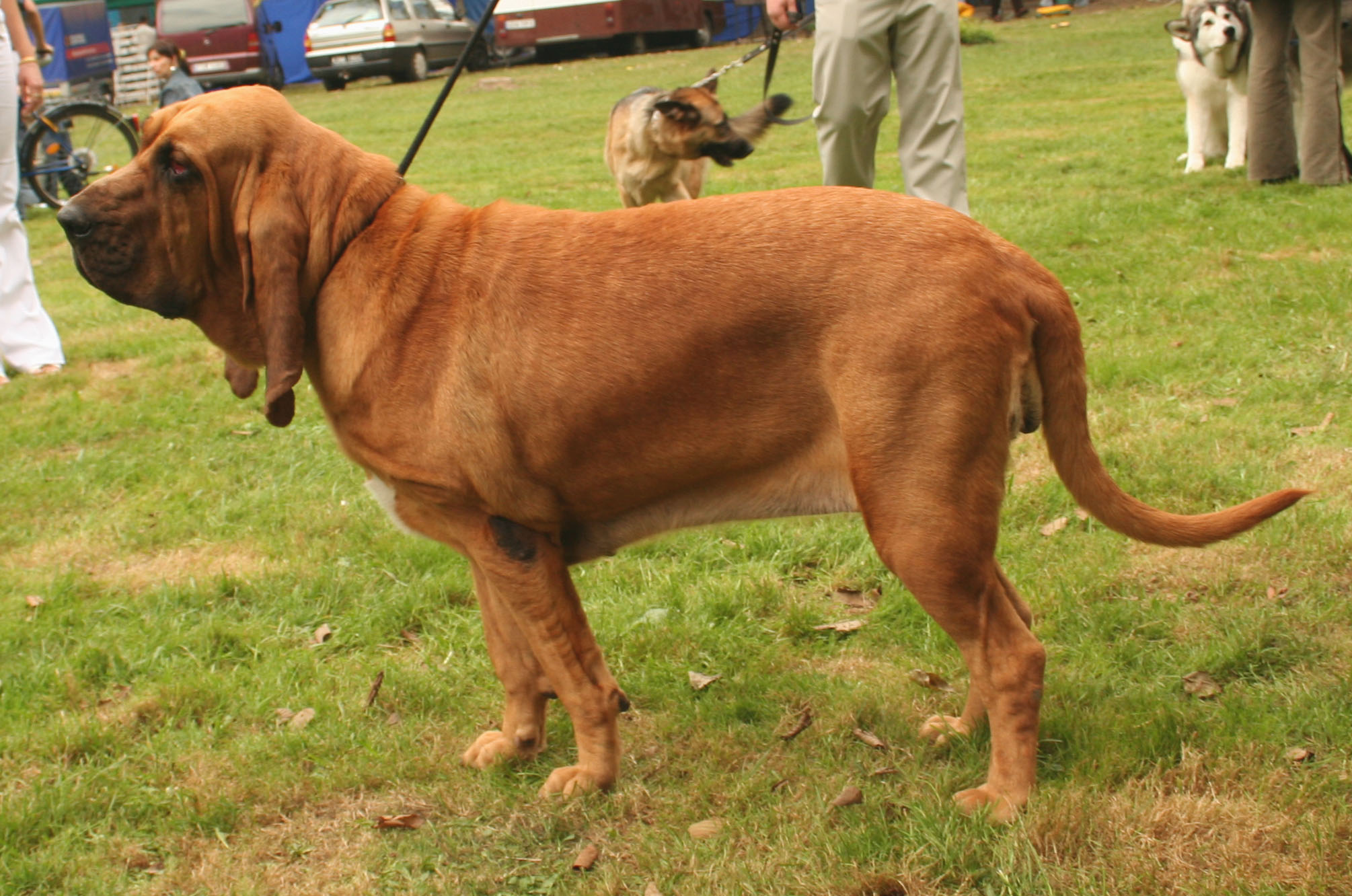

Do you have a better photo of a Bloodhound in the American show ring? If you have a show photo you’d let us use, email it to [email protected] — tell us the dog’s name and the show, and it may be featured here. Please only send photos you took yourself or have the photographer’s permission to share, and tell us the photographer’s name.
1. Breed at a glance
Hound Group; AKC-recognized since 1885
Dogs 25–27 in, 90–110 lb; bitches 23–25 in, 80–100 lb
Short, dense coat; black and tan, liver and tan, or red
10–12 years (AKC)
Extremely affectionate, gentle, sensitive; a tracking specialist
American Bloodhound Club
2. History: the monks’ hound, the world’s nose
The Bloodhound descends from the hounds kept at the Abbey of Saint-Hubert in the Ardennes, in present-day Belgium, bred by the monks there. The FCI standard traces the breed to those black hounds, sent as annual gifts to the King of France from about 1200. In the 11th century the hounds were brought to England by William the Conqueror, and in England they became the Bloodhound. The name, the FCI standard says, comes from “blooded hound” — a dog of pure blood, not a dog that tracks blood.
The breed was established in England by the 14th century, used for hunting deer and boar and for tracking people. In America, the AKC recognized the breed in 1885, Edwin Brough exhibited three of his hounds at Westminster in 1888, and the American Bloodhound Club was established in 1952. The breed became the tracker of choice for law enforcement and search and rescue — and the national specialty week still runs mantrailing trials alongside the conformation show.
The breed’s biggest recent moment belongs to Trumpet, GCHB CH Flessner’s Toot My Own Horn. He won Best in Show at the 146th Westminster Kennel Club Dog Show in June 2022 — the first Bloodhound ever to win Best in Show at Westminster — handled by Heather Buehner, and bred and owned by Chris and Bryan Flessner, Heather Buehner, and Tina Kocar. His sire, Nathan (GCHP CH Flessner’s International S’Cess), won the Hound Group at Westminster in 2014 and Best in Show at the National Dog Show the same year.
3. The standard: built for the nose
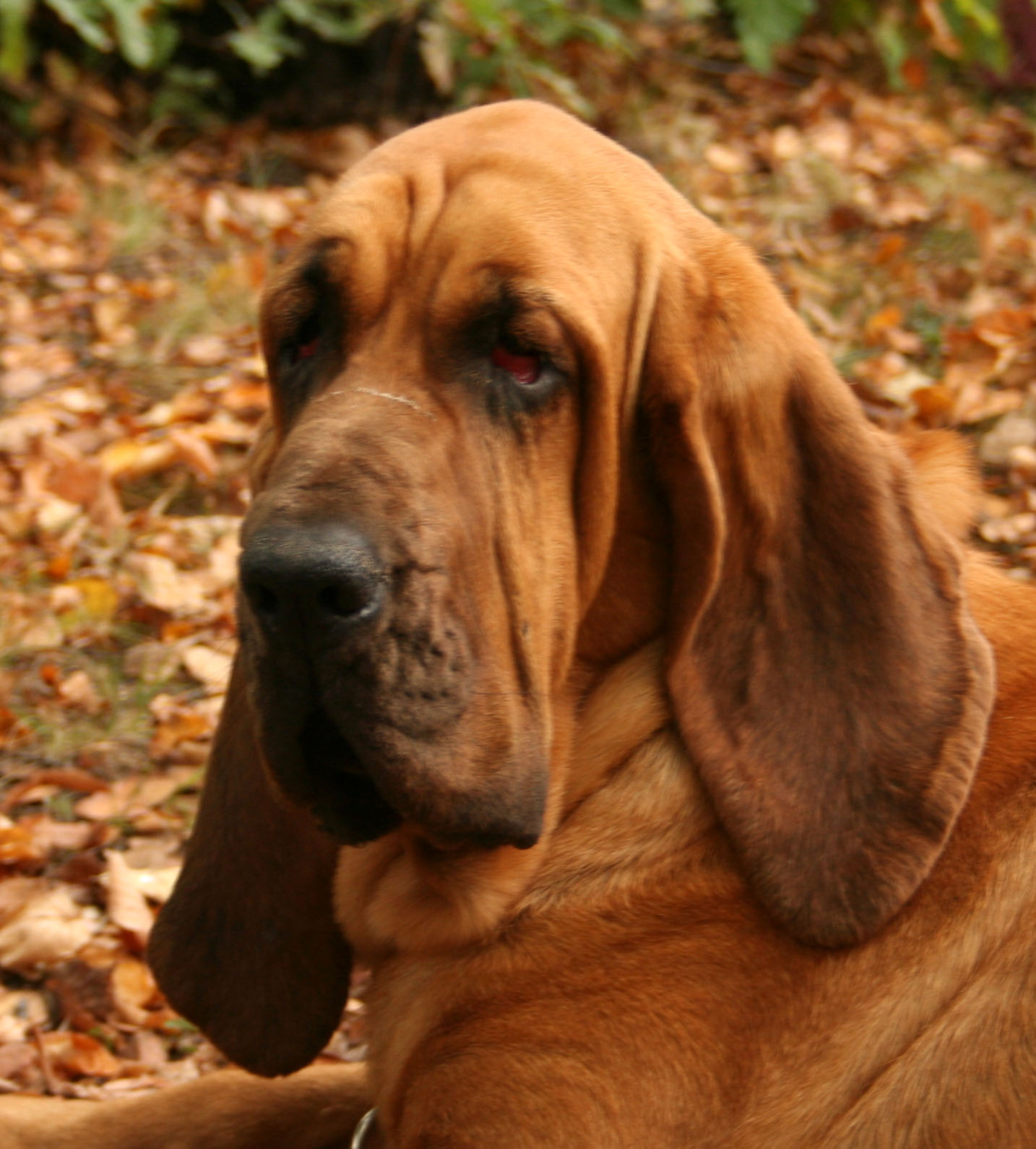
The AKC standard was approved on January 9, 1996, and effective February 29, 1996. It describes a large, powerful dog, noble and dignified, built for endurance on the trail — a dog whose every feature serves the nose: the long head, the long ears, the loose skin, and the deep chest.

Size. Dogs 25 to 27 inches at the withers, the mean 26 inches; bitches 23 to 25 inches, the mean 24 inches. Dogs run 90 to 110 pounds, the mean 90; bitches 80 to 100 pounds, the mean 80. The body is long and deep, and the tail is long, carried in a curve.
Head. The head is long and narrow, with a prominent occiput and deep-set eyes. The ears are very long, thin, and soft, hanging in graceful folds, set low. The skin is loose and wrinkled, most of all about the head and neck — the wrinkles are part of the breed, not a fault. The muzzle is deep, and the nose is large.
Coat and color. The coat is short and dense. The colors are black and tan, liver and tan, and red. A small amount of white is permissible on the chest, feet, and tip of the stern.
Disqualifications. The standard lists none.
4. Temperament: gentle, stubborn, and always on scent
The standard sums the temperament up in a single paragraph: the Bloodhound is “extremely affectionate,” “neither quarrelsome,” and “somewhat shy” and sensitive. That is the dog: gentle, patient, and deeply attached to its people.
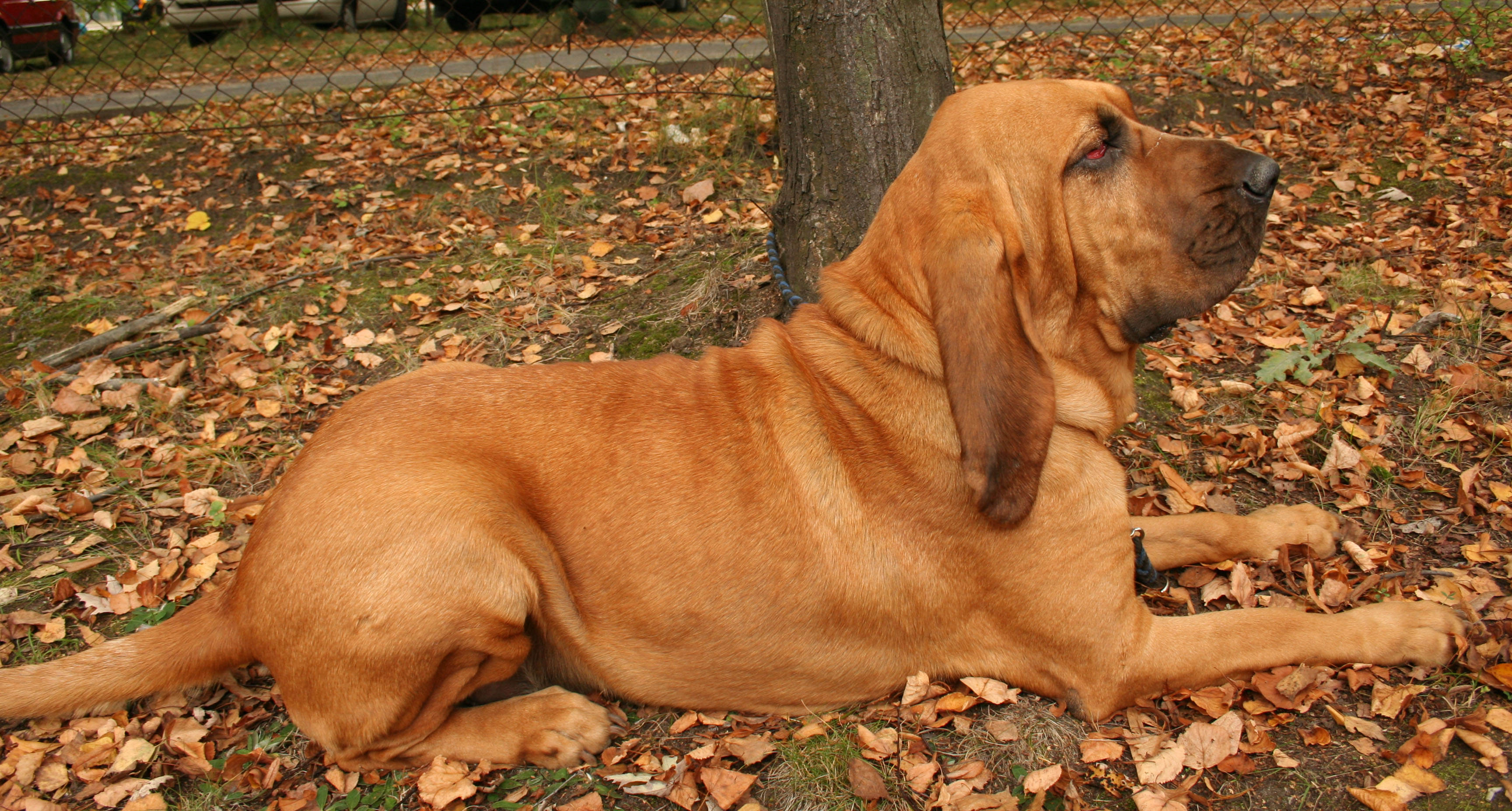

A Bloodhound bonds hard to its people and is famously good with children — patient, tolerant, and gentle. But a Bloodhound follows its nose, and on a scent it is stubborn and independent: it does not hear you calling, and it will go through a fence, a hedge, or a door to get to the smell. The breed is strong-willed, and it needs a fenced yard and a patient owner who trains with consistency and kindness; harsh corrections shut it down.
The everyday reality is a big, drooly, loud dog: Bloodhounds drool, they snore, they shed, and their bay — the deep, musical voice — carries a long way. A Bloodhound with a job is a calm, pleasant house dog; one with nothing to do is a demolition crew with a nose.
5. Grooming and everyday care
Grooming is straightforward: brush the short coat weekly to keep it free of dead hair, and bathe only when the dog is dirty. The long drop ears trap moisture, so clean and check them regularly. The skin folds around the head and neck need wiping, and the lips need wiping after meals and water. Nails need trimming, and teeth need brushing.
Exercise is the hard part, and it is non-negotiable: daily long walks plus scent work — tracking, mantrailing, and scent-work trials are ideal, plus training. A Bloodhound that gets real exercise and mental work is a calm, pleasant house dog; one that gets a walk around the block is a demolition crew. A fenced yard is close to essential: a Bloodhound off lead will follow a scent out of sight.
Feeding is straightforward: a good-quality food, measured meals, and a lean weight at 90 to 110 pounds. Feed after exercise, not before, and do not let the dog gulp a large meal and then run — the breed’s bloat risk makes feeding routine part of the health plan, not an afterthought.
6. Health: the tests that matter
The American Bloodhound Club’s CHIC profile calls for three tests for breeding stock: a hip evaluation (OFA), an elbow evaluation (OFA), and a cardiac examination — and the heart examination must be done by a board-certified cardiologist. A degenerative myelopathy DNA test is recommended but not required, and eye and patella evaluations are optional extras. A CHIC number means the tests were done and published by the OFA — it does not mean the dog passed them. Ask for the parents’ CHIC numbers and look them up yourself on the OFA database.
The tests point at the breed’s known weak spots. Hip and elbow dysplasia are common in the breed, and heart disease is a known concern, which is why the cardiac examination must be done by a cardiologist. Bloat (gastric dilatation-volvulus) is the breed’s most serious acute risk and its leading cause of death, so feeding and exercise routines matter as much as any test. Entropion and ectropion — eyelids rolling in or out — are seen in the breed’s loose-eyed head. The AKC lists the breed’s lifespan as 10 to 12 years.
7. The annual Bloodhound specialty dog show
A specialty is the breed’s All-Star show — its Super Bowl. Once a year, the best Bloodhounds from across the country, and often from around the world, come together in one place.
The American Bloodhound Club’s national specialty: one national event each year, a full specialty week built around conformation, sweepstakes, futurity, and junior showmanship, with obedience, rally, scent work, and mantrailing alongside — the breed’s working life is part of the show. The 2026 national ran October 23 in Broken Arrow, Oklahoma, with the regional specialty the next day. The 2027 national: not yet announced.
The standard, in brief: a large, powerful scent hound, dogs 25 to 27 inches at the withers and 90 to 110 pounds, bitches 23 to 25 inches and 80 to 100 pounds, in black and tan, liver and tan, or red, with a small amount of white permissible on the chest, feet, and tip of the stern. The head is long and narrow, the ears very long and low-set, the skin loose and wrinkled about the head and neck. The temperament is extremely affectionate: neither quarrelsome, somewhat shy and sensitive. The standard lists no disqualifications.
The 2026 ABC National Specialty — Friday, October 23, 2026, at the Stoney Creek Hotel, 200 W Albany Street, Broken Arrow, Oklahoma (event 2026209810). The national specialty regular and non-regular classes, junior showmanship, and Best of Breed were judged by Karen Dewey; Cathleen Caballero judged obedience and rally on Wednesday, October 21; Jennifer Hallett judged the futurity on Wednesday, October 21; and Israel Garcia judged the puppy, junior, and veteran sweepstakes on Thursday, October 22. Entries closed at noon Eastern on Wednesday, September 30, 2026. Show Chair: Wendy Musgrove. Superintendent: Executive Dog Shows.
The national week ran Saturday, October 17 – Saturday, October 24: all-breed scent work trials on October 17–18, trailing days on October 19–20 with a trailing awards dinner and welcome reception, futurity, obedience and rally, the Top 10 invitational, and dinner on Wednesday, October 21, sweepstakes and judges education on Thursday, October 22, the national breed show, annual meeting, awards, and auction banquet on Friday, October 23, and the South Central Bloodhound Trailblazer regional specialty on Saturday, October 24.
Results (2026 national). Best of Breed and the other top winners had not been published in an official source as of November 2026 and will be added here when they are.
The dates for the annual 2027 Bloodhound specialty dog show had not been announced as of November 2026. The AKC’s Upcoming National Specialties list, which runs through October 2027, carries no American Bloodhound Club entry. This page will be updated when the club announces the 2027 national.
Past national specialties: 2025 · 2024
American Bloodhound Club — americanbloodhoundclub.org
8. Regional specialties through the year: smaller regional shows
The national is the anchor, but the breed’s year also runs through regional specialties — smaller regional shows, not the national — held around the country, including the regional specialty that runs with the national. These are the 2026 regionals verified from club and AKC sources.
The 2026 regional specialty ran with the national: Saturday, October 24, 2026, at the Stoney Creek Hotel in Broken Arrow, Oklahoma — the South Central Bloodhound Trailblazer Regional Specialty (event 2026209813), with the regular and non-regular classes, junior showmanship, and Best of Breed judged by Richard E Nance and the puppy, junior, and veteran sweepstakes judged by Donna Bennett. Other 2026 regional specialties had not been verified from club or AKC sources as of November 7, 2026.
More regional specialties will be added here as their programs are verified — this section is built from show data, not guesswork. Browse upcoming show weekends →
9. Clubs
The American Bloodhound Club (ABC), established in 1952, is the AKC parent club for the breed in the United States. It is the guardian of the breed and determines the official breed conformation standard, runs the national specialty every year, and sanctions trailing and mantrailing events. The club’s 2026 officers: President Don Ozee, Corresponding Secretary Paula VanBeveren, and Treasurer Norma Barber. The club’s website is at americanbloodhoundclub.org.
Regional clubs run the regional specialties and the local life of the breed, including the South Central Bloodhound Trailblazers, hosts of the 2026 national week in Broken Arrow, Oklahoma, the Pacific Rim Bloodhound Club, hosts of the 2024 national in Ocean Shores, Washington, the Prairielands Bloodhound Club, the ABC’s North Central regional club, and Bloodhounds West, established in 1974, with Northern and Southern California chapters.
10. Rescue
The American Bloodhound Club Rescue works with regional rescues nationwide to rehome Bloodhounds in need. The ABC-recognized rescue for the southeast is Southeast Bloodhound Rescue, Inc., an independent 501(c)(3) established June 2, 2000, covering the southeastern states and parts of the Midwest, at southeastbloodhoundrescue.net; South Central Bloodhound Rescue and West Coast Bloodhound Rescue cover their regions.
Expect an application, references, and a home visit — and expect an adult dog: puppies are rare in rescue. A rescue Bloodhound comes with a known temperament, placed by a program that will match the dog to your life rather than the other way around.
11. Breeder vs. rescue: honest guidance
Either route starts with the same question: has this dog’s health been tested? From a breeder, ask for the CHIC numbers of both parents — the hip evaluation, the elbow evaluation, and the cardiac examination by a board-certified cardiologist, with the degenerative myelopathy DNA test as a recommended extra — and check them on the OFA database yourself, by the parents’ registered names. Ask what health issues the breeder sees in their stock, and meet at least the dam. And be honest with yourself about the size and the drool: a 90-to-110-pound dog that drools, snores, and follows its nose needs space, patience, and a fenced yard — and a breeder who asks how you will provide them is doing you a favor.
From rescue, expect an adult dog whose temperament is already known, placed by a program that will match the dog to your life rather than the other way around. Budget for the same things either way: training, exercise, and a vet who knows the breed’s health risks — above all bloat. Whichever route you take, the dog that fits is a gentle, affectionate, scent-driven tracker that wants work — and will be happiest doing exactly that, with you.
12. Claim this page
This page was built from public sources — the AKC standard, the parent club’s own material, AKC event records, and the rescue program’s site — and it is a starting point, not the last word. If you are with the American Bloodhound Club or a regional club and something here is wrong or missing, you can claim this page and set it straight: email [email protected] and tell us what needs fixing. Corrections from the people who own the breed are how this page gets better.
Sources
- AKC, Bloodhound
- AKC, Official Standard of the Bloodhound (approved January 9, 1996, effective February 29, 1996)
- AKC, Hound Group Health Testing Requirements
- AKC, Upcoming National Specialties list
- Executive Dog Shows, 2026 ABC National Specialty premium
- American Bloodhound Club, National Specialty
- AKC event record, 2025 ABC National Specialty (event 2025209812)
- American Bloodhound Club, 2024 National Specialty premium
- Georjie's Dog Events, 2024 ABC National Specialty judging program
- FCI Standard N° 84, Bloodhound (Chien de Saint-Hubert)
- Westminster Kennel Club, Hound Group records
- AKC, Westminster Best in Show Winners Through the Years
- Southeast Bloodhound Rescue, Inc., About Us
- American Bloodhound Club, National Results
- Wikimedia Commons, Bloodhund 767 (Pleple2000, CC BY-SA 3.0)
- Wikimedia Commons, Bloodhund r54 (Pleple2000, CC BY-SA 3.0)
- Wikimedia Commons, Bloodhund rf54 (Pleple2000, CC BY-SA 3.0)