
Breed profile · Toy Group · truly a toy and a terrier
Toy Fox Terrier
The Toy Fox Terrier — truly a toy and a terrier — is a tiny American ratter turned companion: 8½ to 11½ inches, a short glossy coat that is more than half white under a predominantly colored head, and erect ears that miss nothing. The United Kennel Club recognized the breed in 1936; the AKC granted full recognition in 2003, in the Toy Group. Its year turns on the annual Toy Fox Terrier specialty dog show — the 2026 national was held August 21, 2026, in Topeka, Kansas, and the 2027 national is set for April 18, 2027, in Perry, Georgia.
Help us improve it. This is one of ThePetAdvisor’s breed profiles, built from public sources with generous links to the people who actually own this breed’s knowledge. If something’s off or missing, the parent club can claim the page and set it straight — see the bottom of the page.
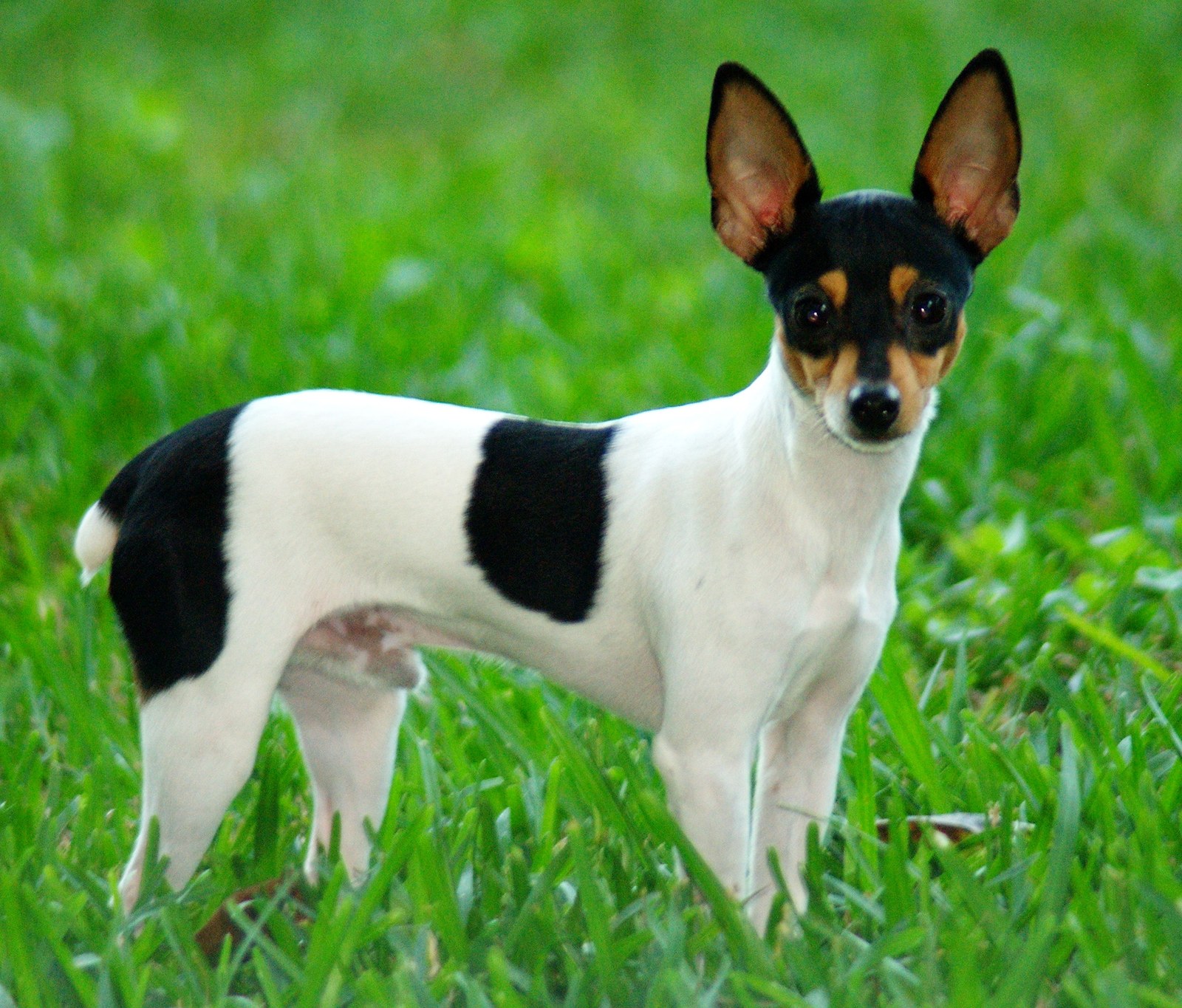

Do you have a better photo of a Toy Fox Terrier in the American show ring? If you have a show photo you’d let us use, email it to [email protected] — tell us the dog’s name and the show, and it may be featured here. Please only send photos you took yourself or have the photographer’s permission to share, and tell us the photographer’s name.
1. Breed at a glance
- Group: Toy. Full AKC recognition in 2003.
- Size: 8½ to 11½ inches at the withers, 9 to 11 preferred. The AKC lists 4 to 9 pounds and a life expectancy of 13 to 15 years. The AKC ranks the breed 108 of 210 in popularity.
- Coat: short, smooth, shiny, satiny, and fine in texture, slightly longer in the ruff, uniformly covering the body.
- Color: four combinations only — tri-color (white, black, and tan), white, chocolate and tan, white and tan, and white and black. The body is over fifty percent white; the head is predominantly solid color.
- Ears: erect, pointed, inverted V-shaped, set high and close together. Ears not erect on a dog over six months of age is a disqualification.
- Tail: short, set high, held erect, and docked to the third or fourth joint.
- Temperament: intelligent, alert and friendly, and loyal to its owners — in the standard’s words, a highly animated toy dog, comical, entertaining, and playful all his life.
- Origin: American — developed in the United States from the Smooth Fox Terrier, bred smaller and smaller for farm ratting.
The whole breed is a balancing act the standard states in its first line: “truly a toy and a terrier.” Everything after that — the size limits, the color rules, the erect ears — exists to keep both halves of that sentence true at once. (Sources: AKC, Toy Fox Terrier breed page; AKC, Official Standard of the Toy Fox Terrier.)
2. History
The Toy Fox Terrier is an American breed, made in the early twentieth century out of the Smooth Fox Terrier. The Smooth Fox Terrier had come to America from England in the nineteenth century as a farm and hunting dog, and American breeders began selecting the smallest of them, generation after generation, for a dog that could still catch rats in a barn and then come inside and live in the house.
What else went into the mix is still argued about. The AKC’s account says American breeders crossed the small Smooth Fox Terriers with toy breeds — the Miniature Pinscher, the Italian Greyhound, the Chihuahua, and the Manchester Terrier. The United Kennel Club’s account holds that the breed came from selecting small Smooth Fox Terriers alone, with no outside crosses. Both versions agree on the result: by the 1930s the little dogs had a settled look of their own, and the argument over how they got there has never quite been settled.
- 1936. The United Kennel Club recognized the Toy Fox Terrier as a separate breed, also known then as the American Toy Terrier — nearly seven decades before the AKC did.
- 1949. The National Toy Fox Terrier Association was formed in Ohio to preserve the breed’s type and function.
- August 31, 1960. The UKC closed the breed’s stud book, ending crossbreeding with other breeds for good.
- 2003. Full AKC recognition, in the Toy Group. The American Toy Fox Terrier Club is the AKC parent club today.
- June 2023. The club’s 20th-anniversary national specialty was held in Oklahoma City, Oklahoma.
The breed’s working past never left it. A Toy Fox Terrier is a ratter shrunk to lap size, and the standard’s temperament paragraph — spirited, determined, not easily intimidated — is a farm dog’s description, not a lap dog’s. That is the point of the breed, and the reason its fanciers describe it the way the parent club does: a big dog in a little package. (Sources: Wikipedia, Toy Fox Terrier; AKC, Toy Fox Terrier breed page; American Toy Fox Terrier Club, ATFTC Nationals and Regionals; American Toy Fox Terrier Club.)
3. The standard and why it's written that way
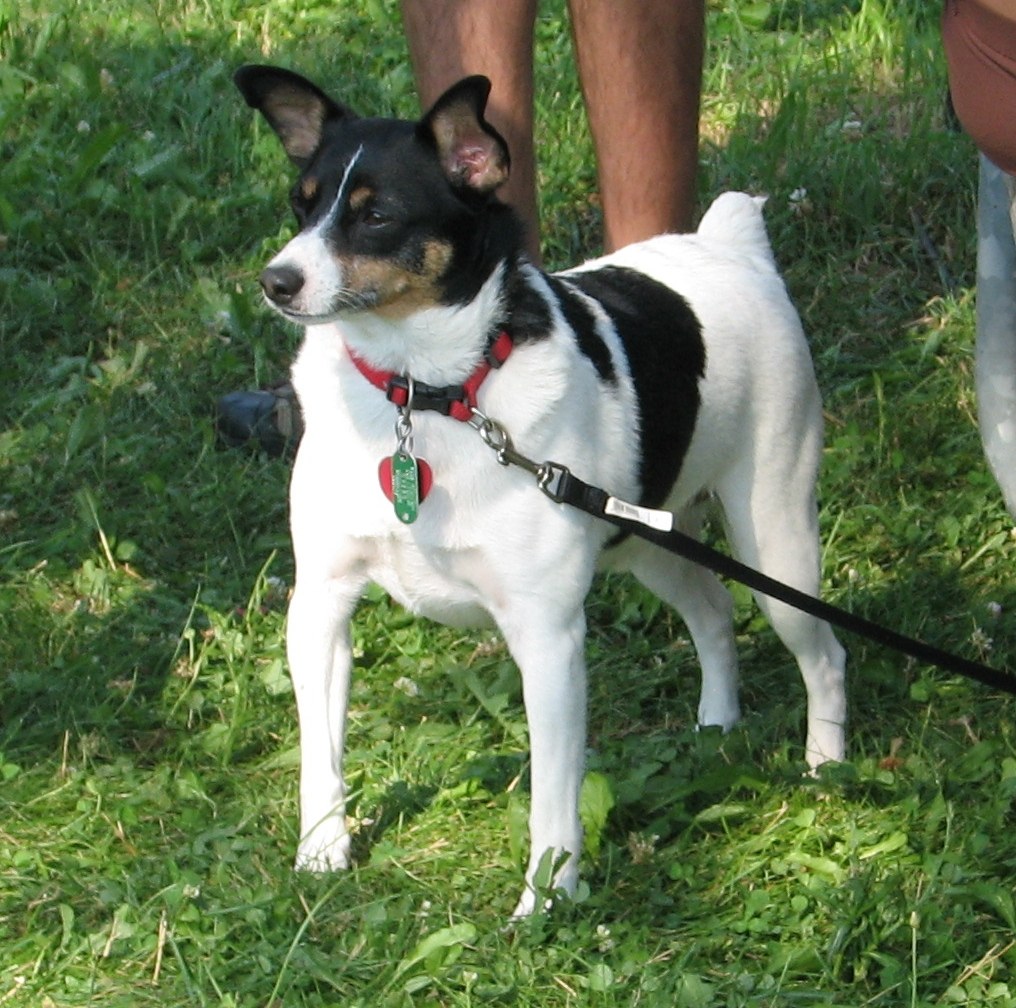

The standard is short — two pages — and nearly all of it serves one idea: a toy dog that is still, unmistakably, a terrier.
- Size, proportion, substance. 8½ to 11½ inches, 9 to 11 preferred. The dog is square in proportion, height approximately equal to length, slightly longer in bitches acceptable. Bone must be strong, but not excessive, and always in proportion to size. The standard sets no weight at all — the only size disqualification is height: any dog under 8½ inches or over 11½ inches.
- Head. Elegant, balanced, and expressive, with no indication of coarseness. Eyes clear, bright, and dark, full, round, and somewhat prominent, set well apart. Ears erect, pointed, inverted V-shaped, set high and close together but never touching. Muzzle strong rather than fine, with a scissors bite preferred. Nose black only, except self-colored in chocolate dogs.
- Coat. Shiny, satiny, fine in texture, and smooth to the touch, slightly longer in the ruff, uniformly covering the body. The dog is, in the standard’s phrase, “naturally well groomed” — no trimming is described or wanted.
- Color. Four combinations and no others: tri-color (predominantly black head with sharply defined tan markings on cheeks, lips, and eye dots; body over fifty percent white, with or without black body spots); white, chocolate and tan; white and tan; white and black. Blazes are acceptable but may not touch the eyes or ears, and a small amount of ticking is not penalized. Body spots must match the head color.
- Neck, topline, body, tail. The neck is carried proudly erect, slightly arched, about the same length as the head. The topline is level when standing and gaiting; the back straight, level, and muscular. The tail is set high, held erect, and docked to the third or fourth joint.
- Gait. Movement is smooth and flowing with good reach and strong drive, the topline straight and the head and tail carriage erect while gaiting. Hackney gait is a fault.
- Temperament. “The Toy Fox Terrier is intelligent, alert and friendly, and loyal to its owners. He learns new tasks quickly, is eager to please, and adapts to almost any situation.” Like other terriers he is “self-possessed, spirited, determined and not easily intimidated,” and “a highly animated toy dog that is comical, entertaining and playful all of his life.” Any individuals lacking good terrier attitude and personality are to be faulted.
- The disqualifications. Under 8½ inches or over 11½ inches. Ears not erect on any dog over six months of age. Dudley nose. Undershot, wry mouth, or overshot more than ⅛ inch. A blaze extending into the eyes or ears. Any color combination not stated above. Any dog whose head is more than fifty percent white. Any dog whose body is not more than fifty percent white. Any dog whose head and body spots are of different colors.
Why the standard is written this way: the color rules and the height disqualification are the breed’s fence. A Toy Fox Terrier is defined as much by what it is not as by what it is — not a generic small white dog, not a toy-sized Smooth Fox Terrier, not a Chihuahua with terrier markings. The fifty-percent split does the work: a predominantly solid head on a predominantly white body is the silhouette the breed is judged by, and the disqualification list exists so that no amount of charm can rescue a dog that has drifted outside it. The temperament paragraph does the same job from the other side: a pretty toy dog with no terrier in it is faulted by name. (Source: AKC, Official Standard of the Toy Fox Terrier (approved July 8, 2003; effective August 27, 2003).)
4. Temperament & living with one
The parent club puts it in one line: the Toy Fox Terrier is a big dog in a little package. The standard says the same thing in plainer language — intelligent, alert, friendly, loyal, self-possessed, spirited, determined, and not easily intimidated — and then adds the part that surprises people: comical, entertaining, and playful all his life.
- Toy and terrier, both at once. As a terrier he has keen intelligence, courage, and animation; as a toy he is diminutive and devoted, “with an endless abiding love for his master.” The club’s own description warns not to let the size fool you: he considers himself “Superdog,” with a huge ego, and will try to dominate almost every situation.
- Quick to learn, eager to please. He learns new tasks quickly and adapts to almost any situation — which makes him easy to train and easy to spoil in equal measure. The determination that makes a good ratter also makes a dog that needs consistent rules, not just affection.
- A people dog, not a yard dog. This is a companion bred to live with people, in the house and on the move with them. The breed club describes the Toy Fox Terrier as a fun-loving, house-trainable small dog who easily adapts to the activity level of his owner — but adaptation is not the same as neglect: a dog this busy and this attached needs daily play, training, and company, not a yard and a hope.
- Busy by design. A ratter’s reflexes do not switch off indoors. Small moving things will catch his eye, and a bored Toy Fox Terrier will invent work — usually loudly, and usually involving something you own. Give him a job every day: walks, play, training, a puzzle, a sport. He has proved himself in agility, obedience, rally, and barn hunt as well as the show ring.
If the household wants a small dog that is part of everything — on the couch, in the car, at the training class — the temperament fits. If the household wants a quiet ornament, it does not: this is a terrier first, and the toy size only makes the terrier easier to carry. (Sources: AKC, Official Standard of the Toy Fox Terrier; American Toy Fox Terrier Club, About TFTs; AKC, Toy Fox Terrier breed page.)
5. Grooming
Grooming a Toy Fox Terrier is the easiest part of owning one. The coat is short, smooth, and glossy, and the standard calls the dog “naturally well groomed” — there is no clipping, stripping, or sculpting involved, ever.
- Brushing. A quick brush once a week with a soft brush or rubber mitt is enough to keep the short coat glossy and to catch loose hair. The coat sheds lightly.
- Bathing. Bathe as needed — after mud, or when the coat looks dull — and no more often than that. Over-bathing strips the natural oils that give the coat its shine.
- The rest of the routine. Nails trimmed regularly (small, fast-growing, and easy to forget on a dog this light on his feet), ears checked and cleaned, teeth brushed. The slightly longer ruff needs no special attention beyond the weekly brush.
- No trimming. The standard describes no clip and no shaping. A Toy Fox Terrier presented with a sculpted or thinned coat is not being groomed to the standard — he is being groomed away from it.
Be honest about the trade: the coat is low-maintenance, but the dog is not. The hours a long-coated breed spends on grooming, a Toy Fox Terrier spends on play, training, and attention — budget for those instead. (Sources: AKC, Official Standard of the Toy Fox Terrier; AKC, Toy Fox Terrier breed page.)
6. Health testing
The Toy Fox Terrier is a generally healthy, long-lived breed — 13 to 15 years — and the parent club’s health page makes an unusual point in the breed’s favor: of the health conditions identified in the breed, all but one have a DNA test available. That makes the buyer’s job concrete: ask for the test results, and check them.
- Patella evaluation. An OFA patellar luxation evaluation, at 12 months or older. Luxating patellas — kneecaps that slip out of place — are the best-known joint problem in toy breeds, and the one identified condition in the breed with no DNA test: it is graded by examination, not by a swab.
- Thyroid evaluation. An OFA thyroid evaluation from an approved laboratory.
- Primary lens luxation (PLL) — DNA test. An inherited condition of the lens of the eye: the ligaments holding the lens break down, the lens dislocates, and the result can be painful glaucoma and blindness. Inherited PLL is autosomal recessive, and a DNA test identifies clear, carrier, and affected dogs.
- Congenital hypothyroidism with goiter (CHG) — DNA test. An inherited thyroid disease named on the parent club’s health page. Affected puppies show symptoms at 3 to 5 weeks of age and do not survive past a few weeks; carriers can only be identified by the genetic test, so both parents must be tested.
- Spinocerebellar ataxia (SCA) — DNA test. An inherited neurological condition named on the parent club’s health page, with a DNA test available.
- Degenerative myelopathy. Not a required test, but many parent-club members test for it as well, according to the club’s health page.
- Legg-Calvé-Perthes disease. No test is available, the club’s health page notes — affected dogs should not be bred. The condition cuts off blood supply to the head of the thigh bone, usually showing up as limping by about six months of age.
- von Willebrand’s disease. A canine bleeding disorder reported in the breed: carriers can appear healthy while passing it on, so both parents should be tested and the results registered with OFA.
- CHIC. The parent club’s recommended tests — patella, thyroid, and PLL — are the breed’s CHIC protocol, set by the parent club with the Orthopedic Foundation for Animals. A dog that completes the protocol and has its results in the public OFA database earns a CHIC number. A CHIC number means the dog was tested and the results are public — it does not mean the dog passed everything.
Before you buy, ask for the parents’ results — patella and thyroid evaluations and the PLL, CHG, and SCA DNA results — and look them up at ofa.org yourself. A breeder who has done the testing will be glad you checked, and the club’s own advice is blunt: clinically affected dogs, and dogs exhibiting symptoms for any of these conditions, should not be bred. (Sources: AKC, Toy Group Health Testing Requirements; American Toy Fox Terrier Club, TFT Health Information; Good Dog, Toy Fox Terrier Health Testing Guide; Embrace Pet Insurance, Toy Fox Terriers.)
7. The annual Toy Fox Terrier specialty dog show
A specialty is the breed’s All-Star show — its Super Bowl. Once a year, the best Toy Fox Terriers from across the country, and often from around the world, come together in one place.
The American Toy Fox Terrier Club’s national specialty: the annual Toy Fox Terrier specialty dog show. The 2026 national: Friday, August 21, 2026, at the Stormont Vail Events Center in Topeka, Kansas, judged by Mrs. Pamela B. Peat, 61 dogs in the entry. Best of Breed: GCHG CH Dynasty Topfox Sugar N Spice — the same bitch won Best of Breed at the 2025 national in Phoenix. The 2027 national: Sunday, April 18, 2027, at the Georgia National Fairgrounds & Agricenter in Perry, Georgia. The 2025 national: Thursday, February 27, 2025, at the Arizona State Fairgrounds in Phoenix, judged by Mr. James A. Moses, 41 dogs in the entry. The 2024 national: Saturday, May 25, 2024, at the Wide World of Indoor Sports in North Kingstown, Rhode Island, judged by Mr. C Howard, 25 dogs in the entry.
The standard, in brief: a well-balanced toy dog of athletic appearance, 8½ to 11½ inches at the withers, square in proportion, with a short, glossy, predominantly white coat, a predominantly solid head, erect pointed ears, and a short, high-set tail docked to the third or fourth joint — intelligent, alert, friendly, and loyal to its owners.
The 2026 National Specialty — Friday, August 21, 2026, at the Stormont Vail Events Center, One Expocentre Drive, Topeka, Kansas, a separate Parent Specialty (National Specialty) in the Capital City Cluster, with the Topeka Kennel Club all-breed show the same day and the Manhattan Kansas Kennel Club regional specialty the day before. Specialty judge: Mrs. Pamela B. Peat. Junior Showmanship judge: Mrs. Pamela B. Peat. Event Chair: Tabitha Dvorak. Superintendent: Onofrio Dog Shows, L.L.C. Entries closed Wednesday, August 5, 2026. (Sources: AKC event search, event 2026586909; American Toy Fox Terrier Club, 2026 National Specialty Schedule of Events; American Toy Fox Terrier Club.)
Results (2026 national). Best of Breed: GCHG CH Dynasty Topfox Sugar N Spice (bitch) — her second straight national Best of Breed, after the 2025 national in Phoenix. Best of Opposite Sex: GCHB CH Kallmee Born To Rule (dog). Winners Dog and Best of Winners: Lc The Greatest Show. Winners Bitch: Valcopy Ter-Lee Dreams Made Of These @ Heartland. Best Owner-Handled in Breed: GCHG CH M L Patriot’s Black In Fashion BCAT. Best Junior Handler: Leah Dykes; Reserve Best Junior Handler: Emma Cloud. The entry: 61 dogs (26 dogs, 35 bitches), 64 entries. (Source: AKC event search, event 2026586909.)
The 2027 National Specialty: a one-day event on Sunday, April 18, 2027, at the Georgia National Fairgrounds & Agricenter, Perry, Georgia. Superintendent: Onofrio Dog Shows, L.L.C. Judge: Christine Martinez, elected by the club’s board in July 2025. AKC event number, entries, and closing date not yet published as of November 2026. (Sources: AKC Upcoming National Specialties; American Toy Fox Terrier Club, Board Meeting Minutes, July 9, 2025; American Toy Fox Terrier Club.)
Past national specialties: 2025 · 2024
American Toy Fox Terrier Club — atftc.com
8. Regional specialties through the year: smaller regional shows
The national is the anchor, but the breed’s year also runs through regional specialties — smaller regional shows, not the national — held by the parent club and its licensed affiliate clubs around the country, usually as designated specialties with all-breed shows. These are the 2026 regionals verified from club and AKC sources so far:
Five ATFTC specialty events verified for 2026 so far:
- Regional specialties — January 12 and 18, 2026, Brooksville, Florida: Central Florida Toy Fox Terrier Club regional specialties. (Source: American Toy Fox Terrier Club, Board Meeting Minutes, July 9, 2025.)
- Designated specialty — Saturday, June 6, 2026, Woodland, California: at the Yolo County Fairgrounds, with the Contra Costa County Kennel Club show. (Source: AKC event search, Contra Costa County Kennel Club, event 2026106101.)
- Specialty — Thursday, August 13, 2026, Enumclaw, Washington: Puget Sound Toy Fox Terrier Club specialty (afternoon event) at the Enumclaw Expo Center, 45224 284th Ave SE. Specialty judge J M Zielinski (9 dogs, 11 entries). Event Chair: Terrie Cowan. Superintendent: BaRay Event Services, Inc. Entries closed Wednesday, July 29, 2026. (Source: AKC event search, event 2026614202.)
- Regional specialty — Thursday, August 20, 2026, Topeka, Kansas: the ATFTC regional specialty with the Manhattan Kansas Kennel Club show at the Stormont Vail Events Center, the day before the 2026 national. Event Chair: Tabitha Dvorak. Superintendent: Onofrio Dog Shows, L.L.C. (Sources: American Toy Fox Terrier Club, 2026 National Specialty Schedule of Events; AKC event search, event 2026586908.)
- Parent Specialty (Orlando regional) — Friday, December 11, 2026, Orlando, Florida: at the Orange County Convention Center N/S Bldg, 9899 International Drive. Specialty judge Mr. Scott Toney. Event Chair: Steven Thibodeaux. Superintendent: Onofrio Dog Shows, L.L.C. Entries closed Wednesday, November 11, 2026. (Source: AKC event search, event 2026586907.)
The 2027 regionals announced so far:
- Designated specialties — January 18 and 24, 2027, Brooksville, Florida: Central Florida Toy Fox Terrier Club designated specialties. (Source: American Toy Fox Terrier Club.)
- Regional specialty — April 2027, Perry, Georgia: an ATFTC regional specialty alongside the national specialty at the Georgia National Fairgrounds & Agricenter; the regional’s day within that weekend had not been separately confirmed in an official source as of November 2026. (Source: American Toy Fox Terrier Club.)
Past regional specialties: 2025
More regional specialties will be added here as their programs are verified — this section is built from show data, not guesswork. Browse upcoming show weekends →
9. Clubs
- American Toy Fox Terrier Club (ATFTC) (parent club) — the AKC-designated parent club for the breed in the United States, and the leading not-for-profit dog club devoted to the Toy Fox Terrier. It holds the national specialty and the parent-club regional specialties, publishes the quarterly FoxTales newsletter, runs a breeder referral program, keeps a health committee ([email protected]), and maintains a rescue fund. Memberships run to December 31 each year. (Sources: American Toy Fox Terrier Club; AKC Club Search, American Toy Fox Terrier Club.)
- Puget Sound Toy Fox Terrier Club — a licensed affiliate club of the ATFTC, holding specialty shows for the breed in the Pacific Northwest (its 2026 specialty was held August 13, 2026, at the Enumclaw Expo Center in Enumclaw, Washington). (Sources: American Toy Fox Terrier Club, ATFTC Nationals and Regionals; AKC event search, event 2026614202.)
- Central Florida Toy Fox Terrier Club — a licensed affiliate club of the ATFTC, holding designated specialties in Brooksville, Florida (January 2026 and January 2027). (Sources: American Toy Fox Terrier Club, ATFTC Nationals and Regionals; American Toy Fox Terrier Club.)
- Toy Fox Terrier Club of Canada. The Canadian breed club, formed in 2001 and accredited by the Canadian Kennel Club in 2010. (Source: EasyPetMD, Toy Fox Terrier.)
If you are new to the breed, the national specialty itself is the better first stop than a breeder’s website: the people there have owned, shown, and worked Toy Fox Terriers, and they will tell you the truth about the temperament, the color rules, and the health testing before you fall for a puppy.
10. Rescue
- Start with Toy Fox Terrier Rescue, Inc. (TFTR). The breed’s dedicated rescue is a separate corporation from the parent club — a 501(c)(3), nationwide, all-volunteer group established in 2009 to re-home Toy Fox Terriers who need new homes, through a network of approved foster homes, with an emergency medical fund for immediate care. Contact: Toy Fox Terrier Rescue, Inc., c/o Patty Blair, 148 Lane Road, Chester, NH 03036; 775-600-2837; [email protected]; tftrescue.com. Available dogs are listed on Petfinder at ToyFoxTerrierRescue.Petfinder.com. (Sources: American Toy Fox Terrier Club, TFT Rescue Program; Toy Fox Terrier Rescue, Inc., Contact.)
- AKC Rescue Network. The AKC’s rescue network lists the breed’s rescue contact as the American Toy Fox Terrier Club / Toy Fox Terrier Rescue. (Source: AKC Rescue Network, T Breeds.)
- The parent club’s rescue fund. The ATFTC’s own rescue fund stands ready to help the rescue effort, the club’s rescue page notes — and the club is explicit that all rescue information should go to Toy Fox Terrier Rescue, Inc., not to the club itself.
- Rescued Toy Fox Terriers are usually adults. A rescued dog arrives with its temperament and size visible before you commit — a real advantage in a breed where temperament is the whole point — but breed rescue often runs a waiting list, so patience is part of the deal. If you bought your Toy Fox Terrier from a responsible breeder, contact the breeder first — most responsible breeders include a take-back clause and want to know if you cannot keep the dog.
11. Breeder vs. rescue: honest guidance
- If you buy: start with the parent club, the American Toy Fox Terrier Club, and its breeder referral program — and the AKC Marketplace, where many breeders are listed. Ask for the parents’ health results — patella and thyroid evaluations and the PLL, CHG, and SCA DNA results — and look the results up in the OFA database yourself. Expect to wait for a puppy from a careful breeder, and expect a breeder who asks you as many questions as you ask them and takes the puppy back for its whole life if you cannot keep it.
- If you rescue: a rescued Toy Fox Terrier is usually an adult, and it will arrive with its temperament and size visible before you commit. What you get in return is a dog whose character you can see before you commit and a lower price. Either way, be honest with yourself first: a Toy Fox Terrier needs daily play and training, a weekly brush, and an owner who wants a small, busy companion underfoot — not a yard and a hope.
- Watch out for “teacup” or “mini” Toy Fox Terriers. There is no smaller variety. The standard has one size — 8½ to 11½ inches — and a dog under 8½ inches is disqualified. A seller offering a teacup version at a premium is selling a label the standard does not recognize.
- Watch out for rare-color premiums. Blue, brindle, and any color combination outside the four the standard names are disqualifications — “any color combination not stated above.” Rarity of color is not a virtue in this breed; it is a fault the standard names outright.
- Watch out for weight claims. The standard sets no weight at all — the only size disqualification is height. A seller citing a weight disqualification is wrong about the standard, and the AKC’s breed-page figure of 4 to 9 pounds is a guide, not a rule.
- Watch out for a mostly-white head. A head more than fifty percent white is a disqualification, as is a blaze touching the eyes or ears. The predominantly solid head is half the breed’s signature — check it before you fall for the face.
12. Claim this page
This page belongs to the breed, and the people who know the breed best are the American Toy Fox Terrier Club and its members. If you are with the parent club — or you are a breeder, a judge, a handler, or a rescue volunteer who spotted something wrong, missing, or out of date — this page is yours to set straight. Tell us what needs fixing and where the correction is documented, and we will fix it and credit the source. Contact the site through the About page, and mention “Toy Fox Terrier breed profile.”
Sources
- AKC, Toy Fox Terrier breed page — akc.org/dog-breeds/toy-fox-terrier/
- AKC, Official Standard of the Toy Fox Terrier (approved July 8, 2003; effective August 27, 2003) — images.akc.org/pdf/breeds/standards/ToyFoxTerrier.pdf
- AKC, Toy Group Health Testing Requirements — akc.org/breeder-programs/breed-health-testing-requirements/toy-group-health-testing-requirements/
- AKC Upcoming National Specialties — apps.akc.org/apps/events/conformation/national_specialties.cfm
- AKC event search, event 2026586909 (2026 national) — apps.akc.org/apps/events/search, event 2026586909
- AKC event search, event 2026586908 (2026 Topeka regional) — apps.akc.org/apps/events/search, event 2026586908
- AKC event search, event 2026586907 (2026 Orlando) — apps.akc.org/apps/events/search, event 2026586907
- AKC event search, event 2026614202 (2026 Puget Sound specialty) — apps.akc.org/apps/events/search, event 2026614202
- AKC event search, event 2025586907 (2025 national) — apps.akc.org/apps/events/search, event 2025586907
- AKC event search, event 2024586907 (2024 national) — apps.akc.org/apps/events/search, event 2024586907
- AKC Rescue Network, T Breeds (American Toy Fox Terrier Club / Toy Fox Terrier Rescue) — akc.org/akc-rescue-network/rescue-network-t-breeds/
- American Toy Fox Terrier Club — atftc.com
- American Toy Fox Terrier Club, ATFTC Nationals and Regionals — atftc.com/nationals/nationals.htm
- American Toy Fox Terrier Club, 2026 National Specialty Schedule of Events — atftc.com/nationals/2026/2026ATFTCNSSchedule.pdf
- American Toy Fox Terrier Club, 2025 National Specialty Premium List — ATFTC.com/nationals/2025ATFTCNationalPL.pdf
- American Toy Fox Terrier Club, TFT Health Information — atftc.com/health/health.htm
- American Toy Fox Terrier Club, TFT Rescue Program — atftc.com/rescue/rescueNEW.html
- American Toy Fox Terrier Club, Board Meeting Minutes, January 13, 2026 — atftc.com/members_only1/board_mtg/2026/20260113Minutes.pdf
- American Toy Fox Terrier Club, Board Meeting Minutes, July 9, 2025 — atftc.com/members_only1/board_mtg/2025/20250709Minutes.pdf
- Toy Fox Terrier Rescue, Inc., Contact — tftrescue.com/contact
- Wikipedia, Toy Fox Terrier (history; UKC 1936; NTFTA 1949; stud book closed 1960) — en.wikipedia.org/wiki/Toy_Fox_Terrier
- Good Dog, Toy Fox Terrier Health Testing Guide — gooddog.com/breeds/toy-fox-terrier/health-testing-guide
- Embrace Pet Insurance, Toy Fox Terriers (Legg-Calve-Perthes; von Willebrand's disease) — rc.embracepetinsurance.com/dog-breeds/toy-fox-terrier/
- Wikimedia Commons, Toy Fox Terrier 2.jpg (hero photo, Terry Best, CC BY-SA 3.0) — commons.wikimedia.org/wiki/File:Toy_Fox_Terrier_2.jpg
- Wikimedia Commons, Toy Fox Terrier.jpg (body photo, Ltshears, CC BY 3.0) — commons.wikimedia.org/wiki/File:Toy_Fox_Terrier.jpg