
Breed profile · Herding Group · The rustic curly-coated herder from Spain
Spanish Water Dog
The Spanish Water Dog is the AKC’s inexhaustible dual-purpose rustic: a medium, curly-coated herding dog from the Iberian Peninsula that drove goats and sheep to seasonal pastures and retrieved fish and tackle from the boats — a dog whose coat grows into thin cords if left alone and whose loyalty comes with a wary eye on strangers. It joined the AKC’s Herding Group in 2015, and it is still rare in the United States: No. 167 in the AKC’s 2025 registrations.
Help us improve it. This is one of ThePetAdvisor’s breed profiles, built from public sources with generous links to the people who actually own this breed’s knowledge. If something’s off or missing, the parent club can claim the page and set it straight — see the bottom of the page.
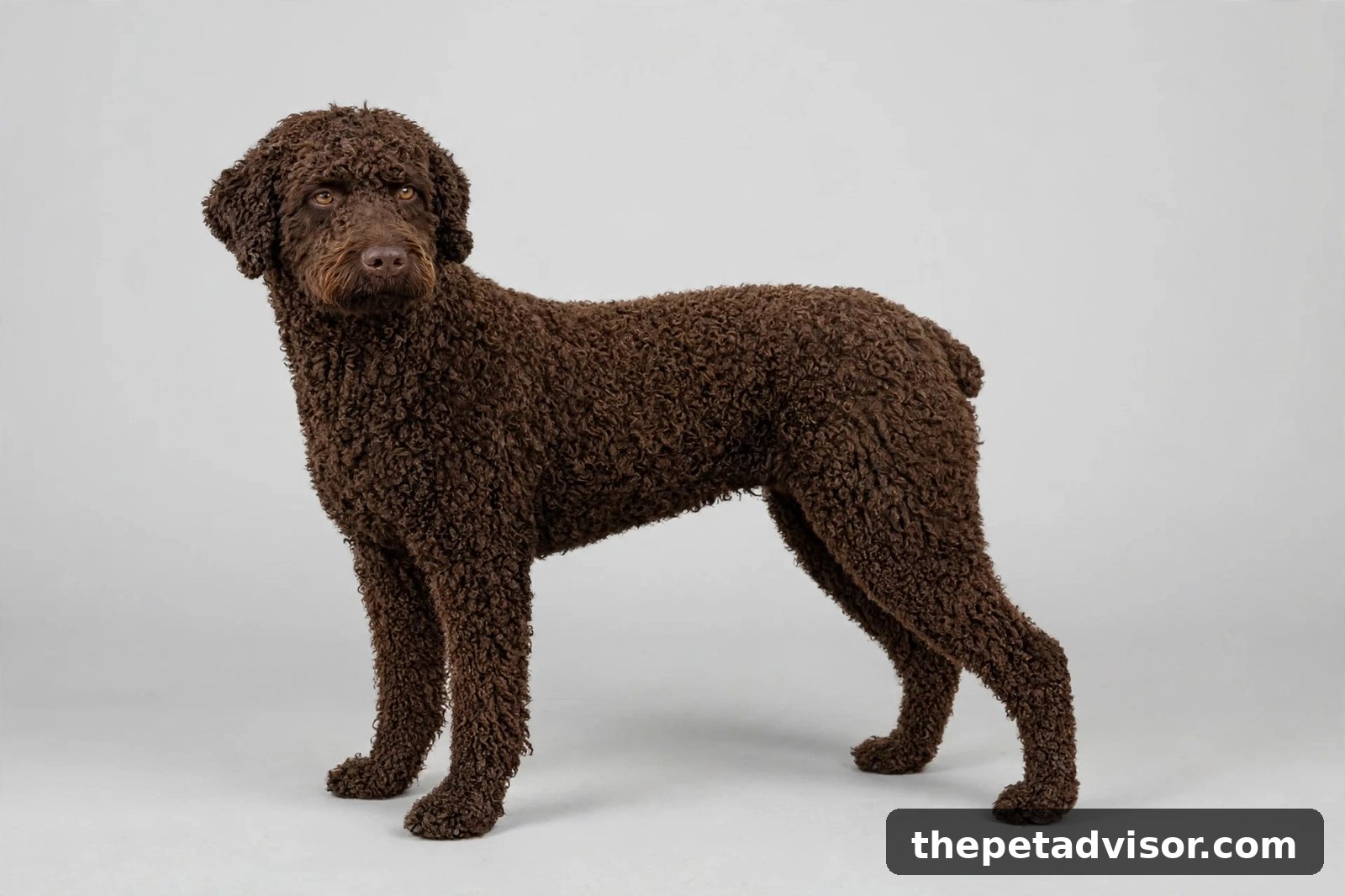
Do you have a photo of a Spanish Water Dog in the American show ring? We’d love this page to lead with one. If you have a show photo you’d let us use, email it to [email protected] — tell us the dog’s name and the show, and it may be featured here. Please only send photos you took yourself or have the photographer’s permission to share, and tell us the photographer’s name. We couldn’t find a public photo of a Spanish Water Dog in the American show ring that we were free to share, so the photo leading this page was made with AI. We’d much rather lead with a real one — if you’re a club member with an approved photo, we’d love to feature it.
1. Breed at a glance
Herding — fully recognized by the AKC in 2015
Dogs 17½–19¾ in, bitches 15¾–18 in at the shoulder. Weight in proportion to height.
Single rustic curly coat, forming thin cords if left to grow. Solid black, brown, beige, or white, or parti-color with white.
Faithful, obedient, lively, hard-working, and watchful — loyal to its own people, wary of strangers.
High and work-driven. A Spanish Water Dog needs a job for its body and its brain every day.
Size, coat, and temperament facts are from the AKC standard (approved November 8, 2022; effective February 1, 2023). Lifespan is the AKC breed-profile figure, 12 to 14 years. Popularity: the Spanish Water Dog is No. 167 in the AKC’s 2025 registrations (AKC most popular breeds 2025).
2. History
The Spanish Water Dog has been found throughout the Spanish countryside for over 800 years, first mentioned in historical literature in 1110 AD, and known by a string of old names — perro turco andaluz, laneto, perro de lanas, patero, rizado, cordelero, merlucero among them. Its precise origins are debated: the parent club’s history cites possible North African origins, a local ancestor descended from an Asian breed, descent from canis familiaris palustris, and a Turkish origin by way of boats between 600 and 900 AD. What is not debated is that it is a rustic multi-purpose breed, developed in Spain over centuries to herd, hunt, work in water, guard the home and farm, and keep company. (Source: Spanish Water Dog Club of America, History of the Breed.)
The breed split its work by region. In the central and southern countryside, the dog drove herds of goats, sheep, cows, and pigs to seasonal pastures, and hunted fowl and small game on the side — and Spanish Water Dogs can still be found with their flocks in the south today. Along the northern coast, its work was like its larger Portuguese cousin’s: retrieving fish and tackle dropped from the boat, and swimming lines to and from shore. The same woolly coat left long and uncut protected the dogs that worked the mines of the Cuenca Minera, guarding mule transports and working rat control in heat and humidity. (Source: SWDCA, History of the Breed.)
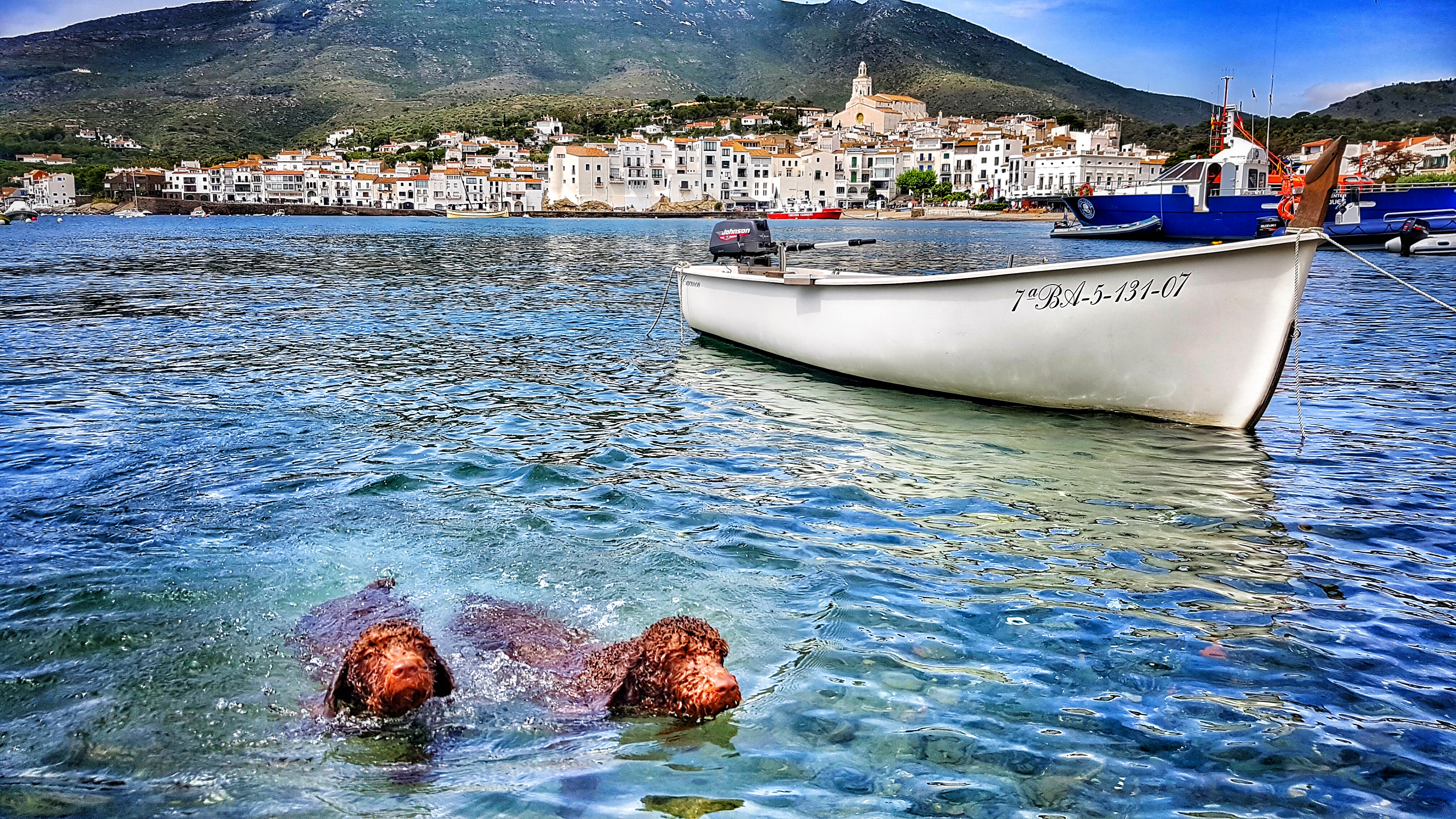
The industrial revolution arrived late in Spain and hit the breed hard: pastureland was fenced, people moved to the cities, fishing fleets mechanized, and the near-shore estuaries were polluted. From 1975, the breed was saved from obscurity by Santiago Montesinos and Antonio Garcia Perez, who acquired or borrowed dogs from all regions — mostly from the shepherds of Andalusia — and bred carefully to preserve conformation and working ability. Spain’s national kennel club recognized the breed in May 1985, and two brown dogs were the first of the breed officially shown at an exposition in Madrid that same year; the breed standard was later based on a black-and-white dog named Lucky, owned by Antonio Moreno. The FCI placed the breed in Group VIII, Section 3, alongside its Portuguese cousins. (Source: SWDCA, History of the Breed.)
The American story is recent. The Spanish Water Dog Club was formed in 2004, the breed entered the AKC Foundation Stock Service in 2005, and the AKC selected the club as parent club in April 2011. The breed became eligible for AKC registration on December 1, 2014, and was fully recognized on January 15, 2015, placed in the Herding Group for its primary work as a herder. It remains a multi-purpose breed: the club’s dogs work today in search and rescue, drug and bomb detection, agility, obedience, and herding, alongside the show ring. (Sources: SWDCA, About the Club; SWDCA, History of the Breed.)
3. The standard and why it’s written that way
- A rustic working dog. The standard opens with the job: “A rustic breed of the Iberian Peninsula, the Spanish Water Dog is a sturdy, medium sized, well proportioned, athletic dog that is suited to perform a variety of tasks including herding, hunting, and assisting fishermen.” The coat is the hallmark: “His distinctive rustic curly, single coat is a hallmark of the breed. He must always be shown in a natural coat and never be aesthetically groomed in any way.” Left to grow, the coat forms thin cords — the AKC describes them as “pencil-thin,” each ending in a natural “fish-hook curl” that shows the coat has not been trimmed or sculpted. (Sources: AKC standard; AKC, Meet the Corded Breeds.)
- Size and build. The numbers are simple. Dogs stand 17½ to 19¾ inches, bitches 15¾ to 18, with weight in proportion to height; the build is rectangular, 9 to 8 measured from point of shoulder to buttocks against withers to ground.
- Color, in full. The color rule is where buyers get tripped up, so here it is whole: the dog may be solid (in its various shades of black, brown, beige, or white), Irish-marked, or parti-color where one of the colors must be white. The disqualifications are tricolor, tan-point, parti-color where one of the colors is not white, or albino — and a smooth or wavy coat, which is a disqualification on its own.
- All tail lengths acceptable. Traditionally the tail was docked; today, all tail lengths are equally acceptable. (Source: AKC standard.)
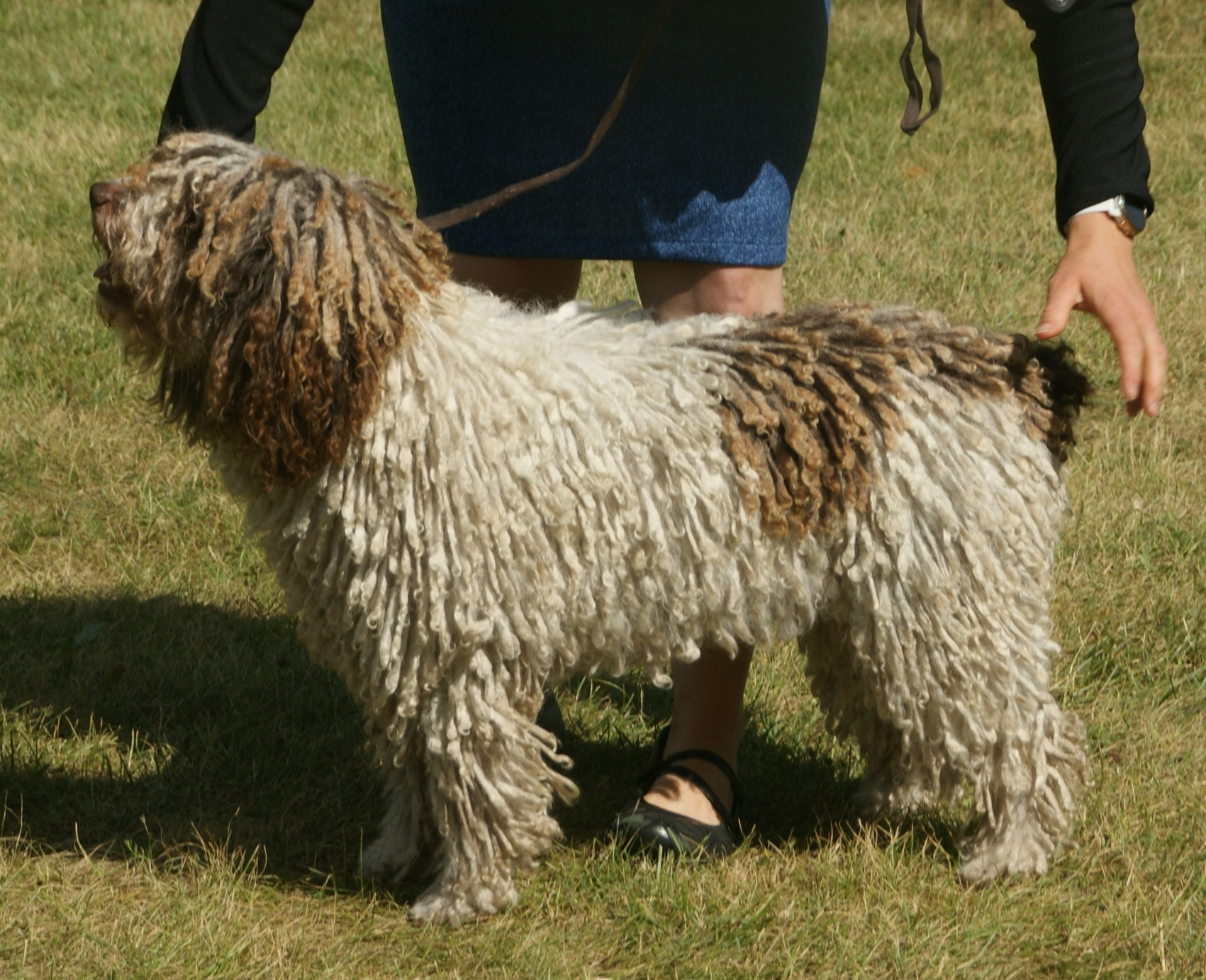
Read the standard as a working specification, not a beauty list. A single coat that cords is a coat that sheds water and protects the dog in marsh, brush, and cold water without trapping heat the way a double coat would; a rectangular build and the gait the standard asks for — “free, smooth, effortless, and ground covering” — are for covering rough ground all day behind a flock. Even the temperament line is written as a job requirement: “The Spanish Water Dog is faithful, obedient, lively, hard working, and watchful.” Nothing in it is decorative — including the rule that the dog must be shown natural, which is the standard’s way of saying the coat is the working coat, not a haircut.
4. Temperament & living with one
The AKC’s breed profile calls the Spanish Water Dog “inexhaustible” — a dual-purpose breed whose hallmark is a coat of woolly curls, used as both a herder and waterfowl retriever in its homeland, “a lively family companion and vigilant watchdog.” The standard says the same thing more plainly: the dog is “faithful, obedient, lively, hard working, and watchful,” and “a loyal, vigilant, and intelligent working dog with strong herding instincts,” whose working ability comes from “an intense desire to please.” (Sources: AKC Spanish Water Dog breed page; AKC standard.)
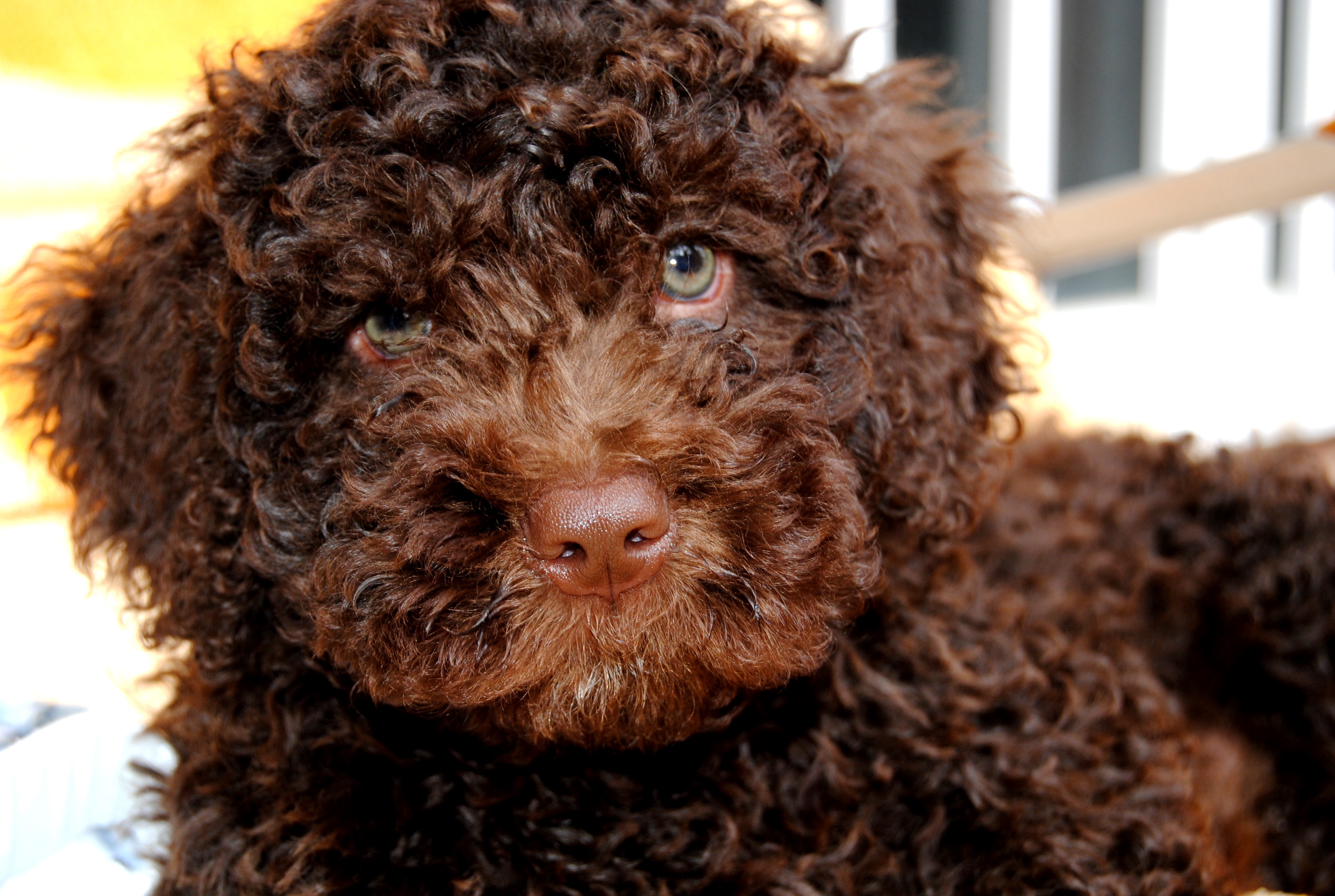
- Bonds hard, watches strangers. What that means at home is a dog that bonds hard to its own people and keeps a wary eye on everyone else. The AKC’s guidance on the breed is blunt and worth quoting in spirit: these dogs are very loyal to their owners but can be quite wary of strangers, so ongoing socialization and positive new experiences are essential from an early age. As herding dogs, some have a very high prey drive and need a reliable recall — even with diligent training, some will not resist a squirrel, rabbit, or deer. Harsh training methods can make the dog lose enthusiasm and shut down; the desire to please is the lever, and it breaks if it is forced. (Source: AKC Spanish Water Dog breed page.)
- The herding instinct stays on. The herding instinct does not switch off in the house: a Spanish Water Dog may try to herd children during play, and it will guard the home it lives in. That is not a fault to train away — it is the breed doing the job it was kept for over eight centuries. What it needs is an owner who gives it real work — herding, water work, agility, obedience, search work — and who socializes it early and keeps socializing it. A Spanish Water Dog with a job and a social life is a devoted, lively companion. One without either is a bored watchdog with opinions about your visitors.
5. Grooming
- Grooming means doing less. Grooming a Spanish Water Dog is unlike grooming almost any other breed, and the first rule is to do less. The coat is typically clipped to about a quarter inch once a year and then allowed to grow naturally; brushing and combing are avoided so the coat can develop cords. The dog is shown in a natural coat and never aesthetically groomed — a sculpted clip is not a style choice here, it is against the standard. (Sources: AKC, Meet the Corded Breeds; AKC standard.)
- Sheared once a year. Traditionally, the dog was sheared one time per year, with the sheep, the same length all over — and that is still the rhythm: one even clip a year, then leave it alone while the curls tighten into cords. For baths, the parent club’s advice is to wash the coat like a sweater — squeeze the shampoo through it — using a shampoo without heavy conditioners. (Sources: AKC standard; SWDCA bathing guidance, via PetGov.) The ears need the attention the coat does not: a curly-coated water dog’s ears trap moisture, so check and clean them regularly. Keep the nails short, and let the cords do what they do.
6. Health testing
- Six tests for a CHIC number. The Spanish Water Dog is a long-lived breed — 12 to 14 years — and the parent club takes health testing seriously enough to run its program through the OFA’s Canine Health Information Center. The Spanish Water Dog Club of America endorses CHIC, and a CHIC number requires six things: an annual eye examination by a board-certified veterinary ophthalmologist; a hip evaluation, OFA preferred and PennHIP also accepted; a full OFA thyroid panel; and one-time DNA tests for prcd-PRA, early-onset PRA, and congenital hypothyroidism with goiter (CHG). Elbow evaluation is optional. (Sources: SWDCA, CHIC and the SWDCA; SWDCA, SWD Health.)
- The issues the club lists. The issues the club lists as found in the breed are hip dysplasia, prcd-PRA, autoimmune thyroiditis (hypothyroidism), congenital hypothyroidism with goiter, neuroaxonal dystrophy (NAD), Addison’s and Cushing’s diseases, exocrine pancreatic insufficiency (EPI), glaucoma, allergies, and epilepsy. The thyroid requirement is the breed-specific one: autoimmune thyroiditis is documented in the breed at meaningful rates, which is why a full thyroid panel — not just a single T4 — is a CHIC requirement. The two PRA forms are the other place to be exact: prcd-PRA is the late-onset form, early-onset PRA is a separate, faster form, and each has its own DNA test — a breeder who tested for one has not tested for the other. (Source: SWDCA, SWD Health.)
- Ask for the CHIC number. What a buyer should do is simple: ask for the CHIC number and look the results up in the OFA database before signing anything. The club’s own advice is to inquire about the sire and dam’s health clearances before purchasing a puppy. A breeder who tests will show you the actual results, not just say the tests were done — and will take the puppy back for its whole life if you cannot keep it.
7. The annual Spanish Water Dog specialty dog show
A specialty is the breed’s All-Star show — its Super Bowl. Once a year, the best Spanish Water Dogs from across the country, and often from around the world, come together in one place.
The Spanish Water Dog Club of America’s national specialty is the anchor of the breed’s year — a one-day designated specialty held inside the AKC National Championship week in Orlando, Florida. The breed is rare in the United States — No. 167 in the AKC’s 2025 registrations — so the specialty is where the breed’s serious breeders, handlers, and judges meet.
The National Specialty: a one-day designated specialty, Friday, December 11, 2026, at the Orange County Convention Center, North/South Building, 9899 International Drive, Orlando, Florida — held inside the AKC National Championship week (December 8–13), with the Sunshine State Herding Group Association group show (AKC event 2026678202) as host. Entries close: Wednesday, November 11, 2026, 12:00 noon, MB-F Inc., superintendent. Entry fees: $39.00 / $29.00. Points for reserve: available. (Sources: AKC Upcoming National Specialties; AKC Event Search, event 2026702006.)
Specialty judge: Ms. Janina K Laurin — all regular and non-regular classes, judged within the host show (the AKC lists designated-specialty results on the host event). Sweepstakes: a sweepstakes with the specialty; sweepstakes judge — not published in the AKC event listing as of November 2026. Ring and ring time: not yet published — no judging program as of November 6, 2026. (Sources: AKC Event Search, event 2026702006; AKC Event Search, host event 2026678202.)
Winners from the 2026 specialty had not been published in an official source as of November 2026 and will be added here when they are.
The 2027 national specialty dates had not been announced as of November 2026.
8. Regional specialties through the year: smaller regional shows
The Spanish Water Dog Club of America is the breed’s only specialty club, so the breed’s year runs through the national specialty and the club’s designated specialties at all-breed shows through the year, rather than a circuit of regional specialties. These are the 2027 regionals verified from club sources so far:
No regional specialties announced yet for 2027.
The national specialty is held as a designated specialty within the Sunshine State Herding Group Association show on Friday, December 11, 2026. Browse upcoming show weekends →
9. Clubs
- Spanish Water Dog Club of America (parent club) — the AKC parent club for the breed in the United States, territory entire US. Formed in 2004, selected as parent club by the AKC in April 2011, and the breed’s official parent club since February 2014. It runs the national specialty and the club’s designated specialties, the Rescue Committee, and the Health and Wellness Committee. (Sources: SWDCA, About the Club; AKC Club Search.)
- Spanish Water Dog Club (United Kingdom) — the Kennel Club breed club in Britain, which keeps an illustrated breed guide and runs the breed’s shows and activities in the UK.
No separate regional Spanish Water Dog specialty clubs could be verified — the SWDCA is the breed’s only specialty club, though its own constitution aims “to encourage the organization of independent local specialty clubs” where there are enough fanciers. The club also keeps the breed’s working side alive: it runs a Junior Water Dog Test, a pass/fail introduction to water work (underwater retrieve, retrieve from shore, floating line, dummy carry, boat ride, and recall) that earns a Junior Water Dog certificate. If you are new to the breed, the national specialty itself is the better first stop than a breeder’s website: the people there have owned, shown, and worked Spanish Water Dogs, and they will tell you the truth about the wariness and the prey drive before you fall for a puppy.
10. Rescue
- The parent club's own program. The breed’s rescue is the parent club’s own program. The SWDCA Rescue Committee places displaced Spanish Water Dogs through foster homes, and it starts from a firm rule: the breeder has the primary responsibility for re-homing a dog they bred or sold, and an owner who cannot keep their dog should go to the breeder first. Only if the breeder will not help does the owner apply to the Rescue Committee. Dogs entering the program spend a probationary period in a foster home so the committee can learn the dog’s temperament before placing it, and adopters complete an application and pass a screening interview with a committee member. (Source: SWDCA Rescue Program.)
- Why dogs come into rescue. Go in with your eyes open about why these dogs come into rescue. The committee says so plainly: often the reason a dog is turned in is that its owner found the breed’s strong natural protective instincts difficult to manage. A rescued Spanish Water Dog is usually an adult whose temperament has been assessed in foster care — which is a real advantage — but it is still a watchful, high-drive working dog that needs an experienced home with work to do, not a first dog for a quiet household. Contact the regional coordinators: Rescue East, David Milstein ([email protected]), for the East, Mid-Atlantic, and South; Rescue West, Art Morgan ([email protected]), for the Midwest and West.
11. Breeder vs. rescue: honest guidance
- If you buy: start with the parent club, the Spanish Water Dog Club of America, and ask the breeder for the dog’s CHIC number — then look the results up in the OFA database yourself. The six CHIC requirements (annual eye exam, hips, full thyroid panel, DNA tests for prcd-PRA, early-onset PRA, and CHG) are the floor, not the ceiling: ask what else they test and what they will take back. A good breeder will have an answer for all of it, will ask you as many questions as you ask them, and will take the puppy back for its whole life if you cannot keep it.
- If you rescue: a rescued Spanish Water Dog is usually an adult whose temperament has been assessed in a foster home, and it will arrive with a coat that needs clipping once a year and a brain that needs work every day. What you get in return is a dog you can meet before you commit and a rescue that knows the breed’s protective instincts first-hand. Either way, budget the work first: a Spanish Water Dog with no job invents one, and the job it invents is usually guarding your house from your visitors.
- No rare tricolor or miniature. One thing that is not what a seller tells you: there is no such thing as a rare tricolor or a miniature Spanish Water Dog. Tricolor and tan-point are disqualifications under the AKC standard, and the standard’s height is 15¾ to 19¾ inches — there is no smaller variety. A breeder selling a “rare” tricolor is selling you a disqualification, usually at a premium. Parti-color with white is standard and legal; parti-color without white is not.
12. Claim this page
This page belongs to the breed, and the people who know the breed best are the Spanish Water Dog Club of America and its members. If you are with the parent club — or you are a breeder, a judge, a handler, or a rescue volunteer who spotted something wrong, missing, or out of date — this page is yours to set straight. Tell us what needs fixing and where the correction is documented, and we will fix it and credit the source. Contact the site through the About page, and mention “Spanish Water Dog breed profile.”
Sources
- AKC Spanish Water Dog breed standard (approved November 8, 2022; effective February 1, 2023) — images.akc.org/pdf/breeds/standards/SpanishWaterDog.pdf
- AKC, Spanish Water Dog breed page — akc.org/dog-breeds/spanish-water-dog
- AKC, Meet the Corded Breeds — akc.org/expert-advice/dog-breeds/meet-the-corded-breeds
- AKC, most popular dog breeds of 2025 — akc.org/expert-advice/dog-breeds/most-popular-dog-breeds-2025
- AKC, rarest dog breeds of 2025 — akc.org/expert-advice/dog-breeds/rarest-dog-breeds-2025
- AKC Upcoming National Specialties — apps.akc.org/apps/events/conformation/national_specialties.cfm
- AKC Event Search, SWDCA designated specialty (event 2026702006) — apps.akc.org/apps/events/search event 2026702006
- AKC Event Search, Sunshine State Herding Group Association (event 2026678202) — apps.akc.org/apps/events/search event 2026678202
- Spanish Water Dog Club of America, History of the Breed — swdclub.org/history.html
- Spanish Water Dog Club of America, About the Club — swdclub.org/abouttheclub.html
- Spanish Water Dog Club of America, SWD Health — swdclub.org/swdhealth.html
- Spanish Water Dog Club of America, CHIC and the SWDCA — swdclub.org/chicandtheswdca.html
- Spanish Water Dog Club of America, Rescue Program — swdclub.org/swdcarescue.html
- Spanish Water Dog Club (UK), Illustrated Breed Guide — spanishwaterdogclub.co.uk/illustrated-breed-guide
- SWDCA bathing guidance, via PetGov — petgov.com/dog-breeds/spanish-water-dog
- Orlando Championship Week 2026, ThePetAdvisor — thepetadvisor.com/shows/orlando-2026