
Breed profile · Working Group · the Arctic sled dog
Siberian Husky
The Siberian Husky is a medium-sized working sled dog, quick and light on its feet and free and graceful in action — a dog built to carry a light load at a moderate speed over great distances, and to do it in the coldest weather on earth. Bred by the Chukchi people of northeastern Siberia, made famous by the 1925 serum run to Nome, and the 30th most popular breed in America in 2025, the Husky is a friendly, outgoing athlete that still wants a job every day.
Help us improve it. This is one of ThePetAdvisor’s breed profiles, built from public sources with generous links to the people who actually own this breed’s knowledge. If something’s off or missing, the parent club can claim the page and set it straight — see the bottom of the page.
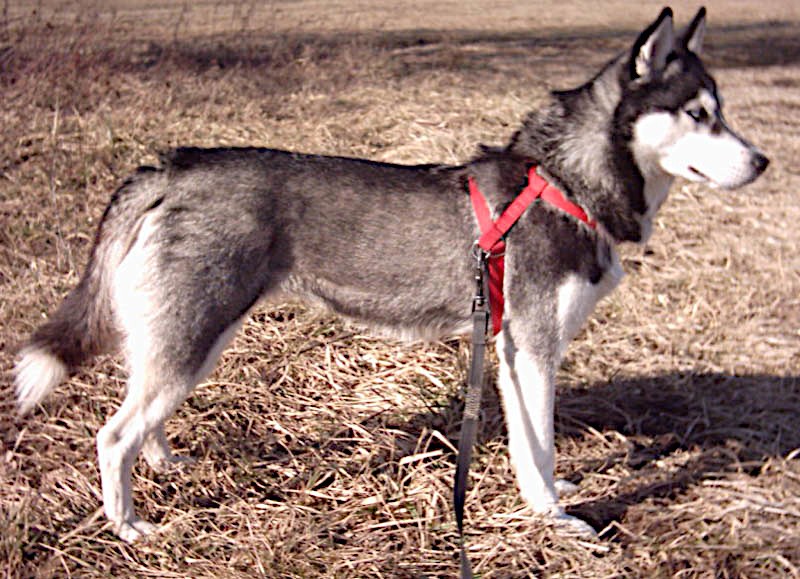

Do you have a better photo of a Siberian Husky in the American show ring? If you have a show photo you’d let us use, email it to [email protected] — tell us the dog’s name and the show, and it may be featured here. Please only send photos you took yourself or have the photographer’s permission to share, and tell us the photographer’s name.
1. Breed at a glance
Working Group; recognized by the AKC in April 1930
21–23½ in at the withers (dogs), 20–22 in (bitches); 45–60 lb (dogs), 35–50 lb (bitches)
Medium-length double coat; all colors from black to pure white
12–14 years (AKC)
Friendly and gentle, alert and outgoing; intelligent, tractable, eager
The Siberian Husky is a sled dog first and a companion second — but it is very good at both, provided the companion half of the household understands the sled-dog half. The standard describes a dog that is “quick and light on his feet and free and graceful in action,” with a gait that is “smooth and seemingly effortless.” The breed is smaller than the similar-looking Alaskan Malamute, lighter in bone, and built for speed and endurance over distance rather than heavy freighting. At its best, the standard says, the Husky shows “medium size, moderate bone, well balanced proportions, ease and freedom of movement, proper coat, pleasing head and ears, correct tail, good disposition.”
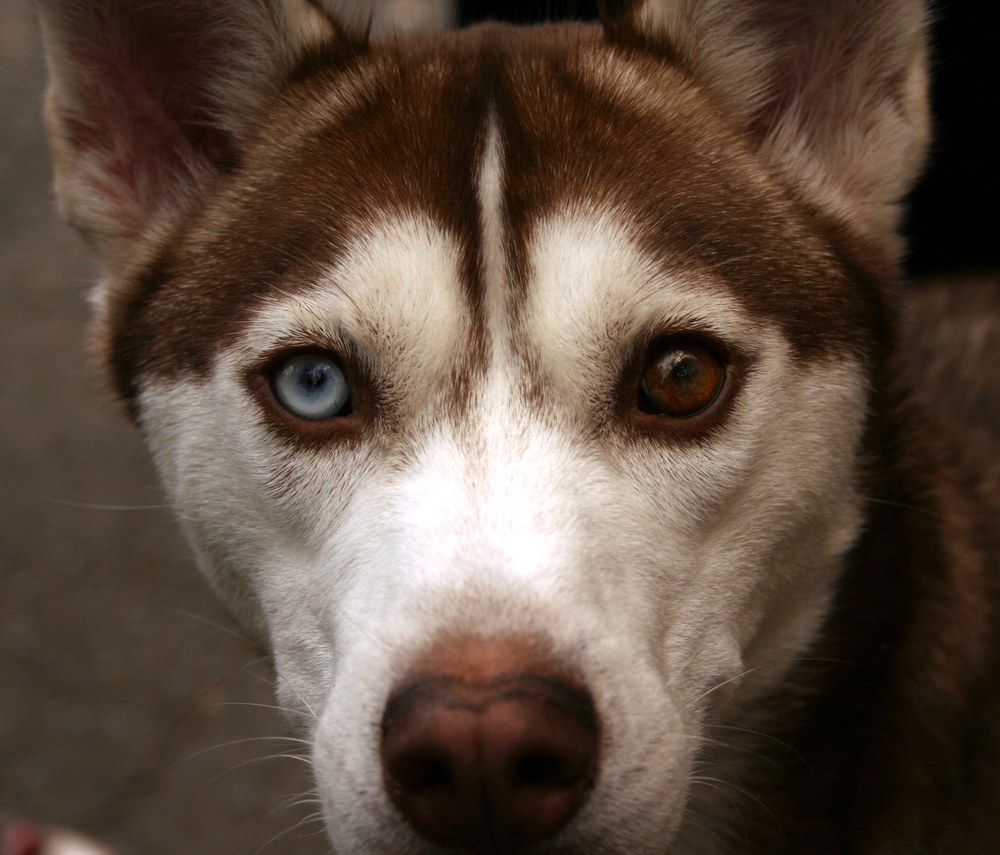
Two things surprise first-time owners: the eyes and the voice. The eyes may be brown or blue, one of each, or parti-colored — blue and brown in the same eye — and all of it is acceptable. The voice is usually a howl, not a bark, and Huskies are famous for talking back. (Sources: AKC, Official Standard for the Siberian Husky; AKC, Siberian Husky breed page.)
2. History
The Siberian Husky is one of the oldest working partnerships between people and dogs still visible in the show ring. The dogs were developed by the Chukchi people of northeastern Siberia, who kept them as far-ranging, low-energy-consuming sled dogs — animals that lived closely with their families, pulled sleds over long distances in brutal cold, and doubled as companions in the tent at night.
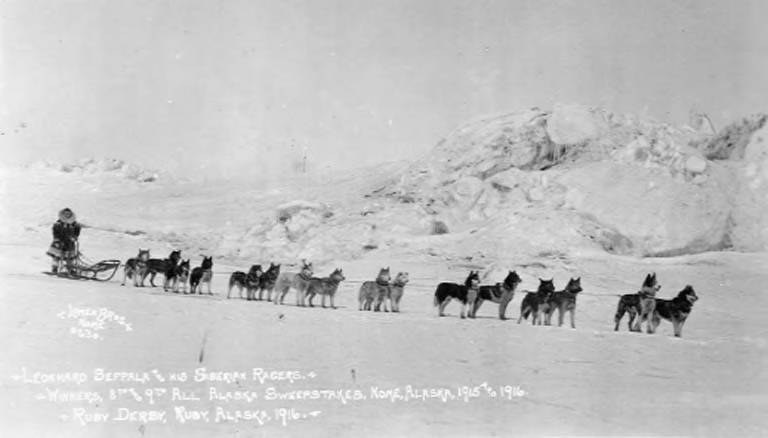

- 1908: the first team reaches Nome. The first Siberian team reached Nome, Alaska, in the autumn of 1908, when Russian fur trader William Goosak brought nine Chukchi dogs to work the gold fields. The following year, larger numbers arrived to race the All-Alaska Sweepstakes, a 408-mile race from Nome to Candle and back with a $10,000 first prize — and the small, fast Siberians immediately dominated it.
- 1915–1917: Seppala’s sweep. Norwegian-born musher Leonhard Seppala, who had inherited a team of Chukchi dogs, won the All-Alaska Sweepstakes three years running, in 1915, 1916, and 1917. His lead dog Togo became the most famous sled dog of his era — and the foundation of many modern Siberian pedigrees.
- 1925: the serum run to Nome. In January 1925, a diphtheria epidemic threatened Nome, and the only antitoxin was hundreds of miles away in Nenana. A relay of about 20 mushers and 150 dogs carried the serum roughly 674 miles in about five and a half days, through blizzard conditions. Seppala and Togo covered the longest and hardest leg; Gunnar Kaasen and his lead dog Balto ran the final leg into Nome. The run made the breed famous across America, and the Iditarod sled dog race commemorates it.
- 1926: the American tour. After the serum run, Seppala and 40 Siberian Huskies toured American cities from Nome to New York, racing and demonstrating the breed. Pioneer fanciers bought foundation stock from his kennel and from the last group of purebred Chukchi dogs brought out of Siberia in 1929.
- 1930: AKC recognition. The American Kennel Club recognized the Siberian Husky in April 1930 and placed it in the Working Group. The Siberian Husky Club of America was established in 1938 and received AKC recognition in 1946.
- 1980: the breed’s only Westminster Best in Show. Ch. Innisfree’s Sierra Cinnar, a red-and-white dog owned by Kathleen Kanzler and handled by Patricia Kanzler — still the youngest handler ever to win Best in Show at Westminster — took the top prize. He had already won 13 Best in Shows when a kennelmate bit off the top third of his show-side ear; judges passed him over for months until one looked past the injury, and he went on to win 17 more.
- Today: show, racing, and Seppala lines. A 2024 genomic study of the breed found four genetically distinct populations — show, pet, racing, and Seppala Siberian Sleddogs — a split that traces back to the different jobs the dogs were bred for. In the ring, the modern standard-bearer is GCHP Crystal Fountain Tanqueray at Snoebear (“Gin”), who won the SHCA national specialty Best of Breed in 2025 and again in 2026, and Best of Breed at Westminster in 2026.
The name itself is a piece of history: “Husky” comes from “Esky,” a version of Eskimo, the name settlers gave the Arctic peoples whose dogs these were. (Sources: AKC, Siberian Husky History; Wikipedia, Siberian Husky; Wikipedia, List of Best in Show winners of the Westminster Kennel Club Dog Show; Siberian Husky Club of America, Siberian Facts.)
3. The standard
The AKC standard for the Siberian Husky was approved October 9, 1990, and effective November 28, 1990. It opens with a working description, not a beauty description: “The Siberian Husky is a medium-sized working dog, quick and light on his feet and free and graceful in action. His well furred coat, erect ears, and brush tail suggest his Northern heritage.” The dog is “moderately compact and well furred,” and the standard’s summary names the qualities that matter most: “medium size, moderate bone, well balanced proportions, ease and freedom of movement, proper coat, pleasing head and ears, correct tail, good disposition.” The standard is explicit about what the breed is not: never so heavy or coarse as to suggest a freighting animal, nor so light and fragile as to suggest a sprint-racing animal.

- Size — and the only disqualification. Dogs 21 to 23½ inches at the withers, 45 to 60 pounds; bitches 20 to 22 inches, 35 to 50 pounds. Weight must be in proportion to height, and the body is slightly longer than the height. The standard’s only disqualification is height: dogs over 23½ inches and bitches over 22 inches.
- Head and eyes. The expression is “keen but friendly, interested and even mischievous.” Eyes are almond-shaped, moderately spaced, and set a trifle obliquely; they may be brown or blue, one of each, or parti-colored. Ears are medium-sized, triangular, close-fitting, set high, thick and well furred, strongly erect, with slightly rounded tips. The muzzle is medium in length and width, tapering to the nose; the nose is black in gray, tan, or black dogs, liver in copper dogs, and may be flesh-colored in pure white dogs. “Snow nose,” a pink-streaked nose in winter, is acceptable. A scissors bite is required; any other bite is a fault.
- Coat. A double coat of medium length, well furred, never so long as to obscure the dog’s clean-cut outline. The undercoat is soft and dense; the outer guard hairs are straight and smooth-lying. Trimming is allowed only for the whiskers and the fur between the toes and around the feet — trimming any other part of the coat is not to be condoned and is severely penalized. A long, rough, or shaggy coat, or one too harsh or too silky, is faulted.
- Color. All colors from black to pure white are allowed, with a variety of head markings and patterns. No color or marking is preferred over another.
- Tail. Well furred, fox-brush in shape, set on just below the topline, usually carried over the back in a graceful sickle curve when the dog is at attention; it never curls to either side or snaps flat against the back. A trailing tail is normal when the dog is at rest. A snapped or tightly curled tail, a highly plumed tail, or one set too low or too high is faulted.
- Gait. The Husky is gaited on a loose lead at a moderately fast trot, showing good reach in front and good drive behind. The gait is “smooth and seemingly effortless” — quick and light on the feet, with the topline firm and level. Short, prancing, choppy, lumbering, or rolling movement, crossing, and crabbing are all faulted.
- Temperament. “Friendly and gentle, but also alert and outgoing. He does not display the possessive qualities of the guard dog, nor is he overly suspicious of strangers or aggressive with other dogs. Some measure of reserve and dignity may be expected in the mature dog. Good disposition, intelligence, tractability, and an eager disposition make him an agreeable companion and willing worker.”
(Source: AKC, Official Standard for the Siberian Husky.)
4. Temperament
The standard’s temperament paragraph is the whole story in miniature: friendly and gentle, alert and outgoing, intelligent, tractable, and eager — with no guard-dog possessiveness and no suspicion of strangers. A Husky wants to be with people and with other dogs, and a mature dog may show some reserve and dignity, but shyness and aggression are not part of the breed.
- Social to a fault. Huskies were bred to live and work in teams and to sleep in the tent with their people. They bond hard, they want company, and they do not do well left alone in a yard all day. Separation anxiety and boredom are the usual reason a Husky becomes destructive.
- High energy, high independence. The breed is intelligent and willing, but it is also famously independent-minded — it was bred to make decisions on the trail, far ahead of the musher. Training works best as a partnership with clear rules and a lot of reward, not as a battle of wills. Recall is the weak spot: a Husky that sees something interesting will go and look at it.
- Voice. Huskies howl more than they bark, and many of them “talk” — a repertoire of yips, woo-woos, and grumbles aimed squarely at their owners. Neighbors should be warned, affectionately, in advance.
- With children and other dogs. The breed is generally good with children and usually good with other dogs, having been bred to work in a team. Small animals are a different matter: the prey drive is real, and cats and small pets need careful introductions and supervision.
- Escape artists. Digging under, chewing through, and jumping over fences are all documented Husky skills, and a six-foot fence is the usual recommendation. A Husky that can get out will get out, and it will run — which is why a secure yard and a reliable recall matter more for this breed than for most.
(Sources: AKC, Official Standard for the Siberian Husky; AKC, Siberian Husky breed page.)
5. Grooming
The double coat is the breed’s working equipment, and grooming is mostly about managing it. The coat is medium in length, with a soft, dense undercoat and straight guard hairs, and it sheds year-round — heavily twice a year, when the dog “blows” its undercoat in clumps over a few weeks.
- Brushing. Weekly brushing with a slicker or pin brush, daily during a coat blow. A bath as needed, and a good blow-dry after, helps move the loose undercoat out.
- Never shave or trim the coat. The standard severely penalizes trimming anywhere but the whiskers and the fur between the toes and around the feet, and for good reason: the double coat insulates against heat as well as cold, and a shaved coat can grow back patchy, coarse, or wrong. Trimming the feet and the fur between the pads is allowed and helps the dog grip.
- Nails, teeth, ears. Nails need regular trimming — Huskies are not heavy enough to wear them down on their own. Brush the teeth, and check the ears; the erect ears stay fairly clean, but any dog can get an infection.
- The fur budget. A Husky owner needs a good vacuum, a lint roller by the door, and a sense of humor. The fur gets everywhere, all year, and twice a year it gets everywhere in drifts.
(Sources: AKC, Official Standard for the Siberian Husky; AKC, Siberian Husky breed page.)
6. Health & testing
The Siberian Husky is a hardy breed — the Orthopedic Foundation for Animals ranks it 155th out of 160 breeds for hip dysplasia risk, with only about 2 percent of tested dogs showing dysplasia — but its eyes carry the main risk, and the parent club’s testing program is built around them. A 2024 UK study put the breed’s median lifespan at 11.9 years; the AKC lists 12 to 14 years.
- CHIC requirements (mandatory). The OFA Canine Health Information Center program for the Siberian Husky requires two tests: an ACVO eye examination by a board-certified veterinary ophthalmologist, and a hip dysplasia evaluation (OFA or PennHIP). A CHIC number means the required tests were done and the results published — it does not by itself mean the dog passed, so read the actual results on ofa.org.
- SHCA ethical breeding practices (effective June 2024). The parent club’s own addendum requires more: the eye exam from 12 months of age, repeated yearly or at least within a year of every breeding; both hips certified clear of hip dysplasia by OFA, PennHIP, or an equivalent recognized registry; and genetic testing for SPS1 and SHPN1 (Siberian Husky polyneuropathy) through the University of Minnesota, with results reported to OFA.
- Also recommended. DNA testing for X-linked progressive retinal atrophy (XLPRA1, caused by a mutation in the RPGR gene) and for hereditary cataracts, plus a thyroid panel — hypothyroidism is seen in the breed.
- What to watch for. Hereditary and juvenile cataracts, corneal dystrophy, progressive retinal atrophy, and glaucoma are the eye conditions that matter most; hip dysplasia is uncommon but possible; hypothyroidism, seizures, and congenital laryngeal paralysis are also documented in the breed. The eye exam matters because Husky eye disease can appear years after maturity — which is why the club requires the exam current within a year of every breeding.
Ask a breeder for the CHIC numbers of both parents and look them up yourself on ofa.org before you commit. (Sources: Siberian Husky Club of America, Addendum: Ethical Breeding Practices — Health and Genetics (effective June 2024); Siberian Husky Club of America, Health Testing — What to Know and How to Interpret the OFA Numbers; Embark, Genetic Health Testing for Siberian Huskies (OFA-CHIC requirements); Wikipedia, Siberian Husky.)
7. The annual Siberian Husky specialty dog show
A specialty is the breed’s All-Star show — its Super Bowl. Once a year, the best Siberian Huskys from across the country, and often from around the world, come together in one place.
The Siberian Husky Club of America’s national specialty: one national event each year, usually a multi-day week in October, with conformation, sweepstakes, obedience, rally, agility, Fast CAT, junior showmanship, and a Top 20 Gala, plus a Rescue Parade and a parade of previous national winners. The 2026 national: October 26–31 in Newark, Ohio, with 270 dogs and 287 entries in conformation on the national days. The 2027 national: not yet announced as of November 7, 2026.
The standard, in brief: a medium-sized working dog, 21 to 23½ inches at the shoulder for dogs and 20 to 22 for bitches, with a thick double coat of medium length, erect triangular ears, and a well-furred fox-brush tail usually carried over the back in a graceful sickle curve. All colors from black to pure white are allowed, and the eyes may be brown or blue, one of each, or parti-colored. The gait is smooth and seemingly effortless, and the temperament is friendly and gentle, alert and outgoing.
The 2026 National Specialty — Monday, October 26–Saturday, October 31, 2026, at the Cherry Valley Hotel, 2299 Cherry Valley Road SE, Newark, Ohio 43055, under the theme “Heart of Ohio.” The National Specialty Show with junior showmanship ran Thursday, October 29–Saturday, October 31, 2026: dog classes on Thursday, bitch classes on Friday, and Best of Breed, junior showmanship, Best of Bred By, veteran, puppy, and sled/dry land dog on Saturday. The week also held the Siberian Husky Club of Greater Cleveland specialty and the SHCA puppy sweepstakes on Tuesday, the veteran and sled dog and dry land sweepstakes and the pre-specialty on Wednesday, two rally trials, two obedience trials, agility, Fast CAT, a pack dog hike, the Top 20 Gala, temperament testing, and a Rescue Parade. Entries opened Thursday, August 13, 2026, and closed at noon on Wednesday, September 30, 2026. Event Chair: J. Charles Crabb. Event Secretary: Dawn Eisele, c/o Rau Dog Shows, Ltd. The national drew 270 dogs and 287 entries in conformation. AKC event 2026071012. (Sources: 2026 judging program (Siberian Husky Club of America, via Rau Dog Shows); AKC event search, event 2026071012; Siberian Husky Club of America, 2026 national infobook announcement (Facebook, June 22, 2026).)
National specialty judges: Ms. Donna Beckman — Best of Breed and intersex (Saturday, October 31, 2026; 115 Best of Breed entries). Jessica Breinholt — dog classes (Thursday, October 29, 2026; 53 entries). Ms. Kim Ramey-LeBlanc — bitch classes (Friday, October 30, 2026; 102 entries). Junior Showmanship judge: Joe T Caton (17 entries). Beginner puppy judge: Mrs. Tami Rose Bradford (11 entries, 4-to-6-month beginner puppy). Sweepstakes judges: Mrs. Karen Mammano (puppy sweepstakes, 37 entries; veteran sweepstakes, 31 entries) and Dominic DiBalsi (sled dog and dry land sweepstakes). Best Junior Handler was not confirmed in an official source as of November 7, 2026. (Sources: 2026 judging program (Siberian Husky Club of America, via Rau Dog Shows); AKC event search, event 2026071012.)
Results (2026 national). Best of Breed: GCHP Crystal Fountain Tanqueray at Snoebear (“Gin”), a dog handled by Tim Terella, owned by H Shimizu and T & M Terella, and bred by H Shimizu. Gin won the national Best of Breed for the second year in a row. Best of Opposite Sex, Best of Winners, Winners Dog, Winners Bitch, Best in Sweepstakes, and Best Junior Handler were not confirmed in an official source as of November 7, 2026. (Sources: Canine Chronicle, November 2026 specialty results (Siberian Husky Club of America National, October 31, 2026); Snoebear Siberians, Gin.)
The 2027 National Specialty had not been announced as of November 7, 2026. The AKC’s Upcoming National Specialties list carries no Siberian Husky Club of America entry, and no date, venue, or judge had been published by the club. Dates, venue, and judges will be added here when they are announced. (Source: AKC, Upcoming National Specialties.)
Past national specialties: 2025 · 2024
Siberian Husky Club of America — shca.org
8. Regional specialties through the year: smaller regional shows
The national is the anchor, but the breed’s year also runs through regional specialties — smaller regional shows, not the national — held around the country, including the regional specialties that run with the national. These are the 2026 regionals verified from club and AKC sources so far:
Regional Siberian Husky specialties verified for 2026, including the specialties that ran with the national in Newark, Ohio:
- Siberian Husky Club of Greater Cleveland Specialty — Tuesday, October 27, 2026, Newark, Ohio: at the Cherry Valley Hotel, opening national specialty week (AKC event 2026182005). The specialty drew 167 dogs and 175 entries. The judge was not confirmed in an official source as of November 7, 2026.
- Siberian Husky Club of America Pre-Specialty — Wednesday, October 28, 2026, Newark, Ohio: at the Cherry Valley Hotel (AKC event 2026071013). Judge: Mrs. Cindy Stansell. The specialty drew 170 dogs and 175 entries.
- SHCA Puppy Sweepstakes — Tuesday, October 27, 2026, Newark, Ohio: Judge: Mrs. Karen Mammano. 37 entries.
- SHCA Veteran Sweepstakes — Wednesday, October 28, 2026, Newark, Ohio: Judge: Mrs. Karen Mammano. 31 entries.
- SHCA Sled Dog & Dry Land Sweepstakes — Wednesday, October 28, 2026, Newark, Ohio: Judge: Dominic DiBalsi.
Past regional specialties: 2025
More regional specialties will be added here as their programs are verified — this section is built from show data, not guesswork. Browse upcoming show weekends →
9. Clubs
The parent club is the Siberian Husky Club of America, Inc. (SHCA), at shca.org — founded in 1938 and recognized by the AKC as the breed’s parent club in 1946, the club that runs the national specialty, publishes the breed’s health guidance, and stewards the standard in the United States. Its charitable arm, the SHCA Trust, funds Siberian rescue work nationwide.
Regional specialty clubs verified in club and AKC sources during this build:
- Siberian Husky Club of Greater Cleveland
- Lake Erie Allegheny Siberian Husky Club, Inc.
Regional clubs run the regional specialties listed in section 8 and are the best first contact for anyone looking for a breeder, a local event, or a rescue contact. (Sources: Siberian Husky Club of America; Siberian Husky Club of America, Officers and Directors.)
10. Rescue
Huskies come into rescue for ordinary reasons — a move, a divorce, an owner’s health, or, very often, an owner who underestimated the exercise and training a Husky needs. The breed’s rescue picture is unusual: the parent club’s charitable arm funds rescues rather than running one itself. Groups verified for this page:
- Siberian Husky Club of America Trust (SHCA Trust). The club’s charitable trust, at shcatrust.org/rescue.html. The Trust is not itself a rescue — it funds Siberian rescues, working with more than 35 approved rescue entities across the United States and providing emergency medical and intake grants for Huskies in rescue. Rescue Coordinator: Michelle Breinholt, [email protected].
- Adopt A Husky, Inc. A breed rescue serving Illinois and Minnesota, at adoptahusky.com ([email protected]).
- MUSH Rescue, Inc. Serving the greater Atlanta area in Georgia, at mushrescue.com ([email protected]).
- Siberian Husky Rescue/Referral of California. Contact Marilyn Lassagne, [email protected].
- Texas Husky Rescue, Inc. Serving Texas and surrounding states.
- Siberian Husky Assist Rescue. Covering shelters from Roanoke, Virginia, to Knoxville, Tennessee ([email protected]).
- Bay Area Siberian Husky Club (BASH) Rescue. In Campbell, California, at bayareasiberian.org.
Most Huskies in rescue are adolescents, 9 to 16 months old — the age when it becomes clear their owners have not trained them properly and cannot handle them anymore, as the club’s own adopting guide puts it. A rescued adult Husky is a known quantity for size, coat, and temperament, and the SHCA holds a Parade of Rescued Siberians at the national specialty every year — the 22nd parade, at the 2025 national in Erie, Pennsylvania, had 11 entries. (Sources: SHCA Trust, Rescue; AKC Rescue Network, S Breeds; Siberian Husky Club of America, Adopting a Siberian.)
11. Breeder vs. rescue: honest guidance
Both routes can end with a great dog. The honest difference is what you know going in — and with this breed, the energy question matters more than the source question.
- Choose a breeder if you want a puppy for showing, sled work, or a specific purpose, and you want the health testing, pedigree, and early socialization that come with a careful breeding program. Ask for the CHIC health results in section 6, meet the dam if you can, and be ready to wait — good breeders have waiting lists. Decide first whether you want a show-bred or a working-bred dog, because they live differently: show lines are bred to the standard’s outline, racing and Seppala lines to pull.
- Choose rescue if you want an adult dog whose temperament, size, and coat you can see before you commit, and you are comfortable with a dog that may need training help and patience. Rescue is also the right route if you want to give a home to a dog that needs one — most Huskies in rescue are adolescents whose first owners underestimated the breed.
- Either way, verify. Ask for health testing, ask what the dog’s lines are known for, and meet the dog before you commit. A breeder who will not show you health results and a rescue that will not let you meet the dog are both telling you something. And either way, be honest about the exercise: a Husky that does not get enough work will invent its own, usually involving your fence, your garden, and your neighbors’ patience.
12. Claim this page
This page was built from public sources — the AKC standard, the parent club’s own material, AKC event records, and the rescue groups’ sites — and it is a starting point, not the last word. If you are with the Siberian Husky Club of America or a regional club and something here is wrong or missing, you can claim this page and set it straight: email [email protected] and tell us what needs fixing. Corrections from the people who own the breed’s knowledge are always welcome.
Sources
- AKC, Siberian Husky breed page
- AKC, Official Standard for the Siberian Husky (approved October 9, 1990; effective November 28, 1990)
- AKC, Siberian Husky History
- Siberian Husky Club of America
- Siberian Husky Club of America, Officers and Directors (2025–2027 term)
- Siberian Husky Club of America, Addendum: Ethical Breeding Practices — Health and Genetics (effective June 2024)
- Siberian Husky Club of America, Health Testing — What to Know and How to Interpret the OFA Numbers
- Siberian Husky Club of America Trust, Rescue
- AKC Rescue Network, S Breeds
- Siberian Husky Club of America, Adopting a Siberian
- Wikipedia, Siberian Husky
- Wikipedia, List of Best in Show winners of the Westminster Kennel Club Dog Show
- Siberian Husky Club of America, Siberian Facts
- Embark, Genetic Health Testing for Siberian Huskies (OFA-CHIC requirements)
- Snoebear Siberians, Gin
- 2026 judging program (Siberian Husky Club of America, via Rau Dog Shows)
- AKC event search, event 2026071012 (2026 national)