
Breed profile · Non-Sporting Group · the smallest Japanese native breed
Shiba Inu
The Shiba Inu is the smallest of the six native Japanese breeds — a compact, well-muscled hunting dog with a foxlike face, pricked ears, and a tail curled over its back. Bred to work the dense undergrowth of Japan’s mountains, it is alert, agile, spirited, and famously independent: loyal and affectionate to its own people, reserved with strangers, and entirely its own dog. The AKC recognized the breed in 1992, and the National Shiba Club of America, founded in 1983, runs the national specialty every fall.
Help us improve it. This is one of ThePetAdvisor’s breed profiles, built from public sources with generous links to the people who actually own this breed’s knowledge. If something’s off or missing, the parent club can claim the page and set it straight — see the bottom of the page.
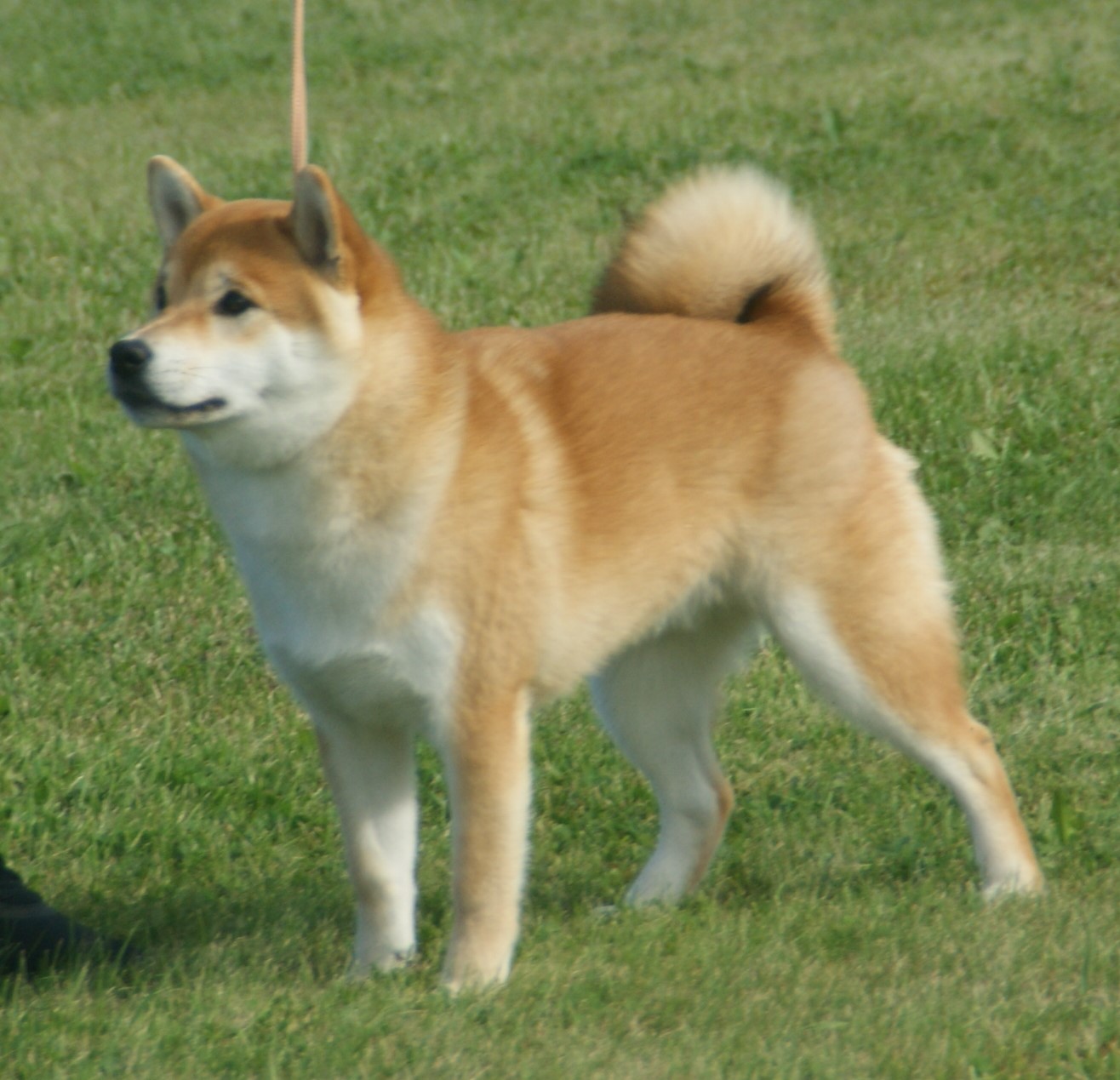

Do you have a better photo of a Shiba Inu in the American show ring? If you have a show photo you’d let us use, email it to [email protected] — tell us the dog’s name and the show, and it may be featured here. Please only send photos you took yourself or have the photographer’s permission to share, and tell us the photographer’s name.
1. Breed at a glance
Non-Sporting Group; AKC-recognized since 1992
Dogs 14½–16½ in, ~23 lb; bitches 13½–15½ in, ~17 lb
Double, stiff and straight; red, black and tan, or sesame, all with urajiro
13–16 years (AKC)
Spirited, bold, good-natured, independent, reserved with strangers
National Shiba Club of America, founded 1983
2. History: the brushwood dog of Japan
The Shiba is an ancient dog of Japan — its name is usually read as “brushwood dog,” for the dense undergrowth of the mountains where it hunted by sight and scent, working birds and small game and even wild boar. It is the smallest of the six native Japanese breeds, and one of the oldest dog types in the world: a spitz dog shaped by Japan’s mountains long before written breeding records.
The breed nearly vanished in the twentieth century. The Nihon Ken Hozonkai (NIPPO), the association for the preservation of the Japanese dog, was founded in 1928 to save the native breeds; the first Nippo standard for the Shiba was published in 1934, and in 1936 the Shiba was designated a Natural Monument of Japan. World War II and a distemper outbreak afterward cut the population to a handful of dogs, and the modern Shiba descends from the survivors of three bloodlines brought together in the rebuilding.
The first Shiba known in the United States arrived in 1954, brought home by an American military family returning from Japan, and the first American-born litter was whelped in 1979. Fanciers organized through the 1980s, and the National Shiba Club of America was founded in 1983 to pursue AKC recognition. The American Kennel Club granted full recognition in 1992 — the breed is the AKC’s 136th — and placed the Shiba in the Non-Sporting Group, where it has remained since. Today the Shiba is the most popular companion dog in Japan, and one of the most recognizable breeds in America.
3. The standard: small, compact, and foxlike
The AKC standard was approved on February 7, 1997, and effective March 31, 1997. It opens with the general appearance: “The Shiba is the smallest of the Japanese native breeds of dog and was originally developed for hunting by sight and scent in the dense undergrowth of Japan’s mountainous areas. Alert and agile with keen senses, he is also an excellent watchdog and companion. His frame is compact with well-developed muscles.” Size is dogs 14½ to 16½ inches at the withers, bitches 13½ to 15½ inches, with average weights of about 23 pounds for males and 17 for females at the preferred size. Dogs outside the height range are disqualified, as is an overshot or undershot bite.
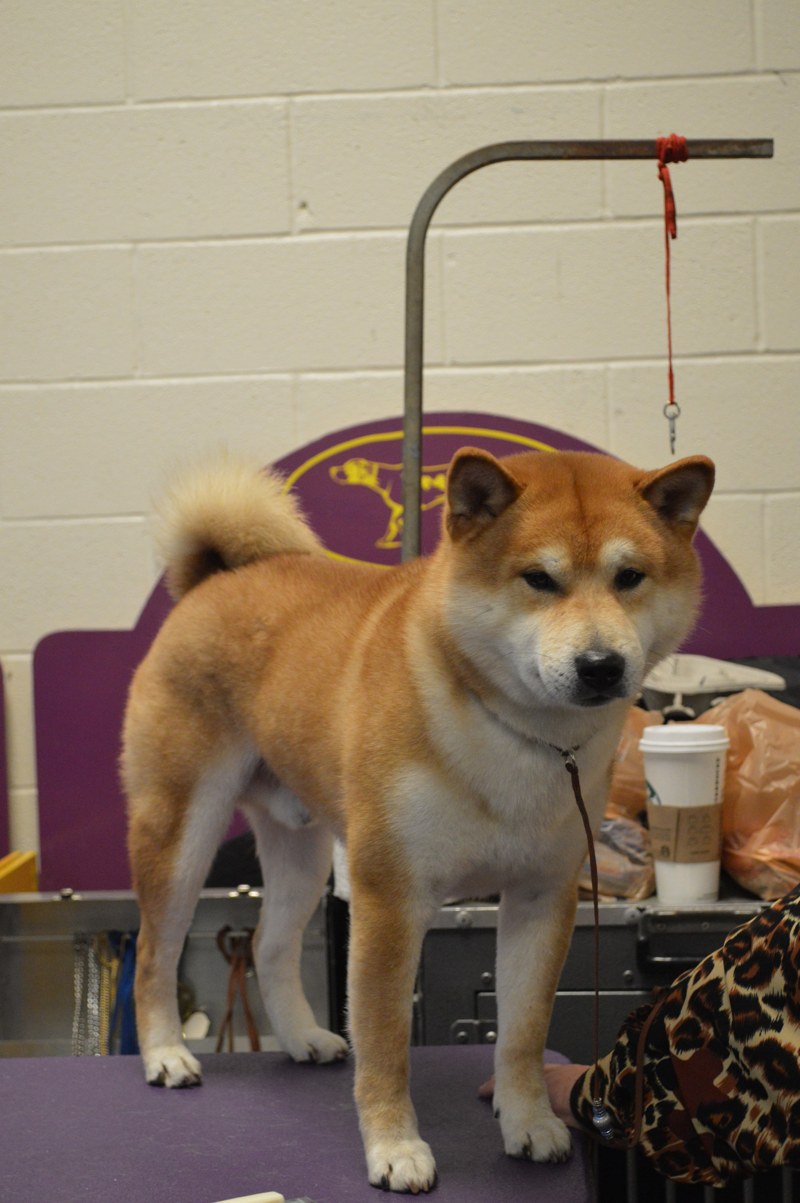

Head. The expression is good-natured, with a strong and confident gaze. The eyes are somewhat triangular, deep set, and slant upward toward the outside base of the ear; the iris is dark brown and the eye rims are black. The ears are triangular, firmly pricked and small but in proportion to head and body size, set well apart and tilting directly forward. The muzzle is firm, full, and round, about 40 percent of the total head length, with a straight bridge, tight black lips, and a black nose. The bite is scissors; five or more missing teeth is a very serious fault.
Body, coat, color, and gait. The neck is thick, sturdy, and of moderate length; the topline is straight and level to the base of the tail. The tail is thick and powerful, carried over the back in a sickle or curled position — a loose single curl or sickle pointing vigorously toward the neck and nearly parallel to the back is preferred. The coat is double, the outer coat stiff and straight, the undercoat soft and thick, and the standard says it is preferred that the Shiba be presented in a natural state: trimming must be severely penalized, and a long or woolly coat is a serious fault. Color is red, black and tan, or sesame (black-tipped hairs on a rich red background), all with urajiro — the cream-to-white markings on the sides of the muzzle, cheeks, inside the ears, underjaw and throat, inside the legs, abdomen, around the vent, and the underside of the tail. Cream, white pinto, or any other color or marking not specified is a very serious fault. Movement is nimble, light, and elastic, and in the show ring the Shiba is gaited on a loose lead at a brisk trot. In temperament the standard’s sentence is the whole pitch: “A spirited boldness, a good nature, and an unaffected forthrightness, which together yield dignity and natural beauty.”
4. Temperament: spirited, bold, and independent
The standard’s temperament sentence is the whole pitch: spirited boldness, a good nature, and an unaffected forthrightness. Shibas are loyal and affectionate to those who earn their respect, and reserved toward strangers — not effusive, not fawning, and not a dog that performs for people it does not know. They are clean and quiet in the house, and famously self-possessed: a Shiba will sit with you, not on you, and make its own decisions about when affection is in order.
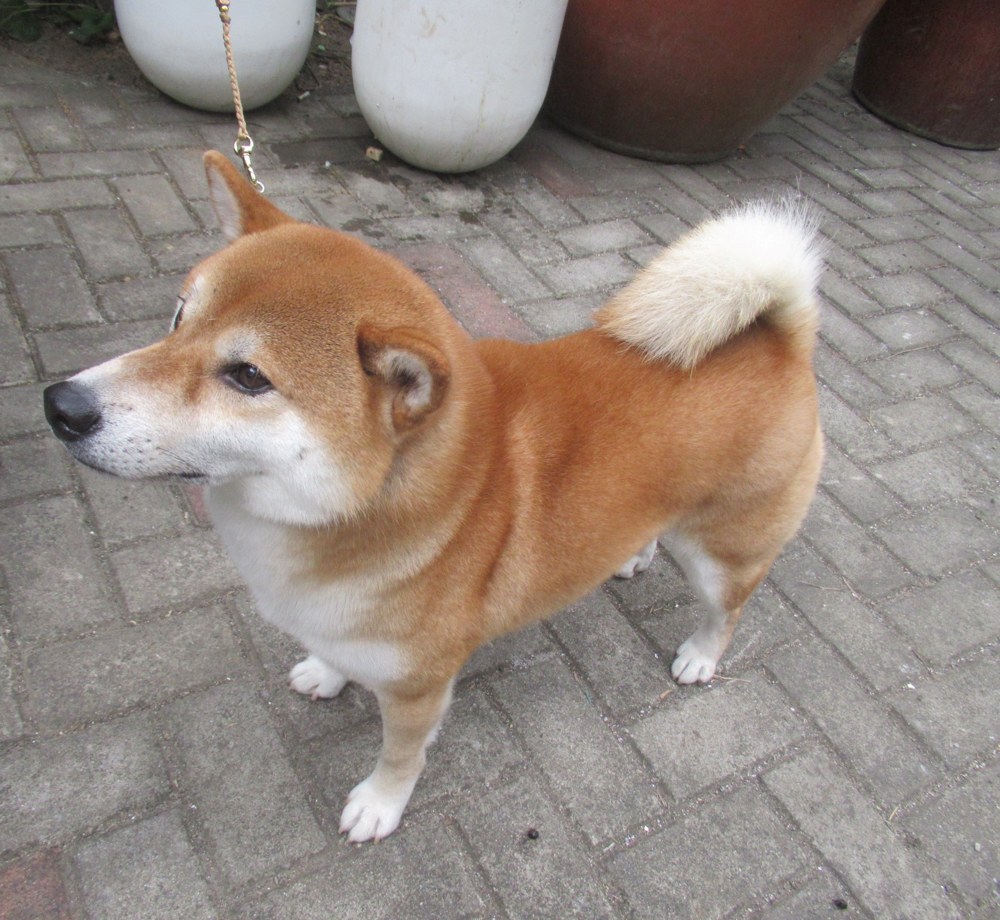

That independence is the breed’s charm and its challenge in equal measure. Shibas are intelligent and learn fast, but they were bred to think for themselves a long way from the hunter, so training works best with consistency, patience, and reward — not with force, which a Shiba will simply refuse. Early, thorough socialization is essential: a Shiba that meets a wide range of people, dogs, and situations as a puppy grows into the confident, discriminating adult the standard describes, while one that does not can grow suspicious. They can be aggressive toward other dogs, and the standard is blunt about it: the Shiba is always under the control of its handler.
In the house, expect a dog that wants to be where you are and makes its feelings known quietly rather than noisily — though a Shiba that objects to something will let you know, loudly, in the famous “Shiba scream.” They are generally good with children in the family, best with older children who can handle an independent dog, and they are escape artists of the first order: a Shiba needs a securely fenced yard and an owner who checks the gate. Give them a job, a long walk, and a place beside their people, and they give back a loyalty that is hard to match — on their own terms.
5. Grooming and everyday care
The double coat is low-maintenance most of the year and emphatic twice a year: a weekly brushing with a slicker or undercoat rake keeps the steady shedding in check, and during the spring and fall coat blows, a bath and a good blow-dry help move the undercoat out. Trimming the coat is penalized in the show ring, and there is no reason to trim a pet Shiba either — the coat is meant to stand off the body as it grows. The real grooming jobs are the nails, which need regular trimming, the ears, which should be checked and cleaned, and the teeth, which should be brushed over a 13- to 16-year life.
Exercise is moderate but not optional. This is an athletic little hunting dog that needs daily walks and play, plus training and mental work — a bored Shiba will find its own entertainment, usually at your furniture’s or your garden’s expense. A securely fenced yard is essential: the prey drive is strong, and a Shiba that spots something to chase will go, and will not necessarily come back when called. Off-leash freedom is earned slowly, if at all, and most Shiba owners walk on lead for life.
Feeding is straightforward: a good-quality food, measured meals, and a lean weight. Extra weight makes the joints work harder and the breathing worse, and a Shiba that is allowed to get fat is a Shiba heading for the vet. Because the breed is small and the coat is thick, watch the weight under the fur — you should be able to feel the ribs without pressing hard.
6. Health: the tests that matter
The National Shiba Club of America takes part in the Canine Health Information Center (CHIC) program run by the Orthopedic Foundation for Animals, and three tests are required for a CHIC number: a hip evaluation (OFA or PennHIP), an eye examination by a board-certified veterinary ophthalmologist (OFA Companion Animal Eye Registry, repeated at least every two years), and a patellar luxation evaluation (OFA). A CHIC number means the tests were done and published by the OFA — it does not mean the dog passed them.
The eye is the breed’s main health story. Shibas are prone to glaucoma, including primary angle-closure glaucoma, and responsible breeders screen with gonioscopy to assess the drainage angle of the eye, alongside the regular CAER examination that also watches for cataracts and progressive retinal atrophy. Other issues to watch are hip dysplasia and patellar luxation — the two orthopedic tests in the CHIC panel — and GM1 gangliosidosis, a fatal inherited neurological disease for which a DNA test is available and which breeders in the United Kingdom screen for routinely. Allergies, especially skin allergies, are also common in the breed. The AKC lists the breed’s lifespan as 13 to 16 years. The breed is generally hardy, and the testing above is how responsible breeders keep it that way.
7. The annual Shiba Inu specialty dog show
A specialty is the breed’s All-Star show — its Super Bowl. Once a year, the best Shiba Inus from across the country, and often from around the world, come together in one place.
The National Shiba Club of America’s national specialty: one national event each year, usually a multi-day weekend in the fall, with the Top Twenty Invitational, sweepstakes, junior showmanship, and stud dog and brood bitch classes alongside the conformation show. The 2026 national: October 22–25 in Colorado Springs, Colorado. The 2027 national: not yet announced.
The standard, in brief: the smallest of the Japanese native breeds, a compact, well-muscled dog 14½ to 16½ inches at the shoulder for dogs and 13½ to 15½ for bitches, with a stiff, straight double coat in red, black and tan, or sesame — all with the cream-to-white urajiro markings — and the tail carried over the back in a sickle or curl. In temperament it is spirited and bold, good-natured, independent, and reserved toward strangers.
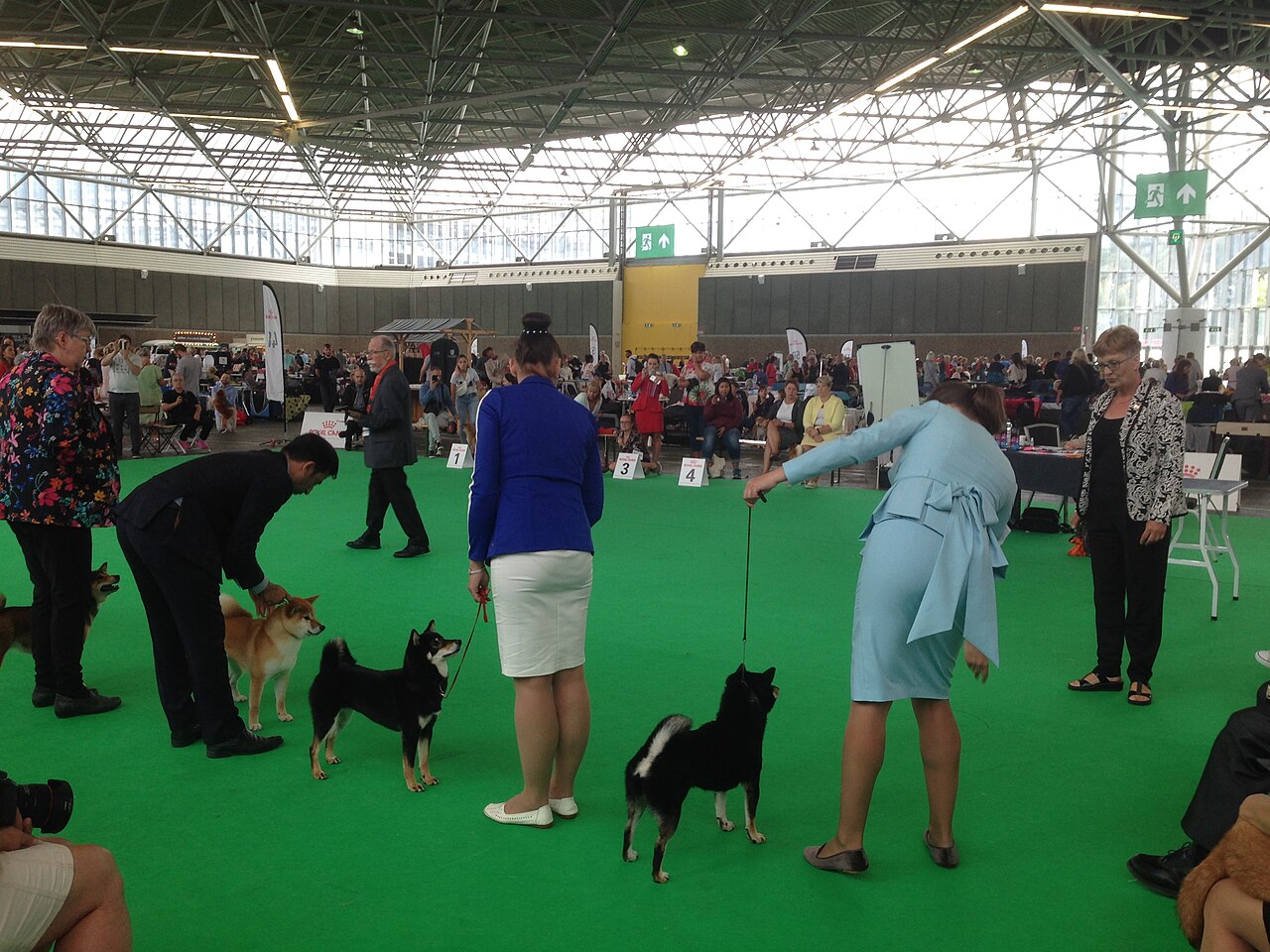
The 2026 National Specialty — Thursday, October 22–Sunday, October 25, 2026, at the Norris Penrose Event Center, 1045 Lower Gold Camp Road, Colorado Springs, Colorado 80905, held with the Colorado Springs Kennel Club cluster. The National Shiba Club of America ran four Shiba events across the weekend: an independent Parent Specialty on Thursday, October 22, a designated specialty on Friday, October 23, a designated specialty with sweepstakes on Saturday, October 24, and a designated specialty on Sunday, October 25. Entries closed at noon Central Time on Wednesday, October 7, 2026. Event Chair: Lissa Shaw. Superintendent: Foy Trent Dog Shows.
The week ran the full Shiba program: the Top Twenty Invitational, puppy and veteran sweepstakes, stud dog and brood bitch classes, brace, junior showmanship, and the 4–6 Month Beginner Puppy competition alongside the conformation shows, with the club’s awards banquet during the weekend.
Results (2026 national). Winners from the 2026 national specialty had not been published in an official source as of November 2026 and will be added here when they are.
The dates for the annual 2027 Shiba Inu specialty dog show had not been announced as of November 2026. The AKC’s Upcoming National Specialties list, which runs through October 2027, carries no National Shiba Club of America entry. This page will be updated when the club announces the 2027 national.
Past national specialties: 2025 · 2024
National Shiba Club of America — shibas.org
8. Regional specialties through the year: smaller regional shows
The national is the anchor, but the breed’s year also runs through regional specialties — smaller regional shows, not the national — held around the country, including the regional specialties that run with the national. These are the 2026 regionals verified from club and AKC sources.
Regional Shiba Inu specialties verified for 2026:
- National Shiba Club of America Parent Specialty — Friday, October 9, 2026, Lebanon, Tennessee: Wilson County Fairgrounds, 945 East Baddour Parkway, held with the Harvest Cluster. Judge: Mrs. B Downey. 40 dogs and 50 entries. (AKC event 2026237601.)
- Ohio River Basin Shiba Inu Fanciers Specialty — Friday, October 9, 2026, Lebanon, Tennessee: Wilson County Fairgrounds, held with the Harvest Cluster. (AKC event 2026780001.)
- National Shiba Club of America Puppy Specialty — Friday, December 11, 2026, Orlando, Florida: Orange County Convention Center, held with the AKC National Championship week. (AKC event 2026237607.)
Other 2026 regional specialties had not been verified from club or AKC sources as of November 7, 2026.
More regional specialties will be added here as their programs are verified — this section is built from show data, not guesswork. Browse upcoming show weekends →
9. Clubs
The National Shiba Club of America, Inc. (NSCA), founded in 1983, is the AKC parent club for the breed in the United States, and was granted parent club status when the AKC recognized the breed in 1992. It maintains the official standard, promotes responsible breeding through its code of ethics, coordinates breed-specific health research, runs the national specialty, and supports rescue. The club’s officers for 2026 are President Letty Hughes, Vice-President Lisa Sakashita, Recording Secretary Corina Tadros, Corresponding Secretary Lori Pendergast, and Treasurer Jeri Burnside.
Regional clubs run the regional specialties that fill the breed’s year — the Ohio River Basin Shiba Inu Fanciers and the Shiba Inu Fanciers of Southern California among them. The club also runs the Top Twenty Invitational, held on the day before the breed judging at the national specialty, which showcases the dogs that excelled in conformation competition the previous year.
10. Rescue
The main breed-specific rescue is the Shiba Inu Rescue Association (SIRA), a volunteer 501(c)(3) that fosters abandoned, neglected, and abused Shibas in homes across the Midwest — Illinois, Indiana, Ohio, Iowa, Michigan, Minnesota, Nebraska, Kansas, Missouri, North Dakota, South Dakota, Arkansas, Kentucky, Tennessee, Oklahoma, and Wisconsin. There is no shelter building: dogs live with foster families for six to eight weeks on average while their medical and behavioral needs are addressed. Contact: savingshibas.com. The AKC Rescue Network also lists Shiba rescue contacts, and the parent club’s site points buyers toward rescue as well as breeders.
Expect an application, two non-related references, a home visit with every family member present, and a 24-hour waiting period before the dog goes home — SIRA is thorough, and adopters must be at least 21. A rescue Shiba is usually an adolescent or adult whose personality is already known, which is a real advantage with this breed: you will know how it is with children, with other dogs, and with strangers before you commit. Ask about hips, knees, eyes, and any history of escape artistry before you commit, and budget for the vet care an older or surrendered dog may need.
11. Breeder vs. rescue: honest guidance
Either route starts with the same question: has this dog’s health been tested? From a breeder, ask for the CHIC numbers of both parents — the hip evaluation, the eye examination, and the patellar luxation evaluation — and check them on the OFA database yourself, by the parents’ registered names. Ask about glaucoma screening and GM1 gangliosidosis testing, and ask what health issues the breeder sees in their stock: a responsible breeder tests, and will talk about the breed’s faults as readily as its virtues. Meet at least the dam, and be honest with yourself about the independence: this is a dog that will test boundaries, slip a gate, and decide for itself whether to come when called.
From rescue, expect an adolescent or adult dog whose personality is already known, placed by a group that has vetted the dog and will tell you what it is actually like in a home. Budget for the same things either way: joint and knee care, eye care, and a securely fenced yard. Whichever route you take, the dog that fits is a clean, quiet, loyal companion that wants a place beside its people — on its own terms, and with a sense of humor about yours.
12. Claim this page
This page was built from public sources — the AKC standard, the parent club’s own material, AKC event records, and the rescue group’s site — and it is a starting point, not the last word. If you are with the National Shiba Club of America or a regional club and something here is wrong or missing, you can claim this page and set it straight: email [email protected] and tell us what needs fixing. Corrections from the people who own the breed are how this page gets better.
Sources
- AKC, Shiba Inu
- AKC, Official Standard of the Shiba Inu (approved February 7, 1997; effective March 31, 1997)
- AKC, Shiba Inu History: Where this Japanese Breed Originated
- AKC, Non-Sporting Group Health Testing Requirements (Shiba Inu: patella, hip, ophthalmologist)
- National Shiba Club of America
- National Shiba Club of America, 2026 National Specialty
- 2026 Colorado Springs premium list (Foy Trent)
- AKC event search, NSCA Parent Specialty, October 22, 2026 (event 2026237609)
- AKC event search, NSCA designated specialty with sweepstakes, October 24, 2026 (event 2026237605)
- AKC event search, NSCA Parent Specialty, October 9, 2026, Lebanon, Tennessee (event 2026237601)
- AKC, Upcoming National Specialties list
- AKC Gazette, January 2025 (2024 NSCA national specialty report)
- National Shiba Club of America, 2025 National Specialty sponsorships (Lake Perris, California)
- Shiba Inu Rescue Association
- The Japanese Shiba Inu Club of Great Britain, Health (glaucoma, GM1/GM2 gangliosidosis)
- Wikimedia Commons, Shiba Inu, red, male (Canarian, CC BY-SA 4.0)
- Wikimedia Commons, GCH Lee-Fen’s An Everlasting Love (Pets Adviser, CC BY 2.0)
- Wikimedia Commons, Shiba Inu Philippine Circuit Show Champion (Valenzuela400, CC BY-SA 4.0)
- Wikimedia Commons, World Dog Show, Amsterdam, 2018 (CC0)
