
Breed profile · Non-Sporting Group · the little captain
Schipperke
The Schipperke — Belgium’s ‘little captain’ — is a small, thickset, cobby, black, tailless dog with a foxlike face: curious, mischievous, and an excellent and faithful little watchdog. The AKC recognized the breed in 1904, in the Non-Sporting Group. Its year turns on the annual Schipperke specialty dog show — the 2026 national was held March 19–20, 2026, in Louisville, Kentucky, and the 2027 national is set for April 21–22, 2027, in Topeka, Kansas.
Help us improve it. This is one of ThePetAdvisor’s breed profiles, built from public sources with generous links to the people who actually own this breed’s knowledge. If something’s off or missing, the parent club can claim the page and set it straight — see the bottom of the page.
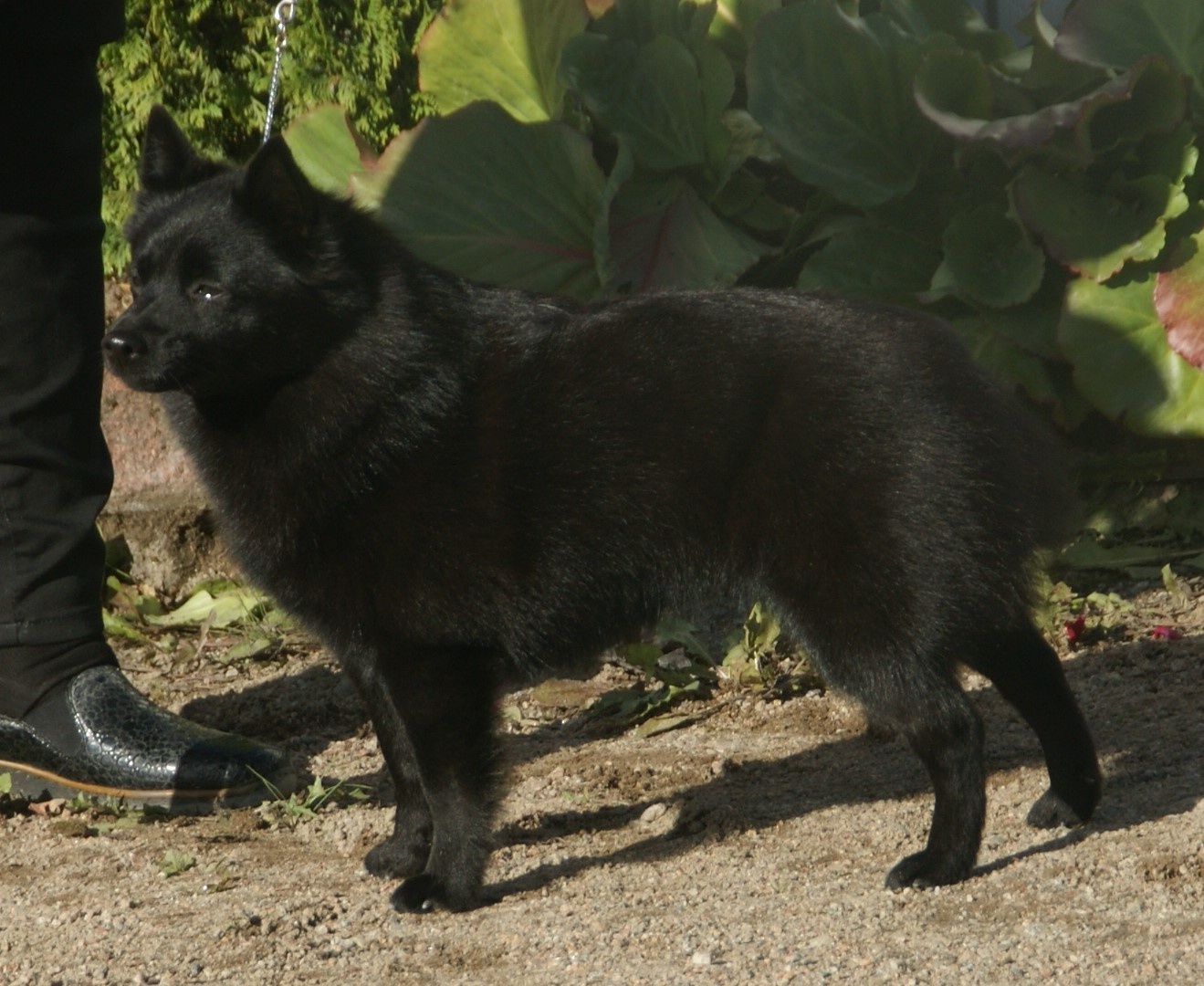

Do you have a better photo of a Schipperke in the American show ring? If you have a show photo you’d let us use, email it to [email protected] — tell us the dog’s name and the show, and it may be featured here. Please only send photos you took yourself or have the photographer’s permission to share, and tell us the photographer’s name.
1. Breed at a glance
- Group: Non-Sporting. Full AKC recognition in 1904.
- Size: males 11 to 13 inches at the withers, bitches 10 to 12 inches. The AKC lists 10 to 16 pounds and a life expectancy of 12 to 14 years.
- Coat: abundant, straight, and slightly harsh to the touch, over a dense, soft undercoat — in several distinct lengths: short on the face, ears, forelegs, and hocks; medium on the body; longer in the ruff, cape, jabot, and culottes.
- Color: black, and only black — the outercoat must be black, and any color other than a natural black is a disqualification.
- Ears: small, triangular, placed high on the head, and very erect when at attention. A drop ear or ears is a disqualification.
- Tail: docked. The croup is broad and well-rounded, and no tail is visually discernible.
- Temperament: curious, interested in everything around him, and an excellent and faithful little watchdog — reserved with strangers, ready to protect family and property, confident and independent.
- Name: Schipperke is Flemish for “little captain” — the breed worked as watchdog and ratter on the canal boats of the Low Countries.
2. History
The Schipperke was made in Flanders, the Dutch-speaking north of Belgium, from the Leauvenaar — the black sheepdog of the Low Countries, now extinct. The little black dogs worked the canal boats that plied the waterways between Brussels and Antwerp, standing watch and hunting rats, and their Flemish name says what they were: Schipperke means “little captain.” The breed was first shown in Belgium in the 1880s, the Royal Schipperke Club of Belgium was founded in 1888, and the first breed standard was written in 1889. The dogs’ rise to fashion came when Queen Marie Henriette of Belgium saw one at the Brussels show in 1885 and took the working breed as a personal pet.
The first Schipperke reached the United States in 1888, and the American Kennel Club recognized the breed in 1904, in the Non-Sporting Group. An American specialty club formed in 1905 but died out during World War I, and it was not until 1929 that the present Schipperke Club of America was founded. The breed’s modern show-ring landmark is GCHG CH Delamer Summer Sand Elle, who took second in the Non-Sporting Group at the Westminster Kennel Club Dog Show in February 2026.
The Schipperke Club of America is the AKC parent club for the breed in the United States.
3. The standard and why it's written that way
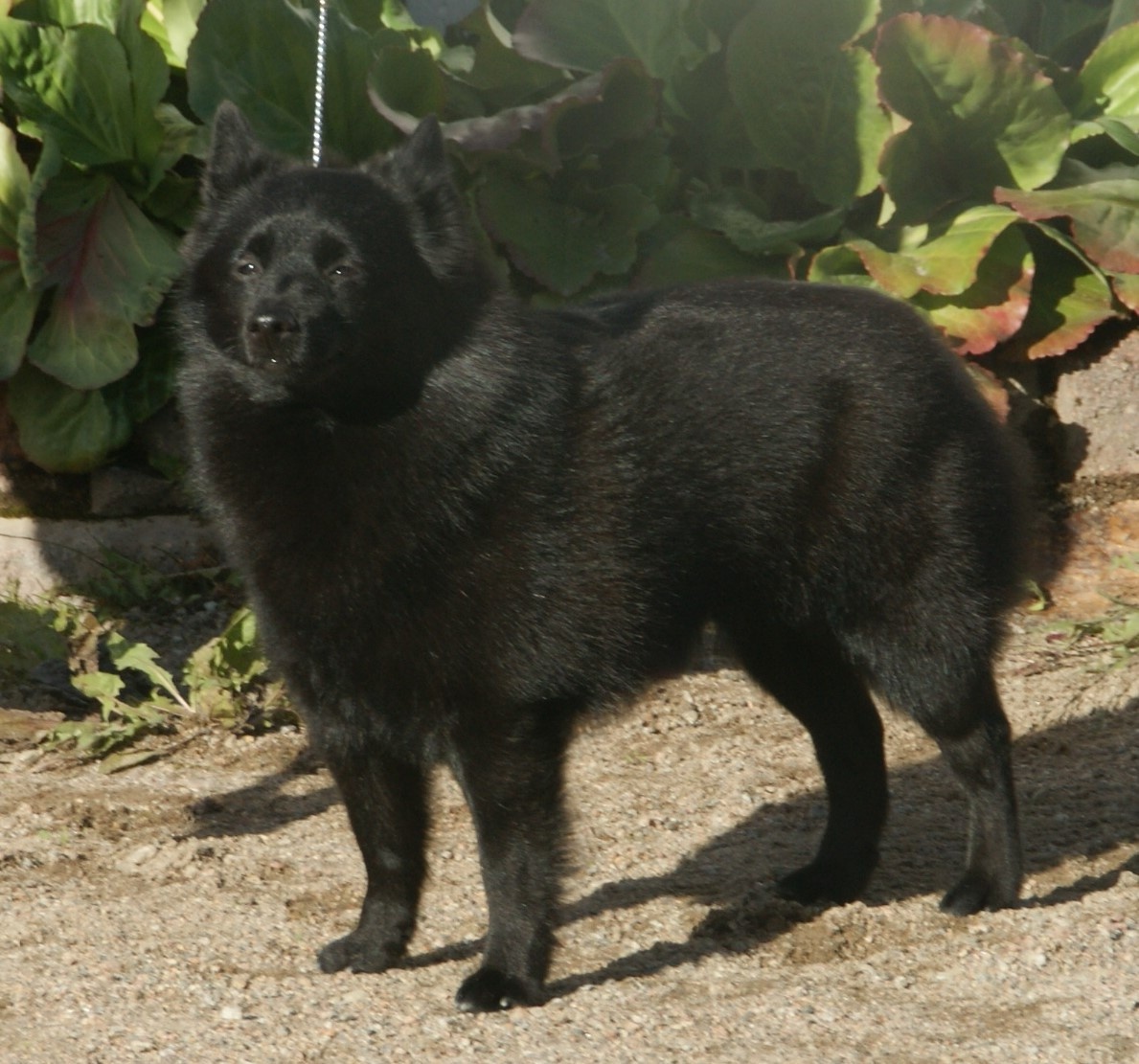

The standard is two pages, and nearly all of it serves one idea: a small, thickset, cobby, black, tailless dog with a foxlike face, whose coat grows in several distinct lengths that make a silhouette all its own.
- General appearance. “An agile, active watchdog and hunter of vermin. In appearance he is a small, thickset, cobby, black, tailless dog, with a fox-like face. The dog is square in profile and possesses a distinctive coat, which includes a stand-out ruff, cape and culottes. All of these create a unique silhouette, appearing to slope from shoulders to croup.” Males are decidedly masculine without coarseness; bitches decidedly feminine without overrefinement.
- Size, proportion, substance. The suggested height at the highest point of the withers is 11 to 13 inches for males and 10 to 12 inches for bitches, and quality should always take precedence over size. Square in profile; thickset — the dog should feel heavy, with plenty of body under the coat.
- Head. Expression questioning, mischievous, impudent, and alert, but never mean or wild. The skull is of medium width, narrowing toward the muzzle, forming a wedge from the back of the skull to the tip of the nose; the stop is definite but not prominent. The ideal eyes are small, oval rather than round, dark brown, and placed forward on the head. The ears are small, triangular, placed high, and very erect when at attention — a drop ear or ears is a disqualification. The nose is small and black. The bite must be scissors or level; any deviation is to be severely penalized.
- Neck, topline, body. Neck of moderate length, slightly arched, in balance with the rest of the dog. The topline is level or sloping slightly from the withers to the croup, and the stand-out ruff adds to the slope, making the dog seem slightly higher at the shoulders than at the rump. The chest is broad and deep, reaching to the elbows; the loin is short, muscular, and moderately drawn up. The croup is broad and well-rounded with the tail docked: no tail is visually discernible.
- Coat. The adult coat is highly characteristic and must include several distinct lengths growing naturally in a specific pattern: short on the face, ears, front of the forelegs, and hocks; medium on the body; longer in the ruff, cape, jabot, and culottes. The ruff begins behind the ears and extends completely around the neck; the cape forms an additional distinct layer extending beyond the ruff; the jabot extends across the chest and down between the front legs; the coat on the rear of the thighs forms culottes, as long as the ruff. Lack of differentiation in coat lengths should be heavily penalized, as it is an essential breed characteristic. Texture: abundant, straight, and slightly harsh, with a dense, soft undercoat that is very dense around the neck, making the ruff stand out. Silky coats, body coats over three inches in length, and very short harsh coats are equally incorrect. Trimming: as the Schipperke is a natural breed, only trimming of the whiskers and the hair between the pads of the feet is optional — any other trimming must not be done.
- Color. The outercoat must be black. Any color other than a natural black is a disqualification. The undercoat may be slightly lighter, and during shedding the coat might take on a transitory reddish cast, penalized to the degree it detracts from the overall black appearance. Graying due to age (seven years or older) or occasional white hairs should not be penalized.
- Gait. A smooth, well coordinated, graceful trot — basically double tracking at a moderate speed — with a tendency to gradually converge toward the center of balance beneath the dog as speed increases. Front and rear must be in perfect balance, with good reach in front and drive in the rear, and the topline remains level or slightly sloping downward from the shoulders to the rump.
- Temperament. Curious, interested in everything around him, and an excellent and faithful little watchdog. Reserved with strangers and ready to protect his family and property if necessary. Confident and independent, reflecting the breed’s original purpose as watchdog and hunter of vermin.
Disqualifications: a drop ear or ears; any color other than a natural black. The Official Standard of the Schipperke was approved November 13, 1990, and effective January 1, 1991.
4. Temperament & living with one
A Schipperke is a small dog with a large personality and no off switch for curiosity. The standard’s words — curious, interested in everything around him — are the whole of living with one: this is a dog that investigates, patrols, and reports. Indoors it is busy and watchful, happiest in the middle of whatever its people are doing; left alone and bored, it will find its own entertainment, and its own entertainment is rarely what the owner had in mind.
Outdoors, remember what the dog was built for. A Schipperke is a watchdog and a hunter of vermin, confident and independent, and it needs work for its mind as much as its legs: training, rally, obedience, agility, scent work, and a yard to patrol. The breed is reserved with strangers, so early and steady socialization matters — a Schipperke that meets the world young grows into a confident adult instead of a suspicious one. And the watchdog barking is real: the breed announces, and an owner who wants quiet should look elsewhere.
With its people, the Schipperke is faithful and devoted, and it is a long-lived companion — twelve to fourteen years is the AKC’s figure, and many live into their mid-teens. That devotion cuts both ways: this is not a kennel dog or a backyard ornament, but a house dog that wants to be where its people are.
5. Grooming
Grooming a Schipperke is straightforward, and the standard itself sets the limits: this is a natural breed, and no trimming is done beyond the whiskers and the hair between the pads.
- Coat: a weekly brushing through the double coat, and more during the seasonal shed, when the coat blows heavily. No clipping, no thinning, no shaping — the coat’s several lengths grow naturally and must not be sculpted.
- Bathing: an occasional bath. The harsh outer coat sheds dirt well, and over-bathing softens the correct texture.
- Nails: regular trims. The feet are small, round, and tight, with short, strong, black nails; dewclaws are generally removed.
- Ears and teeth: check the small erect ears and brush the teeth as part of the weekly routine.
- Shedding: expect a reddish cast to the black coat while shedding — it is transitory, and the standard allows for it.
6. Health testing
Responsible Schipperke breeders health-test to the OFA CHIC protocol for the breed, and the Schipperke Club of America recommends the tests be completed before any dog is bred, or by two years of age, whichever comes first:
- Eye examination by a boarded ACVO ophthalmologist, with results in the OFA Eye Certification Registry — before breeding, after seven years of age, or whenever an eye problem occurs; ideally done yearly.
- Complete thyroid panel after one year of age and before breeding, by an OFA-approved laboratory and recorded with OFA; re-evaluation recommended between six and eight years of age, or whenever a thyroid problem is suspected; ideally repeated at two, three, four, six, and eight years of age.
- Patella evaluation (for luxating patellas) by a general practitioner or orthopedist after one year of age, with results submitted to OFA.
- MPS IIIB DNA test before breeding any Schipperke whose status is unknown — recommended by the parent club, though not part of the CHIC requirements.
- Hip evaluation — the AKC’s breed health-testing list for the Schipperke also names hip evaluation alongside patella, eye, and thyroid.
What breeders and owners watch for: MPS IIIB, an inherited lysosomal storage disease found only in Schipperkes and humans, for which a DNA test was developed at the University of Pennsylvania — a dog’s status is Normal, Carrier, or Affected, and breeders should be able to show it. Hypothyroidism is relatively common in the breed. Epilepsy is an issue in the breed for which there is no test. Hip dysplasia and cancer are also tracked in the breed.
7. The annual Schipperke specialty dog show
A specialty is the breed’s All-Star show — its Super Bowl. Once a year, the best Schipperkes from across the country, and often from around the world, come together in one place.
The Schipperke Club of America’s national specialty: the annual Schipperke specialty dog show. The 2026 national: March 19–20, 2026, at the Holiday Inn Hurstbourne Louisville in Louisville, Kentucky, judged by Greg Garrity. Best of Breed: CH Fullmoon Whispers in the Wind. The 2027 national: April 21–22, 2027, at the Wyndham Grand Topeka Executive Center in Topeka, Kansas. The 2025 national: April 23–25, 2025, at the Mirabeau Park Hotel and Convention Center in Spokane Valley, Washington, judged by Mr. K D MacFarlane, 63 dogs in the entry. The 2024 national: April 25–26, 2024, at the Roberts Centre in Wilmington, Ohio, judged by D Hanson, 121 dogs in the entry.
The standard, in brief: a small, thickset, cobby, black, tailless dog with a foxlike face — males 11 to 13 inches at the withers, bitches 10 to 12 inches, square in profile, with a distinctive coat of several lengths: a stand-out ruff, a cape, a jabot, and culottes — small, triangular, very erect ears, and a docked tail with no tail visually discernible — curious, interested in everything, and an excellent and faithful little watchdog, reserved with strangers.
The 2026 National Specialty — a week of events Monday, March 16 – Friday, March 20, 2026, in Louisville, Kentucky. Conformation Thursday, March 19 – Friday, March 20, 2026, at the Holiday Inn Hurstbourne Louisville, 1325 S. Hurstbourne Pkwy, Louisville, Kentucky. AKC event 2026177203, Parent Specialty (National Specialty). Conformation judge: Greg Garrity. Junior Showmanship judge: W Corr. Rally judge: Ms. S S Hennessy (AKC event 2026177202). Superintendent: Caper-Dogs (Mary Mignogna, event secretary). Event chair: Ruth Levesque. Entries closed Wednesday, February 18, 2026, at 6:00 p.m. The entry: 133 dogs, 155 entries. The week also held obedience and rally on Monday, March 16, at Competitive Edge Agility and Dog Sports, Louisville; Parent Club specialties on Tuesday, March 17, judged by Shelley Hennessy and Richard Mullen; and a 4–6 Month Beginner Puppy event on Wednesday, March 18. (Sources: AKC event search, event 2026177203; Caper-Dogs, 2026 SCA National Specialty results.)
Results (2026 national). Best of Breed: CH Fullmoon Whispers in the Wind. Best of Opposite Sex: GCHG Whispering Pines Lover Boy. Winners Dog: FullMoon This Is Me (also Best Puppy). Winners Bitch: Delamer Isle of Diamonds (also Best of Winners). Select Dog: CH Victoria TopperLyn Dragondancer. Select Bitch: GCHG Delamer Summer Sand Elle. Best Junior Handler: Sophia Pacheco; Reserve Best Junior Handler: Charlotte Burkemper. (Sources: Caper-Dogs, 2026 SCA National Specialty results; AKC event search, event 2026177203; Westminster Kennel Club, 2027 Westminster invitees.)
The 2027 National Specialty: a week of events Saturday, April 17 – Thursday, April 22, 2027, at the Wyndham Grand Executive Center, 1717 SW Topeka Blvd., Topeka, Kansas. The AKC Upcoming National Specialties list gives the national as Wednesday, April 21 – Thursday, April 22, 2027 (2 days); the club’s tentative schedule lists national conformation Tuesday, April 20 – Thursday, April 22, 2027. Show chair: Beverly Henry, assisted by Geri Gerstner Hart. Show secretary: MAC Dog Shows, LLC. Conformation judge: Gay Kuehnel-Hisatake. Junior Showmanship judge: Gay Kuehnel-Hisatake. Stud Dog, Brood Bitch, Brace & Team judge: Gay Kuehnel-Hisatake. Futurity/Maturity judge: Shanan L. Streweler. Sweepstakes judge: Denise Simenaur. Parent Club Specialty #1 (Sunday, April 18) conformation judge: Mary Ann Clark; Parent Club Specialty #2 (Monday, April 19) conformation judge: Sandra Coffman. Obedience/Rally judge: Kenneth Kozak. Agility April 16–18 at All Star Dog Sports, Blue Springs, Missouri. No awards banquet in 2027; awards at the annual membership meeting. Top Twenty theme: “An Evening in Oz.” AKC event number, entries, and closing date not yet published as of November 2026. (Sources: AKC Upcoming National Specialties; Schipperke Club of America, 2027 National Specialty.)
Past national specialties: 2025 · 2024
Schipperke Club of America — 2027 national specialty
8. Regional specialties through the year: smaller regional shows
The national is the anchor, but the breed’s year also runs through regional specialties — smaller regional shows, not the national — held by the parent club’s regional clubs around the country, usually as designated specialties with all-breed shows. These are the 2026 regionals verified from club and AKC sources so far:
One SCA regional specialty verified for 2026 so far:
- Schipperke Club of Greater St. Louis Specialty — Friday, February 27, 2026, Gray Summit, Missouri: at Purina Farms, 300 Checkerboard Drive, held with the Belle-City Classic cluster. AKC event 2026121801. Judge Mrs. C A Moore. The entry: 26 Schipperkes, 27 entries. Best Junior Handler: Charlotte Burkemper; Reserve Best Junior Handler: Oaklee Klemp. Entries closed Wednesday, February 11, 2026, at 12:00 p.m.; entries limited to 100. Superintendent: Foy Trent Dog Shows. (Source: AKC event search, event 2026121801.)
Past regional specialties: 2025 · 2024
More regional specialties will be added here as their programs are verified — this section is built from show data, not guesswork. Browse upcoming show weekends →
9. Clubs
- Schipperke Club of America (SCA) (parent club) — the AKC-designated parent club for the breed in the United States, founded in 1929. It holds the national specialty — the annual Schipperke specialty dog show — runs a breeder directory for members, and publishes Schipps Log, its newsletter.
- Regional clubs around the country include the Schipperke Club of Greater St. Louis, the Lone Star Schipperke Club, the Schipperke Club of Southern California, the Colonial Schipperke Club, the Central Rockies Schipperke Club, and the Erie Canal (New York) Schipperke Club — ten regional clubs are associated with the parent club.
- Schipperke Club of Canada — the breed club for Schipperkes in Canada, which holds its own national and regional specialties.
10. Rescue
Schipperke Club of America Rescue Referral — the AKC Rescue Network lists the parent club’s rescue contact as Cathy Thistle, 30594 Polly Branch Rd., Selbyville, DE 19975, (302) 436-8588, [email protected].
- The Schipperke Club of America Rescue and Health Foundation, Inc. — schipperkefoundation.org — a Texas nonprofit founded in 2005 that supports the SCA Rescue Referral, local Schipperke clubs, and approved individual rescuers with expenses involved in Schipperke rescue. The club itself ceased doing rescue directly, and the Foundation bridges that gap. Emergency contact: Lee Ann Stusnick, 405-850-6158, [email protected].
- Schipperke Rescue Network — schipperkerescue.net — an IRS-approved 501(c)(3) rescue placing displaced Schipperkes across the United States, run by experienced Schipperke people. Adoption starts with an application, an interview with the rescue coordinator, personal references, and the name of the current veterinarian.
- Recycled Pomeranians and Schipperkes Rescue — a 501(c)(3) in the Dallas/Fort Worth area placing Pomeranians and Schipperkes, with foster homes across the metroplex.
- At the national: the Schipperke Club of America holds a Parade of Rescues at the national specialty, where rescue Schipperkes walk the ring.
- AKC Rescue Network: the AKC Rescue Network also lists the breed’s rescue contact for Schipperkes.
11. Breeder vs rescue
From a breeder: ask the Schipperke Club of America for its breeder directory, and expect a breeder who shows their dogs, health-tests breeding stock to the CHIC protocol (eye examination, complete thyroid panel, and patella evaluation, plus MPS IIIB testing before breeding any dog whose status is unknown), shares the health records, asks questions about your home, and will take the dog back at any age if things go wrong. Be wary of anyone with puppies always available, no health testing, no questions, and no take-back.
From rescue: the rescue groups place adult Schipperkes whose temperament is already known — a good fit for a home that wants a companion rather than a puppy, and for first-time Schipperke owners who want a dog the foster home can describe honestly. Expect an application, an interview, references, and a veterinarian check.
Either way: decide first whether you want a puppy or an adult, and a show prospect or a companion. And beware of a “Schipperke” offered in any color other than black as show quality: under AKC rules any color other than a natural black is a disqualification, so a cream or liver dog cannot be shown as a Schipperke no matter how it is advertised.
12. Claim this page
This page belongs to the breed, and the people who know the breed best are the Schipperke Club of America and its members. If you are with the parent club — or you are a breeder, a judge, a handler, or a rescue volunteer who spotted something wrong, missing, or out of date — this page is yours to set straight. Tell us what needs fixing and where the correction is documented, and we will fix it and credit the source. Contact the site through the About page, and mention “Schipperke breed profile.”
Sources
- AKC, Schipperke breed page — akc.org/dog-breeds/schipperke/
- AKC, Official Standard of the Schipperke (approved November 13, 1990; effective January 1, 1991) — images.akc.org/pdf/breeds/standards/Schipperke.pdf
- AKC, Schipperke History: From Dockyard Watchdog to Active Companion — akc.org/expert-advice/dog-breeds/schipperke-history/
- AKC, Non-Sporting Group Health Testing Requirements — akc.org/breeder-programs/breed-health-testing-requirements/non-sporting-group-health-testing-requirements/
- Schipperke Club of America, Health Testing Schipperkes (revised November 2014) — cdn.akc.org/Marketplace/Health-Statement/Schipperke.pdf
- Schipperke Club of America, 2027 National Specialty — schipperkeclubofamerica.org/national-specialty/
- AKC, Upcoming National Specialties — apps.akc.org/apps/events/conformation/national_specialties.cfm
- AKC event search, event 2026177203 (2026 national) — apps.akc.org, event 2026177203
- Caper-Dogs, 2026 SCA National Specialty results — Caper-Dogs.com, 2026 national results
- AKC event search, event 2025177207 (2025 national) — apps.akc.org, event 2025177207
- AKC event search, event 2024177202 (2024 national) — apps.akc.org, event 2024177202
- Caper-Dogs, 2024 SCA National Specialty results — caper-dogs.com, 2024 national results
- Westminster Kennel Club, 2027 Westminster invitees — westminsterkennelclub.org/2027-westminster-invitees/
- AKC event search, event 2026121801 (Greater St. Louis 2026) — apps.akc.org, event 2026121801
- AKC event search, event 2025121801 (Greater St. Louis 2025) — apps.akc.org, event 2025121801
- Lone Star Schipperke Club, 2025 specialty results — wsimg.com, 2025 Lone Star results
- AKC Rescue Network, S Breeds — akc.org/akc-rescue-network/akc-rescue-network-s-breeds/
- The Schipperke Club of America Rescue and Health Foundation, Inc. — schipperkefoundation.org/individual-rescuers/
- Schipperke Rescue Network, Adoption/Foster — schipperkerescue.net/adoptfoster.htm
- Wikimedia Commons, Schipperke bobtailed 1.jpg (hero photo) — commons.wikimedia.org/wiki/File:Schipperke_bobtailed_1.jpg
- Wikimedia Commons, Schipperke bobtailed 2.jpg (body photo) — commons.wikimedia.org/wiki/File:Schipperke_bobtailed_2.jpg