
Breed profile · Hound Group · North Carolina’s brindle big-game hound
Plott Hound
The Plott Hound is North Carolina’s state dog and the only AKC coonhound that isn’t descended from foxhounds: a brindle, German-descended big-game hound, a mellow gentleman at home and fearless, implacable, and bold on the trail of a bear. It is also near the bottom of the AKC’s registration rankings — No. 173 in 2025 — which is why most people outside the mountains have never met one.
Help us improve it. This is one of ThePetAdvisor’s breed profiles, built from public sources with generous links to the people who actually own this breed’s knowledge. If something’s off or missing, the parent club can claim the page and set it straight — see the bottom of the page.
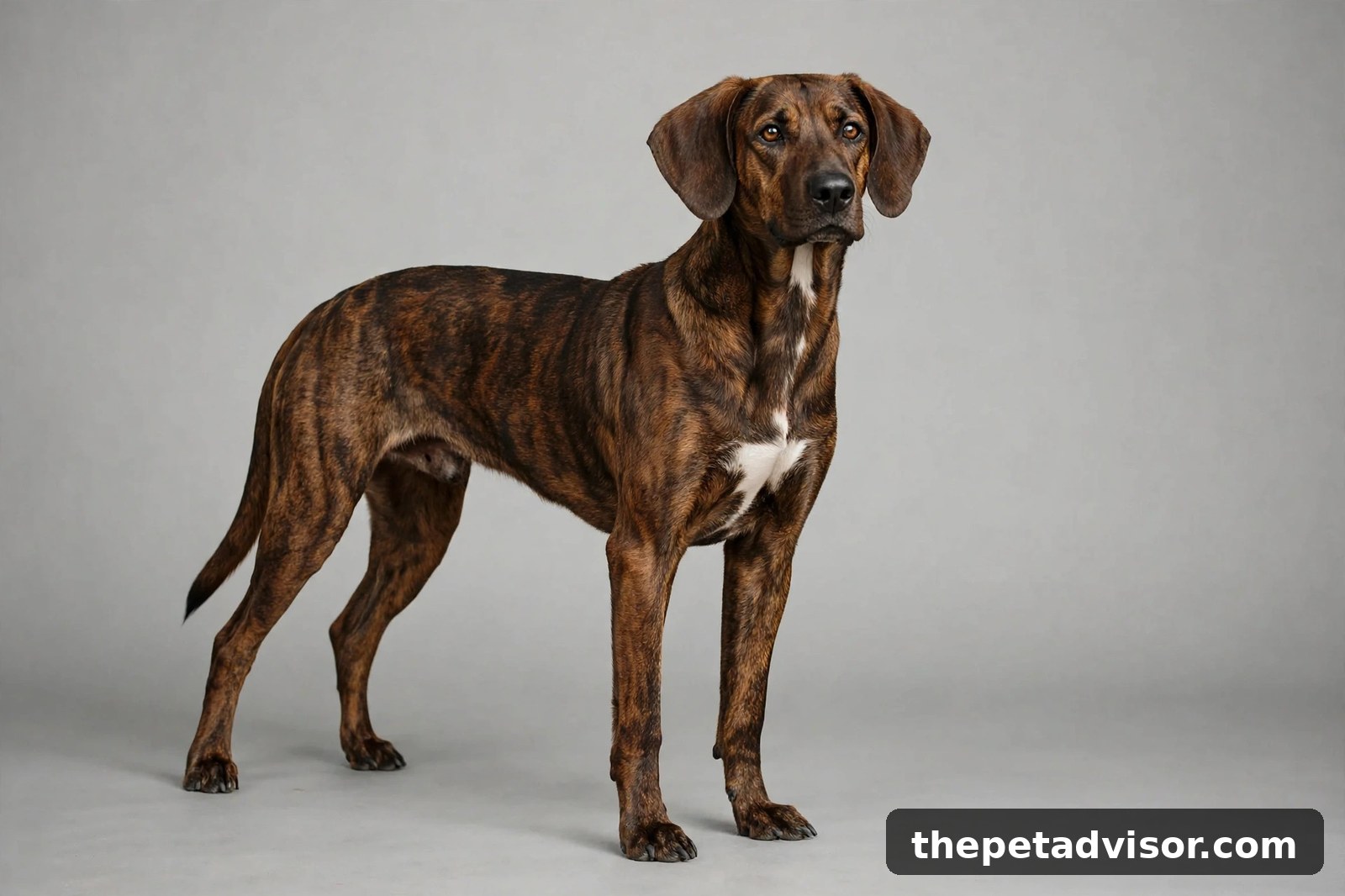
Do you have a photo of a Plott Hound in the American show ring? We’d love this page to lead with one. If you have a show photo you’d let us use, email it to [email protected] — tell us the dog’s name and the show, and it may be featured here. Please only send photos you took yourself or have the photographer’s permission to share, and tell us the photographer’s name. We couldn’t find a public photo of a Plott Hound in the American show ring that we were free to share, so the photo leading this page was made with AI. We’d much rather lead with a real one — if you’re a club member with an approved photo, we’d love to feature it.
1. Breed at a glance
Hound — recognized by the AKC in 2006
Males 20–25 in, 50–60 lb; females 20–23 in, 40–55 lb at the shoulder.
Short, smooth, glossy. Any shade of brindle preferred; solid black, black with brindle trim, and rare buckskin also acceptable.
Loyal, alert, and intelligent; mellow at home, fearless and relentless on the trail.
High and nose-driven. A Plott needs a job for its nose every day, with long rests between outings.
Size and coat facts are from the AKC standard as reproduced by AKC Coonhounds. Popularity: the Plott is No. 173 in the AKC’s 2025 registrations (AKC most popular breeds 2025).
2. History
The Plott’s story begins in 1750, when Johannes Georg Plott, a German immigrant from Heidelberg, arrived in North Carolina with five Hanoverian Schweisshunds — German boar-hunting hounds bred to track wounded big game and face it at close range. The family settled in the mountains of western North Carolina and hunted bear and boar with the dogs for roughly two hundred years; Johannes’s son Henry, who settled Haywood County around 1801 to 1810, is credited with the breed’s later development. Of the seven UKC-registered coonhound breeds, the Plott is the only one that does not trace its ancestry to the foxhound. (Sources: Wikipedia, Plott Hound; AKC, Get to Know the Coonhound Breeds.)
The United Kennel Club registered the Plott in 1946. North Carolina named it the official state dog in 1989 — the Plott Balsams, a mountain range in the state, are named for the same family. The American Kennel Club granted full recognition in 2006, the breed became eligible to compete in the Hound Group on January 1, 2007, and Plotts were first exhibited at Westminster in 2008. (Sources: Wikipedia, Plott Hound; AKC, Get to Know the Coonhound Breeds.)
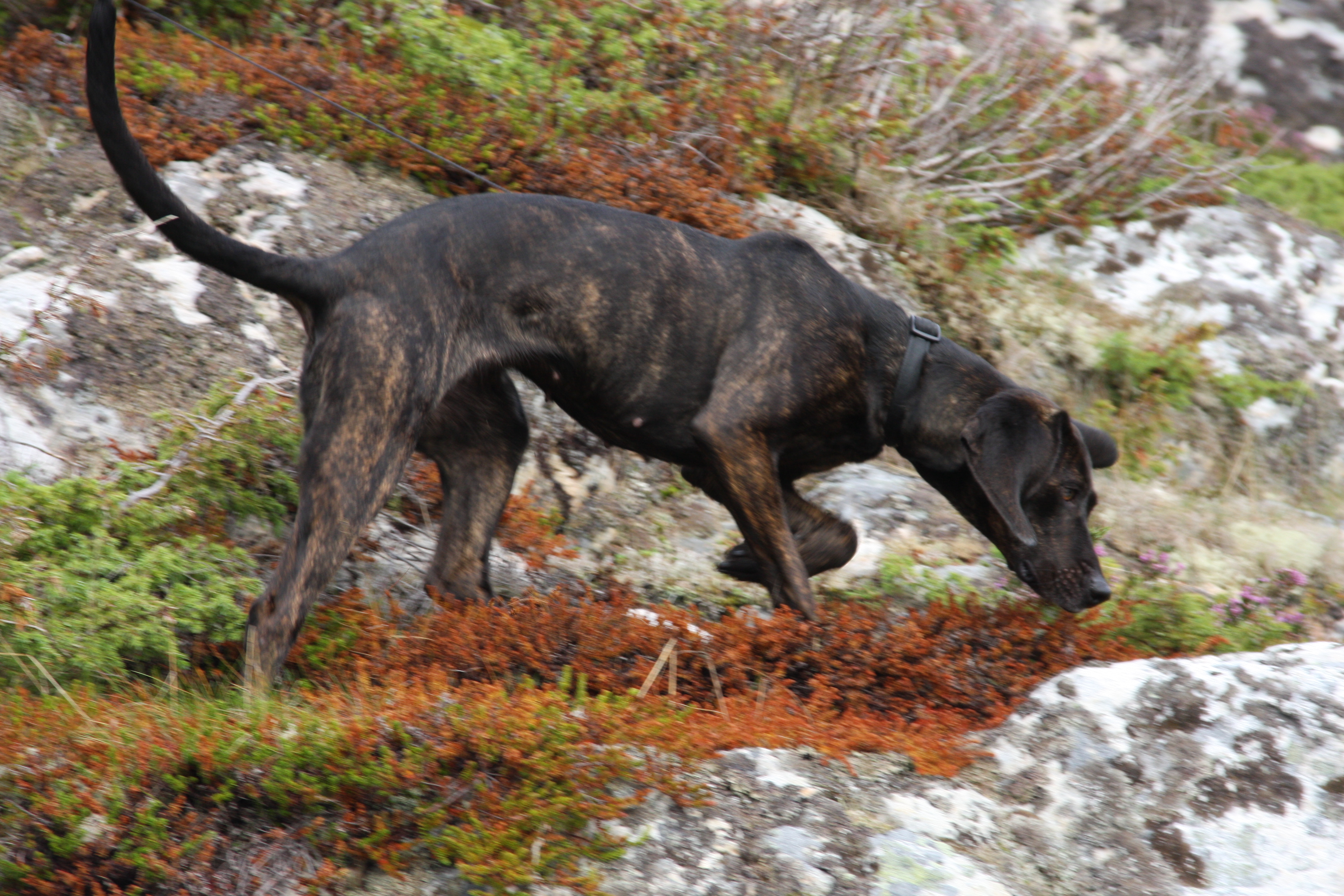
What the history explains is the dog in front of you. A Plott was not bred to tree a raccoon and wait for the hunter; it was bred to follow a bear’s trail for hours over steep, rocky ground and then bay and hold a dangerous animal at close range until the hunter arrived. That is where the confident, determined look comes from, and the voice, and the refusal to quit — and it is why a Plott that has never seen a bear still needs a job for its nose every day. (Source: AKC, Get to Know the Coonhound Breeds.)
3. The standard and why it’s written that way
The standard is written around the job: a powerful, well-muscled hound whose appearance suggests stamina, endurance, and agility, built to work steep, rocky ground for hours. The numbers are simple. Males stand 20 to 25 inches at the withers and weigh 50 to 60 pounds; females stand 20 to 23 inches and weigh 40 to 55 pounds. The head carries brown or hazel eyes, prominent rather than deeply set, and ears of medium length, soft in texture and fairly broad, set moderately high to high. The feet are firm, tight, well padded, and knuckled, with strong toes set directly under the leg. (Source: AKC standard, as reproduced by AKC Coonhounds.)
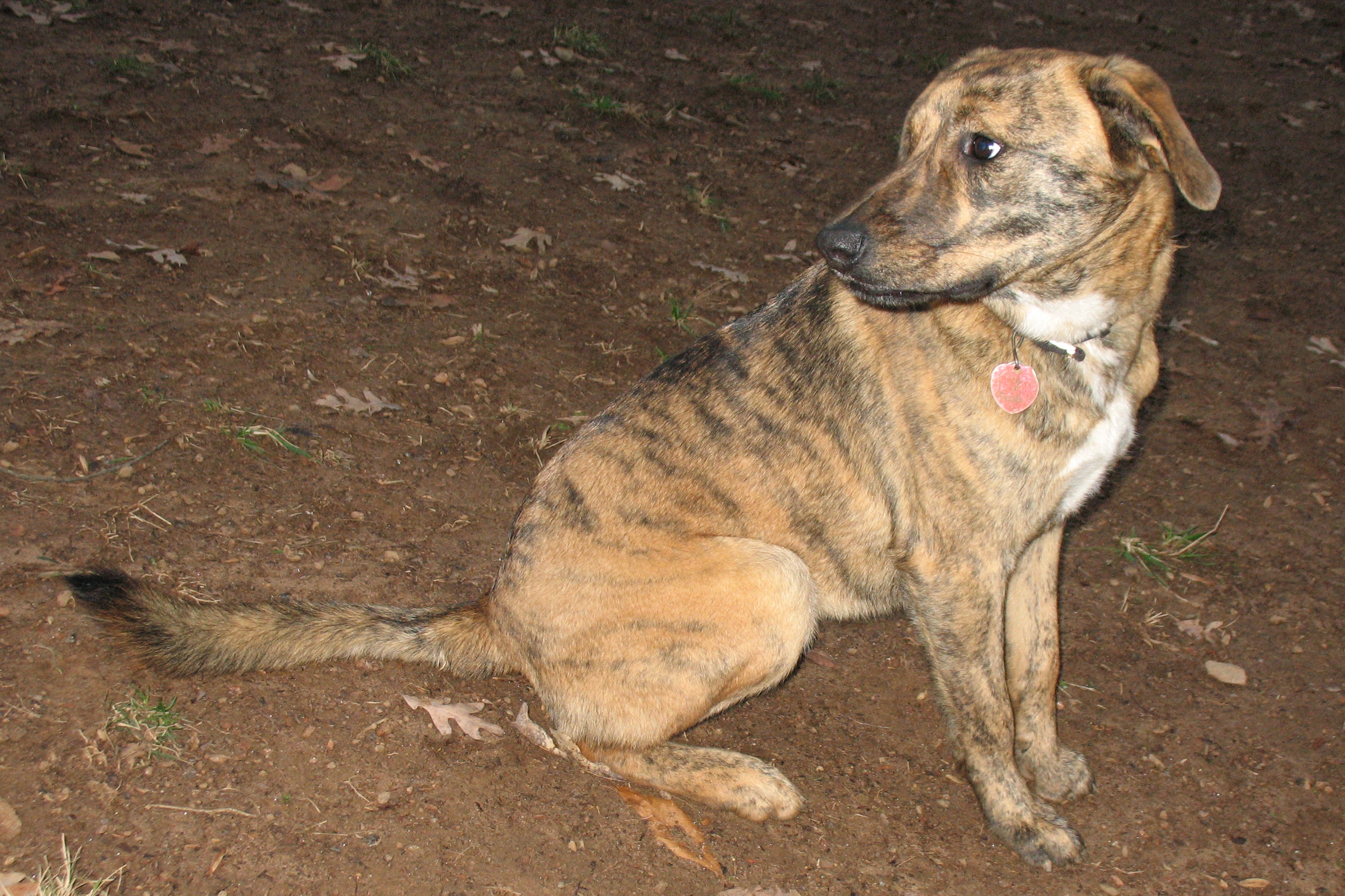
The coat is the breed’s signature, and the standard says so in one sentence: “Any shade of brindle (a streaked or striped pattern of dark hair imposed on a lighter background) is preferred.” The brindle factors run from yellow, buckskin, tan, brown, chocolate, liver, orange, and red through light or dark gray, blue or Maltese, dilute black, and black. Other acceptable colors are solid black, any shade of brindle with a black saddle, and black with brindle trim; a rare buckskin, devoid of any brindle, sometimes appears among litters. Some white on the chest and feet is permissible, as is a graying effect around the jaws and muzzle. The Plott may also carry an identification mark on the rump, used to identify the dog when out hunting, and such a mark is not to be penalized. (Source: AKC standard.)
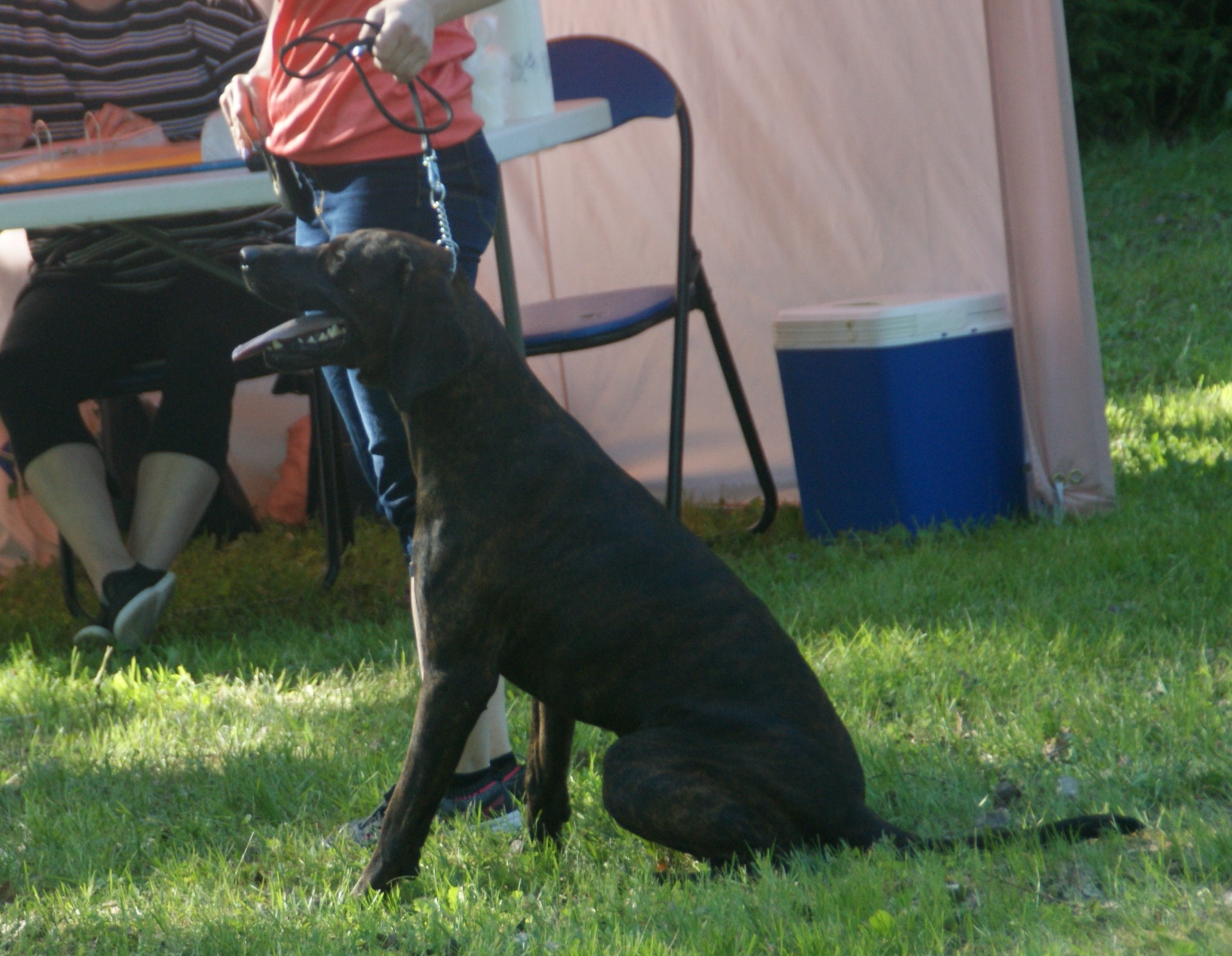
Only two things disqualify a Plott in the ring: ears whose length extends beyond the tip of the nose, or that hang bloodhound-like in long, pendulous fashion; and splayed feet. Everything else in the standard is a matter of degree, and the degree that matters is function. The coat is smooth, fine, and glossy, thick enough to turn wind and water; the chest is deep with well-sprung ribs, for lung capacity on a long trail; the body is athletic and moderate, neither coarse nor racy. A Plott in the ring is shown as it hunts: short-coated, clean, and ready to work. (Source: AKC standard.)
4. Temperament & living with one
The AKC’s breed line is short and the standard’s people say the same thing in plainer words: the Plott is “loyal, alert and intelligent” — “a rugged, relentless hunting dog who is a mellow gentleman at home but fearless, implacable, and bold at work.” What sets the Plott apart from the rest of the coonhounds, the AKC’s coonhound guide notes, is a confident, determined look: this is a dog ready to take on predators, including bears, mountain lions, and wild boar. Fast, agile, and tenacious, it is adept at traversing lowlands to steep, rocky hills. (Sources: AKC Plott Hound breed page; AKC, Get to Know the Coonhound Breeds.)
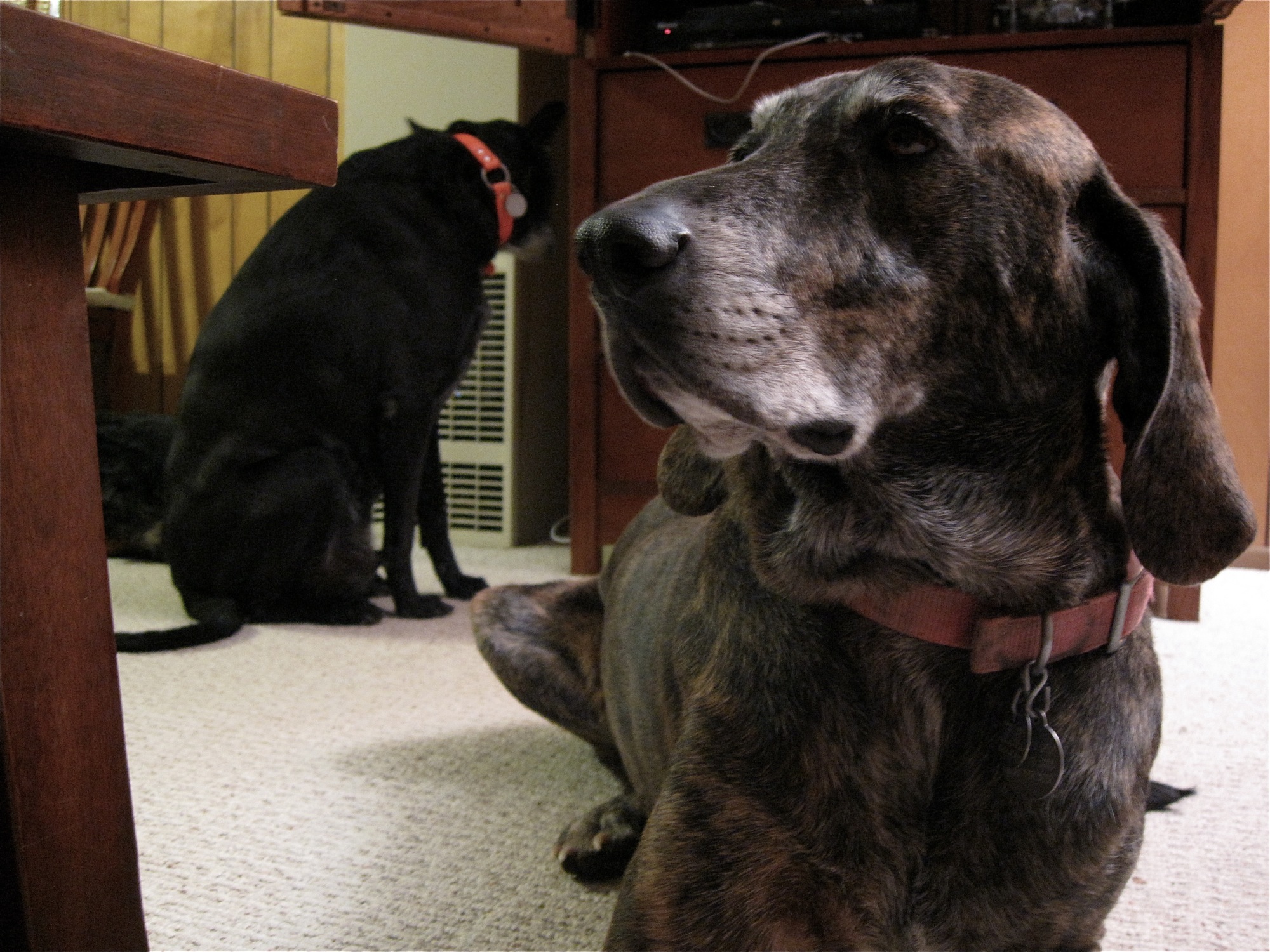
What that means at home is a dog that is easy to live with and hard to bore. A Plott is devoted to its family, good with children and other dogs, and — like the other coonhounds — happiest laying around the house between outings, getting some quality snuggle time alongside its owners. The same independence that makes a Plott a great trailing dog makes it a project in training: it is intelligent and eager enough to learn, and determined enough to test every rule once it knows where the food is. Channel that tenacity with patience and consistency, and the dog does not disappoint. (Sources: AKC, Get to Know the Coonhound Breeds; AKC Plott Hound breed page.)
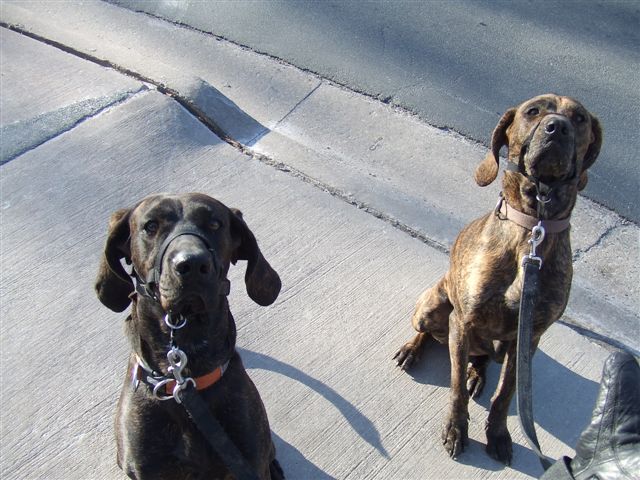
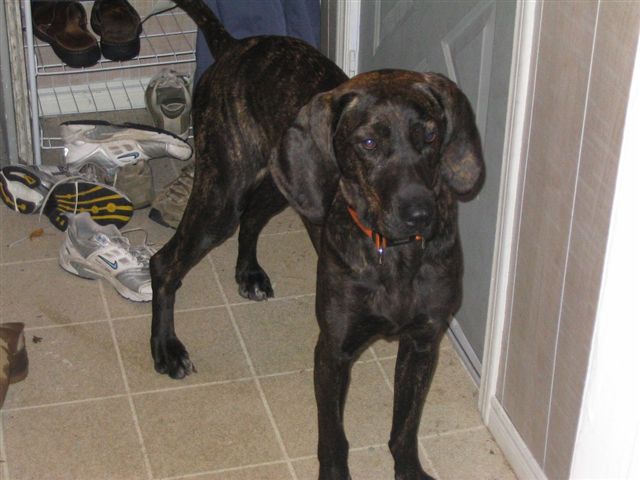
The voice is part of the bargain, and so is the nose. A Plott off leash in unfenced ground is a dog following a scent somewhere else, and recall is a project, not a given — fence the yard, keep the lead on, and give the nose a job before it finds one itself. A Plott that has been run, worked, and tired out is a quiet, devoted house dog. A Plott that has not is a dog that will bay at your neighbors and redecorate your shoe rack.
5. Grooming
Grooming is the easy part of owning a Plott. The coat is short, smooth, and glossy; a weekly brushing keeps it in shape, and a bath when the dog has rolled in something — which, given the nose, will be often. Plotts shed to some degree year-round, and no amount of brushing stops it. (Source: AKC, Get to Know the Coonhound Breeds.)
The ears need the attention the coat does not. Long ears that hang close to the head trap moisture, and Plott ears should be checked and cleaned regularly for infection. Keep the nails short — a Plott that runs will wear them down, and a Plott that does not run will need them trimmed. There is no clipping, stripping, or trimming to the coat: a Plott in the ring is shown as it hunts, short-coated and clean.
6. Health testing
The Plott is a long-lived breed — 12 to 14 years — and a generally healthy one. There is no CHIC program established for the Plott Hound, and the parent club publishes no health-testing policy that could be verified, so there is no parent-club test list to demand and no CHIC number to ask for. What the Orthopedic Foundation for Animals recommends for the breed is hip radiography as the primary health test for breeding stock, and conscientious breeders also obtain an eye examination and a cardiac evaluation. (Sources: Wisdom Panel, Plott Hound; Furry Critter Network, Plott Hound breed guide.)
What a buyer can still do is ask the breeder what they test and why — and a breeder who tests will show you the actual results, not just say the tests were done. The other things a buyer should hear about before they sign anything: bloat, or gastric dilatation-volvulus, which the deep chest puts the breed at risk for — know the warning signs and get an affected dog to a veterinarian immediately; hip and elbow dysplasia, the orthopedic risk in a larger breed; and ear infections, from the long pendulous ears. None of these is a reason not to own a Plott. All of them are reasons to buy from a breeder who will answer questions. (Source: Basepaws, Plott Hound breed information.)
7. The annual Plott Hound specialty dog show
A specialty is the breed’s All-Star show — its Super Bowl. Once a year, the best Plott Hounds from across the country, and often from around the world, come together in one place.
The Plott Hound Association of America’s national specialty is the anchor of the Plott’s year — a one-day show held inside the Cotton Cluster in Rainsville, Alabama, with the breed’s people gathered around it. The club is small and the entry is small; the specialty is where the breed’s serious breeders, handlers, and judges meet.
The National Specialty: a one-day show, Saturday, November 7, 2026, at the Northeast Alabama Agri-Business Center, 1571 McCurdy Avenue North, Rainsville, Alabama — held inside the Cotton Cluster (November 5–8), with the Decatur Alabama and Huntsville all-breed shows around it. Entry: 13 dogs and 15 entries. (Sources: official judging program; AKC Upcoming National Specialties.)
Specialty judge: Mr. Richard D Albee of Auburn, Alabama — all regular and non-regular classes, Ring 5 at 11:30 am. Puppy and Veteran Sweepstakes: Mrs. Kathy Lorentzen, 11:15 am, with one puppy bitch and one veteran bitch entered. Five dogs in Best of Breed (3-2). (Source: official judging program.)
Winners from the 2026 specialty had not been published in an official source as of November 2026 and will be added here when they are.
The 2027 national specialty dates had not been announced as of November 2026.
8. Regional specialties through the year: smaller regional shows
The Plott Hound Association of America is the breed’s only AKC specialty club, so the Plott’s year runs through the national specialty and the club’s supported entries at the Cotton Cluster, rather than a circuit of regional specialties. These are the 2027 regionals verified from club sources so far:
No regional specialties announced yet for 2027.
The club supports Plott entries at the Cotton Cluster all four days, November 5–8, 2026, and the national specialty itself is held inside that cluster. Browse upcoming show weekends →
9. Clubs
- Plott Hound Association of America (parent club) — the AKC parent club for the breed in the United States. It runs the national specialty, which is held inside the Cotton Cluster in Rainsville, Alabama. President Christina Officer, Vice-President Cynthia Grooms, Secretary LaDonna Williams, Treasurer Deidre Favors (2026). The club has no standalone website that could be verified; the AKC club directory lists no website for it. (Sources: 2026 national specialty judging program; AKC Coonhounds, National Coonhound Clubs.)
- National Plott Hound Association — the UKC-side body for the breed, founded in 1953, which runs National Plott Hound Days, a bench show, hunt, field trial, and water race gathering held in New Lexington, Ohio — June 17–20, 2026, the 73rd annual. (Sources: nphaplotthound.com; UKC, 2026 National Plott Hound Days.)
No separate regional Plott specialty clubs could be verified — the Plott Hound Association of America is the breed’s only AKC specialty club. If you are new to the breed, the national specialty itself is the better first stop than a breeder’s website: the people there have owned, shown, and hunted Plotts, and they will tell you the truth about the baying before you fall for a puppy.
10. Rescue
There is no Plott-only national rescue that could be verified, so start with the coonhound rescues — they take Plotts, and they know the breed. Northeast Coonhound Rescue is an all-volunteer 501(c)(3) that has rescued almost 1,800 coonhounds and beagles since 2009, transporting dogs from southern shelters to foster homes in New England, New York, and New Jersey. HoundSong Rescue, based in northwest Indiana, has placed Beagles and coonhounds since 1995 and serves Indiana, Illinois, and Kentucky. American Black & Tan Coonhound Rescue is a national foster-based rescue that takes all six coonhound breeds, Plotts included. (Sources: necoonhoundrescue.org; houndsong.com; coonhoundrescue.com.)
A rescued Plott is usually an adult whose owner underestimated the baying, the exercise, or the nose — and it will arrive with a history you may never fully know. What you get in return is a dog whose temperament you can see before you commit, and a rescue that will take the dog back for life if it does not work out. Ask the parent club for the rescue nearest you; this page will list more by name once their current details are verified.
11. Breeder vs. rescue: honest guidance
If you buy: start with the parent club, the Plott Hound Association of America. Because the club publishes no health-testing policy, the breeder’s own answer matters more here than in most breeds: ask what they test, ask to see the results, and ask what they will take back. A good breeder will have an answer for all three, will ask you as many questions as you ask them, and will take the puppy back for its whole life if you cannot keep it.
If you rescue: a rescued Plott is usually an adult, often one whose owner underestimated the baying, and it will arrive with a coat that needs little work and a nose that needs a lot. What you get in return is a dog whose temperament you can see before you commit and a lower price. Either way, budget the exercise first: a Plott you cannot tire out is a Plott that will bay at your neighbors, and a Plott off leash in unfenced ground is a dog following a scent somewhere else.
One thing that is not what a seller tells you: there is no such thing as a miniature Plott, and there is no “rare” brindle worth a premium. Brindle comes in every shade from yellow and tan through red, gray, and near-black, and all of them are standard; the rare buckskin without brindle is recognized too, not a luxury upgrade. A breeder selling a “rare” color or a smaller Plott is selling you a label, usually at a premium.
12. Claim this page
This page belongs to the breed, and the people who know the breed best are the Plott Hound Association of America and its members. If you are with the parent club — or you are a breeder, a judge, a handler, or a rescue volunteer who spotted something wrong, missing, or out of date — this page is yours to set straight. Tell us what needs fixing and where the correction is documented, and we will fix it and credit the source. Contact the site through the About page, and mention “Plott Hound breed profile.”
Sources
- AKC Plott Hound breed standard, as reproduced by AKC Coonhounds — events.akccoonhounds.org/judge/plott.asp
- AKC, Plott Hound breed page — akc.org/dog-breeds/plott-hound
- AKC, Get to Know the Coonhound Breeds of the Hound Group — akc.org/expert-advice/dog-breeds/meet-coonhound-breeds
- AKC, most popular dog breeds of 2025 — akc.org/expert-advice/dog-breeds/most-popular-dog-breeds-2025
- AKC Upcoming National Specialties — apps.akc.org/apps/events/conformation/national_specialties.cfm
- 2026 National Specialty judging program (Foy Trent) — foytrentdogshows.com/forms/JPs/JP2026/JP_2026_Cotton_Cluster_Plotts.pdf
- AKC club directory, Plott Hound Association of America — apps.akc.org/apps/akc_clubs/?PlottHoundAssociationofAmerica
- AKC Coonhounds, National Coonhound Clubs — akccoonhounds.org/inside-akc/parent-clubs
- National Plott Hound Association — nphaplotthound.com
- UKC, 2026 National Plott Hound Days — ukcdogs.com/result?result_id=29488
- Wikipedia, Plott Hound (history, recognition dates, measurements) — en.wikipedia.org/wiki/Plott_Hound
- Wisdom Panel, Plott Hound (lifespan 12–14 years) — wisdompanel.com/en-gb/dog-breeds/plott
- Basepaws, Plott Hound breed information (bloat, hip and elbow dysplasia) — basepaws.com/dog-breeds/plott-hound
- Furry Critter Network, Plott Hound complete breed guide (health testing) — furrycritter.com/pages/descriptions/dogs/p/plott_hound
- Northeast Coonhound Rescue — necoonhoundrescue.org
- HoundSong Rescue — houndsong.com/about.html
- American Black & Tan Coonhound Rescue — coonhoundrescue.com