
Breed profile · Toy Group · The lion dog of the Imperial court
Pekingese
The Pekingese is the lion dog of the Chinese Imperial court: a long, low, heavily coated toy dog with a flat face, a rolling gait, and an opinion about everything — including you. Bred to sit in the sleeves of emperors and carried off from the Old Summer Palace in 1860, the Peke arrived in the West as a palace treasure and has behaved like one ever since. It is also a two-time Westminster Best in Show winner — Wasabi in 2021 and Malachy in 2012 — and the breed’s national specialty anchors the AKC National Championship week in Orlando this December.
Help us improve it. This is one of ThePetAdvisor’s breed profiles, built from public sources with generous links to the people who actually own this breed’s knowledge. If something’s off or missing, the parent club can claim the page and set it straight — see the bottom of the page.
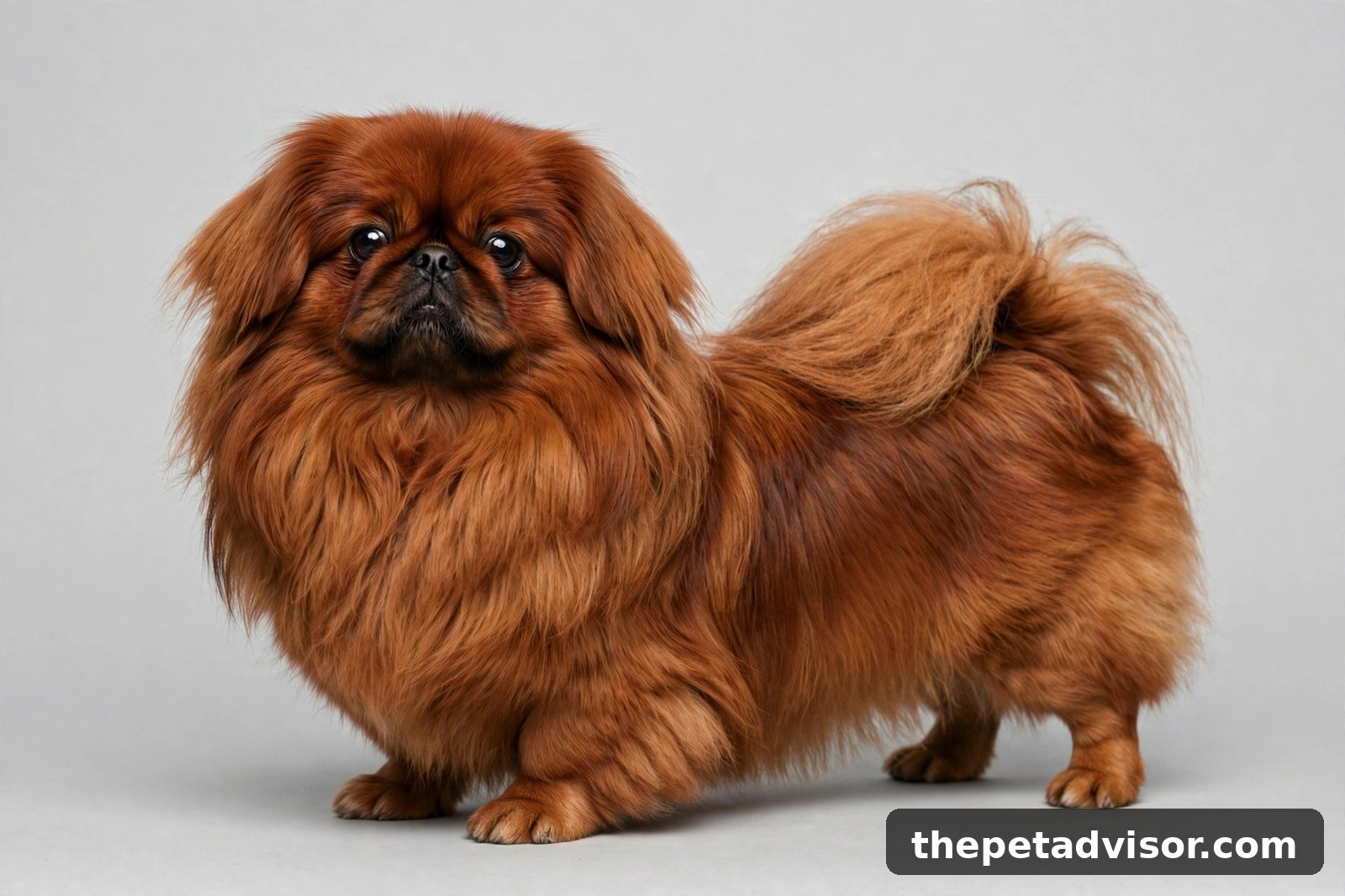
Do you have a photo of a Pekingese in the American show ring? We’d love this page to lead with one. If you have a show photo you’d let us use, email it to [email protected] — tell us the dog’s name and the show, and it may be featured here. Please only send photos you took yourself or have the photographer’s permission to share, and tell us the photographer’s name. We couldn’t find a public photo of a Pekingese in the American show ring that we were free to share, so the photo leading this page was made with AI. We’d much rather lead with a real one — if you’re a club member with an approved photo, we’d love to feature it.
1. Breed at a glance
Toy — recognized by the AKC in 1906
6–9 in at the shoulder. Weight up to 14 lb — over 14 lb is the breed’s only disqualification.
Long, coarse-textured, straight outer coat with a thick, soft undercoat; a mane on the neck and shoulders. All colors and markings of equal merit.
Regal dignity, intelligence, and self-importance; a good-natured, opinionated, affectionate companion to those who have earned its respect.
12–14 years.
Size, coat, and temperament facts are from the AKC Official Standard (approved January 13, 2004, effective March 2, 2004). Lifespan is the AKC breed-profile figure. Popularity: the Pekingese is No. 90 in the AKC’s 2025 registrations (AKC most popular breeds 2025).
2. History
The Pekingese comes from the Chinese Imperial court, where the breed’s history dates to 800 A.D. and the dogs lived in the Forbidden City; the smallest, about five pounds, were called “Sleeve Pekingese” and were carried in the sleeves of imperial robes. Smuggling one out of the palace was punishable by death. (Source: Pekingese Club of America flyer.)
In 1860, during the Second Opium War, British and French troops sacked the Old Summer Palace in Peking; five Pekingese survived the sacking, and one, brought to England by Captain John Hart Dunne, was presented to Queen Victoria, who named it Looty. From those palace dogs the breed spread through the West. The AKC registered the breed in 1906, and the Pekingese Club of America was founded in 1909. (Sources: AKC Pekingese breed page; Pekingese Club of America flyer.)
The breed’s show peak came at Westminster: GCH CH Pequest Wasabi won Best in Show in 2021 and GCh Palacegarden Malachy in 2012, both bred, owned, and handled by David Fitzpatrick; Wasabi was also the first Toy dog to win the AKC National Championship, in 2019. Earlier Pekingese Westminster Best in Show winners were Chik T’Sun of Caversham (1960), St. Aubrey Dragonora of Elsdon (1982), and Wendessa Crown Prince (1990). (Source: AKC, Westminster winners through the years.)
3. The standard and why it’s written that way
- A lionlike picture. The standard opens with a picture: “well-balanced, compact dog of Chinese origin with a heavy front and lighter hindquarters. Its temperament is one of directness, independence and individuality. Its image is lionlike, implying courage, dignity, boldness and self-esteem rather than daintiness or delicacy.” The lion is the point — everything in the standard is built around a small dog that carries itself like a much bigger one. (Source: AKC Official Standard, approved January 13, 2004.)
- Small, with a hard limit. The size is small and the limit is hard: the AKC profile gives 6 to 9 inches at the shoulder, and the standard allows all weights within 14 pounds — weight over 14 pounds is the breed’s only disqualification. The proportion is about 3 high to 5 long. The face is flat — chin, nose leather, and brow all in one plane — with large, very dark, round eyes and a broad, short, black nose with wide, open nostrils. The coat is long, coarse-textured, and straight, a stand-off outer coat over a thick, soft undercoat, with a mane on the neck and shoulders; any obvious trimming or sculpting of the coat is severely penalized. (Source: AKC Official Standard.)
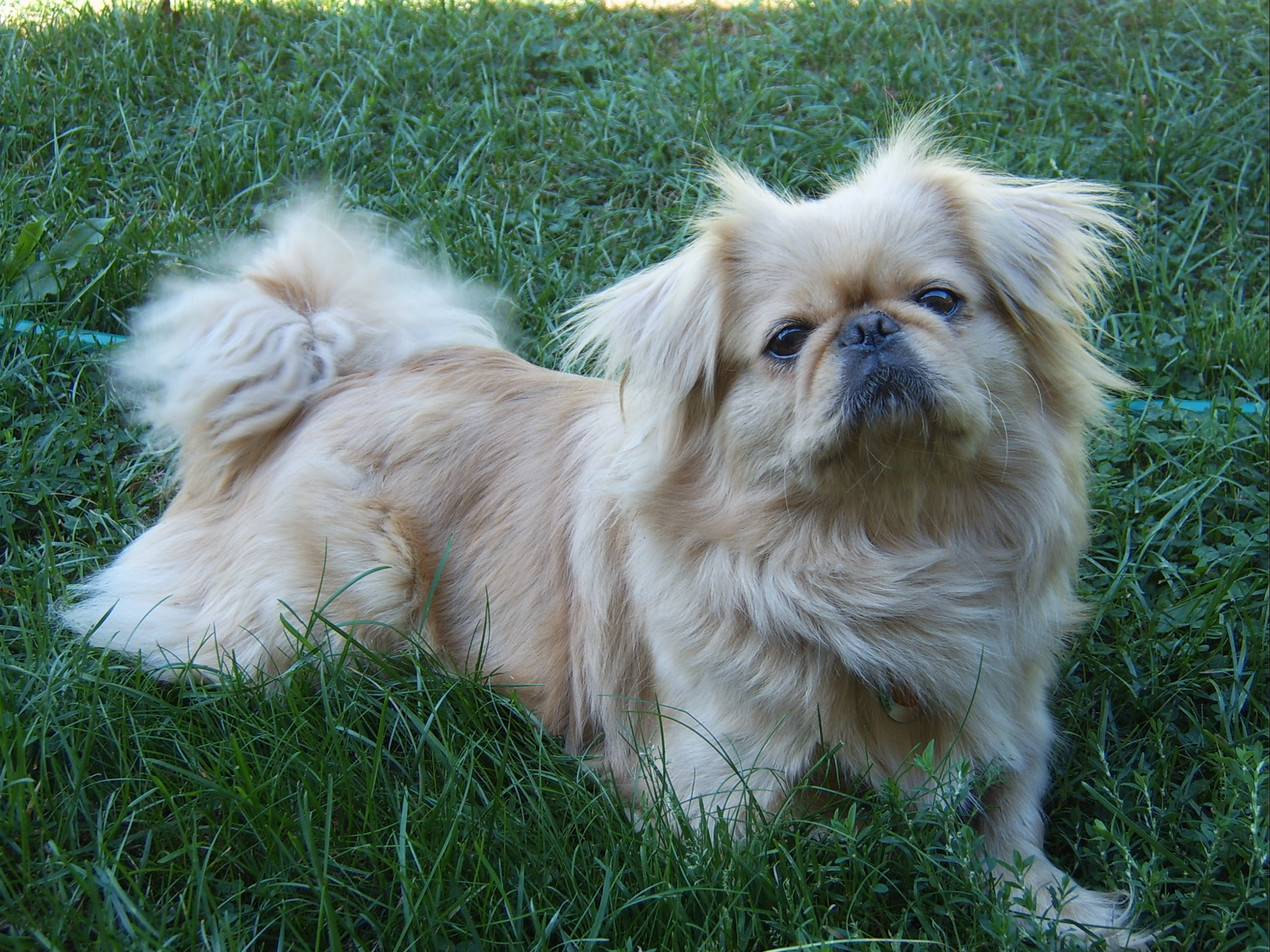
Color is where the standard is most generous — and most specific. “All coat colors and markings are allowable and of equal merit. A black mask or a self-colored face is equally acceptable. Regardless of coat color the exposed skin of the muzzle, nose, lips and eye rims is black.” There is no preferred color and no rare color; a breeder charging a premium for one is selling a label. The gait the standard asks for is “unhurried, dignified, free and strong, with a slight roll over the shoulders.” (Source: AKC Official Standard.)
4. Temperament & living with one
The standard’s temperament line is short and it does the work: “A combination of regal dignity, intelligence and self-importance make for a good natured, opinionated and affectionate companion to those who have earned its respect.” That last clause is the whole breed in miniature: a Pekingese is not a dog that loves everyone on sight. It is loyal and affectionate with its own people — the AKC calls them “sophisticated dogs of undying loyalty” — and it expects to be treated as an equal, not a toy. (Sources: AKC Official Standard; AKC Pekingese breed page.)
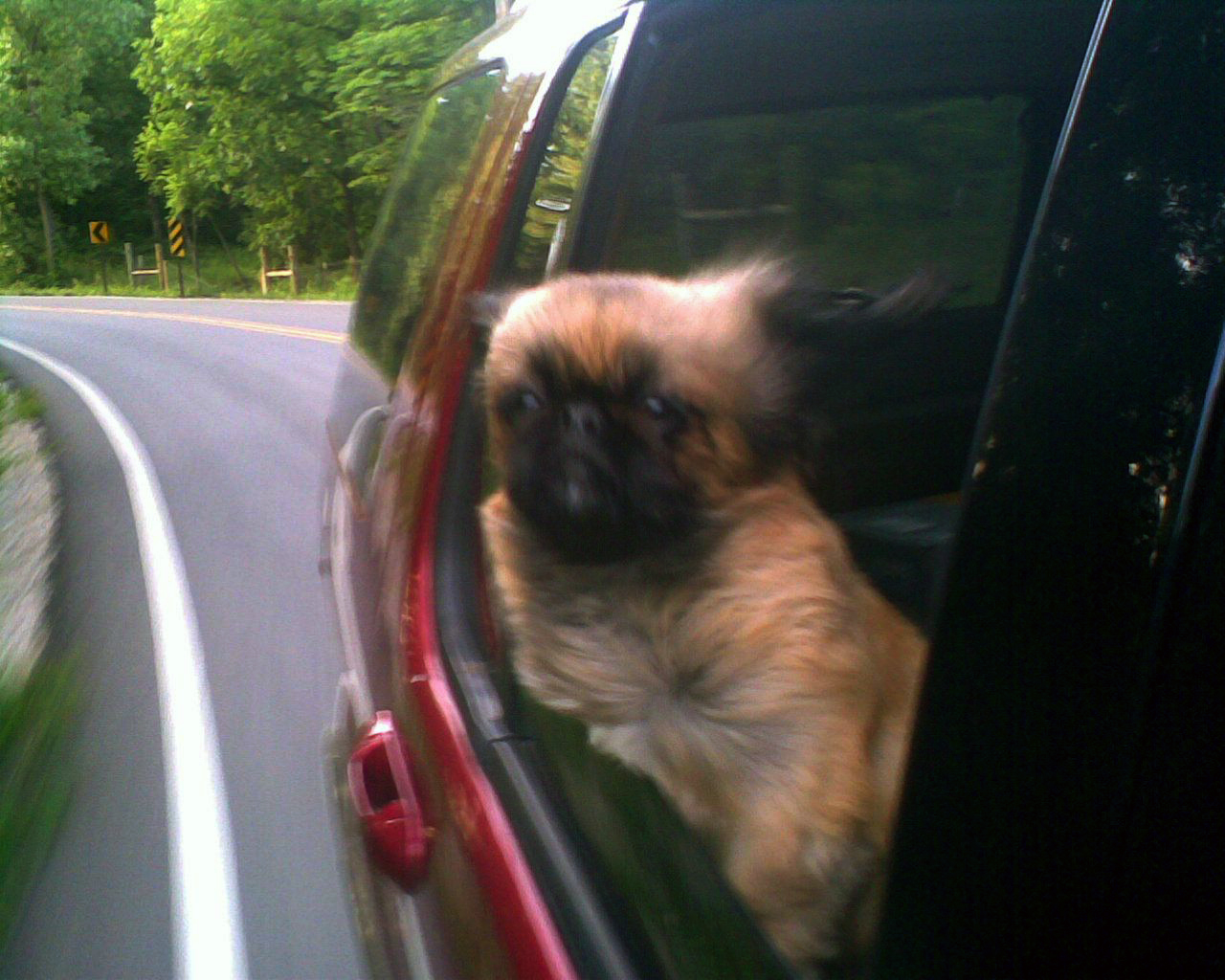

What that means at home is a small dog with a large sense of itself. A Pekingese is a companion, not a sporting dog: it wants to be with its people, on the couch or in the car, and it will tell you what it thinks of your plans. The flat face brings the usual brachycephalic care — keep the dog cool in heat, watch the breathing, and keep the prominent eyes clean and protected (more in section 6). The long coat means daily brushing; the dignity means the dog will tolerate it, on its own terms. (Sources: AKC Pekingese breed page; AKC Official Standard.)
5. Grooming
- The daily work. Grooming is the daily work of owning a Pekingese. The coat is a long double coat — a coarse, straight, stand-off outer coat over a thick, soft undercoat — and it needs daily brushing to stay free of mats, especially the mane, the feathering on the ears and legs, and the trousers at the rear. Plan on a professional groom every 8 to 12 weeks. Pet dogs are often kept in a shorter “Lion clip” or “Summer clip,” which the parent club’s flyer shows as the practical pet option. (Sources: AKC Official Standard; Pekingese Club of America flyer; Wikipedia, Pekingese.)
- The face needs daily attention. The face needs daily attention the coat does not: clean the folds and the eyes every day, and keep the rear trousers clean. There is no trimming or sculpting of the coat for the show ring — the standard severely penalizes it — but a pet in a Lion clip is a different matter, and a shorter coat is the honest choice for a dog that will not be shown. Keep the nails short; a Pekingese that walks will wear them down, and one that is carried everywhere will not. (Sources: AKC Official Standard; Pekingese Club of America flyer.)
6. Health testing
- The parent club requires none. Honestly, the parent club requires none. The Pekingese Club of America’s health statement, approved July 5, 2017, says the club “does not currently require specific health screening because those conditions of which we are aware in the breed cannot be tested for in advance the way certain genetic diseases can in other breeds.” The statement adds that “as a breed the Pekingese is amazingly devoid of genetic breed-related health issues.” The AKC’s Toy Group health-testing page agrees: for the Pekingese, “No recommended health tests.” That is the whole of the club’s policy, and it is worth stating plainly, because it is different from most breeds: there is no parent-club test list to demand, and no CHIC number to ask for. (Sources: Pekingese Club of America health statement; AKC Toy Group health-testing requirements.)
- Ask what they check. What a buyer can still do is ask the breeder what they check and why. The things buyers ask about in a Pekingese are the flat face and the breathing that goes with it, the prominent eyes (injuries, dry eye, and progressive retinal atrophy), patellar luxation, disc disease, heat sensitivity, and anesthesia sensitivity — and a breeder who watches for them will tell you what they do about them.
- Regular vet exams suffice. The other thing a buyer should hear before they sign anything: regular health exams by the owner’s veterinarian are, in the parent club’s words, “sufficient to uncover and treat any potential problems that arise as Pekingese get older.” Lifespan is 12 to 14 years. (Sources: Pekingese Club of America health statement; AKC Pekingese breed page.)
7. The annual Pekingese specialty dog show
A specialty is the breed’s All-Star show — its Super Bowl. Once a year, the best Pekingese from across the country, and often from around the world, come together in one place.
The Pekingese Club of America’s national specialty is the anchor of the Pekingese’s year. The 2026 national: a one-day show in Orlando, inside the AKC National Championship cluster, with a puppy specialty, sweepstakes, and Junior Showmanship alongside the regular classes.
The National Specialty: a one-day show, Thursday, December 10, 2026 (afternoon), at the Orange County Convention Center, N/S Building, Orlando, Florida — held with the Central Florida Kennel Club all-breed show during AKC National Championship week (the Orlando cluster, December 8–13). AKC event numbers 2026145103 (conformation specialty) and 2026145104 (puppy specialty with sweepstakes and Junior Showmanship). (Sources: AKC Upcoming National Specialties; ThePetAdvisor, Orlando 2026; Pekingese Club of America, Lion Dog News, Fall 2025.)
Specialty judge: Janet Allen — all regular classes and Junior Showmanship. Sweepstakes: Heather Ginochio. Show chair: Betty Tilley-Poole. The judging program (ring, time, and entry count) had not been published as of November 2026; entries close November 11, 2026. (Sources: Lion Dog News, Fall 2025; ThePetAdvisor, Orlando 2026.)
Around the national: the PCA judges seminar (Jason Hoke and Lori Stephen), December 11, at the Orange County Convention Center, and the annual dinner and awards, Friday, December 11, at Maggiano’s Little Italy, Pointe Orlando. (Source: Pekingese Club of America shop.)
Winners from the 2026 specialty had not been published in an official source as of November 2026 and will be added here when they are.
2027 national specialty: announced for Woodland, California, in conjunction with the Candy Cane Cluster, December 8–12, 2027. PCA board acceptance of the California bid: June 23, 2025. Exact specialty day within the cluster: not announced as of November 2026. (Source: Pekingese Club of America, Lion Dog News, Fall 2025.)
Conflicting date in the record: the August 27, 2025 board minutes in the same issue also give December 1, 2027, which falls outside the cluster dates; the cluster dates are corroborated by the bid report, so this page follows them until the club confirms the day.
Past national specialties: 2025
8. Regional specialties through the year: smaller regional shows
The national is the anchor, but the breed’s year runs through its regional specialties, held by the Pekingese Club of America’s regional clubs. These are the 2026 regionals verified from club sources so far:
- Pekingese Association of New York — January 30, designated specialty with the Progressive Dog Club (New Yorker Hotel, New York, NY); March 19, supported entry with the Staten Island Kennel Club (Edison, NJ); March 20, designated specialty with the New Brunswick Kennel Club (Edison, NJ); June 6, designated specialty with the Greenwich Kennel Club (Norwalk, CT).
- Pekingese Club of New Jersey — January 31, designated specialty with the Progressive Dog Club (New York, NY); March 21, designated specialty with the New Brunswick Kennel Club (Edison, NJ); March 22, designated specialty (no sweepstakes) with the Bronx County Kennel Club (Edison, NJ); June 7, designated specialty with the Longshore Southport Kennel Club (Norwalk, CT).
- Pekingese Club of Florida — January 12, designated specialty with the Manatee Kennel Club (Brooksville, FL); December 8, designated specialty with the Space Coast Kennel Club (judge Juan Miranda), in the Orlando cluster.
- Canton Ohio Pekingese Club — specialty, March 1, with the Medina Kennel Club “Barkaritaville” weekend.
- Pekingese Club of Georgia — March 28, Lake Lanier Cluster, Lawrenceville, GA — the club’s 70th specialty; judge Benson Ray (regular classes, Junior Showmanship, Beginner Puppy); sweepstakes judge TBA.
- Brevard Kennel Club — December 9, designated specialty (judge Desmond Murphy), in the Orlando cluster.
Sources: Pekingese Club of America, Lion Dog News, Fall 2025 (Regional Club Committee Report) — fliphtml5.com/fiirj/aqlz/Lion_Dog_Newsletter_Fall_2025; December Orlando designated specialties — ThePetAdvisor, Orlando 2026.
The 2027 regionals announced so far:
- Evergreen State Pekingese Club — designated specialty during the Candy Cane Cluster, Woodland, California, December 8–12, 2027 (all-breed shows December 9–12), alongside the PCA national specialty. (Source: Lion Dog News, Fall 2025.)
The Pekingese Club of America’s regional clubs hold designated and supported-entry specialties through the year; more regionals will be added here as their programs are verified. Browse upcoming show weekends →
9. Clubs
- Pekingese Club of America (parent club) — the AKC parent club for the breed in the United States, founded 1909. It runs the national specialty and publishes Lion Dog News. Breeder referral contact: Heather Ginochio.
- Regional clubs (AKC club search) — Pacific Coast Pekingese Club; Pekingese Association of New York; Pekingese Club of Central California; Pekingese Club of Florida; Pekingese Club of Georgia; Pekingese Club of New Jersey; Pekingese Club of Texas.
If you are new to the breed, the national specialty itself is the better first stop than a breeder’s website: the people there have owned, shown, and judged Pekingese, and they will tell you the truth about the coat before you fall for a puppy.
10. Rescue
- AKC contacts and regional rescues. The AKC Rescue Network lists two Pekingese contacts: the Pekingese Club of America / Pekingese Charitable Foundation (Dorothy Cooper, [email protected]) and Pekingese Rescue Network Inc, which serves the northeastern states. Two more breed rescues work regionally: Northern California Pekingese Rescue, a 501(c)(3) referral service in the Sacramento area, and Peke-N-Chin Midwest Rescue. (Source: AKC Rescue Network.)
- Usually an adult. A rescued Pekingese is usually an adult, often one whose owner underestimated the coat, and it will arrive with a history you may never fully know. What you get in return is a dog whose temperament you can see before you commit and a lower price. Ask the parent club for the rescue nearest you; this page will list more by name once their current details are verified.
11. Breeder vs. rescue: honest guidance
- If you buy: start with the parent club, the Pekingese Club of America — breeder referral is Heather Ginochio. Because the club requires no health screening of its breeders, the breeder’s own answer matters more here than in most breeds: ask what they check, ask what they will take back, and ask to see the dogs. A good breeder will have an answer for all three, will ask you as many questions as you ask them, and will take the puppy back for its whole life if you cannot keep it.
- If you rescue: a rescued Pekingese is usually an adult, often one whose owner underestimated the coat, and it will arrive with a long coat that needs daily work and a dignity that needs respecting. What you get in return is a dog whose temperament you can see before you commit and a lower price. Either way, budget the grooming first: a Pekingese you cannot brush is a Pekingese that will mat, and a matted Pekingese is an unhappy one.
- No rare color or miniature. One thing that is not what a seller tells you: there is no such thing as a rare color or a miniature Pekingese. The standard allows all coat colors and markings, all of equal merit, and one size, 6 to 9 inches and up to 14 pounds. A breeder selling a “rare” color or a smaller Pekingese is selling you a label, usually at a premium.
12. Claim this page
This page belongs to the breed, and the people who know the breed best are the Pekingese Club of America and its members. If you are with the parent club — or you are a breeder, a judge, a handler, or a rescue volunteer who spotted something wrong, missing, or out of date — this page is yours to set straight. Tell us what needs fixing and where the correction is documented, and we will fix it and credit the source. Contact the site through the About page, and mention “Pekingese breed profile.”
Sources
- AKC Official Standard for the Pekingese (approved January 13, 2004, effective March 2, 2004) — images.akc.org/pdf/breeds/standards/Pekingese.pdf
- AKC, Pekingese breed page — akc.org/dog-breeds/pekingese
- Pekingese Club of America, health statement (approved July 5, 2017) — cdn.akc.org/Marketplace/Health-Statement/Pekingese.pdf
- AKC, Toy Group health-testing requirements — akc.org/breeder-programs/breed-health-testing-requirements/toy-group-health-testing-requirements
- AKC, most popular dog breeds of 2025 — akc.org/expert-advice/dog-breeds/most-popular-dog-breeds-2025
- AKC Upcoming National Specialties — apps.akc.org/apps/events/conformation/national_specialties.cfm
- Pekingese Club of America, Lion Dog News, Fall 2025 — fliphtml5.com/fiirj/aqlz/Lion_Dog_Newsletter_Fall_2025
- ThePetAdvisor, Orlando 2026 — thepetadvisor.com/shows/orlando-2026
- Canine Chronicle, April 2025 specialty results — caninechronicle.com/2025/04/page/18
- AKC, Westminster winners through the years — akc.org/expert-advice/news/westminster-winners-through-the-years
- AKC Rescue Network, Pekingese — akc.org/akc-rescue-network/rescue-network-p-breeds
- Pekingese Club of America — pekingeseclubofamerica.com (shop: pekingeseclubofamerica.com/shop)
- Pekingese Club of America, club flyer — cdn.akc.org/Pekingese-club-flier.pdf
- Wikipedia, Pekingese (history, grooming) — en.wikipedia.org/wiki/Pekingese