
Breed profile · Non-Sporting Group · The six-toed Puffin Dog
Norwegian Lundehund
The Norwegian Lundehund is the only dog breed created for one job: hunting puffins in the cliff burrows and crevices of Norway’s rocky islands. The job rebuilt the dog from the feet up — at least six toes on every foot, a neck that bends the head back to the spine, shoulders that spread flat to hug a cliff, ears that fold shut against debris — and the breed nearly paid for its specialization with its existence, twice reduced to a handful of dogs by distemper. Today it is the rarest AKC breed in the United States: No. 202 of 202 in the AKC’s 2025 registrations.
Help us improve it. This is one of ThePetAdvisor’s breed profiles, built from public sources with generous links to the people who actually own this breed’s knowledge. If something’s off or missing, the parent club can claim the page and set it straight — see the bottom of the page.
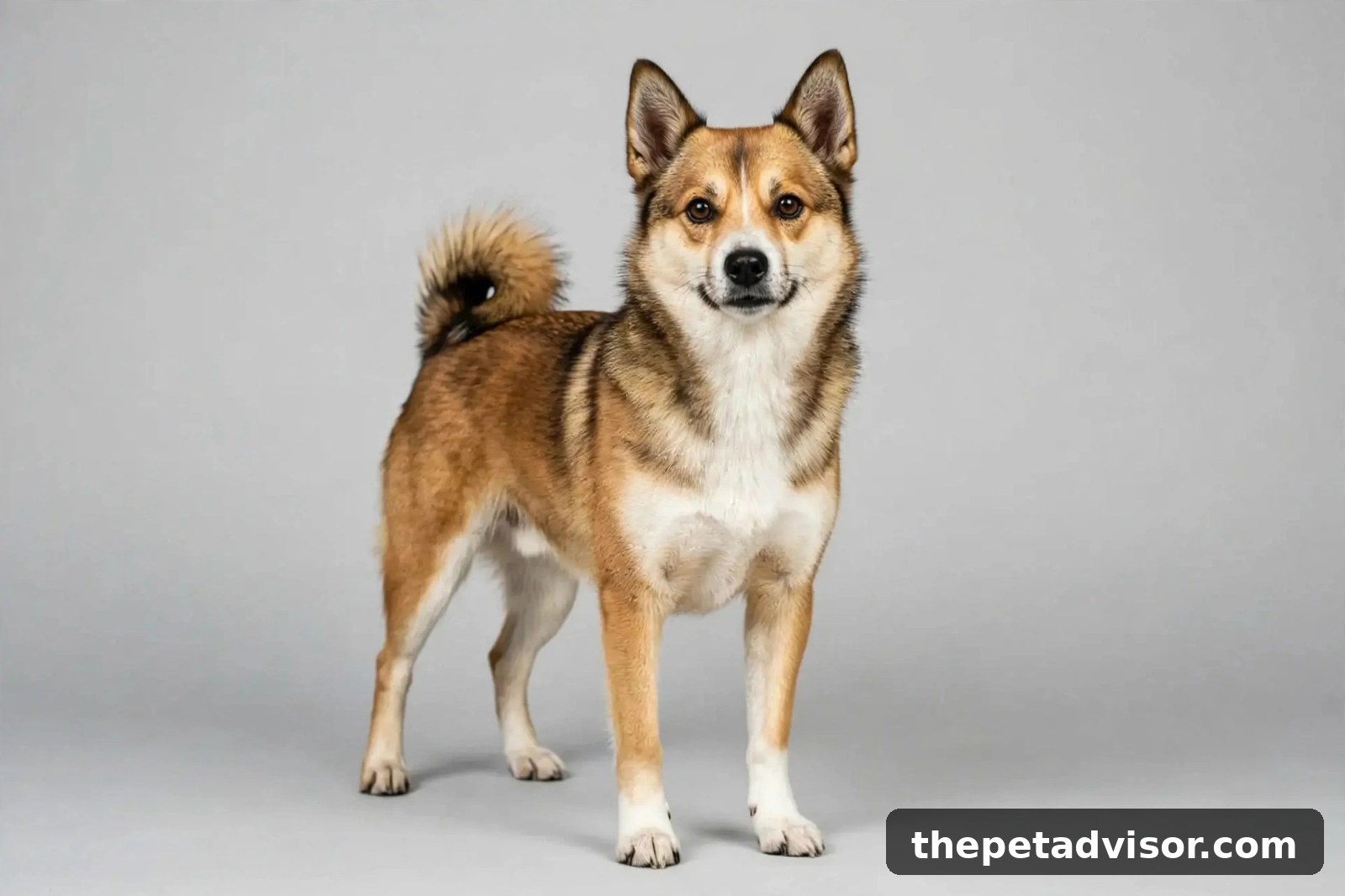
Do you have a photo of a Norwegian Lundehund in the American show ring? We’d love this page to lead with one. If you have a show photo you’d let us use, email it to [email protected] — tell us the dog’s name and the show, and it may be featured here. Please only send photos you took yourself or have the photographer’s permission to share, and tell us the photographer’s name. We couldn’t find a public photo of a Norwegian Lundehund in the American show ring that we were free to share, so the photo leading this page was made with AI. We’d much rather lead with a real one — if you’re a club member with an approved photo, we’d love to feature it.
1. Breed at a glance
Non-Sporting — full AKC recognition January 1, 2011 (Miscellaneous Class from July 1, 2008)
Desired height: males 13–15 in, females 12–14 in at the shoulder. The standard gives no weight; breed guides put males at roughly 15–18 lb and females at roughly 11–13 lb.
Double coat: harsh outer coat, dense soft undercoat. Fallow to reddish brown to tan with black hair tips and white markings, or white with red or dark markings.
Alert, very energetic, loyal and protective. Wary of strangers but never aggressive toward people.
High and curious. Needs daily exercise and mental work every day; agility is a popular outlet.
Size, coat, and temperament facts are from the AKC standard (effective July 1, 2008). Popularity: the Lundehund is No. 202 of 202 in the AKC’s 2025 registrations — the rarest AKC breed in the United States in 2025 (AKC rarest dog breeds 2025). Lifespan is 12 to 15 years by the AKC’s figure, though Lundehund syndrome shortens many lives; some breed guides give 10 to 12 years.
2. History
The name says the job: lunde is Norwegian for puffin, hund for dog, and the Lundehund is the Puffin Dog. On the remote islands of northern Norway — Værøy, Lofoten, and their neighbors — puffins nest in burrows and crevices in the cliffs, and the farmers who harvested the birds for meat and feathers needed a dog small and flexible enough to go in after them. The first written record of the breed is from 1591, a bailiff’s account on Værøy. By about 1900, the breed survived in only one place: Mostad (Måstad), on Lofoten. (Sources: Wikipedia, Norwegian Lundehund; AKC Norwegian Lundehund breed page.)
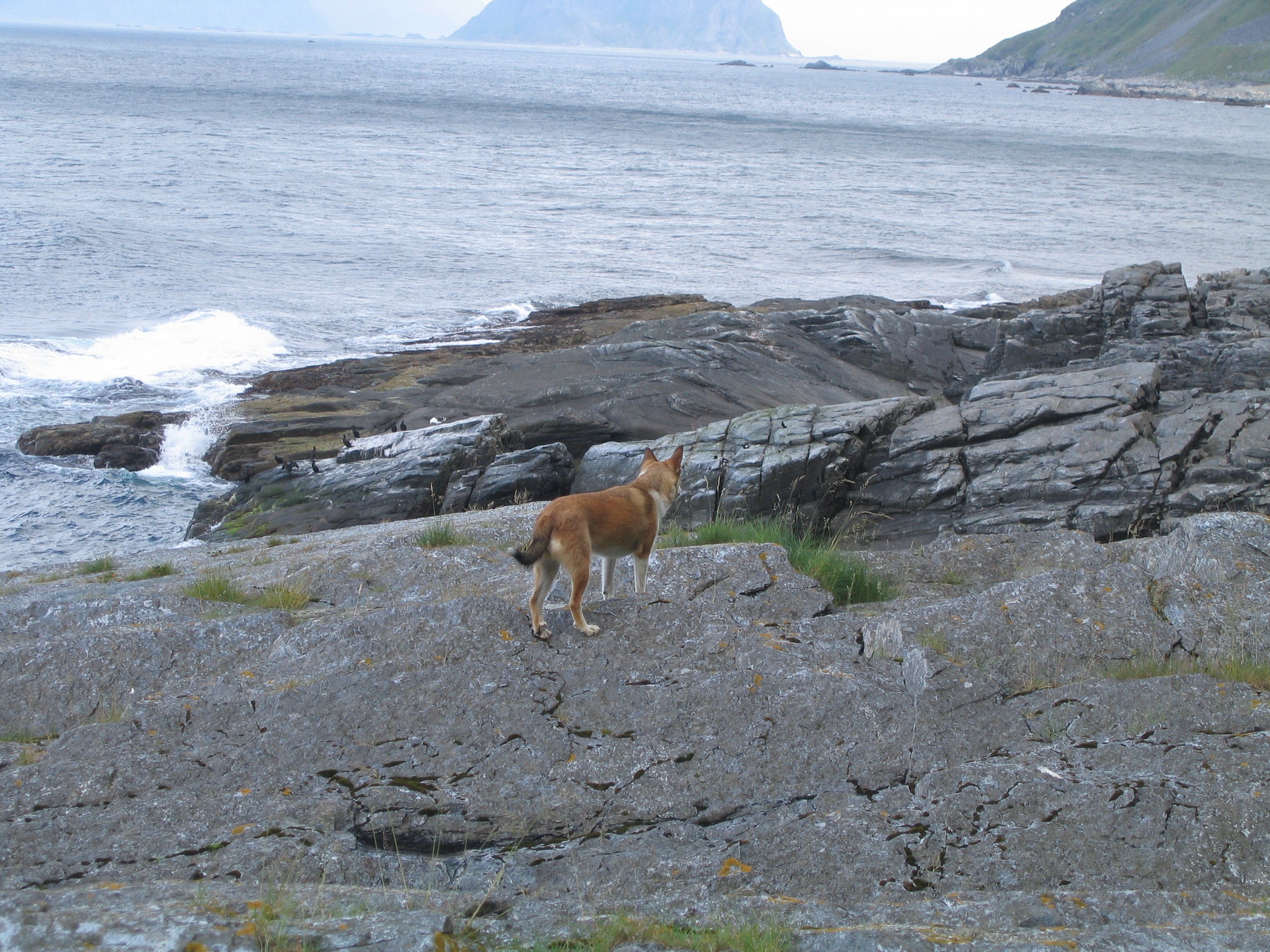
The breed nearly died twice. Eleanor Christie and her husband rebuilt it in the 1930s, building a kennel of more than 60 dogs; after the Second World War only six were left. Then a distemper outbreak in 1963 left six again — one dog on Værøy and five in Hamar, in eastern Norway, all from the same mother. Every Lundehund alive today descends from that bottleneck, and the breed still carries it: the world population was about 1,500 in 2022, with about 900 of them in Norway. (Source: Wikipedia, Norwegian Lundehund.)
Recognition came late and in stages. The Norwegian Kennel Club recognized the breed in 1943; the FCI lists it as Standard No. 265, Group 5, Section 2, Nordic Hunting Dogs. The United Kennel Club recognized it on January 1, 1995. The AKC took it into the Miscellaneous Class on July 1, 2008, the Board voted on February 12, 2010 to accept it into the stud book, and full recognition followed on January 1, 2011. With puffins now a protected species, the job that made the breed is gone; today’s Lundehund is what the AKC’s breed page calls it — “a friendly, athletic companion.” (Sources: Wikipedia, Norwegian Lundehund; AKC Norwegian Lundehund breed page.)
3. The standard and why it’s written that way
The standard opens with the job, and it names the traits that make this breed unlike any other: “small rectangular and agile Spitz breed with unique characteristics not found in any other breed.” Then it lists the characteristics that must be present: a minimum of six toes on each foot, with elongated rear foot pads; an elastic neck that allows the head to bend backward to touch the spine; shoulders flexible enough for the front legs to extend flat to the side “in order to hug the cliffs”; and ears that close and fold forward or backward to protect the ear canals from dirt and debris. Every one of those traits is a cliff-hunting adaptation, and the standard treats them as the breed, not as decoration. (Source: AKC standard, effective July 1, 2008.)
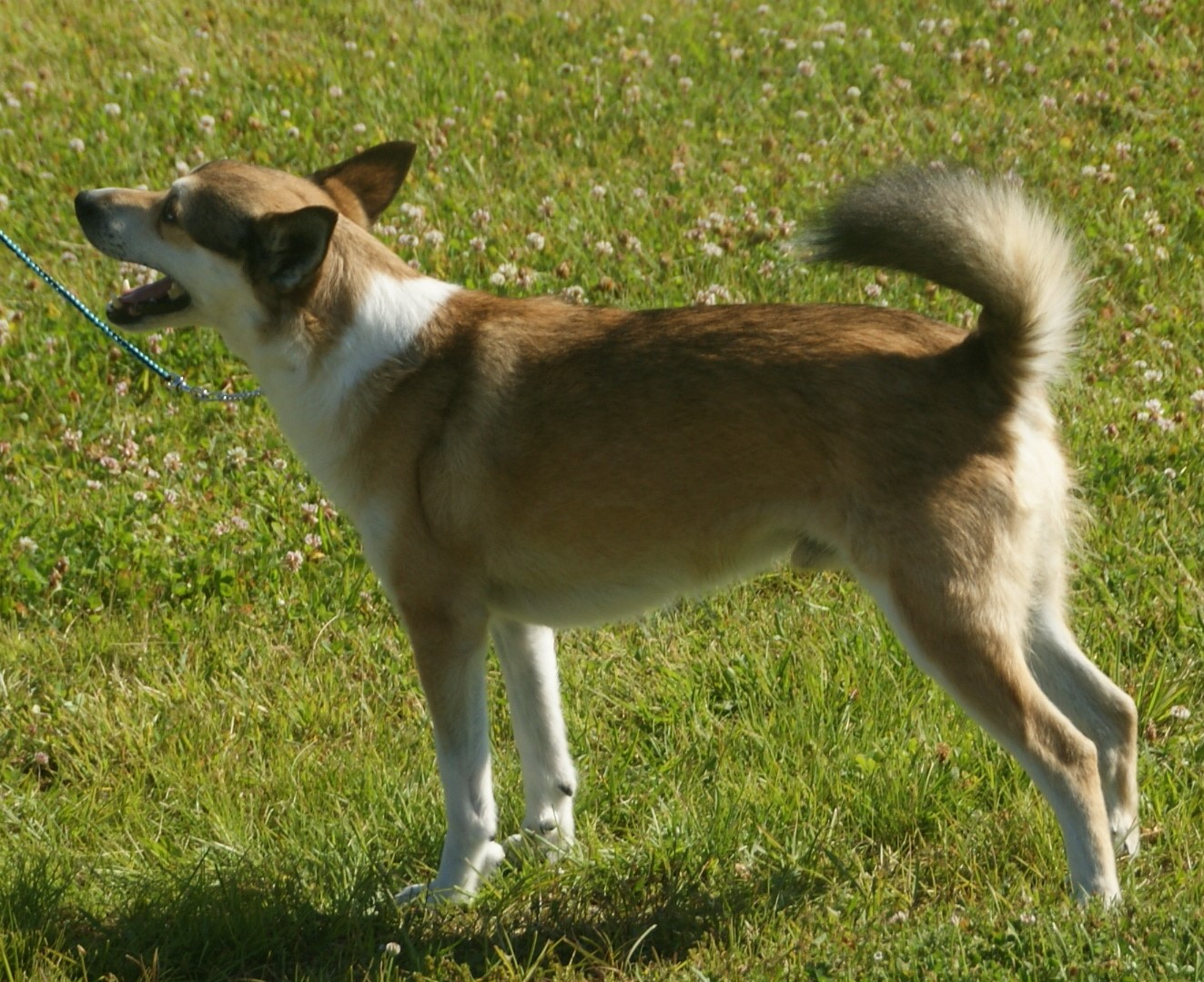
- Small numbers. The numbers are small. Desired height is 13 to 15 inches for males and 12 to 14 for females, the body slightly longer than tall, the chest about half the height at the withers.
- Head, eyes, and ears. The head is wedge-shaped, with a black nose and black lips; a scissors bite is preferred, a level or reverse scissors bite is permitted, and missing premolars on both sides are common and allowed. The eyes are almond-shaped, yellow-brown to brown with a brown ring around the pupil; light eyes are preferred, and the eye rims are dark and complete — a dog with a completely white head, or with 50 percent of the head white, should have complete dark eye rims and lashes. The ears are medium-sized and triangular, broad at the base, carried erect and very mobile; the ear leather can be folded and turned up, backward, or at right angles so the ear openings clamp shut.
- Flexibility is never demonstrated. One line in the standard is worth quoting whole, because it tells you how seriously the breed takes its own flexibility: “The judge should never ask the handler to demonstrate the characteristic flexibility in the ring, as the dog cannot relax sufficiently at a dog show.” (Source: AKC standard.)
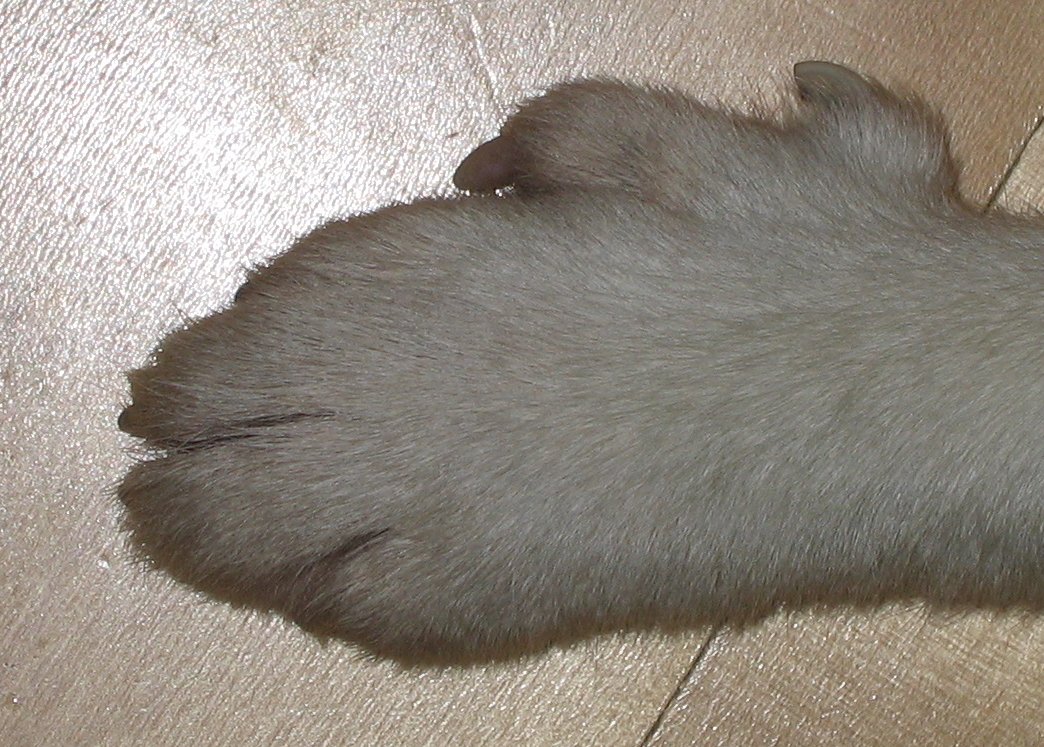
- Six toes on every foot. The feet get the most words of any part of the dog, and they earn them. The forefeet are oval, slightly turned out, with at least six fully developed toes, five of them reaching the ground, and eight pads. The hind feet are oval, with a minimum of six toes, four of them supporting the weight, and seven pads, the center pad elongated.
- A working specification. Read the standard as a working specification: the extra toes and the elongated pads are grip on wet rock, the elastic neck is for turning in a burrow, the folding ears are for keeping cliff dirt out of the ear canal.
- Coat, color, and gait. The coat is double — a harsh outer coat and a dense soft undercoat, short on the head and the front of the legs, longer around the neck and the back of the thighs — and it is presented naturally, with no trimming. The color is fallow to reddish brown to tan with black hair tips and white markings, or white with red or dark markings, and the black tips increase with maturity. The gait is light and elastic, with a unique rotary movement in front. (Source: AKC standard.)
The standard carries no color disqualification — the only disqualification the UKC standard adds is albinism — so the color range above is the whole of it: reddish-brown and white dogs, white dogs with red or dark markings, and black and gray dogs are all conforming. What the standard does disqualify by temperament is aggression: “alert, very energetic, loyal and protective. He can be wary of strangers but never aggressive toward people.”
4. Temperament & living with one
- Alert, energetic, and loyal. The standard’s temperament line is short and it is the whole of the breed’s character in one sentence: “alert, very energetic, loyal and protective. He can be wary of strangers but never aggressive toward people.” At home the Lundehund is loyal, playful, and sensitive — a good family dog that tolerates children well when it is socialized, and a dog that bonds hard to its people. It is also independent and curious, and it can be stubborn and aloof with strangers: a Lundehund decides for itself whether you are worth knowing. (Sources: AKC standard; AKC Norwegian Lundehund breed page.)
- Easy to love, hard to train. What that means at home is a dog that is easy to love and not always easy to train. The Lundehund is intelligent and learns fast when the work is worth its time — the parent club’s agility feature in the fall 2026 newsletter profiles five owners who run the breed, and the advice that runs through it is to make the training worth the dog’s while.
- Needs work, takes patience. It needs daily exercise and mental work, and it will invent its own work if you do not provide any: a bored Lundehund is a Lundehund exploring the house. Breed guides note that house-training can take patience and that the breed can be vocal; neither is a reason not to own one, and both are reasons to go in with your eyes open. (Sources: NLAA, Lundie Link, Fall 2026; AKC Norwegian Lundehund breed page.)
5. Grooming
- The coat does the work. Grooming is straightforward, and the coat does most of the work itself. The double coat sheds moderately year-round and heavily twice a year, in the spring and fall coat blows; a weekly brushing with a firm bristle brush or an undercoat rake keeps it in shape outside shedding season, and daily brushing during a blow. There is no trimming: the standard says the dog is presented naturally, so a Lundehund in the ring is shown as it lives, double-coated and unclipped. (Sources: AKC standard; AKC Norwegian Lundehund breed page.)
- Ears and feet need attention. The ears need the attention the coat does not. Ears that fold shut trap moisture, and Lundehund ears should be checked and cleaned regularly. The feet need a count, not just a trim: there are more toes than on any other breed, and more nails to keep short. Keep the nails trimmed — a Lundehund that runs will wear them down, and a Lundehund that does not run will need them cut, all six of them on every foot.
6. Health testing
- One condition dominates. The breed’s health story is dominated by one condition. Lundehund syndrome is an intestinal lymphangiectasia — a protein-losing enteropathy — usually tangled up with chronic atrophic gastritis, inflammatory bowel disease, and small intestinal bacterial overgrowth. Affected dogs have intermittent diarrhea, vomiting, weight loss, and fluid in the abdomen. There is no cure; it is managed with a low-fat, higher-protein diet and medication, and the breed is also predisposed to gastric tumors. A mortality study found about 30 percent of deaths before age 11 were from Lundehund syndrome, with about 10 percent more from other gastrointestinal disease. (Source: Wikipedia, Norwegian Lundehund.)
- The bottleneck behind it. Behind the syndrome sits the bottleneck. The 1963 distemper outbreak left six dogs, and the breed’s gene pool has never recovered: a mutation in the LEPREL1 gene has been implicated in the syndrome, and it is nearly fixed in the population, so DNA testing has limited value as a breeding tool.
- The Norwegian outcross program. The Norwegian club’s answer is an outcross program, crossing Lundehunds with the Norwegian Buhund, the Norrbottenspets, and the Icelandic Sheepdog: second-generation dogs were approved for breeding in August 2026, third-generation offspring have been approved, and new first-generation puppies were born in June 2026. That is a Norwegian program, run by the Norwegian Kennel Club — not an American one — and it is the most important thing happening in the breed’s health. (Sources: Wikipedia, Norwegian Lundehund; NLAA, Lundie Link, Fall 2026.)
- The CHIC list. What a buyer can ask for is the CHIC list. The OFA/CHIC requirements for the breed are a patella evaluation, an eye examination (CAER/OFA), and submission of a blood sample to the OFA/CHIC DNA repository. Those three are the floor, not the ceiling: the question that matters most is how the breeder manages syndrome risk in their lines, and a breeder who tests will show you the actual results, not just say the tests were done. Lifespan is 12 to 15 years by the AKC’s figure, with the syndrome caveat above; some breed guides give 10 to 12 years. (Sources: Good Dog, Norwegian Lundehund health-testing guide; Paction, Norwegian Lundehund.)
7. The annual Norwegian Lundehund specialty dog show
A specialty is the breed’s All-Star show — its Super Bowl. Once a year, the best Norwegian Lundehunds from across the country, and often from around the world, come together in one place.
The Norwegian Lundehund Association of America’s national specialty is the anchor of the Lundehund’s year — a designated specialty held inside the Brevard Kennel Club show at the Orlando Cluster, during AKC National Championship week, with the breed’s people gathered around it. The club is small and the entry is small; the specialty is where the breed’s serious breeders, handlers, and judges meet — and where the Best Feet competition, the breed’s polydactyl prize, is awarded.
The National Specialty: a designated specialty, Wednesday, December 9, 2026, at the Orange County Convention Center, North/South Building, 9899 International Drive, Orlando, Florida — with the Brevard Kennel Club all-breed show, inside the Orlando Cluster (December 8–10) and the AKC National Championship week. Entries close 12:00 noon EST, Wednesday, November 11, 2026; MB-F, Inc., Superintendent. (Sources: official premium list; AKC Upcoming National Specialties; NLAA Lundie Link, Fall 2026.)
Specialty judge: Mrs. Wendy Corr — Best of Breed, Brace, and the Best Feet competition. Non-Sporting Group: Dr. Azalea A. Alvarez. Owner-Handled: Mr. Juan Miranda. The Best Feet competition — the breed’s polydactyl prize, awarded annually at the national specialty — is judged after Best of Breed, with feet scored on oval shape, at least six fully developed toes on each foot, and the elongated rear center pads. (Sources: official premium list; NLAA Lundie Link, Fall 2026.)
Ring, time, and entry count await the MB-F judging program, not yet published as of November 2026; winners from the 2026 specialty likewise not yet published in an official source and to be added here when they are.
The 2027 national specialty: a return to Bloomington, Illinois, in May 2027, as a supported entry; exact dates not yet announced as of November 2026. (Source: NLAA Lundie Link, Fall 2026.)
Past national specialties: 2025
8. Regional specialties through the year: smaller regional shows
The Norwegian Lundehund Association of America is the breed’s only specialty club, so the Lundehund’s year runs through the national specialty and the club’s supported entries at the Orlando Cluster, rather than a circuit of regional specialties. These are the 2026 regionals verified from club sources so far:
No regional specialties announced yet for 2026.
The club supports Lundehund entries at the Central Florida Kennel Club show on Thursday, December 10, 2026 — Best of Breed judged by Dr. Azalea A. Alvarez — and the national specialty itself is held inside the Brevard Kennel Club show on Wednesday, December 9. Browse upcoming show weekends →
9. Clubs
- Norwegian Lundehund Association of America (parent club) — the AKC parent club for the breed in the United States. It runs the national specialty, held in 2026 as a designated specialty inside the Brevard Kennel Club show at the Orlando Cluster, and handles rescue and rehoming for the breed. President Kristina Leach-Knubel, Vice-President Diane Anderson, Treasurer David Rachford, Secretary Cindy Stansell (2026).
- Norsk Lundehund Klubb (Norway) — the breed’s home club, which runs the outcross program described in the health section.
No separate regional Lundehund specialty clubs could be verified — the Norwegian Lundehund Association of America is the breed’s only specialty club. If you are new to the breed, the national specialty itself is the better first stop than a breeder’s website: the people there have owned, shown, and lived with Lundehunds, and they will tell you the truth about the syndrome before you fall for a puppy.
10. Rescue
- The parent club is first. There is no Lundehund-only national rescue that could be verified as a standalone organization, so the parent club is the first call: the Norwegian Lundehund Association of America handles rescue and rehoming for the breed itself (the AKC’s breed-club directory lists a Norwegian Lundehund Association of America Rescue). Very few Lundehunds ever come into rescue — the breed is too rare, and the waitlists for puppies are too long, for many to be given up — but when one does, it comes through the club’s network, not a shelter intake. (Source: nlaainc.com.)
- Ask about syndrome first. A rescued Lundehund is usually an adult, and it will arrive with a history you may never fully know — including, quite possibly, a history of Lundehund syndrome, which is the first thing to ask the rescue about and the first thing to budget for. What you get in return is a dog whose temperament you can see before you commit, and a club that will take the dog back for life if it does not work out. If the club has no dog available, the honest answer is a waitlist, not a different rescue: a Lundehund from a general shelter is rare enough that a “Lundehund” in a shelter listing is usually a guess.
11. Breeder vs. rescue: honest guidance
- If you buy: start with the parent club, the Norwegian Lundehund Association of America. Puppies are scarce and the waitlists are long — expect months, and plan for it.
- Ask about syndrome risk. The breeder’s answers matter more here than in most breeds, because the breed’s health problem is specific and serious: ask how they manage Lundehund syndrome risk in their lines, ask for the CHIC tests (patella evaluation, eye examination, blood sample to the OFA/CHIC DNA repository), and ask what they will take back. A good breeder will have an answer for all three, will ask you as many questions as you ask them, and will take the puppy back for its whole life if you cannot keep it. Be wary of any breeder who says the breed has no health problems — syndrome is the breed’s defining health fact, and a breeder who will not discuss it is not being straight with you.
- If you rescue: a rescued Lundehund is usually an adult, and it will arrive with a coat that needs weekly brushing and a gut that needs a careful diet. What you get in return is a dog whose temperament you can see before you commit and a lower price. Either way, budget the exercise and the food first: a Lundehund you cannot tire out is a Lundehund that will invent its own work, and a Lundehund on the wrong diet is a dog you will be carrying to the vet.
- No rare color or miniature. One thing that is not what a seller tells you: there is no such thing as a rare color or a miniature Lundehund. The standard wants fallow to reddish brown to tan with black hair tips and white markings, or white with red or dark markings — and one size, 12 to 15 inches. A breeder selling a “rare” color or a smaller Lundehund is selling you a label, usually at a premium.
12. Claim this page
This page belongs to the breed, and the people who know the breed best are the Norwegian Lundehund Association of America and its members. If you are with the parent club — or you are a breeder, a judge, a handler, or a rescue volunteer who spotted something wrong, missing, or out of date — this page is yours to set straight. Tell us what needs fixing and where the correction is documented, and we will fix it and credit the source. Contact the site through the About page, and mention “Norwegian Lundehund breed profile.”
Sources
- AKC Norwegian Lundehund breed standard, effective July 1, 2008 — a.storyblok.com/f/92981/x/f72ffcda11/akc-norwegian-lundehund.pdf
- AKC, Norwegian Lundehund breed page — akc.org/dog-breeds/norwegian-lundehund
- AKC, rarest dog breeds of 2025 — akc.org/expert-advice/dog-breeds/rarest-dog-breeds-2025
- AKC, most popular dog breeds of 2025 — akc.org/expert-advice/dog-breeds/most-popular-dog-breeds-2025
- AKC Upcoming National Specialties — apps.akc.org/apps/events/conformation/national_specialties.cfm
- 2026 Orlando Cluster premium list (MB-F, Inc.) — thepetadvisor.com/assets/premiums/2026/orlando-cluster-2026.pdf
- NLAA, Lundie Link, Fall 2026 — Lundie-Link-Fall2026-nonmembers.pdf
- NLAA, Lundie Link, Summer 2025 — Newsletter-LL-Summer25x.pdf
- Norwegian Lundehund Association of America — nlaainc.com
- Good Dog, Norwegian Lundehund health-testing guide — gooddog.com/breeds/norwegian-lundehund/health-testing-guide
- Paction, Norwegian Lundehund — paction.ca/dog-breeds/norwegian-lundehund
- ShowSight, 2025 National Specialty Winner (GCH CH Solkanata's Teal The Show) — showsightmagazine.com
- Wikipedia, Norwegian Lundehund (history, bottleneck, health, recognition) — en.wikipedia.org/wiki/Norwegian_Lundehund