
Breed profile · Non-Sporting Group · One breed, three varieties
Miniature Poodle
The Miniature Poodle is the middle variety of the Poodle — over 10 inches and up to 15 at the shoulder, the same brain and the same coat as the Standard in a smaller body. It was bred down for city life and the circus ring, and it has never quite left the stage: a Miniature took Best of Breed at the 2026 Poodle Club of America national specialty, and Miniatures have won Best in Show at Westminster four times — most recently in 2024.
This profile covers the Miniature Poodle. The Poodle as a whole has its own profile too: Poodle. For the other varieties: Standard Poodle, Toy Poodle.
Help us improve it. This is one of ThePetAdvisor’s breed profiles, built from public sources with generous links to the people who actually own this breed’s knowledge. If something’s off or missing, the parent club can claim the page and set it straight — see the bottom of the page.
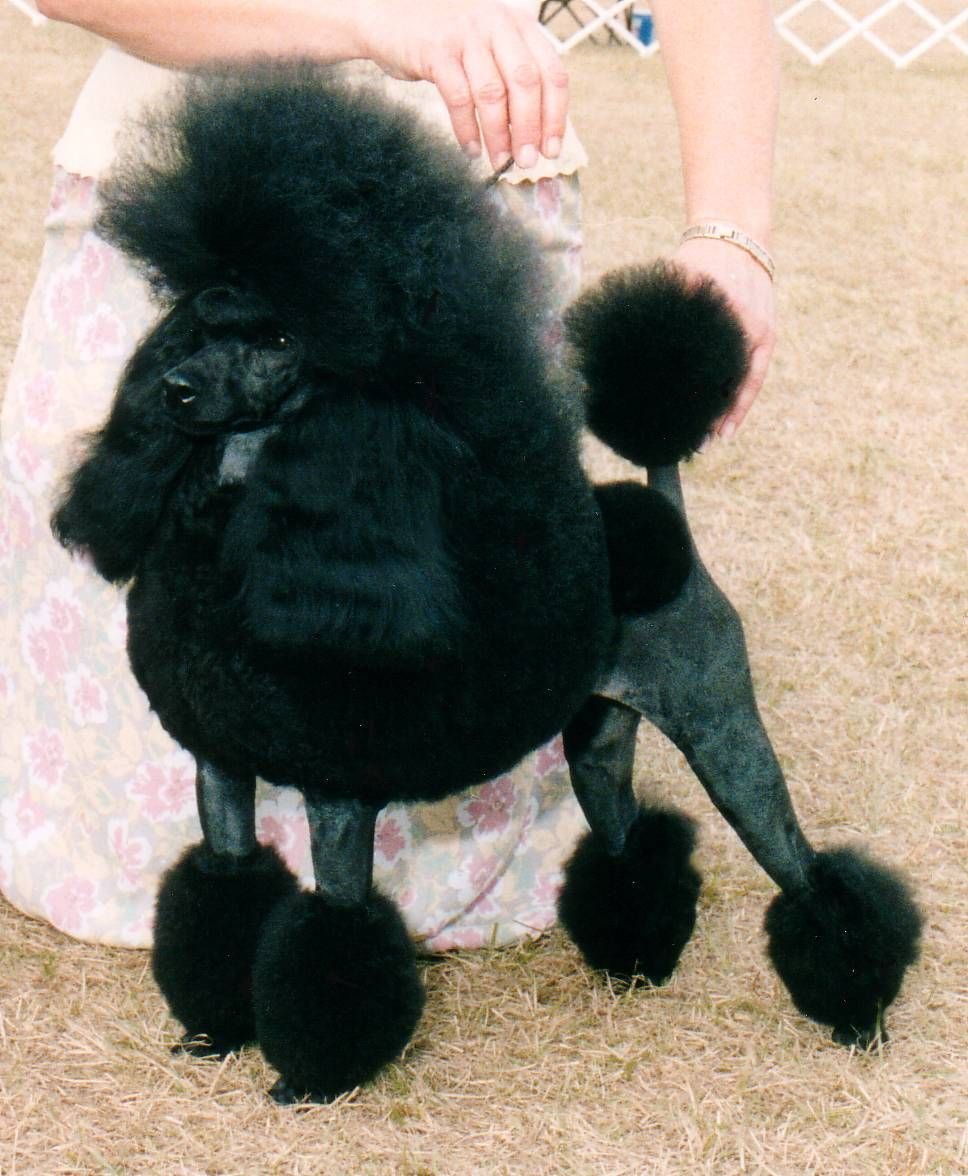
Do you have a better photo of a Miniature Poodle in the American show ring? If you have a show photo you’d let us use, email it to [email protected] — tell us the dog’s name and the show, and it may be featured here.
1. Breed at a glance
- Group: Non-Sporting (AKC) — the same group as the Standard Poodle; the Toy Poodle is in the Toy Group.
- Size: Over 10 inches and up to 15 inches at the shoulder. The AKC lists the weight range at 10 to 15 pounds.
- Coat: Curly, dense, and profuse — the same coat as the other varieties, in the same clips.
- Temperament: Bright, busy, and eager to work; the same brain as the Standard in a smaller body.
- Lifespan: 10 to 18 years, with the smaller varieties tending to live longer.
- Energy: High. A Miniature needs a job — training, agility, or a long daily walk — or it will invent one.
- Shedding: Very low. The coat holds shed hair instead of dropping it, which is why it mats without regular grooming.
- Recognition: The AKC registers the Poodle as one breed in three varieties. The Standard and Miniature were recognized in 1887; the Toy became the third variety in 1943.
The Miniature is the Poodle at apartment scale: small enough to live in a flat and travel in a carrier, large enough to hike, swim, and compete in every dog sport the Standard does. It is the variety most often chosen by people who want a real working dog in a smaller package — and the variety that has won Westminster four times.
2. History
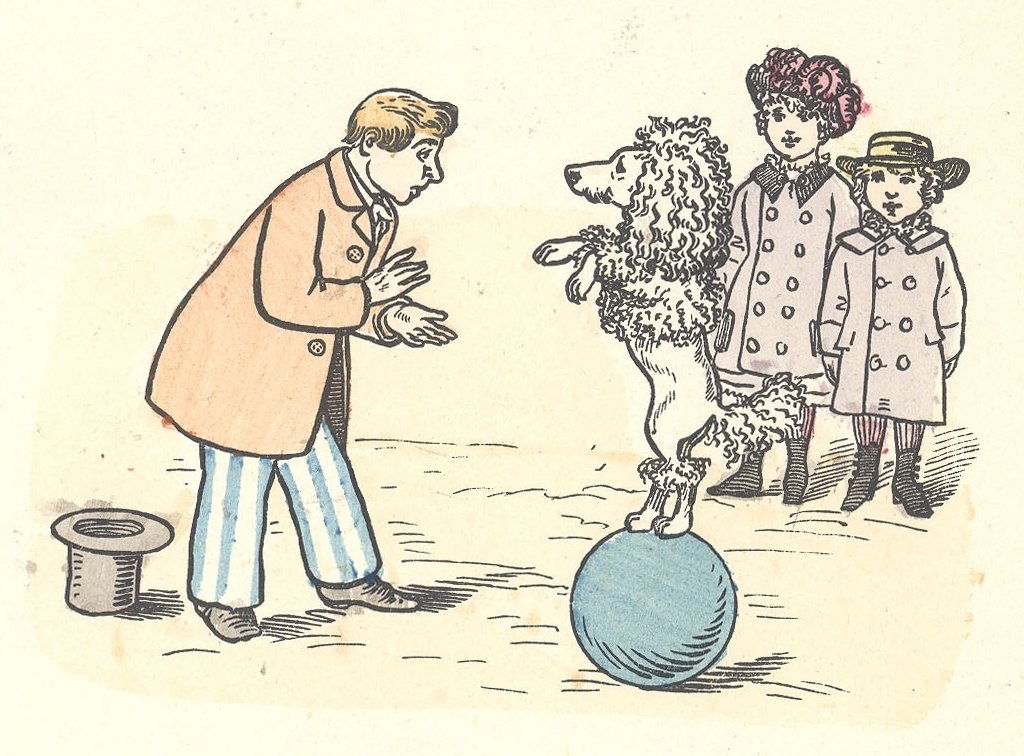
The Miniature Poodle was bred down from the Standard. The AKC's breed history puts it plainly: "During the 18th century, the Standard Poodle was bred down to the smaller Miniature and Toy Poodles to appeal to city dwellers in Paris and other European cities. Around the same time, the Poodle began performing in circuses and dog shows." The smaller dog was easier to keep in a city flat, easier to travel with — and, once the circus discovered it, a natural performer. The Poodle's reputation as a trick dog dates from this era, and the Miniature was at the center of it.

In America, the AKC recognized the Standard Poodle and the Miniature Poodle as separate breeds in 1887, both in the Non-Sporting Group. The Poodle Club of America was formed in 1931, and it recognized the Toy Poodle as the third variety in 1943. The three varieties have been judged as one breed with three varieties ever since — and the Miniature has been the most successful of them at Westminster.
Miniature Poodles have won Best in Show at Westminster four times: Pitter Patter of Piperscroft in 1943, Fontclair Festoon in 1959, Surrey Spice Girl ("Spice") in 2002, and GCHG CH Surrey Sage ("Sage") in 2024. Sage's win was a story in itself: she was handled by Kaz Hosaka, who ended his 45-year handling career with that win — his second Westminster Best in Show, the first being Spice in 2002. Spice is the great-great-granddam of Sage, and both were bred by Kathleen Wallen and Hosaka; Sage is owned by Cathy Gauche. She was the fourth Miniature and the 11th Poodle of any variety to take the top prize at Westminster.
Winston Churchill kept a Miniature Poodle, "Rufus" — the AKC's history notes he was photographed leaping up to greet Churchill on his return home. The Miniature has always been the Poodle as a companion first and a show dog second: small enough to sit on a lap, smart enough to run a household.
And the variety's present is as strong as its past. At the 2026 Poodle Club of America national specialty, the Best of Breed winner — GCH CH Karadale The Last Dance — was a Miniature. The middle variety took the top prize over all three.
3. The standard and why it's written that way
The AKC Poodle standard is one standard for all three varieties. The only difference between the varieties in the standard is height: the Standard is over 15 inches at the shoulder, the Miniature is over 10 inches up to 15, and the Toy is 10 inches or under. A dog of the wrong height for its variety is disqualified from competition as that variety.
Everything else is shared. The standard calls the Poodle "an active, intelligent and elegant-appearing dog, squarely built, well proportioned, moving soundly and carrying himself proudly." The head is "rectilinear" — straight and fine, with a long, straight muzzle and dark, oval eyes set far enough apart to give an alert, intelligent expression. The coat is "curly, harsh, and dense," and the standard is explicit about what it is not: a soft coat is a fault.
The standard's most distinctive sentence is about proportion between the varieties: "As long as the Toy Poodle is definitely a Toy Poodle, and the Miniature Poodle a Miniature Poodle, both in balance and proportion for the Variety, diminutiveness shall be the deciding factor when all other points are equal." In plain terms: a Miniature should look like a Miniature — a smaller dog in every proportion, not a Standard shrunk in the wash. Size is the variety; balance is the breed.
The standard is written the way it is because the Poodle was a working water retriever before it was a show dog, and the breed's shape still has to work. The square build, the strong hindquarters, the long neck carried proudly — all of it describes a dog that could swim, retrieve, and move all day. The clips are part of the same story: they were cut to keep the joints and chest warm in cold water while letting the dog swim freely.
Clips
The same clip rules apply to the Miniature as to the other varieties. Dogs under 12 months may be shown in the Puppy clip. Adults 12 months and over in regular classes must be in the English Saddle clip or the Continental clip. The Sporting clip is allowed only in the Stud Dog, Brood Bitch, and Parade of Champions classes. Any other clip is a disqualification.
On a Miniature, the clips read differently than on a Standard: the same Continental clip on a 13-inch dog is a smaller, tighter package, and the pompons, the shaved hindquarters, and the topknot have to be in proportion to a smaller frame. The standard warns that the topknot should not be so heavy as to weigh the head down, and that the coat should never be so long or so thick that it hides the dog's outline.
The standard also bars bows, ribbons, and other decorations in the ring, and it disqualifies any dog shown with a topknot tied up. Show Poodles never wear bows — the coat is the decoration.
One breed, three varieties — how they are judged
The Poodle is one AKC breed in three varieties, and the varieties are judged separately. At a dog show, each variety is judged in its own ring with its own judge, through Winners Dog, Winners Bitch, and Best of Variety — Best of Variety takes the place of Best of Breed for the nine AKC breeds divided into varieties. Each variety's Best of Variety winner advances to its group: the Standard and the Miniature to the Non-Sporting Group, the Toy to the Toy Group. At the Poodle Club of America's national specialty, the three Best of Variety winners meet in the Intervariety competition to decide Best of Breed. In 2026, that competition was won by a Miniature.
4. Temperament & living with one
A Miniature Poodle is the same brain as the Standard in a smaller body — and that is both the appeal and the warning. The breed is famously intelligent, and a Miniature will learn the household's routines faster than its owner does, then start improving them. They are busy dogs: they want a job, and if you don't give them one they will invent one, usually involving opening doors, rearranging the laundry, or barking at the mail.
They are companion dogs first. A Miniature wants to be with its people, in the room, on the sofa, in the car. They are good with children who are old enough to be gentle, and they are famously good with older people — the size is manageable, the coat doesn't shed on the furniture, and the dog is happy to spend the day at home as long as someone is there. They do not do well left alone for long hours; a bored Miniature is a destructive Miniature.
In sport, the Miniature is a natural. The breed excels at agility, obedience, rally, and scent work, and Miniatures compete at the top levels of all of them. The smaller body is an advantage in agility — quick, tight turns, a low center of gravity — and the intelligence that makes them easy to train also makes them easy to bore, so training has to stay interesting. A Miniature that has learned the pattern will start offering variations.
They are alert watchdogs without being aggressive: they will announce a visitor, then greet them. They are generally good with other dogs and with cats, especially when raised with them. And they travel well — a Miniature fits in a carrier under an airplane seat, which is one reason the variety is so popular with people who fly with their dogs.
The honest trade-off is the coat and the brain together. The coat needs real grooming, every week, for the dog's whole life — see the next section. And the brain needs real engagement, every day, for the dog's whole life. A Miniature Poodle is not a low-maintenance dog. It is a high-reward one.
5. Grooming
The Miniature Poodle's coat is the same curly, dense coat as the Standard's, and it needs the same care: thorough brushing to the skin at least twice a week, a bath every three to four weeks, and a professional clip every six to eight weeks. The coat holds shed hair instead of dropping it, so a Miniature that isn't brushed mats — and mats, once they form, have to be cut out. Regular brushing is not cosmetic; it is the price of the low-shedding coat.
Most pet Miniatures live in a short, practical clip — a lamb clip or a kennel clip — rather than the Continental or English Saddle of the show ring. A short clip is easier to maintain, dries faster after a bath, and still looks like a Poodle. The ears need regular cleaning, the teeth need regular brushing, and the nails need trimming every few weeks.
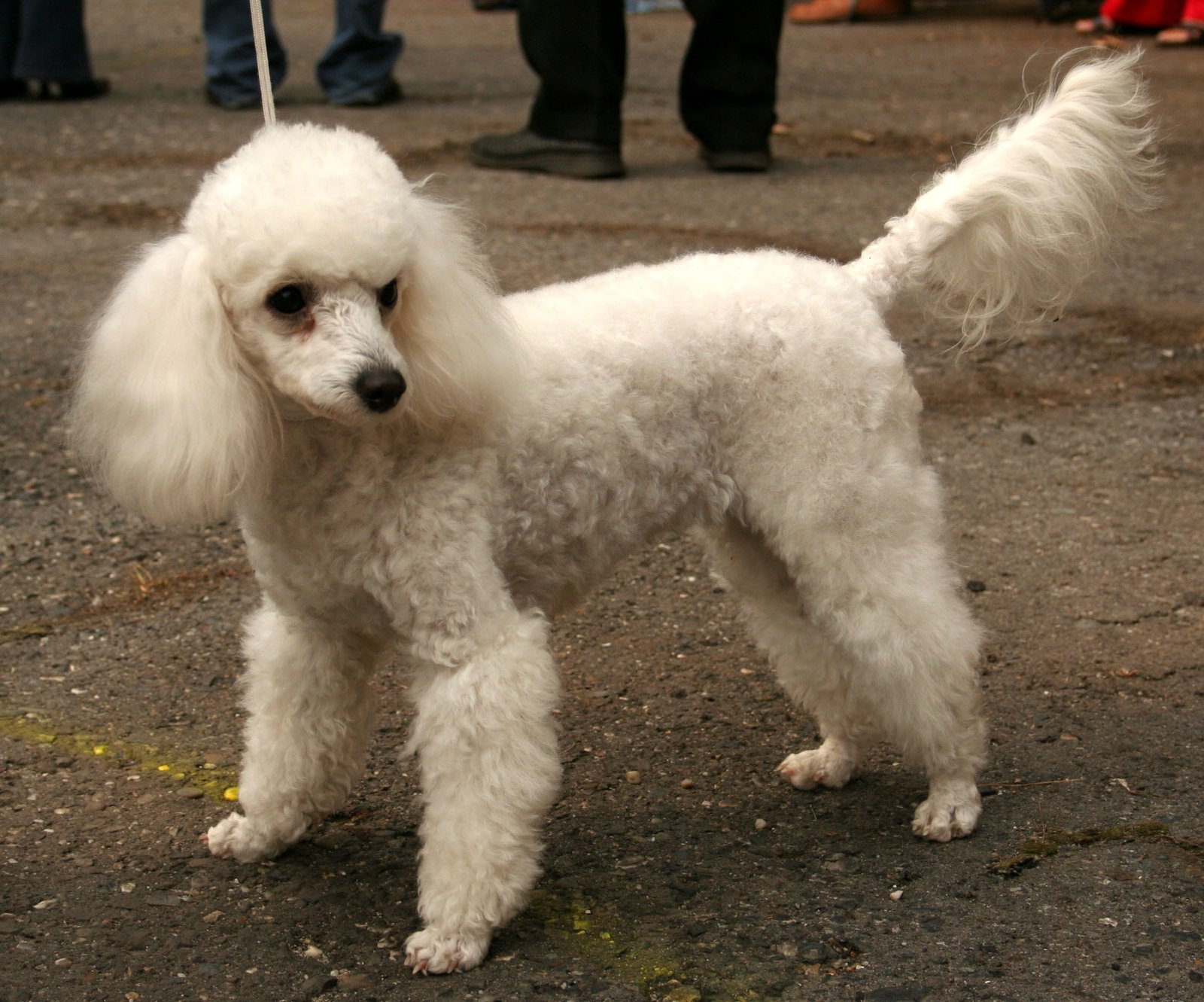

Expect to budget for a professional groomer unless you learn to clip the dog yourself — many Miniature owners do, since the smaller dog is easier to handle on a table than a Standard. Either way, start grooming early: a puppy that is handled, brushed, and clipped from eight weeks old grows into an adult that stands quietly for grooming instead of fighting it.
6. Health testing
The Poodle Club of America's health-testing guidance is specific to each variety, and the Miniature's list is longer than the Toy's and shorter than the Standard's. For a Miniature Poodle, the PCA recommends a DNA test for prcd-progressive retinal atrophy, a yearly eye examination, and a patellar luxation evaluation — plus a hip evaluation, which the Toy does not need. The PCA Foundation also strongly recommends a DNA test for Miniature Poodle dwarfism (osteochondrodysplasia), since about 10 percent of Miniatures carry the mutation.
Progressive retinal atrophy (prcd-PRA) is the disease to know about. It is an inherited eye disease that causes gradual blindness, and it affects Miniature and Toy Poodles. The DNA test identifies carriers, and a responsible breeder tests both parents so that no affected puppies are produced. The yearly eye examination catches other eye problems early.
Patellar luxation — a kneecap that slips out of place — is common in smaller dogs, and Miniatures are no exception. A dog with a luxating patella may skip a step or hold a hind leg up for a stride, then carry on as if nothing happened. Mild cases need no treatment; severe cases need surgery. The evaluation is a simple hands-on examination by a veterinarian.
Miniature Poodle dwarfism (osteochondrodysplasia) is a skeletal disorder that causes shortened legs and a deformed spine. About 10 percent of Miniatures carry the mutation, which is why the PCA Foundation strongly recommends the DNA test. Two carriers should never be bred together.
Legg-Calvé-Perthes disease — a degeneration of the hip joint that causes pain and lameness in young dogs — also occurs in Miniature Poodles. It is one reason the hip evaluation matters for this variety.
Ask any breeder for the results of these tests on both parents before you commit to a puppy. A breeder who has done them will be glad to show you; a breeder who hasn't is telling you something.
7. The specialty year: the national specialty is the anchor
The Poodle Club of America’s national specialty is the anchor of the Miniature Poodle’s year — and in 2026 the Miniature took the top honor, Best of Breed.
93rd National Specialty ran Tuesday to Friday, April 21–24, 2026, at Purina Farms’ Purina Event Center, 300 Checkerboard Loop, Gray Summit, Missouri. The show was dedicated to “our 94 year-old Poodle Club of America.” The specialty show and trials drew 577 dogs and 605 entries across the three varieties, with a further 95 dogs and 112 entries in the concurrent obedience, rally, and 4–6-month puppy events. The Miniature drew 100 entries (46 dogs, 54 bitches). (Sources: official judging program; premium list; AKC event results.)
The week ran on the usual pattern. Tuesday was obedience and rally, a Parade of Rescue Dogs, and a Parade of Companion and Performance Titleholders. Wednesday was the regular dog classes — Miniature 33 dogs — plus the 4–6-month puppy competition (26 puppies) and juniors, and the Parade of Champions. Thursday was the regular bitch classes — Miniature 52 bitches — plus Veteran Sweepstakes and the annual dinner. Friday closed with veterans and the hunt class, then Best of Variety for each variety and Intervariety, with 42 dogs in the Intervariety competition. FastCAT ran Monday to Wednesday alongside the show, and the national hunt tests were a separate event in the autumn, October 30 to November 2, 2026, at Guns Up in Advance, North Carolina. (Source: official judging program.)
The Miniature judges were Ms. Tina Yuhl for the dog classes and Miniature Best of Variety, and Dr. Donald Sturz, Jr. for the bitch classes. The Intervariety competition — the Best of Breed competition — was judged by Mr. Scott B. Wolfe.
Results: the Miniature took the top honor. Best of Breed (Intervariety) went to GCH CH Karadale The Last Dance, owned and bred by Karin & Dan Giles — she won the Miniature Best of Variety under Ms. Tina Yuhl, then Best of Breed under Mr. Scott B. Wolfe. Best of Opposite Sex went to the Standard, CH Aviator’s Mind The Gap. (Sources: PCA homepage; AKC event results.)
Next year: the 2027 national specialty is announced for April 19–23, 2027. The judging panel is pending AKC approval: Miniatures, Mrs. Patricia Proctor; Inter-Variety, Mrs. Gina Wieser. The venue had not been confirmed in the sources consulted as of November 2026. (Source: PCA judges education.)
8. Regional specialties through the year
The national is the anchor, but the breed’s year runs through its regional specialties, held by the PCA’s affiliate clubs. Every regional below is a three-variety specialty — the Standard, Miniature, and Toy are each judged in their own ring. These are the 2026 regionals verified from club and AKC event sources:
- Greenspring Poodle Club, Saturday, January 24, 2026, Howard County Fairgrounds, West Friendship, Maryland — 50 entries. (Source: AKC event listing.)
- William Penn Poodle Club, Saturday, May 2, 2026, Mercer County Park, W Windsor Township, New Jersey — judge Mrs. D. K. Ondo; 23 dogs and 30 entries (Toy 7, Miniature 4, Standard 12 entries); Best of Breed went to the Standard, “Unique Up In The Stars.” (Source: AKC event listing.)
- Washington Poodle Club, Friday to Sunday, October 9–11, 2026, West Friendship, Maryland — three shows, judged by Mr. Daniel Augustus, Dr. Valeria Rickard, and Mr. Gregg Kantak. (Source: Canine Chronicle specialty results.)
- Great Lakes Poodle Club of Chicago, Saturday, October 24, 2026, Lennox, Illinois — two specialties, judged by Mrs. Sandy Bingham-Porter and Mr. Tim Catterson. (Source: Canine Chronicle specialty results.)
The PCA’s affiliate-club roster — updated September 14, 2026 — lists the clubs that hold specialties and the contact for each; more regionals will be added here as their programs are verified. (Source: PCA affiliate-club roster.)
9. Clubs
The parent club for all three Poodle varieties is the Poodle Club of America, formed in 1931. It is the club that writes the standard, holds the national specialty, and runs the breeder referral service at poodleclubofamerica.org/breeder-referral. Its corresponding secretary is Adrienne Dorland.
The PCA's affiliated clubs are the regional home of the breed. The four that held specialties in 2026 — the Greenspring Poodle Club, the William Penn Poodle Club, the Washington Poodle Club, and the Great Lakes Poodle Club of Chicago — are all PCA affiliates, and each runs its own events, rescue program, and breeder referral. If you want to meet Miniature Poodles and the people who show them, a regional specialty is the place to start.
10. Rescue
The Poodle Club of America Rescue Foundation, Inc. is a 501(c)(3) established in 2006. Every PCA-affiliated club is required to have a Rescue Chairman, and the national specialty holds a Parade of Rescue Dogs each year. The Foundation rehomed Poodles of all three varieties and all ages — puppies, adults, and seniors — and it takes in owner surrenders, shelter dogs, and dogs from commercial breeding operations.
A rescue Miniature is often an adult dog whose history is known: the rescue can tell you whether the dog is good with children, with cats, with other dogs, and whether it has any health issues. The adoption fee is a fraction of a puppy's price, and the dog is spayed or neutered, vaccinated, and groomed before it goes home. If you want a Miniature and you don't need a puppy, rescue is the fastest honest route to one.
11. Breeder vs. rescue: honest guidance
There is no wrong answer here, only a wrong way to do either. A reputable breeder health-tests both parents for the tests listed in section 6, shows the dogs, belongs to the Poodle Club of America or an affiliated club, and takes a puppy back for life if you ever can't keep it. A breeder who does none of those things is not a reputable breeder, whatever they charge.
Be wary of anyone selling a "teacup" Miniature. There is no teacup variety — the three varieties are Standard, Miniature, and Toy, and a dog advertised as a teacup is either a Toy sold under a marketing name or a dog bred deliberately undersized, which brings health problems with it. The standard's own words apply: a Miniature should be "definitely a Miniature Poodle, both in balance and proportion for the Variety."
Be wary, too, of "doodle" crosses sold as if they were Poodles. A Labradoodle or Goldendoodle is a crossbreed, not a Poodle, and it does not inherit the Poodle's coat, temperament, or health testing in any predictable way. If you want a Poodle, buy a Poodle; if you want a crossbreed, buy one knowingly, from someone who health-tests both parent breeds.
Parti-coloured Poodles — white with patches of another colour — are Poodles, and they are shown in the UKC and in parti classes at some shows, but the AKC standard calls for solid colours in the conformation ring. A parti Miniature from a good breeder is a fine pet; it is not a show prospect in AKC conformation, and anyone selling one as such is misleading you.
Rescue, meanwhile, is not a second-best choice. The PCA Rescue Foundation and the affiliated clubs' rescue programs place dogs that are already house-trained, already groomed, and already known quantities. The trade-off is that you rarely get a puppy, and you rarely get to choose the colour. The gain is a dog that needs a home, at a fraction of the price, with the rescue's support behind it.
12. Claim this page
This Miniature Poodle breed profile belongs, in the end, to the people who know the breed best — the Poodle Club of America and its members. If you are with the parent club, or with an affiliated club, and something on this page is wrong or missing, claim it: email [email protected] and tell us what needs fixing. The page will record the club as its official contact for corrections, so the next reader gets the right information.
If you own a Miniature Poodle and you have a show photo you'd like to see leading this page, send it to the same address — tell us the dog's name and the show, and it may be featured here.
Sources
- Poodle Club of America — parent club; 2026 national specialty Best of Breed and Best of Opposite Sex.
- AKC event results, event 2026070212 — 2026 PCA national specialty results and entry counts by variety.
- 2026 PCA national specialty judging program — dates, venue, judges, entry counts.
- Poodle Club of America, Judges Education — 2027 national specialty dates and judges.
- AKC, Poodle history — 18th-century breeding down, circus era, 1887 recognition, 1943 Toy recognition, Churchill's Rufus.
- AKC Poodle breed standard — heights, clips, diminutiveness, topknot and bow rules.
- AKC, Westminster Best in Show winners through the years — Miniature wins 1943, 1959, 2002, 2024.
- AKC, Sage, 2024 Westminster Best in Show winner — handler, owner, breeder, fourth Miniature and 11th Poodle.
- Westminster dog show guide (AKC information) — how varieties are judged, Best of Variety.
- Poodle Club of America, breeder referral.