
Breed profile · Non-Sporting Group · the little lion dog
Löwchen
The Löwchen — German for “little lion” — is a small, bright, lively companion dog: 11 to 13 inches at the withers, with a long flowing mane, clipped hindquarters, cuffs on all four legs, and a tail plume. That is the traditional lion clip, and the standard allows no other trim. The breed has been a court companion in Europe for more than 500 years, and it is one of the rarest AKC breeds — the parent club calls it a breed in danger of going extinct — with full AKC recognition only since January 1, 1999. Its year turns on the annual Löwchen specialty dog show — the 2026 national was held May 23, 2026, in Kalamazoo, Michigan, and the 2027 national is set for April 17, 2027, in Perry, Georgia.
Help us improve it. This is one of ThePetAdvisor’s breed profiles, built from public sources with generous links to the people who actually own this breed’s knowledge. If something’s off or missing, the parent club can claim the page and set it straight — see the bottom of the page.
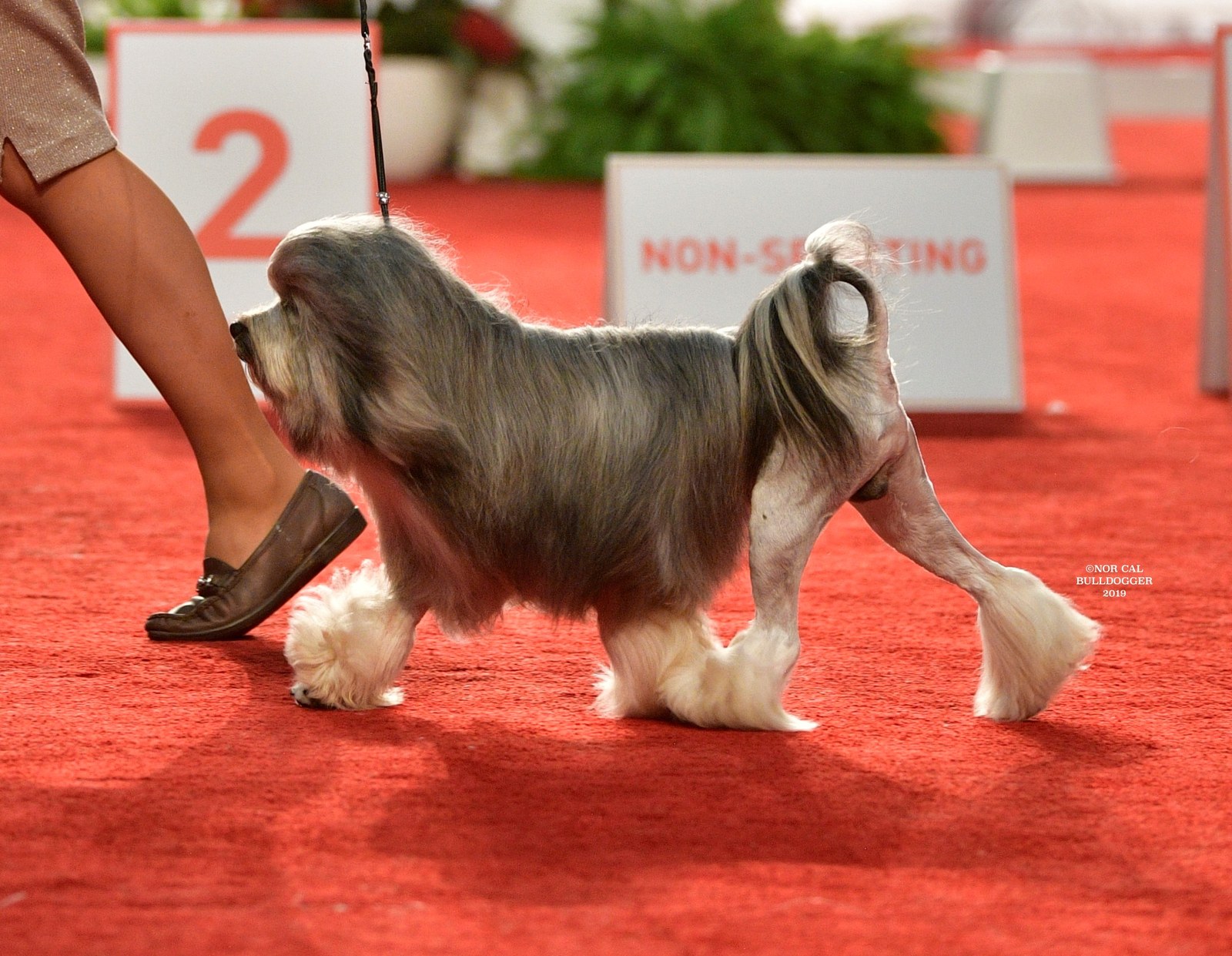

Do you have a better photo of a Löwchen in the American show ring? If you have a show photo you’d let us use, email it to [email protected] — tell us the dog’s name and the show, and it may be featured here. Please only send photos you took yourself or have the photographer’s permission to share, and tell us the photographer’s name.
1. Breed at a glance
- Group: Non-Sporting. Full AKC recognition January 1, 1999.
- Size: ideally 11 to 13 inches at the withers, with one inch of latitude either way; about 15 pounds. Life expectancy 13 to 15 years.
- Coat: long, rather dense, and moderately soft, slightly to moderately wavy, shown in the traditional lion clip — clipped hindquarters and legs with cuffs, a flowing mane, and a tail plume.
- Color: all colors and color combinations are acceptable, with no preference given to any.
- Temperament: alert, intelligent, and affectionate, with a lively, outgoing, and inquisitive personality — a loving companion dog by design.
- Rarity: one of the rarest AKC breeds. The AKC lists the breed’s popularity at 154 of 210 breeds, and the parent club describes the Löwchen as a breed in danger of going extinct.
- Name: German for “little lion” — also spelled Lowchen without the umlaut.
Everything about this breed follows from the name: the clip makes a little lion of a small companion dog, and the dog underneath it is a house dog, not a kennel dog — portable, non-shedding, and built to live with people. (Sources: AKC, Löwchen breed page; AKC, Official Standard of the Löwchen; Löwchen Club of America.)
2. History
The Löwchen’s history is a companion’s history. The standard opens it plainly: “A small, bright, and lively dog that originated as a companion breed in pre-Renaissance Europe where ladies of the court groomed it in the likeness of a little lion.” The AKC’s breed page puts the same span in plainer terms — a companion dog whose name is German for “little lion,” “a popular pet among Continental Europeans for more than 500 years.”
The lion was not decoration. The club’s history page explains that in a time of great symbolism the groomed Löwchen represented the courage of lions, and repeats the old legend: knights killed in battle were buried with the statue of a lion at their feet, but if they died of natural causes the statue of a lion dog was substituted. The breed’s job, from the start, was to sit beside people — in courts, in portraits, in laps — and look like a lion while doing it.
The American story is short and recent:
- 1971. The Löwchen Club of America was founded by Charles and Jane Cook and Robert and Carol Yhlen, originally as the Little Lion Dog Club of America, with the first mission of creating and maintaining a breed registry for the Löwchen in the United States. The club began accepting members in 1973 and first collected dues in 1975.
- 1984–1985. The club began holding regional specialties in 1984 and national specialties in 1985.
- 1990–1991. The club wrote its constitution to AKC guidelines in 1990, and the name officially changed to Löwchen Club of America in 1991.
- April 1, 1996. The Löwchen was accepted for registration and into the AKC Miscellaneous Class — the first step toward full recognition.
- January 1, 1999. Full AKC recognition, along with the Havanese and the Anatolian Shepherd, in the Non-Sporting Group.
The breed nearly did not survive the twentieth century: the club’s own site says the Löwchen is one of the rarest breeds and “in danger of going extinct,” and its mission is to preserve the breed and bring awareness of it. Every Löwchen in America descends from a small gene pool rebuilt after the Second World War by a handful of dedicated breeders — which is why the club’s preservation work, and the health testing in section 6, matter as much as they do. (Sources: Löwchen Club of America, History; Löwchen Club of America; AKC, Löwchen breed page; AKC, Official Standard of the Löwchen.)
3. The standard and why it's written that way
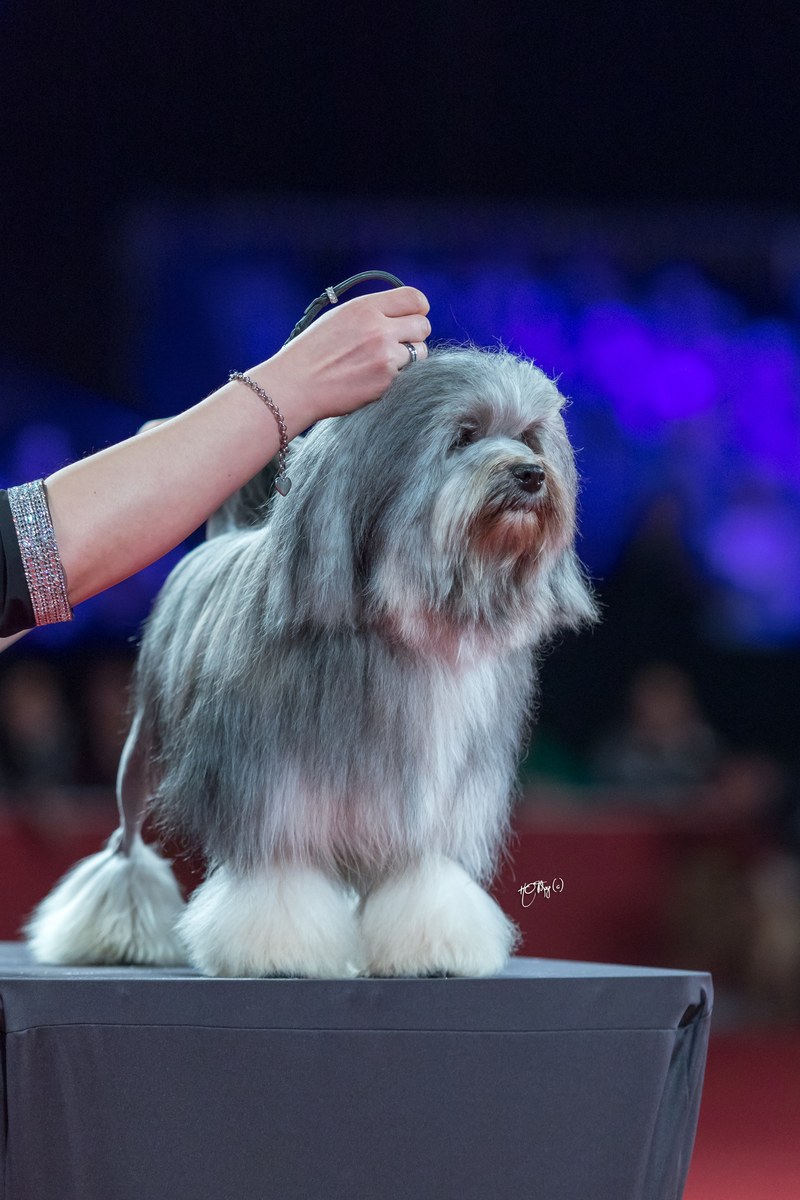

The standard is short, and nearly all of it serves one idea: the dog must read as a little lion. The general appearance paragraph says so outright — “a compact, balanced body; a relatively short, broad topskull and muzzle; and a proud, lively gait that accentuates the lion cut with a long flowing mane” — and then: “These quintessential features, combined with an outgoing and positive attitude, result in a dog of great style.”
- Size, proportion, substance. Ideally 11 to 13 inches at the withers, with one inch of latitude either way — and the standard is explicit that “absolute height at the withers should not take precedence over correct proportion and substance.” The body is just off-square, 11 to 10, slightly longer than tall, and the dog should never be low-stationed: sturdily built, strong bone, muscular hindquarters, never coarse.
- Head. The head is called “a hallmark breed characteristic”: bright, alert, lively expression; large, round, dark brown eyes set well apart; pendant, well-fringed ears; a broad, relatively flat backskull; a well-filled, relatively broad muzzle with a scissors bite. Nose and eye rims are completely pigmented, in accordance with coat color.
- Coat and the lion clip. “The Löwchen must be shown in the traditional Lion Clip.” The unclipped coat is long, rather dense, and moderately soft, slightly to moderately wavy, and it must fall naturally — never artificially parted, never sculpted or scissored. The clip itself is precise: clipped to approximately ⅛ inch from the last rib back to and including the hindquarters; the hindquarters to the hock joints; the front legs from the elbows to a point level with the hocks, leaving cuffs of hair on all four legs; the tail from the base to about halfway to the tip, leaving a plume; and the feet entirely clipped.
- Color. All colors and color combinations are acceptable, with no preference given to any — the standard judges the lion silhouette, not the paint.
- Gait. Movement at a trot is effortless, with good reach in front and full extension behind, the head held high and the tail carried curved over the back. The standard wants the dog to look nearly square in outline while moving, topline firm and level.
- Temperament. “The Löwchen is alert, intelligent, and affectionate with the overall qualities of a loving companion dog. It has a lively, outgoing, and inquisitive personality.”
- The one disqualification. “Any cut/trim/pattern other than what is listed in this standard.” There is no other disqualification in the standard — the clip is the line the breed draws. A Löwchen in any other trim cannot be placed in the ring, however good the dog underneath.
Why the standard is written this way: the clip is not a fashion choice laid over the breed, it is the breed’s identity. The mane, the clipped rear, the cuffs, and the plume are what make a 12-inch dog read as a lion, and the rules that protect them — no scissoring, no shaping, no artificial part, the unclipped coat left completely natural — exist so that no handler can sculpt a better lion than the dog grows. The size clause works the same way: a range with latitude, and an explicit warning not to let a tape measure overrule proportion and substance. (Sources: AKC, Official Standard of the Löwchen (approved October 11, 2021; effective January 1, 2022); Löwchen Club of America, Löwchen Grooming (Diana Heathcote, CaliKij).)
4. Temperament & living with one
The standard’s temperament paragraph is one sentence, and it is the whole brief: “The Löwchen is alert, intelligent, and affectionate with the overall qualities of a loving companion dog. It has a lively, outgoing, and inquisitive personality.” Everything the club and the AKC add fills that sentence in rather than qualifying it.
- Sociable and easygoing. The parent club calls the Löwchen “extremely sociable, easygoing, and gets along well with all other household members.” This is a dog bred to live among people, not apart from them.
- Quick to learn. “Most Löwchen learn small tricks easily,” the club says, and they have proved themselves in agility, therapy work, tracking, dock diving, and competitive frisbee — “great performance dogs, but also therapy dogs” and “wonderful all-around great dogs.” The inquisitive half of the temperament wants work to do.
- Brave as a lion, in miniature. The AKC’s summary — “affectionate, lively, and brave as a lion” — is the court-companion story in six words: a small dog with a large opinion of itself, portable and non-shedding, built to go where its people go.
- Daily exercise and play. A lively, outgoing dog needs a daily outlet — walks, play, and something to learn — not just a yard. The exercise need is moderate for a small dog, but the companionship need is not: a Löwchen left alone all day is a Löwchen with a problem, not a Löwchen with a hobby.
None of this is a guard dog, a yard dog, or a dog that entertains itself. If the household wants a small dog that is part of everything — on the couch, in the car, at the show, at the training class — the temperament fits. If the household wants a dog that is content to be left to its own devices, it does not. (Sources: AKC, Official Standard of the Löwchen; Löwchen Club of America; AKC, Löwchen breed page.)
5. Grooming
Grooming a Löwchen is two jobs: keeping the lion clip true, and keeping the long coat from matting. The first is the standard’s job; the second is the owner’s, every week.
- The clip, in practice. The club’s show-grooming guide (Diana Heathcote, CaliKij) sets the mane line at the last rib — brush the hair straight down, find the last rib, part with a comb, shave — and clips to about ⅛ inch with a #7F blade with the grain of growth, or a #10 against the grain for show. The tail is clipped halfway to the plume, the feet entirely clipped, and cuffs left on all four legs. The unclipped mane is never scissored or shaped: “On no account should the unclipped areas be smoothed, shortened, shaped or otherwise tidied with anything other than a comb or brush.”
- Brushing. The coat is a single coat that behaves more like hair than fur: it sheds very little, which means loose hair stays in the coat until it is brushed out, and it mats where it is missed — behind the ears, under the legs, behind the collar. Brush several times a week at minimum; daily brushing is ideal if the coat is kept long.
- Re-clipping. A Löwchen kept in the lion clip needs professional re-clipping every six to eight weeks to hold the outline. Let the clip grow out and the lion disappears into a shaggy small dog.
- The rest of the routine. Ears checked and cleaned regularly — pendant, fringed ears trap moisture — nails trimmed, teeth brushed, and the coat bathed as needed to keep it clean and soft.
Be honest about the commitment before the dog arrives: a Löwchen is a high-maintenance coat on a low-shedding dog. The brushing is the price of the mane, and it is weekly, not occasional. (Sources: Löwchen Club of America, Löwchen Grooming (Diana Heathcote, CaliKij); AKC, Official Standard of the Löwchen; Masterclip, Lowchen grooming; Pets4Homes, Is a Lowchen the Right Dog for You?.)
6. Health testing
The Löwchen is a healthy breed with a small gene pool, and the parent club treats testing as preservation, not paperwork. The club’s Code of Ethics requires breeding stock of sound temperament with no known hereditary defects, and says testing for eye, hip, and knee problems is strongly recommended, with results made available to the breed’s health committee and to buyers.
- Eye evaluation (ACVO). An examination by a board-certified veterinary ophthalmologist, screening for hereditary eye disease including cataracts and progressive retinal atrophy.
- Hip evaluation. An OFA or PennHIP hip dysplasia evaluation; final hip exams at 24 months or older.
- Patella evaluation. An OFA patellar luxation evaluation, at 12 months or older — kneecaps that slip are the breed’s best-known joint problem.
- CHIC. The three tests above are the breed’s CHIC protocol, set by the parent club with the Orthopedic Foundation for Animals. A dog that completes the protocol and has its results in the public OFA database earns a CHIC number. A CHIC number means the dog was tested and the results are public — it does not mean the dog passed everything.
- No breed-specific DNA test. There is currently no genetic test specific to the Löwchen. DNA panels can screen for conditions found across breeds, but no DNA test replaces the eye, hip, and patella exams.
What the numbers say: a breeder’s summary of OFA data from 2021 onward puts eyes at 99.5% normal, patellas at 91.8% normal, and hips at 91.7% normal — good figures, with the knees and hips the places to watch. Conditions reported in the breed include patellar luxation, Legg-Calvé-Perthes disease, cataracts, and progressive retinal atrophy. Before you buy, ask for the parents’ OFA results for all three tests and look them up at ofa.org yourself — a breeder who has done the testing will be glad you checked. (Sources: AKC, Non-Sporting Group Health Testing Requirements; Löwchen Club of America, Breed Health Testing; Roman Reign Löwchen, Health Issues; Dog Breed Health, Lowchen.)
7. The annual Löwchen specialty dog show
A specialty is the breed’s All-Star show — its Super Bowl. Once a year, the best Löwchens from across the country, and often from around the world, come together in one place.
The Löwchen Club of America’s national specialty: the annual Löwchen specialty dog show. The 2026 national: Saturday, May 23, 2026, at the Kalamazoo Co Fairgrounds in Kalamazoo, Michigan, held as a designated specialty with the Grand Rapids Kennel Club show. Specialty judge: Mrs. Jean Shepherd. Sweepstakes judge: Mrs. Rachel Tepera. Best of Breed: GCHS CH Adamant Roman Reign Domo Affogato Mr. Gelato — Non-Sporting Group winner and Reserve Best in Show at the host show the same day. The 2027 national: Saturday, April 17, 2027, at the Georgia National Fairgrounds & Agricenter in Perry, Georgia. The 2022 national: Saturday, July 2, 2022, at the Oklahoma State Fairgrounds in Oklahoma City, judged by Ms. J N Paulk, 13 dogs in the entry. AKC event record: no LCA national specialty confirmed for 2023, 2024, or 2025.
The standard, in brief: a small, bright, and lively companion dog, ideally 11 to 13 inches at the withers, shown in the traditional lion clip — clipped to about ⅛ inch from the last rib back through the hindquarters, the legs to the cuffs, and the tail halfway to the plume — with a long, flowing mane, all colors and color combinations acceptable, and an alert, intelligent, affectionate temperament.
The 2026 National Specialty — Saturday, May 23, 2026, at the Kalamazoo Co Fairgrounds, 2900 Lake St, Kalamazoo, Michigan, held as a designated specialty with the Grand Rapids Kennel Club show (host event 2026028701), in a five-day cluster, May 21–25, with supported entries Thursday, Friday, and Monday and a regional specialty Sunday. Specialty judge: Mrs. Jean Shepherd. Sweepstakes judge: Mrs. Rachel Tepera. Event Chair: Kristin Schmitt. Superintendent: MB-F Inc. Entries closed Wednesday, May 6, 2026. (Sources: Löwchen Club of America, 2026 National Specialty; AKC event search, event 2026499706; AKC event search, host event 2026028701.)
Results (2026 national). Best of Breed: GCHS CH Adamant Roman Reign Domo Affogato Mr. Gelato (dog) — he went on to win the Non-Sporting Group and Reserve Best in Show at the host Grand Rapids Kennel Club show the same day, which only the Best of Breed dog can do. Best of Opposite Sex, Winners Dog, Winners Bitch, and Best Junior Handler not confirmed in an official source as of November 2026; the breed-level entry count: not shown on the AKC event record. (Source: AKC event search, host event 2026028701.)
The 2027 National Specialty: a one-day event on Saturday, April 17, 2027, at the Georgia National Fairgrounds & Agricenter, Perry, Georgia. Superintendent: Onofrio Dog Shows, L.L.C. Judges, AKC event number, entries, and closing date not yet published as of November 2026. (Source: AKC Upcoming National Specialties.)
Past national specialties: 2022 · 2021 · 2020
Löwchen Club of America — thelowchenclubofamerica.org
8. Regional specialties through the year: smaller regional shows
The national is the anchor, but the breed’s year also runs through regional specialties — smaller regional shows, not the national — held by the parent club around the country, usually as designated specialties with all-breed shows. These are the 2026 regionals verified from club and AKC sources so far:
Two LCA specialty events verified for 2026 so far, plus the regional held the day after the national:
- Regional specialty — Sunday, May 24, 2026, Kalamazoo, Michigan: the day after the 2026 national, at the Kalamazoo Co Fairgrounds, 2900 Lake St, with the Kalamazoo Kennel Club show. Specialty judge Mrs. Linda Hurlebaus; sweepstakes judge Mr. Ryan Tepera. Event Chair: Kristin Schmitt. Superintendent: MB-F Inc. (Sources: Löwchen Club of America, 2026 National Specialty; AKC event search, event 2026499707.)
- Designated specialty — Thursday, December 10, 2026, Orlando, Florida: a designated specialty at the Orange County Convention Center N/S Bldg, held with the Central Florida Kennel Club show. Event Chair: Greta DiGuglielmo. (Source: AKC event search, event 2026499701.)
Past regional specialties: 2025 · 2024
More regional specialties will be added here as their programs are verified — this section is built from show data, not guesswork. Browse upcoming show weekends →
9. Clubs
- Löwchen Club of America (LCA) (parent club) — the AKC-designated parent club for the breed in the United States. Founded in 1971 as the Little Lion Dog Club of America, its mission is to preserve the breed and bring awareness of it, and to educate judges, breeders, and the public about the breed’s virtues. It holds the national specialty, publishes the quarterly Headlions and the ByLions newsletter, keeps a breeder referral listing under its Code of Ethics, runs the breed’s rescue system, and offers a host-a-specialty program for clubs that want to put on a national or regional specialty. (Sources: Löwchen Club of America; Löwchen Club of America, History; Löwchen Club of America, Constitution and By-Laws.)
- The Lowchen (Little Lion Dog) Club (United Kingdom). The UK breed club, which runs championship shows for the breed — its 2024 results list 15 championship shows, 379 Löwchen entered, 321 judged. The UK club is the counterpart to the LCA for the breed’s European home. (Source: The Lowchen (Little Lion Dog) Club, Championship Show Results 2024.)
- Regional clubs. The LCA’s constitution encourages the organization of independent Löwchen specialty clubs where there are enough fanciers to meet AKC requirements, but no separate regional Löwchen club with a verified website was found as of November 2026. In practice the parent club itself puts on the regional specialties listed in section 8.
If you are new to the breed, the national specialty itself is the better first stop than a breeder’s website: the people there have owned, shown, and worked Löwchen, and they will tell you the truth about the coat, the clipping, and the rarity before you fall for a puppy.
10. Rescue
- Start with the parent club’s rescue system. The Löwchen Club of America’s constitution commits the club to fund and facilitate a comprehensive rescue system for Löwchen in need throughout the United States. The club is the first call if a Löwchen needs a new home — or if you want one. (Source: Löwchen Club of America, Constitution and By-Laws.)
- AKC Rescue Network. The AKC’s rescue network lists the breed’s rescue contact as the Löwchen Club of America’s Wendy Russell of Puyallup, Washington. (Source: AKC Rescue Network, L Breeds.)
- Löwchen are uncommon in rescue. The breed’s small numbers cut both ways: a rescued Löwchen is usually an adult, and it will arrive with its temperament and coat visible before you commit — but breed rescue often runs a waiting list, so patience is part of the deal. If you bought your Löwchen from a responsible breeder, contact the breeder first — most responsible breeders include a take-back clause and want to know if you cannot keep the dog.
- General rescue directories. SaveARescue.org lists the breed among its adoption listings, and the LCA itself is listed there as the breed’s rescue contact. (Source: SaveARescue.org, lowchen adoption & rescues.)
11. Breeder vs. rescue: honest guidance
- If you buy: start with the parent club, the Löwchen Club of America, and its breeder referral listing — breeders on it work under the club’s Code of Ethics. Ask for the parents’ health results — eye, hip, and patella evaluations — and look the results up in the OFA database yourself. Expect to wait for a puppy from a careful breeder: this is a rare breed, and a good breeder will have the answers, will ask you as many questions as you ask them, and will take the puppy back for its whole life if you cannot keep it.
- If you rescue: a rescued Löwchen is usually an adult, and it will arrive with its temperament and coat visible before you commit. What you get in return is a dog whose character you can see before you commit and a lower price. Either way, be honest with yourself first: a Löwchen needs daily exercise and play, regular brushing several times a week with a re-clip every six to eight weeks, and an owner who wants a small companion dog underfoot — not a yard and a hope.
- Watch out for “rare breed” pricing without the paperwork. The Löwchen genuinely is rare, and rarity gets used to justify high prices with no health testing and no papers. Rarity is a reason to test more carefully, not less: a seller charging a premium for a rare breed should have the eye, hip, and patella results to show for it.
- Watch out for “mini” or “teacup” Löwchen. There is no smaller variety. The standard has one size — ideally 11 to 13 inches — and a seller offering a mini or teacup version at a premium is selling a label the standard does not recognize.
- Watch out for show claims in any trim but the lion clip. Any cut, trim, or pattern other than the traditional lion clip is a disqualification under the standard. A breeder presenting a dog in another trim as show quality is either mistaken or hoping you will not check.
12. Claim this page
This page belongs to the breed, and the people who know the breed best are the Löwchen Club of America and its members. If you are with the parent club — or you are a breeder, a judge, a handler, or a rescue volunteer who spotted something wrong, missing, or out of date — this page is yours to set straight. Tell us what needs fixing and where the correction is documented, and we will fix it and credit the source. Contact the site through the About page, and mention “Löwchen breed profile.”
Sources
- AKC, Löwchen breed page — akc.org/dog-breeds/lowchen/
- AKC, Official Standard of the Löwchen (approved October 11, 2021; effective January 1, 2022) — images.akc.org/pdf/breeds/standards/Lowchen.pdf
- AKC, Non-Sporting Group Health Testing Requirements — akc.org/breeder-programs/breed-health-testing-requirements/non-sporting-group-health-testing-requirements/
- AKC Upcoming National Specialties — apps.akc.org/apps/events/conformation/national_specialties.cfm
- AKC event search, event 2026499706 (2026 national) — apps.akc.org/apps/events/search, event 2026499706
- AKC event search, host event 2026028701 (Grand Rapids KC, May 23, 2026) — apps.akc.org/apps/events/search, event 2026028701
- AKC event search, event 2026499707 (2026 regional, Kalamazoo May 24) — apps.akc.org/apps/events/search, event 2026499707
- AKC event search, event 2026499701 (2026 designated specialty, Orlando Dec 10) — apps.akc.org/apps/events/search, event 2026499701
- AKC event search, event 2022499706 (2022 national) — apps.akc.org/apps/events/search, event 2022499706
- AKC event search, event 2021499712 (2021 national) — apps.akc.org/apps/events/search, event 2021499712
- AKC event search, event 2020499707 (2020 national) — apps.akc.org/apps/events/search, event 2020499707
- AKC Rescue Network, L Breeds (Löwchen Club of America rescue contact) — akc.org/akc-rescue-network/rescue-network-l-breeds/
- Löwchen Club of America — thelowchenclubofamerica.org
- Löwchen Club of America, History — thelowchenclubofamerica.org/about-lca
- Löwchen Club of America, 2026 National Specialty — thelowchenclubofamerica.org/more-news/2026-national
- Löwchen Club of America, Breed Health Testing — thelowchenclubofamerica.org/the-lowchen-breed/breed-health
- Löwchen Club of America, Löwchen Grooming (Diana Heathcote, CaliKij) — thelowchenclubofamerica.org/images/2025/PDF/Lowchen-Show-Grooming-2025.pdf
- Löwchen Club of America, Constitution and By-Laws (approved by AKC, effective October 11, 2023) — thelowchenclubofamerica.org/images/2025/PDF/Lowchen-Club-Constitution.pdf
- Roman Reign Löwchen, Health Issues (parent-club recommended tests; OFA results summary) — romanreign.com/lowchen-health-issues/
- Masterclip, Lowchen grooming (brushing frequency; clipping interval) — masterclip.co.uk/collections/dog-breed-owchen
- Pets4Homes, Is a Lowchen the Right Dog for You? (grooming; health) — pets4homes.co.uk/pet-advice/is-a-lowchen-the-right-choice-of-dog-for-you.html
- Dog Breed Health, Lowchen (health screening; reported conditions) — dogbreedhealth.com/lowchen/
- The Lowchen (Little Lion Dog) Club (UK), Championship Show Results — thelowchenclub.co.uk
- Wikimedia Commons, Adult Lowchen Gaiting (hero photo) — commons.wikimedia.org/wiki/File:Adult_Lowchen_Gaiting.jpg
- Wikimedia Commons, Lowchen at 2019 American Kennel Club National Championship (body photo) — commons.wikimedia.org/wiki/File:Lowchen_at_2019_American_Kennel_Club_National_Championship.jpg