
Breed profile · Non-Sporting Group · the long-coated sentinel from Tibet
Lhasa Apso
The Lhasa Apso is a small, long-coated sentinel from Tibet who spent a thousand years guarding palaces and monasteries high in the Himalayas — and never quite forgot the job. The AKC calls the breed smart, confident, and complex: family comedians at home, regally aloof with strangers. The AKC recognized the breed in 1935, and the American Lhasa Apso Club is the parent club and the host of the annual Lhasa Apso specialty dog show.
Help us improve it. This is one of ThePetAdvisor’s breed profiles, built from public sources with generous links to the people who actually own this breed’s knowledge. If something’s off or missing, the parent club can claim the page and set it straight — see the bottom of the page.
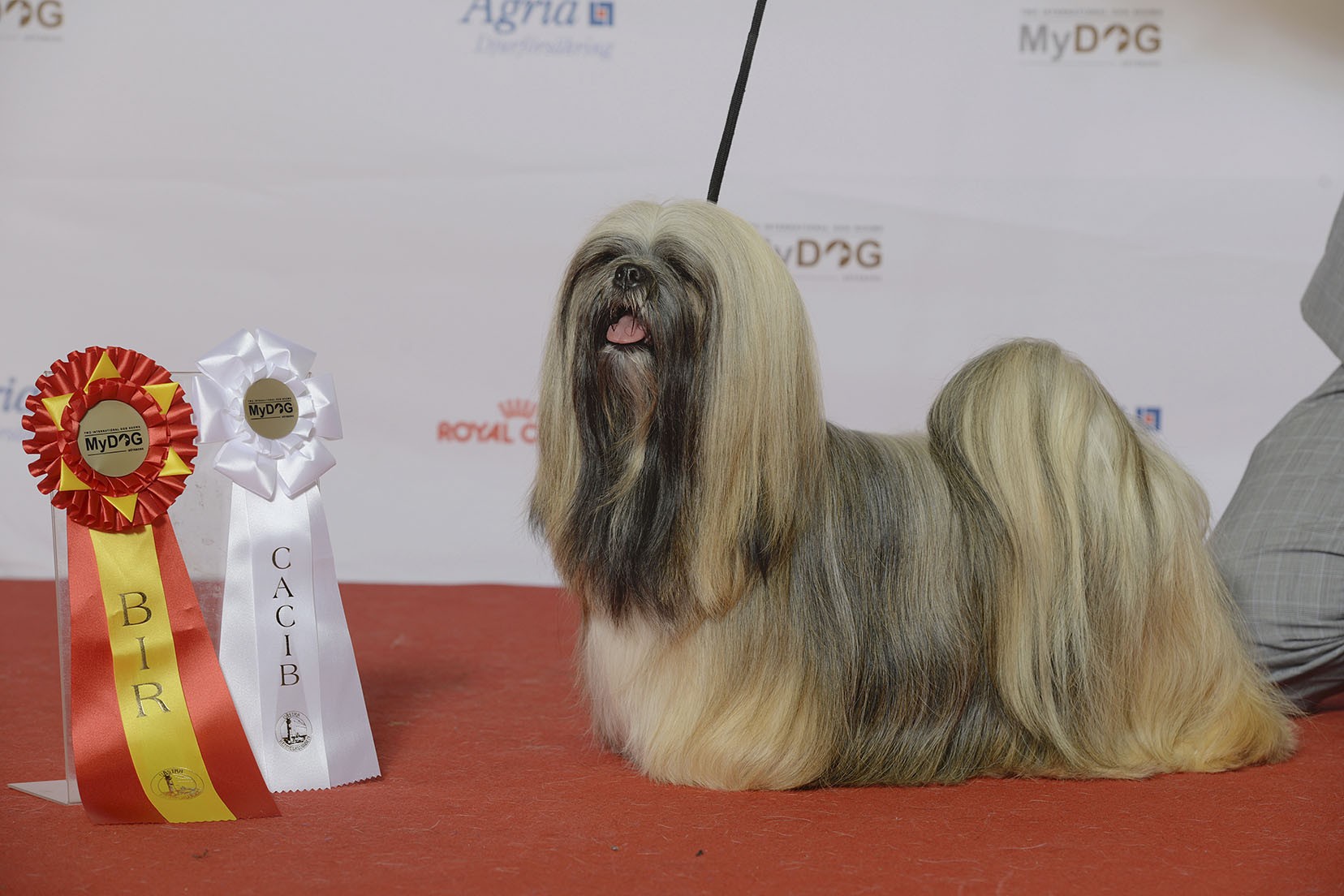

Do you have a better photo of a Lhasa Apso in the American show ring? If you have a show photo you’d let us use, email it to [email protected] — tell us the dog’s name and the show, and it may be featured here. Please only send photos you took yourself or have the photographer’s permission to share, and tell us the photographer’s name.
1. Breed at a glance
Non-Sporting Group; recognized by the AKC in 1935
About 10–11 in at the shoulder; 12–18 lb
Long, heavy, straight, hard coat, parted in the middle; all colors equally acceptable
12–15 years
Gay and assertive, but chary of strangers
American Lhasa Apso Club, the AKC parent club
A Lhasa Apso is a small dog with a long memory — the AKC calls the breed a thousand-year-old sentinel of palaces and monasteries, “smart, confident, and complex,” a family comedian that turns regally aloof the moment a stranger appears. The whole breed is built around two things: the coat and the character. A heavy fall of long, straight hair, parted in the middle and dropping to the ground, is the silhouette that says Lhasa at a glance — and the watchful, independent temperament underneath it is the price of owning one. (Sources: AKC, Lhasa Apso; The American Lhasa Apso Club.)
2. History
The Lhasa Apso comes from Tibet, where for a thousand years the little dogs served as interior sentinels in palaces and Buddhist monasteries, sounding the alarm while the much larger Tibetan Mastiffs guarded outside. The parent club’s judges study guide traces the breed to at least 800 AD, when Buddhism first took root in the Himalayan country, and the dogs remain what they were bred to be: guardians by nature, especially in their own domain. Apso is the Tibetan word for “bearded,” and the breed is still sometimes called the bark lion sentinel dog. (Sources: AKC, Lhasa Apso; The American Lhasa Apso Club, Judges Study Guide.)
The breed reached the West in the early twentieth century, and the first Lhasa Apsos in the United States arrived as gifts: in 1933 the 13th Dalai Lama, Thubten Gyatso, gave a pair of black-and-white Lhasas to the naturalist and world traveler C. Suydam Cutting and his wife, who brought them home to Hamilton Farms in Gladstone, New Jersey. The Cuttings imported more dogs — including another pair from the 14th Dalai Lama in 1950 — and established the breed in America. The AKC recognized the breed in 1935 as the Lhasa Terrier, in the Terrier Group; it was renamed the Lhasa Apso in 1944 and transferred to the Non-Sporting Group in 1959. The American Lhasa Apso Club was formed on February 9, 1959, and is the AKC parent club for the breed. (Sources: AKC, Facts About the Lhasa Apso; Lhasa Apso history, lhasa-apso.at.)
The American standard was first approved in 1935 and stayed essentially unchanged for forty-three years. It was revised only slightly in 1978, when the gold coat color preference was removed — making all coat colors equally acceptable — the preference for a slightly undershot bite was made equal to the preference for a level mouth, and the preference for a 1-inch muzzle length was removed. The standard has changed little since, and the breed in the ring today is recognizably the dog the Cuttings brought home in 1933. (Source: Carolyn Herbel, The Lhasa Apso: An Owner’s Guide to a Happy, Healthy Pet.)
3. The standard and why it is written that way
- Character — gay and assertive, but chary of strangers. “Gay and assertive, but chary of strangers.” The character line comes first in the standard, before any measurement, because it is the breed: a happy, confident dog that chooses its friends carefully. (Source: The American Lhasa Apso Club, Judges Study Guide.)
- Size — about 10 or 11 inches at the shoulder. “Variable, but about 10 or 11 inches at shoulder for dogs, bitches slightly smaller.” Weight runs 12 to 18 pounds. The standard gives no weight disqualification and no height disqualification — size is a matter of balance, not a hard line. (Sources: The American Lhasa Apso Club, Judges Study Guide; AKC, Lhasa Apso.)
- Coat — heavy, straight, hard, and of good length. The standard calls for a heavy, straight, hard coat of good length, parted in the middle and falling to the ground, with the hair over the face falling forward and the beard and whiskers full. It is the breed’s hallmark and its burden: the coat that makes a Lhasa look like a Lhasa is the coat that has to be brushed every day. (Sources: Furry Critter Network, Lhasa Apso breed guide; The American Lhasa Apso Club, Judges Study Guide.)
- Color — all colors equally acceptable. Every color is equally acceptable, and there is no color disqualification. The gold preference that once stood in the standard was removed in the 1978 revision, so no color carries a premium in the ring and none should carry one in a sale. (Sources: Carolyn Herbel, The Lhasa Apso; Furry Critter Network, Lhasa Apso breed guide.)
- Head — bearded, dark-eyed, and watchful. Dark brown eyes and a black nose, with pendant ears heavily feathered and a full beard and whiskers framing the face. The head is the breed’s other signature: the fall of hair over the eyes is part of the silhouette, not a grooming accident. (Sources: Furry Critter Network, Lhasa Apso breed guide; The American Lhasa Apso Club, Judges Study Guide.)
- Body — small, well-balanced, and longer than tall. A small, well-balanced, sturdy dog of longer-than-tall proportions, with a level topline and a strong loin, and the tail carried well over the back in a screw, with long feathering. Nothing about the dog is coarse or massive — the standard describes a moderate, small dog throughout. (Sources: Furry Critter Network, Lhasa Apso breed guide; The American Lhasa Apso Club, Judges Study Guide.)
- Why it is written that way. Every clause in the standard points back to the job: a small indoor sentinel needs to be small enough to live in the house, watchful enough to sound the alarm, and coated enough to survive a Himalayan winter indoors. The coat is described in texture words — heavy, straight, hard — because a soft or wavy coat is not the coat that kept a monastery dog warm. The character line comes first because a Lhasa that greets every stranger like a friend has lost the breed. And the all-colors rule is the standard’s quietest statement: the breed was never bred for color, so color never decides a Lhasa.
4. Temperament & living with one
The AKC’s summary is short: smart, confident, and complex — family comedians at home, regally aloof with strangers. The standard’s version is shorter still: gay and assertive, but chary of strangers. Both are describing the same dog — a sentinel that became a companion and never quite believed the demotion. (Sources: AKC, Lhasa Apso; The American Lhasa Apso Club, Judges Study Guide.)
- With its own people: devoted and intensely bonded, often to one person above all. A Lhasa leans on its people, follows them from room to room, and expects to be part of whatever is happening — on a lap, on a cushion, or at the foot of the bed. It is sensitive to its owner’s moods and responds accordingly, but it does not act as an obedient servant: a typical Lhasa does not live for you, it lives with you.
- With strangers: watchful and discerning rather than shy. The breed is quick to announce a visitor, and most Lhasa puppies are friendly to strangers until about six months, when they usually become more discerning about making friends. Early socialization is what turns that wariness into confidence instead of fear or snapping.
- Training: bright and quick to learn — and famously self-willed. A Lhasa responds to fair, consistent training and to praise, and it notices inconsistency at once. The independence that made it a good sentinel makes it a dog that thinks for itself rather than waiting for instructions.
- Exercise: small but not sedentary. A Lhasa needs daily walks and play, and it is quick and agile for its size — it was built to patrol a house, not to sit still. What it does not need is a yard: it is an indoor dog that goes out, not an outdoor dog that comes in, and it feels the heat in its heavy coat.
- Barking: the sentinel job never left. A Lhasa notices change — a footstep, a car door, a stranger at the gate — and says so. Owners who want a quiet house should know this before the dog arrives, not after.
- First-dog honesty: this is a lot of personality — and a lot of grooming — for a first-time owner. The confidence, the barking, and the willfulness all demand an owner who trains from day one and keeps training, and who brushes every day or keeps the coat clipped short. If that sounds like a burden rather than a pleasure, a softer breed is the honest choice.
5. Grooming
The Lhasa Apso’s coat is long and profuse, and it needs frequent grooming and regular trimming — the hair falls over the eyes and affects the dog’s ability to see, so it should be kept trimmed even on a dog in full coat. There is no shortcut: a Lhasa in full coat is a daily commitment, and a clipped Lhasa is the honest answer for anyone who will not brush every day. (Sources: Dog Breed Health, Lhasa Apso; AKC, Lhasa Apso.)
- Daily brushing: a good brushing every day keeps the tangles away. Work mats out gently with your fingers first and then a wide-tooth metal comb, always from the ends of the hair toward the body, with a little detangler to save coat — never pull mats out. Dirty hair mats and cannot grow well, so cleanliness is part of coat care, not separate from it.
- Bathing: once every week or two, more often for some dogs. First make sure all the tangles are out, then shampoo and rinse — and rinse again, because soap left in dulls the coat and can cause itching — then use a good conditioner.
- Eyes & face: the fall of hair over the eyes is the breed’s silhouette, and it needs managing: keep the hair out of the eyes or trimmed so the dog can see, and clean the corners of the eyes so tearing does not stain the face. The beard picks up food and water and needs wiping and combing.
- Ears & nails: the pendant, heavily feathered ears need regular checking and cleaning, and the toenails need trimming at least every two weeks. Keep the hair on the pads of the feet clipped so the dog does not slip on slippery floors.
- The clipped option: a full floor-length coat is a show coat, not a requirement for a pet. Many owners keep the coat in a short clipped style — the usual answer for a busy household, and the honest answer for anyone who will not brush every day. A clipped Lhasa is still a Lhasa: the temperament does not come with the coat.
6. Health testing
The Lhasa Apso has no CHIC requirements — the parent club lists no recommended health tests with the AKC, so there is no parent-club checklist and no CHIC number to ask a breeder for. That does not mean there is nothing to test: it means the asking falls on the buyer. The lists:
- Eye exam — the big one. An annual eye exam by a board-certified veterinary ophthalmologist screens for progressive retinal atrophy, cataracts, and dry eye (keratoconjunctivitis sicca), which is reported in about 23% of the breed, as well as cherry eye and entropion. Eye clearances are renewed annually, because some eye diseases develop later in life. (Sources: AKC, Non-Sporting Group Health Testing Requirements; BreedTracker, Breeding Lhasa Apso.)
- Patella evaluation. The OFA patella evaluation screens for patellar luxation — slipping kneecaps — which affects an estimated 15–20% of Lhasa Apsos, graded from normal to Grade IV. Preliminary evaluations can be done at 12 months. (Source: BreedTracker, Breeding Lhasa Apso.)
- Genetic tests to ask about: DNA tests exist for progressive retinal atrophy (PRA 1 and PRA 4), a degenerative eye disorder that causes blindness over time. (Source: Dog Breed Health, Lhasa Apso.)
- Other conditions to ask about: intervertebral disc disease and dry eye are also reported in the breed, and the heavy coat brings its own risks in warm weather — a Lhasa in full coat can overheat, and the hair falling over its eyes should be kept trimmed so it can see. (Source: Dog Breed Health, Lhasa Apso.)
Ask any breeder for the parents’ results for the eye exam and the patella evaluation, and look them up in the OFA database yourself before you commit. The breed’s 12-to-15-year lifespan is a long one for any dog, and the testing exists so that those years are healthy ones.
7. The annual Lhasa Apso specialty dog show
A specialty is the breed’s All-Star show — its Super Bowl. Once a year, the best Lhasa Apsos from across the country, and often from around the world, come together in one place.
The American Lhasa Apso Club’s national specialty: one national event each year, with conformation, futurity and maturity stakes, sweepstakes, and junior showmanship. The 2026 national: October 17, at the Roberts Centre in Wilmington, Ohio, with 45 dogs and 47 entries. The 2025 national: October 30, at the Roberts Centre in Wilmington, Ohio, with 27 competitors and 37 entries. The 2027 national: April 17, at the Crowne Plaza Asheville in Asheville, North Carolina.
The standard, in brief: a small, well-balanced dog, longer than tall, about 10 or 11 inches at the shoulder, with a heavy, straight, hard coat of good length, parted in the middle and falling to the ground. All colors are equally acceptable. Character: gay and assertive, but chary of strangers.
The 2026 National Specialty — Saturday, October 17, 2026, at the Roberts Centre, 123 Gano Road, Wilmington, Ohio. Entry: 47 entries / 45 dogs. Entries closed September 23, 2026. Event Chair: Naomi Hanson, Scottsdale, Arizona. Superintendent: BaRay Event Services, Inc. The 2026 national: the club’s 72nd National Specialty, with a Parade of Titleholders before judging. (Sources: AKC event search, event 2026185106; American Lhasa Apso Club 2026 National Cluster judging program.)
National specialty judge: Vicki L Abbott — conformation and junior showmanship. The Futurity/Maturity and Celebration of Veterans Sweepstakes ran the day before, Friday, October 16, 2026, judged by Brad Reece (20 entries). (Source: American Lhasa Apso Club 2026 National Cluster judging program.)
Results (2026 national). Best of Breed, Best of Opposite Sex, Winners Dog, and Winners Bitch: not published in an official source as of November 2026.
The 2027 National Specialty: Saturday, April 17, 2027, one day, at the Crowne Plaza Asheville in Asheville, North Carolina. Show secretary: Cullen Leck. AKC event number, judges, entries, and closing date not yet published as of November 2026. (Source: AKC Upcoming National Specialties.)
Past national specialties: 2025
American Lhasa Apso Club — lhasaapso.org
8. Regional specialties through the year: smaller regional shows
The national is the anchor, but the breed’s year also runs through regional specialties — smaller regional shows, not the national — held around the country, including the regional specialties that run with the national. These are the 2026 regionals verified from club and AKC sources so far:
Three regional Lhasa Apso specialties verified for 2026 so far, all part of the national cluster at the Roberts Centre in Wilmington, Ohio:
- ALAC Midwestern Regional Specialty No. 1 — Thursday, October 15, 2026, Wilmington, Ohio: at the Roberts Centre (AKC event 2026185108). Judge: Mr. Robin L Stansell. Entry: 38 dogs / 38 entries.
- ALAC Midwestern Regional Specialty No. 2 — Thursday, October 15, 2026, Wilmington, Ohio: at the Roberts Centre (AKC event 2026185105). Judge: Mrs. Cindy Stansell. Entry: 38 dogs / 38 entries.
- Sunshine State Lhasa Apso Club Independent Specialty — Friday, October 16, 2026, Wilmington, Ohio: at the Roberts Centre (AKC event 2026759101), the club’s second independent specialty. Judge: Mr. Jeffery M Bazell. Entry: 43 dogs / 42 entries.
The cluster also held the Futurity/Maturity and Celebration of Veterans Sweepstakes on Friday, October 16, 2026, judged by Brad Reece (20 entries) — a sweepstakes, not a regional specialty, but part of the national week.
Past regional specialties: 2025
More regional specialties will be added here as their programs are verified — this section is built from show data, not guesswork. Browse upcoming show weekends →
9. Clubs
- American Lhasa Apso Club (ALAC) (parent club) — the AKC-recognized national breed club for the Lhasa Apso, founded February 9, 1959. It maintains the breed standard, holds the national specialty each year, runs the futurity and the rescue network, and publishes a judges study guide and an illustrated guide to the standard. (Sources: The American Lhasa Apso Club; Joyslyn’s Lhasa Apsos, Brief History of the Lhasa Apso.)
- Regional Lhasa Apso clubs. Local and regional Lhasa Apso clubs across the country hold the regional specialties in section 8, including the Sunshine State Lhasa Apso Club, the Greater Milwaukee Lhasa Apso Club, and the Central Maryland Lhasa Apso Fanciers — and, among others, the Lhasa Apso Club of Greater Houston, the Lhasa Apso Club of Northern California, and the Lhasa Apso Club of Westchester. (Sources: AKC Club Search, L clubs; AKC event records in section 8.)
- AKC Marketplace and breeder referral. The AKC’s club directory lists each club’s breeder-referral and rescue contacts, and the ALAC is the first stop for anyone looking for a puppy from a breeder who works under the club’s code. (Source: AKC Club Search, L clubs.)
10. Rescue
- ALAC Rescue. The parent club’s own national rescue network — an all-volunteer agency operating under the American Lhasa Apso Club, with a published Rescue Handbook. Its goal is to re-home Lhasa Apsos in need and to educate the public about the breed. (Sources: ALAC Rescue; AKC Rescue Network, L Breeds.)
- Apso Rescue – Colorado. The club’s Colorado rescue arm, a 501(c)(3) nonprofit in Loveland, Colorado, fostering stray or relinquished Lhasa Apsos for placement under the parent club’s rescue guidelines. Contact: Vickie Kuhlmann. (Sources: Apso Rescue – Colorado; American Lhasa Apso Club Rescue – Colorado, Adopt-a-Pet.)
- ALAC Rescue, Sarasota, Florida. The parent club’s Florida rescue contact (Christine Hutchinson, Sarasota), the official rescue arm of the American Lhasa Apso Club, working to improve the breed through education, rehabilitation, and rescue. (Source: ALAC Rescue, Adopt-a-Pet.)
- AKC Rescue Network. The AKC’s rescue network lists Lhasa Apso rescue organizations under its L breeds page, and the parent club is the first stop if you do not know which contact covers your area. (Source: AKC Rescue Network, L Breeds.)
- Lhasas are uncommon in rescue. The breed’s small numbers cut both ways: a rescued Lhasa is usually an adult, and it will arrive with its temperament visible before you commit — but breed rescue often runs a waiting list, so patience is part of the deal. A rescue is the honest first stop if you want the breed without the puppy wait — and without the grooming learning curve of a puppy growing into full coat.
11. Breeder vs. rescue: honest guidance
- If you buy: start with the parent club, the American Lhasa Apso Club — contact the club directly for a breeder referral — and ask for the parents’ health-test results — the annual eye exam and the patella evaluation — and look the results up in the OFA database yourself. There is no CHIC number to ask for in this breed, so the asking matters more, not less. Expect to wait for a puppy from a careful breeder: a good breeder will have the answers, will ask you as many questions as you ask them, and will take the puppy back for its whole life if you cannot keep it.
- If you rescue: a rescued Lhasa is usually an adult, and it will arrive with its temperament visible before you commit. What you get in return is a dog whose character you can see before you commit and a lower price. Either way, be honest with yourself first: a Lhasa needs daily grooming or a clipped coat, patient house-training, and an owner who socializes and trains from day one — not a lap and a hope.
- Watch out for Lhasa/Shih Tzu confusion. The two breeds look alike to a newcomer — small, long-coated, bearded — and the confusion is old: the Dalai Lama’s gifts of Lhasas to the emperor of China are the predominant theory of how the Shih Tzu came about. A seller calling a Shih Tzu a Lhasa, or a Lhasa–Shih Tzu cross a purebred Lhasa, is selling you a different dog. Judge the dog in front of you against the standard — the longer muzzle, the 10-to-11-inch size, the heavy straight coat parted in the middle — not against a listing’s label.
- Watch out for “rare color” marketing. All colors are equally acceptable in this breed — the gold preference was removed in 1978. A seller charging extra for a gold Lhasa as a rare color is charging for a preference the standard abolished nearly fifty years ago.
- Small-dog honesty: a Lhasa is not a starter pet and not a dog for everyone. The size that makes the breed portable also makes it a serious watchdog, and the independent temperament that makes it charming also makes it willful, vocal, and reserved with strangers. If that sounds like a burden rather than a pleasure, a softer breed is the honest choice.
12. Claim this page
This page belongs to the breed, and the people who know the breed best are the American Lhasa Apso Club and its members. If you are with the parent club — or you are a breeder, a judge, a handler, or a rescue volunteer who spotted something wrong, missing, or out of date — this page is yours to set straight. Tell us what needs fixing and where the correction is documented, and we will fix it and credit the source. Contact the site through the About page, and mention “Lhasa Apso breed profile.”
Sources
- AKC, Lhasa Apso breed page — akc.org/dog-breeds/lhasa-apso
- AKC, Facts About the Lhasa Apso That You May Not Know — akc.org
- AKC, Non-Sporting Group Health Testing Requirements — akc.org
- AKC Upcoming National Specialties — apps.akc.org
- AKC event search, event 2026185106 (2026 national) — apps.akc.org
- AKC event search, event 2025185106 (2025 national) — apps.akc.org
- AKC event search, event 2026185108 (2026 regional No. 1) — apps.akc.org
- AKC event search, event 2026185105 (2026 regional No. 2) — apps.akc.org
- AKC event search, event 2026759101 (2026 Sunshine State specialty) — apps.akc.org
- AKC event search, event 2025185116 (2025 regional No. 1) — apps.akc.org
- AKC event search, event 2025185105 (2025 regional No. 2) — apps.akc.org
- AKC event search, event 2025185107 (2025 regional No. 3) — apps.akc.org
- AKC event search, event 2025759103 (2025 Sunshine State specialty) — apps.akc.org
- American Lhasa Apso Club 2026 National Cluster judging program — apps.akc.org (PDF)
- American Lhasa Apso Club 2025 National Cluster judging program — apps.akc.org (PDF)
- AKC Club Search, L clubs — apps.akc.org
- AKC Rescue Network, L Breeds — akc.org/akc-rescue-network-l-breeds
- The American Lhasa Apso Club — lhasaapso.org
- The American Lhasa Apso Club, Judges Study Guide — scribd.com
- ALAC Rescue — lhasaapsorescue.org
- Apso Rescue – Colorado — apsorescuecolorado.org
- ALAC Rescue, Sarasota, FL, Adopt-a-Pet — adoptapet.com
- American Lhasa Apso Club Rescue – Colorado, Adopt-a-Pet — adoptapet.com
- BreedTracker, Breeding Lhasa Apso: Complete Guide for Responsible Breeders — breedtracker.com
- Dog Breed Health, Lhasa Apso — dogbreedhealth.com
- Furry Critter Network, Lhasa Apso — Complete Breed Guide — furrycritter.com
- Joyslyn’s Lhasa Apsos, Brief History of the Lhasa Apso — joyslynslhasaapsos.com
- Lhasa Apso history, lhasa-apso.at — lhasa-apso.at
- Carolyn Herbel, The Lhasa Apso: An Owner’s Guide to a Happy, Healthy Pet — everand.com
- Svenska Mässan, Chic Choix Some Like It Chic at MyDOG, Sweden, January 2016, Wikimedia Commons (CC BY 2.0) — commons.wikimedia.org