Breed profile · Toy Group · the national dog of Cuba
Havanese
The Havanese is the national dog of Cuba — a small, sturdy companion with a long, silky coat, a springy gait, and a personality the standard sums up as friendly, playful, alert, and intelligent, with a sweet, nonquarrelsome disposition. The breed was recognized by the AKC in 1996 and ranked the 25th most popular breed in America in 2025. The Havanese Club of America, founded in 1979, is the parent club.
Help us improve it. This is one of ThePetAdvisor’s breed profiles, built from public sources with generous links to the people who actually own this breed’s knowledge. If something’s off or missing, the parent club can claim the page and set it straight — see the bottom of the page.
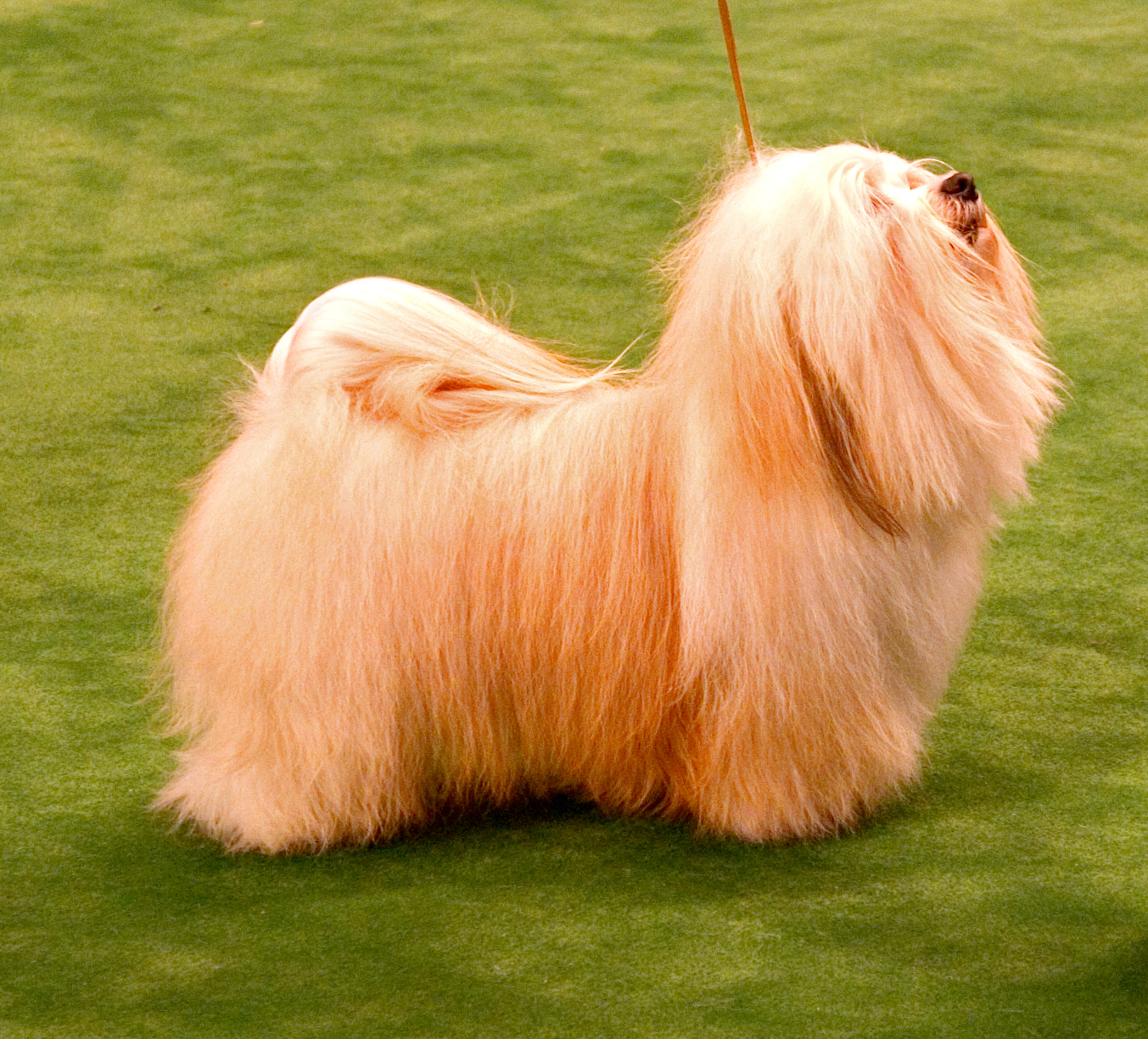

Do you have a better photo of a Havanese in the American show ring? If you have a show photo you’d let us use, email it to [email protected] — tell us the dog’s name and the show, and it may be featured here. Please only send photos you took yourself or have the photographer’s permission to share, and tell us the photographer’s name.
1. Breed at a glance
Toy Group; recognized by the AKC in 1996
8½–11½ in at the withers (ideal 9–10½), 7–13 lb (ideal 8–11)
Long, abundant, silky coat, straight to wavy; all colors and marking patterns permissible and of equal merit
14–16 years (AKC)
Friendly, playful, alert, intelligent, affectionate
The Havanese is a toy dog in size and a companion in every other way: slightly longer than tall, with a long, untrimmed, double coat, a plumed tail carried arched forward over the back, and a springy gait that the standard says comes from the breed’s structure and its playful, spirited personality. The name comes from Havana, the capital of Cuba, where the breed was the beloved companion of the island’s nobility. (Sources: AKC, Official Standard of the Havanese; AKC, Havanese.)
2. History
The Havanese descends from the little white dogs of the Mediterranean bichon family. Its progenitors came from Tenerife — the Bichón Tenerife — and were carried to Cuba, where they were crossed with other bichon types, including the poodle, and became the Blanquito de la Habana, the “little white dog of Havana.” The Blanquito is extinct; the Havanese is what it became.
- Companions of Cuban nobility. In Cuba the dogs were companions to Spanish colonists and were admired by the Cuban nobility, who kept them as house dogs. The breed takes its name from Havana, and it is the national dog of Cuba.
- The Revolution nearly ended the breed. When the Cuban Revolution drove the upper class from the island, few families could bring their dogs with them. The dogs that reached the United States were the breed’s lifeline.
- Eleven dogs. When American breeders became interested in the Havanese in the 1970s, the gene pool in the United States numbered only eleven dogs. Every American Havanese descends, in one way or another, from that tiny foundation.
- Club and recognition. The Havanese Club of America was founded in 1979. The AKC recognized the breed in 1996, in the Toy Group.
- Popularity. The Havanese was the 25th most popular breed in the United States in 2013, and it ranked 25th again in 2025. In 2017 it cracked the top five most popular breeds with the Canadian Kennel Club.
- Not the Havana Silk Dog. The “Havana Silk Dog” is a separate breed with its own registry, the Havana Silk Dog Association of America — it is not recognized by the AKC, and it is not the Havanese.
From a nearly lost Cuban house dog to one of America’s most popular toy breeds, the Havanese has kept the same job for centuries: be small, be charming, and be company. (Sources: Wikipedia, Havanese; AKC, Havanese; Havanese Club of America.)
3. The standard and why it is written that way
The standard opens with the breed in one line: “The Havanese is a small, sturdy dog of immense charm. The native dog of Cuba, he is beloved as a friendly, intelligent and playful companion.” Everything else follows from the companion job — the dog is meant to look happy, with a soft, intelligent, mischievous expression, a plumed tail arched over the back, and a springy gait. The current standard was approved August 9, 2011, and has been effective since September 28, 2011.
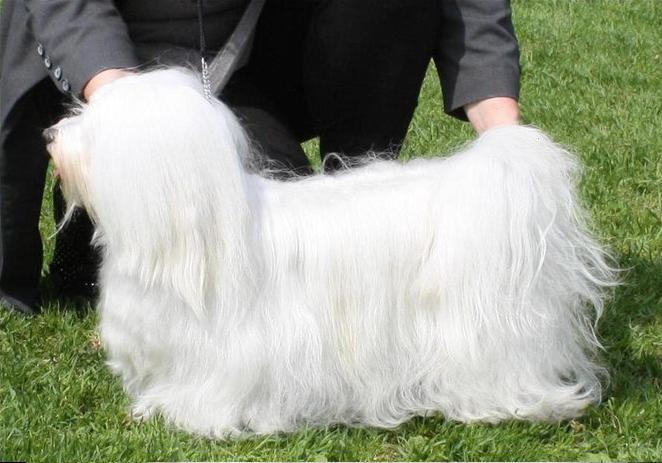

- Size. The ideal height is 9 to 10½ inches at the withers, with an acceptable range of 8½ to 11½ inches. Height under 8½ or over 11½ inches is a disqualification, except that the minimum does not apply to dogs or bitches under twelve months of age. The body is slightly longer than tall, creating a rectangular outline, and the dog is moderately boned — never coarse, never fragile. The AKC lists weight at 7 to 13 pounds, ideal 8 to 11.
- Head. The expression is soft, intelligent, and mischievous. The eyes are large, dark brown, and almond-shaped. The ears are broad at the base, dropped, with a distinct fold. A scissors bite is ideal. The nose and lips are solid black for all colors except chocolate dogs, which have solid brown pigment — and incomplete or total lack of pigmentation of the eye rims, nose, or lips is a disqualification.
- Coat. Silky to the touch, soft and light in texture, long, abundant, and wavy — it stands off the body slightly but flows with movement, and an ideal coat lets the natural lines of the dog show through. A single, flat, frizzy, or curly coat is faulted. A coarse, wiry coat is a disqualification, and so is a short, smooth coat with or without furnishings. The coat may also be corded, developing in time into tassel-like cords.
- Color. All colors and marking patterns are permissible and are of equal merit. There is no preferred color in the AKC standard — a solid white Havanese and a parti-color one are judged on the same terms.
- Tail and gait. The tail is high-set and arches forward up over the back, plumed with long, silky hair; it may not be docked, though a dropped tail is permissible while standing. The gait is springy — the characteristic spring comes from the short upper arm combined with rear drive — and the head is carried high on the move.
- Temperament in the standard. The standard’s temperament line is short and exact: the Havanese is friendly, playful, alert, and intelligent, with a sweet, nonquarrelsome disposition. Aggression or shyness should be faulted.
- Presentation. Havanese are shown as naturally as is consistent with good grooming, either brushed or corded. The head furnishings are long and untrimmed and may be held in two small braids secured with plain elastic bands. No other trimming or sculpting of the coat is permitted, and it is to be so severely penalized as to preclude placement. Dogs are presented at a natural speed on a loose lead, so the springy gait can be properly assessed.
The color rule is the most important thing to know about the modern standard: because all colors are of equal merit, no one can sell you a “rare” color as better, or mark down a color as lesser. Judge the dog, not the shade. (Sources: AKC, Official Standard of the Havanese; AKC, Havanese.)
4. Temperament & living with one
Havanese are friendly, playful, alert, and intelligent — and, as the standard puts it, sweet and nonquarrelsome. They are companion dogs in the fullest sense, and they are often called velcro dogs for how closely they stick to their people.
- Company first. This is a breed that wants to be with you — on your lap, on the couch beside you, or following you from room to room. A Havanese left alone all day will be unhappy.
- With children and other dogs. Usually good with children and with other dogs, especially when socialized young. They are sturdy for a toy breed, but they are still small — small children need to be taught to handle them gently.
- Alert, not yappy by nature. Havanese are watchful and will announce a visitor, but they are not generally excessive barkers for a toy breed. Early training and enough company keep the announcing in check.
- Exercise is modest. A daily walk or two and some play is enough. They are playful and will happily chase a toy around the house, and they enjoy short training sessions — they are intelligent and eager to please, which makes them quick learners.
- Apartment dogs. Small, adaptable, and content indoors, Havanese suit apartments and small homes — as long as someone is home much of the day and the grooming gets done.
The honest summary: this is a wonderful family dog for a household that wants a small, affectionate companion and can give it company and grooming every day, and a poor fit for a household that is out all day or wants a dog that takes care of itself. (Source: AKC, Havanese.)
5. Grooming
Grooming a Havanese is the real work of owning one. The long, silky coat tangles and mats if it is not brushed at least several times a week — daily if it is kept in full coat — and the face needs attention every day.
Most pet owners keep the coat in a short puppy cut, which is far easier to maintain, but even a short coat needs regular brushing. The coat may also be kept corded, which is its own commitment. The ears need regular cleaning, the eyes need wiping since they can tear-stain, and the teeth should be brushed. A bath every few weeks keeps the coat clean, and a full show coat is a serious weekly commitment, not a casual one. In the ring the coat is shown untrimmed except for neat feet — the standard forbids sculpting. (Sources: AKC, Havanese; AKC, Official Standard of the Havanese.)
6. Health testing
The Havanese Club of America’s CHIC program sets the health testing a responsible breeder should do — and the results should be registered with the Orthopedic Foundation for Animals, where anyone can look them up.
- Hips. An OFA hip evaluation, required for a CHIC number, performed after the dog is two years old.
- Patellas. An OFA patella evaluation, required for a CHIC number, performed after one year of age — the kneecap is checked for luxation, a slipped kneecap that is common in small breeds.
- Eyes. An annual CAER eye exam by a board-certified veterinary ophthalmologist, required for a CHIC number. The exam is annual, not one-time, because heritable eye conditions — cataracts, progressive retinal atrophy, cherry eye — can appear and progress during a breeding dog’s life.
- BAER hearing — no longer required. The BAER hearing test was a fourth CHIC requirement until May 2022, when the HCA Board removed it after the Health Committee, consulting veterinary experts and many years of data, confirmed congenital deafness is extremely rare in the breed. Many responsible breeders still test voluntarily. Some sources still list four required tests — those are out of date.
- Also recommended. Cardiac, elbow, and thyroid screening, and Legg-Calve-Perthes assessment, are recommended though not required for a CHIC number. The UC Davis Havanese Health Panel tests for chondrodystrophy (CDDY, with IVDD risk), chondrodysplasia (CDPA), canine multifocal retinopathy type 1, and von Willebrand disease type 1.
Two things worth knowing that are not on a test list: liver disease matters in this breed — a UC Davis study of 27,254 dogs found portosystemic shunt in 4.35% of Havanese, against 0.35% of mixed-breed dogs — so bile-acid testing for liver function is worth asking a breeder about. And the breed is long-lived: the AKC lists 14 to 16 years, and a 2024 UK study of veterinary records put the median lifespan at 14.5 years. A CHIC number confirms the testing was done and published; it is not a guarantee of health, and it does not replace asking the breeder what they know about the health of their own lines. (Sources: Havanese Club of America, Top Paw Health Awards Policy; AKC, Toy Group Health Testing Requirements; UC Davis Veterinary Genetics Laboratory, Havanese Health Panel; Bellumori et al., Prevalence of inherited disorders among mixed-breed and purebred dogs (JAVMA, 2013); Wikipedia, Havanese.)
7. The annual Havanese specialty dog show
A specialty is the breed’s All-Star show — its Super Bowl. Once a year, the best Havaneses from across the country, and often from around the world, come together in one place.
The Havanese Club of America’s national specialty: one national event each year, with conformation, sweepstakes, obedience, rally, agility, and junior showmanship, usually a multi-day week in the summer. The 2026 national: June 13–14, closing a national week June 9–14, at the Roberts Centre in Wilmington, Ohio, with 59 dogs and 68 entries in conformation on the national days. The 2027 national: announced for August 12–15 in Kingsport, Tennessee, with Mr. George Milutinovich judging.
The standard, in brief: a small, sturdy dog of immense charm, 8½ to 11½ inches at the shoulder and slightly longer than tall, with a long, abundant, silky coat that may be brushed or corded. All colors and marking patterns are permissible and are of equal merit. The plumed tail arches forward up over the back, and the gait is springy, with the head carried high.
The 2026 National Specialty — Saturday, June 13–Sunday, June 14, 2026, at the Roberts Centre, 123 Gano Road, Wilmington, Ohio 45177, closing a national specialty week that ran Tuesday, June 9–Sunday, June 14, 2026. Dogs were judged Saturday, June 13, and bitches and Best of Breed on Sunday, June 14. Entries opened Tuesday, April 21, 2026, and closed Wednesday, May 27, 2026. Show Chair: Christianne Disser. Show Secretary: Susan Gordon. The national drew 59 dogs and 68 entries (59 Ent — 35d — 24b; 59 competitors). AKC event 2026498706. (Sources: Havanese Club of America, 2026 HCA National Specialty; AKC event search, event 2026498706.)
National specialty judge: Mrs. Charlotte Patterson — conformation. Sweepstakes judge: Ms. Kat Smith (Saturday, June 13, 2026). Best Junior Handler: Geneasa Williams; Reserve Best Junior Handler: Emerson Tibuni. Agility trials ran June 9–11 (judge Dr. Roger O’Sullivan); obedience and rally were held Thursday, June 11 (judge Mr. Fred Buroff). (Sources: Havanese Club of America, 2026 HCA National Specialty; AKC event search, event 2026498706.)
Results (2026 national). Best of Breed: GCHS Zona Rosa’s It Never Entered My Mind. Best of Opposite Sex, Best of Winners, Winners Dog, Winners Bitch, and Best in Sweepstakes were not confirmed in an official source as of November 7, 2026. (Source: Westminster Kennel Club, 2027 Westminster Invitees (national specialty winner list).)
The 2027 National Specialty is announced for Wednesday, August 12–Saturday, August 15, 2027, at the MeadowView Conference Resort & Convention Center, 1901 Meadowview Parkway, Kingsport, Tennessee 37660. National specialty judge: Mr. George Milutinovich, announced September 2, 2026. Sweepstakes judge: Mrs. Kathy Ambler, announced October 11, 2026. The AKC event number and entries had not been announced as of November 7, 2026. They will be added here when they are announced. (Sources: Havanese Club of America, Events list (2027 HCA National Specialty); Havanese National Specialty, 2027 National Specialty Judge announcement (Facebook, September 2, 2026); Havanese National Specialty, 2027 Sweepstakes Judge announcement (Facebook, October 11, 2026).)
Past national specialties: 2025 · 2024
Havanese Club of America — havaneseclubofamerica.org
8. Regional specialties through the year: smaller regional shows
The national is the anchor, but the breed’s year also runs through regional specialties — smaller regional shows, not the national — held around the country, including the regional specialties that run with the national. These are the 2026 regionals verified from club and AKC sources so far:
Two regional Havanese specialties verified for 2026, both in national specialty week at the Roberts Centre in Wilmington, Ohio:
- Havanese Club of America regional specialty #1 — Thursday, June 11, 2026, Wilmington, Ohio: at the Roberts Centre (AKC events 2026498703 and 2026498704). Judge: Mrs. Elaine Lessig.
- Red River Havanese Club regional specialty #2 — Friday, June 12, 2026, Wilmington, Ohio: at the Roberts Centre (AKC events 2026498705 and 2026498709). Judge: Ms. Terry Jennings Bailey.
Past regional specialties: 2025 · 2024
More regional specialties will be added here as their programs are verified — this section is built from show data, not guesswork. Browse upcoming show weekends →
9. Clubs
The parent club is the Havanese Club of America (HCA), at havaneseclubofamerica.org (also havanese.org) — founded in 1979, the club that runs the national specialty, publishes the breed’s health guidance, and keeps the rescue program. The 2026 president is Chris Disser.
Regional specialty clubs verified in club and AKC sources during this build:
- Cascade Havanese Club
- Oregon Trail Havanese Club
- Red River Havanese Club
- Delaware Valley Havanese Club
Regional clubs run the regional specialties listed in section 8 and are the best first contact for anyone looking for a breeder, a local event, or a rescue contact. (Sources: Havanese Club of America; Havanese Club of America, Officers & Directors.)
10. Rescue
Havanese come into rescue for ordinary reasons — an owner dies, moves, or can no longer manage the grooming — and the breed has a national rescue to catch them. Groups verified for this page:
- Havanese Rescue Inc. The breed’s national rescue organization, at havaneserescue.com. Assistance requests: [email protected].
- Havanese Club of America Rescue. The parent club’s rescue program, at havanese.org/rescue.
A rescue Havanese is usually an adult, so you know its size, coat, and temperament before you commit — and an adult that is already used to the grooming routine is a real advantage with this breed. (Sources: Havanese Rescue Inc.; Havanese Club of America Rescue.)
11. Breeder vs. rescue: honest guidance
Both routes can end with a great dog. The honest difference is what you know going in.
- Choose a breeder if you want a puppy for showing or a specific purpose, and you want the health testing, pedigree, and early socialization that come with a careful breeding program. Ask for the CHIC health results in section 6, meet the dam if you can, and be ready to wait — good breeders have waiting lists.
- Choose rescue if you want an adult dog whose temperament, size, and coat you can see before you commit, and you are comfortable with a dog that may need grooming help and patience. Rescue is also the right route if you want to give a home to a dog that needs one.
- Either way, verify. Ask for health testing, ask what the dog’s lines are known for, and meet the dog before you commit. A breeder who will not show you health results and a rescue that will not let you meet the dog are both telling you something.
A Havanese is a fourteen-to-sixteen-year commitment to a dog that needs daily company and regular grooming. The right question is not breeder or rescue — it is whether your life has room for a small dog that wants to be with you all the time.
12. Claim this page
This page was built from public sources — the AKC standard, the parent club’s own material, AKC event records, and the rescue groups’ sites — and it is a starting point, not the last word. If you are with the Havanese Club of America or a regional club and something here is wrong or missing, you can claim this page and set it straight: email [email protected] and tell us what needs fixing. Corrections from the people who own the breed’s knowledge are always welcome.
Sources
- AKC, Havanese
- AKC, Official Standard of the Havanese (approved August 9, 2011; effective September 28, 2011)
- AKC, Toy Group Health Testing Requirements
- Wikipedia, Havanese
- Havanese Club of America
- Havanese Club of America, Top Paw Health Awards Policy
- Havanese Club of America, Officers & Directors
- UC Davis Veterinary Genetics Laboratory, Havanese Health Panel
- Bellumori et al., Prevalence of inherited disorders among mixed-breed and purebred dogs (JAVMA, 2013)
- Westminster Kennel Club, 2027 Westminster Invitees
- Havanese Club of America, 2026 HCA National Specialty
- Havanese Rescue Inc.
- Havanese Club of America Rescue
- Wikimedia Commons, A Havanese judging (hero photo)
- Wikimedia Commons, Bichon Havanese (stacked profile photo)