Breed profile · Toy Group · the merry companion of kings
English Toy Spaniel
The English Toy Spaniel is a compact, cobby and essentially square toy dog with a short-nosed, domed head, a merry and affectionate demeanor, and a silky, flowing coat. It was bred to be the companion of kings — the AKC calls it the companion of kings, and beneath the patrician exterior beats the heart of a real spaniel: bright, loving, and willing to please. It comes in four varieties — Blenheim, Prince Charles, King Charles, and Ruby — and the AKC recognized the breed in 1886. The English Toy Spaniel Club of America is the parent club.
Four varieties, two variety groups: the Blenheim (red and white) and the Prince Charles (tricolor) are judged together as Blenheim & Prince Charles, and the King Charles (black and tan) and the Ruby (solid mahogany red) are judged together as King Charles & Ruby. Each variety group has its own Best of Variety, and the two winners compete for Best of Breed. The same dog is known outside the United States as the King Charles Spaniel.
Help us improve it. This is one of ThePetAdvisor’s breed profiles, built from public sources with generous links to the people who actually own this breed’s knowledge. If something’s off or missing, the parent club can claim the page and set it straight — see the bottom of the page.
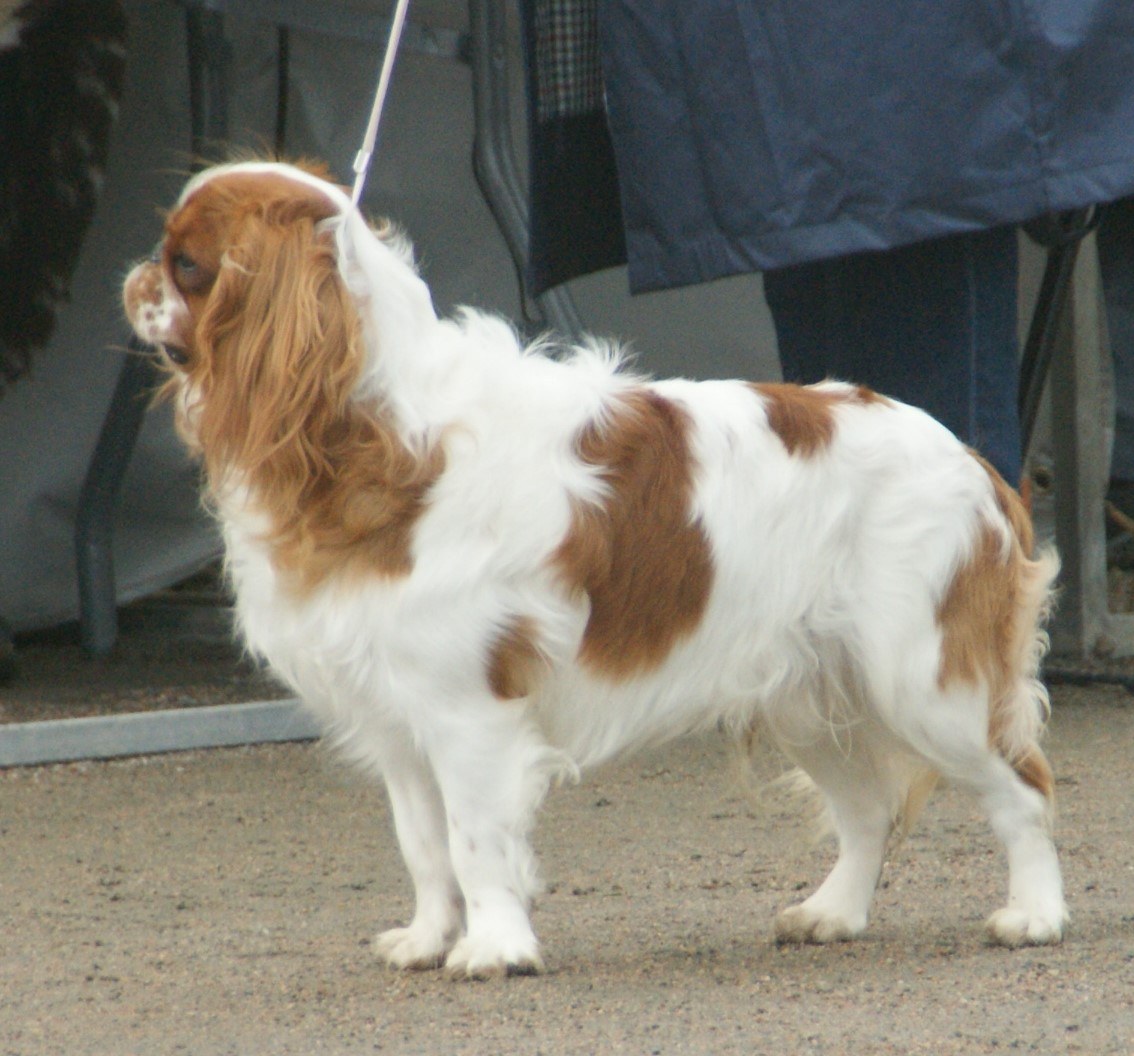

Do you have a better photo of an English Toy Spaniel in the American show ring? If you have a show photo you’d let us use, email it to [email protected] — tell us the dog’s name and the show, and it may be featured here. Please only send photos you took yourself or have the photographer’s permission to share, and tell us the photographer’s name.
1. Breed at a glance
The English Toy Spaniel — “Charlie” to its people, ETS for short — is a small companion spaniel with a big head, a short face, and a silky coat. It is quiet, gentle, and devoted to its own people, and it has been a lapdog of royalty for centuries. It is also a rare breed in the United States: only a few hundred are registered in a typical year, so most people have never met one. (AKC, English Toy Spaniel.)
- AKC group
- Toy; recognized 1886
- Size
- Most desirable weight 8–14 lb; compact and essentially square; the standard sets no height
- Coat & color
- Profuse, silky, straight or slightly wavy coat; four varieties: Blenheim, Prince Charles, King Charles, Ruby
- Lifespan
- 10–12 years
- Temperament
- Bright, affectionate, willing to please; gentle and devoted, reserved with strangers
- Parent club
- English Toy Spaniel Club of America
2. History
Toy spaniels have been the companions of European royalty since the 1500s, and the English Toy Spaniel’s history is documented back to the fifteenth century. The dogs were kept in the courts of Europe as companions and lapdogs, and they were bred for nothing but companionship — no hunting, no herding, no guarding, just company. The breed’s whole shape follows from that one job: small enough for a lap, quiet enough for a drawing room, and devoted enough to stay there. (Sources: Chewy, Back to Basics: English Toy Spaniel and Cavalier; AKC, English Toy Spaniel.)
King Charles II of England was famously devoted to these spaniels, to the point that he was rarely without one by his side — and the black-and-tan variety still carries his name, King Charles. The red-and-white variety is named for Blenheim Palace, where the Duke of Marlborough kept spaniels of this color in the 1700s, and the chestnut spot on the top of a Blenheim’s skull is still called the Blenheim spot. The tricolor variety is Prince Charles, and the solid red variety is Ruby. (Sources: Furry Critter Network, English Toy Spaniel; AKC, English Toy Spaniel.)
In the United States, the AKC recognized the breed in 1886, two years after the AKC itself was founded, making it one of the earliest breeds in the American registry. The same dog is known in England and in FCI countries as the King Charles Spaniel — the American name, English Toy Spaniel, is the only difference, and it is a difference of name only. The English Toy Spaniel Club of America is the parent club, and it runs the national specialty every year in Kalamazoo, Michigan. (Sources: Vetstreet, English Toy Spaniel; Chewy, Back to Basics.)
3. The standard and why it is written that way
The standard’s first line is the whole breed in one sentence: a compact, cobby and essentially square toy dog possessed of a short-nosed, domed head, a merry and affectionate demeanor, and a silky, flowing coat. And the standard says, in its own terms, what matters most: “The important characteristics of the breed are exemplified by the head.” This is a head breed — everything else follows from the head. (AKC, Official Standard of the English Toy Spaniel, approved June 13, 1989, effective August 1, 1989.)
- Head — the breed’s defining feature: large in comparison to size, with a plush, chubby look and a degree of refinement that keeps it from being coarse. Eyes large and very dark brown or black, set squarely on line with the nose, with little or no white showing; eye rims black. Ears very long, set low and close to the head, fringed with heavy feathering. Skull high and well domed, curving as far out over the eyes as possible. Stop deep and well-defined. Muzzle very short, with the nose well laid back and well-developed cushioning under the eyes. Jaw square, broad, and deep, well turned up. Nose large and jet black, with large, wide-open nostrils. Bite slightly undershot, teeth not to show; a wry mouth is penalized, and a hanging tongue is extremely objectionable.
- Size & body: the most desirable weight of an adult is 8 to 14 pounds; general symmetry and substance matter more than the actual weight, but all other things being equal, the smaller dog is preferred. Compact and essentially square, built on cobby lines, sturdy of frame and solidly constructed. Neck moderate in length, nicely arched; topline level; body short, compact, square and deep, with a broad back, good rib, and deep brisket. Tail docked to two to four inches, carried at or just slightly above the level of the back; many are born with a shorter or screw tail, which is acceptable, and the tail feather forms a marked square “flag.”
- Coat: profusely coated, with heavy fringing on the ears, body, and chest, flowing feathering on both the front and hind legs, and feathering on the feet. Straight or only slightly wavy, with a silken, glossy texture. The Blenheim and the Ruby rarely gain the length of coat and ears of the Prince Charles and King Charles, but good coats and long ear fringes are a desired and prized attribute in all four varieties. Over-trimming of the body, feet, or tail fringes is penalized.
- Color: four varieties, each with its own name and pattern. Blenheim: pearly white ground with deep red or chestnut markings in large patches; ears and cheeks red, with a white blaze from the nose up the forehead ending between the ears in a crescentic curve; red markings around both eyes are preferable; the Blenheim often carries the thumb mark or “Blenheim Spot” on the top and center of the skull. Prince Charles: pearly white ground with evenly distributed black patches, solid black ears and black face markings, with rich tan markings on the face, over the eyes, in the lining of the ears, and under the tail. King Charles: rich, glossy black with bright mahogany tan markings on the cheeks, lining of the ears, over the eyes, on the legs, and underneath the tail. Ruby: self-colored, rich mahogany red. A small white chest patch about the size of a quarter, or a few white hairs on the chest, is not penalized on a King Charles or a Ruby — other white markings are an extremely serious fault.
- Gait: elegant, with good reach in front and sound, driving rear action; free and lively as a whole, with a good length of stride in profile and straight, true movement from front and rear.
- Temperament (in the standard): a bright and interested little dog, affectionate and willing to please.
Why it is written that way. The standard is a head standard, and it says so outright — the head is where the breed lives. The domed skull, the very short muzzle, the large dark eyes set squarely on line with the nose, and the long, heavily feathered ears are the breed; a dog without them is a spaniel, not an English Toy. The weight range with a preference for the smaller dog keeps it a toy, not a small spaniel, and the “extremely serious fault” for white markings on a King Charles or a Ruby exists because those two varieties are defined by being solid — white on them is not a marking, it is a mistake in the pattern. And the hanging-tongue line is unusually blunt for a standard, because a dog whose mouth cannot close is a dog whose short face has gone too far.
4. Temperament & living with one
The AKC’s summary is short and accurate: the English Toy Spaniel was bred to be the companion of kings, but beneath the patrician exterior beats the heart of a real doggy dog — bright, loving, and willing to please. The standard calls it bright and interested, affectionate and willing to please. In the house that reads as a quiet, gentle shadow: a dog that follows its person from room to room, settles on the nearest lap, and asks for very little beyond company.
- With its own people: devoted, and often devoted to one or two people in particular. It bonds hard and early, and it is happiest within arm’s reach of its person.
- With strangers: reserved, not hostile. An English Toy that has not been introduced will keep its distance, and it does not warm up on a schedule. It is more reserved than a Cavalier, and that reserve is the breed, not a flaw in the individual dog.
- Training: willing to please and intelligent, but soft. Gentle, positive training works; harsh handling shuts the dog down. It is not a breed that needs a firm hand — it needs a kind one, consistently applied.
- Exercise: modest. Short walks and play indoors are enough, and the dog is content in an apartment. The flat face means heat is a real risk — never exercise an English Toy hard in heat, and never leave one in a hot car.
- First-dog honesty: a good first dog for a calm, attentive household, and a poor fit for a rough household. It is small, it does not like being handled roughly, and it is best with older, gentle children rather than small children who grab. It is also a quiet dog, which makes it a good neighbor in an apartment — and a dog that can be left alone only in short stretches, because it was bred for company and it notices when the company leaves.
5. Grooming
The coat is profuse, silky, and straight or only slightly wavy — and profuse is the operative word. There is a lot of it for an 8-to-14-pound dog, and the long feathering on the ears, the chest, the legs, and the tail mats easily if it is left alone. The standard penalizes over-trimming, so the coat is kept long and the grooming is maintenance, not shaping.
- Brushing: brush the coat through several times a week, paying attention to the heavily feathered ears, the chest fringing, and the feathering on the legs and feet, where mats start. A pin brush or a comb, worked gently through the feathering, is enough — the coat is silky, not woolly, and it does not need to be thinned or stripped.
- Bathing: bathe as needed, and dry the coat thoroughly; a damp long coat mats faster than a dry one.
- Face & ears: keep the face clean, especially around the muzzle and the eyes, and check the long, low-set ears regularly — feathered, hanging ears trap moisture, so keep them clean and dry.
- Eyes: the eyes are large, dark, and prominent, which makes them easy to injure. Check them daily, wipe away debris gently, and see a veterinarian promptly for any cloudiness, redness, or squinting.
- Teeth & nails: the mouth is small and the bite is slightly undershot, so teeth crowd easily and dental care matters more in this breed than in a larger dog. Trim the nails regularly, and trim the feathering between the toes if it picks up debris.
6. Health testing
The parent club’s health-testing recommendations, published by the AKC and the OFA, are the starting point. English Toy Spaniels are generally healthy dogs with a 10–12-year lifespan, but the breed has two tests the parent club requires for CHIC registration, and a flat face that brings its own risks.
- Eye Examination by a boarded ACVO Ophthalmologist (CHIC): the eyes. An examination by a board-certified veterinary ophthalmologist, with results registered with the OFA, because the breed’s large, prominent eyes are prone to cataracts, progressive retinal atrophy, and other inherited eye disease.
- Congenital Cardiac Database (CHIC): the heart. An OFA cardiac evaluation — by a practitioner, a specialist, or a cardiologist, from 12 months of age — because mitral valve disease is the breed’s signature health risk: the heart’s mitral valve becomes leaky, and over time that can lead to heart failure. Patent ductus arteriosus, a vessel that fails to close after birth, is also seen in the breed.
- Patellar Luxation (optional): the kneecaps. An OFA evaluation, because toy breeds are prone to patellar luxation, where the kneecap slips out of place. The parent club lists it as optional for CHIC, but it is worth asking about all the same.
- DNA Repository (optional): participation in the OFA/CHIC DNA Repository, by blood or swab, so the breed’s genetics are on record for future research.
- Heat and airways: the muzzle is very short, with the nose well laid back. English Toy Spaniels are sensitive to heat and should never be exercised hard in warm weather or left in a hot car.
- Dental crowding: the mouth is small and the bite is slightly undershot. Teeth crowd easily, so dental care — brushing, and regular veterinary checks — matters more in an English Toy than in a larger dog.
Ask the breeder for the parents’ eye and cardiac results, and look them up in the OFA database yourself before you commit. (Sources: AKC, English Toy Spaniel Health Statement (parent club recommendations); AKC, Toy Group Health Testing Requirements; OFA, CHIC Program.)
7. The annual English Toy Spaniel specialty dog show
A specialty is the breed’s All-Star show — its Super Bowl. Once a year, the best English Toy Spaniels from across the country, and often from around the world, come together in one place.
The English Toy Spaniel Club of America’s national specialty: one national event each year, with conformation, sweepstakes, and junior showmanship. The 2026 national: May 21, at the Kalamazoo Co Fairgrounds in Kalamazoo, Michigan, with 42 competitors and 50 entries in conformation. The 2025 national: May 22, at the same fairgrounds, with 47 competitors and 47 entries. The 2027 national: May 27, at the same fairgrounds.
The standard, in brief: a compact, cobby, essentially square toy dog with a short-nosed, domed head, a merry and affectionate demeanor, and a silky, flowing coat. The most desirable weight for an adult is 8 to 14 pounds. There are four varieties — Blenheim (red and white), Prince Charles (tricolor), King Charles (black and tan), and Ruby (solid mahogany red) — judged in two variety groups, Blenheim & Prince Charles and King Charles & Ruby.
The 2026 National Specialty — Thursday, May 21, 2026, at the Kalamazoo Co Fairgrounds, 2900 Lake St, Kalamazoo, Michigan. Entry: 50 entries / 42 competitors in conformation. Entries limited to 100; entries closed May 6, 2026. Event Chair: Stephanie Sterling. Superintendent: MB-F Inc. The national opened the Kalamazoo cluster week, with ETSCA designated specialties at the Holland, Grand Rapids, Kalamazoo, and Greater Muskegon all-breed shows that followed. (Sources: AKC event search, event 2026208101; 2026 ETSCA National Specialty flyer.)
National specialty judge: Mr. David Fitzpatrick — regular classes in both varieties and junior showmanship. Sweepstakes judge: Ms. Stephanie Sterling — puppy sweepstakes. (Sources: AKC event search, event 2026208101; 2026 ETSCA National Specialty flyer.)
Results (2026 national). Best of Breed: GCHG CH Clussexx Organza Extravaganza (Blenheim & Prince Charles). Best of Opposite Sex: GCHB CH Clussexx Coronation Of A King From Sandscape (King Charles & Ruby). Best Junior Handler: Eva McMacken. The variety-level Winners Dog, Winners Bitch, select awards, and sweepstakes winners were not confirmed in an official source as of November 2026. (Source: AKC event search, event 2026208101.)
The 2027 National Specialty: Thursday, May 27, 2027, one day, at the Kalamazoo Co Fairgrounds, 2900 Lake St, Kalamazoo, Michigan. Entries limited to 100; entries close May 12, 2027. Event Chair: Patti Caldwell. Superintendent: MB-F Inc. ETSCA designated specialties follow at the Holland, Grand Rapids, Kalamazoo, and Greater Muskegon all-breed shows, May 28–31, at the same fairgrounds. (Sources: AKC event search, event 2027208101; AKC Upcoming National Specialties.)
National specialty judge: Gina Wieser — regular classes in both varieties and junior showmanship. The sweepstakes judge had not been published as of November 2026. (Source: AKC event search, event 2027208101.)
Past national specialties: 2025 · 2024 · 2023
English Toy Spaniel Club of America — englishtoyspanielclubofamerica.org
8. Regional specialties through the year: smaller regional shows
The national is the anchor, but the breed’s year also runs through regional specialties — smaller regional shows, not the national — held around the country, including the designated specialties that run with the national week in Kalamazoo and the specialties that run with the Des Moines cluster. These are the 2026 regionals verified from club and AKC sources so far:
Seven ETSCA specialties verified for 2026 so far — the national-week designated specialties in Kalamazoo, Michigan, and the Des Moines, Iowa, specialties in September:
- ETSCA designated specialty with the Holland Michigan Kennel Club — Friday, May 22, 2026, Kalamazoo, Michigan: at the Kalamazoo Co Fairgrounds (AKC event 2026208102). The breed judge is recorded on the host club’s event.
- ETSCA designated specialty with the Grand Rapids Kennel Club — Saturday, May 23, 2026, Kalamazoo, Michigan: at the Kalamazoo Co Fairgrounds (AKC event 2026208104). The breed judge is recorded on the host club’s event.
- ETSCA designated specialty with the Kalamazoo Kennel Club — Sunday, May 24, 2026, Kalamazoo, Michigan: at the Kalamazoo Co Fairgrounds (AKC event 2026208105). The breed judge is recorded on the host club’s event.
- ETSCA designated specialty with the Greater Muskegon Kennel Club — Monday, May 25, 2026, Kalamazoo, Michigan: at the Kalamazoo Co Fairgrounds (AKC event 2026208103). The breed judge is recorded on the host club’s event.
- ETSCA regional specialty — Friday, September 4, 2026, Des Moines, Iowa: at the Iowa State Fairgrounds, E 30th & Grand Ave. (AKC event 2026208106), with the Combined Specialty Clubs of Greater Des Moines. Judge: G M Fritz. Entry: 16 entries / 10 competitors. Best of Breed: CH Luvn Chr-Lys Make It Big At Reflexions (King Charles & Ruby). Best of Opposite Sex: Clussexx Reigning Star (Blenheim & Prince Charles). Event Chair: Jamie Ward. Superintendent: Onofrio Dog Shows.
- ETSCA designated specialty with the Des Moines Kennel Club — Saturday, September 5, 2026, Des Moines, Iowa: at the Iowa State Fairgrounds (AKC event 2026208107). The breed judge is recorded on the host club’s event.
- ETSCA designated specialty with the Des Moines Kennel Club — Sunday, September 6, 2026, Des Moines, Iowa: at the Iowa State Fairgrounds (AKC event 2026208108). The breed judge is recorded on the host club’s event.
The 2027 regionals announced so far:
Four ETSCA designated specialties announced for 2027 so far, all in the national week in Kalamazoo, Michigan:
- ETSCA designated specialty with the Holland Michigan Kennel Club — Friday, May 28, 2027, Kalamazoo, Michigan: at the Kalamazoo Co Fairgrounds (AKC event 2027208102). Entries close May 12, 2027. The breed judge is recorded on the host club’s event.
- ETSCA designated specialty with the Grand Rapids Kennel Club — Saturday, May 29, 2027, Kalamazoo, Michigan: at the Kalamazoo Co Fairgrounds (AKC event 2027208103). Entries close May 12, 2027. The breed judge is recorded on the host club’s event.
- ETSCA designated specialty with the Kalamazoo Kennel Club — Sunday, May 30, 2027, Kalamazoo, Michigan: at the Kalamazoo Co Fairgrounds (AKC event 2027208104). Entries close May 12, 2027. The breed judge is recorded on the host club’s event.
- ETSCA designated specialty with the Greater Muskegon Kennel Club — Monday, May 31, 2027, Kalamazoo, Michigan: at the Kalamazoo Co Fairgrounds (AKC event 2027208105). Entries close May 12, 2027. The breed judge is recorded on the host club’s event.
Past regional specialties: 2025 · 2024 · 2023
More regional specialties will be added here as their programs are verified — this section is built from show data, not guesswork. Browse upcoming show weekends →
9. Clubs
The English Toy Spaniel Club of America is the parent club — the breed’s national organization, and the club that runs the national specialty every May in Kalamazoo, Michigan. Its stated objects are to encourage and promote quality in the breeding of purebred English Toy Spaniels, to encourage the organization of independent local English Toy Spaniel clubs, to urge members and breeders to accept the AKC standard as the only standard of excellence, and to protect and advance the interests of the breed by encouraging sportsmanlike competition at dog shows. The club’s annual meeting is held with the national specialty. (Source: English Toy Spaniel Club of America, Constitution and By-Laws.)
- English Toy Spaniel Club of America (parent club) — englishtoyspanielclubofamerica.org. National specialty, breeder referral, rescue.
- English Toy Spaniel Club of New England — the regional club in New England; holds specialty shows in the region.
- English Toy Spaniel Club of Western Pennsylvania — the regional club in western Pennsylvania.
- AKC Marketplace — marketplace.akc.org/puppies/english-toy-spaniel — for puppies from AKC-registered breeders. The parent club’s breeder referral is the better first step.
10. Rescue
English Toy Spaniels are rare, and they are rarer still in rescue — which is good news for the dogs and a long wait for anyone hoping to adopt one. The parent club runs a rescue network for the breed, and it is the first place to ask: the club knows the dogs that need homes and the homes that suit them, and it can also point you to regional help.
- English Toy Spaniel Club of America rescue network — the parent club’s rescue program, run by club members. Contact the parent club directly at englishtoyspanielclubofamerica.org about a dog that needs a home or a home that wants a dog.
- Lucky Star Cavalier Rescue — a rescue group that takes in both Cavalier King Charles Spaniels and English Toy Spaniels, and rehomes them. Because the two breeds are so often confused, a group that knows both is worth knowing.
- AKC Rescue Network — the AKC’s rescue directory also lists English Toy Spaniel rescue contacts: akc.org/akc-rescue-network.
Rescue dogs are almost always adults, and their temperaments are already visible — which is an advantage in a breed this devoted to its own people and reserved with strangers. A rescue will want to know your home, your schedule, and your other animals before it places a dog with you. That is the process working, not a delay.
11. Breeder vs. rescue: honest guidance
The honest version, before you decide:
- Do not confuse it with a Cavalier. The English Toy Spaniel and the Cavalier King Charles Spaniel share coat colors and ancestors, but they are two different breeds with two different standards. The English Toy is smaller, shorter-faced, and more reserved; the Cavalier is larger, longer-nosed, and more outgoing. A breeder selling “Cavaliers” with English Toy paperwork — or the other way around — is selling you a problem.
- There is no fifth variety. Only four colors are allowed — Blenheim, Prince Charles, King Charles, and Ruby — and white markings other than a small chest patch are an extremely serious fault on a King Charles or a Ruby. A “rare” color outside the four is a dog that cannot be shown, sold as a rarity.
- Ask for the two health tests. Eye and cardiac — and look the parents up in the OFA database yourself. A breeder who has done the tests will be glad to show them; a breeder who has not will change the subject. The heart test matters most in this breed.
- Be honest about the flat face. A very short muzzle means heat is a real risk, prominent eyes are easy to injure, and a small mouth means dental care matters. Vet bills are part of the decision, not an afterthought, and it is worth choosing a veterinarian who is comfortable with flat-faced toy dogs.
- Expect a wait either way. This is a rare breed. A good breeder will have a waiting list, and rescue will have few dogs. Anyone offering you a puppy today, at a discount, is not offering you this breed’s usual path — and a puppy bought that way is the one most likely to carry the health problems this page warns about.
12. Claim this page
Do you own an English Toy Spaniel? Have a photo from a national specialty or a regional specialty, or a correction to something on this page? English Toy Spaniel Club of America members, breeders, and exhibitors — and anyone with a standard-conforming dog — can help this page get better. See the photo note under the photo above for how to send a picture, or contact us with a correction.
Sources
- AKC, Official Standard of the English Toy Spaniel (PDF) — images.akc.org/pdf/breeds/standards/EnglishToySpaniel.pdf
- AKC, English Toy Spaniel breed page — www.akc.org/dog-breeds/english-toy-spaniel
- AKC, Toy Group Health Testing Requirements — www.akc.org/breeder-programs/akc-breed-health-testing-requirements/toy-group-health-testing-requirements
- AKC, English Toy Spaniel Health Statement (parent club recommendations) — cdn.akc.org/Marketplace/Health-Statement/English-Toy-Spaniel.pdf
- AKC, Upcoming National Specialties — www.apps.akc.org/apps/events/conformation/national_specialties.cfm
- AKC event search, event 2027208101 (2027 national) — www.apps.akc.org/apps/events/search/index_results.cfm
- AKC event search, event 2026208101 (2026 national) — www.apps.akc.org/apps/events/search/index_results.cfm
- AKC event search, event 2025208101 (2025 national) — www.apps.akc.org/apps/events/search/index_results.cfm
- AKC event search, event 2024208101 (2024 national) — www.apps.akc.org/apps/events/search/index_results.cfm
- AKC event search, event 2023208101 (2023 national) — www.apps.akc.org/apps/events/search/index_results.cfm
- AKC event search, event 2026208106 (2026 Des Moines regional) — www.apps.akc.org/apps/events/search/index_results.cfm
- AKC event search, event 2025208106 (2025 Des Moines regional) — www.apps.akc.org/apps/events/search/index_results.cfm
- English Toy Spaniel Club of America — englishtoyspanielclubofamerica.org
- English Toy Spaniel Club of America, Constitution and By-Laws — englishtoyspanielclubofamerica.org/wp-content/uploads/2018/01/ETSCA-Constitution.pdf
- 2026 ETSCA National Specialty flyer — englishtoyspanielclubofamerica.org/wp-content/uploads/2025/10/2026NationalFlyer.pdf
- 2025 ETSCA National Specialty results — englishtoyspanielclubofamerica.org/wp-content/uploads/2025/07/2025-ETSCA-National-Specialty-Results.pdf
- Canine Chronicle, English Toy Spaniel Club — 2015 National Specialty — caninechronicle.com/current-articles/english-toy-spaniel-club-2015-national-specialty
- OFA, CHIC Program — ofa.org/chic-programs
- AKC Rescue Network — www.akc.org/akc-rescue-network
- Chewy, Back to Basics: A Comparison of the English Toy Spaniel and the Cavalier King Charles Spaniel — www.chewy.com/education/dog/training-and-behavior/back-to-basics-a-comparison-of-the-english-toy-spaniel-and-the-cavalier-king-charles-spaniel
- Vetstreet, English Toy Spaniel — www.vetstreet.com/dogs/english-toy-spaniel
- Furry Critter Network, English Toy Spaniel — www.furrycritter.com/pages/descriptions/dogs/e/english_toy_spaniel.htm
- Wikimedia Commons, File:King Charles Spaniel Blenheim 1.jpg (hero photo) — commons.wikimedia.org/wiki/File:King_Charles_Spaniel_Blenheim_1.jpg