
Breed profile · Sporting Group · the merry flushing spaniel
English Springer Spaniel
The English Springer Spaniel is a medium-sized sporting dog of great energy, stamina, and brains — a flushing spaniel that springs game from cover, then comes home and wants to be on the couch with you. The AKC recognized the breed in 1910, and the English Springer Spaniel Field Trial Association, founded in 1926, is the parent club. Springers have ranked among the AKC's 30 most popular breeds for years.
Help us improve it. This is one of ThePetAdvisor’s breed profiles, built from public sources with generous links to the people who actually own this breed’s knowledge. If something’s off or missing, the parent club can claim the page and set it straight — see the bottom of the page.
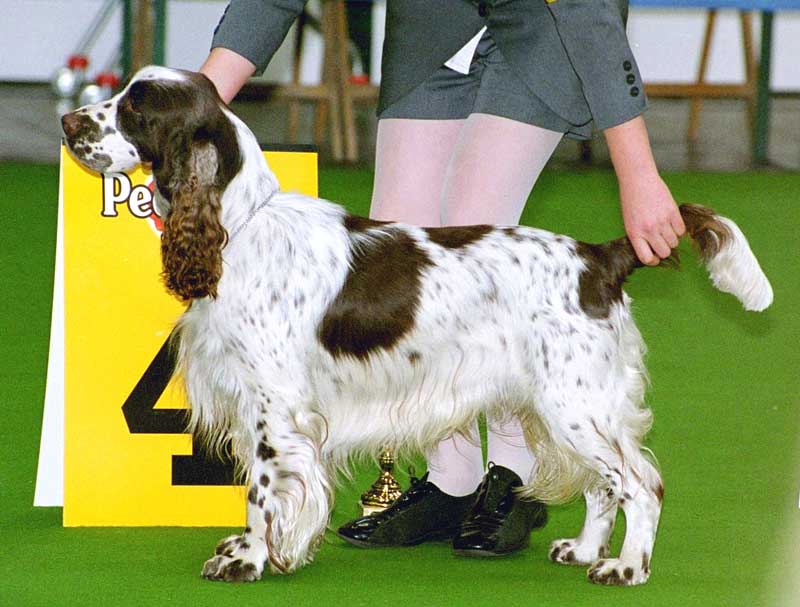

Do you have a better photo of an English Springer Spaniel in the American show ring? If you have a show photo you’d let us use, email it to [email protected] — tell us the dog’s name and the show, and it may be featured here. Please only send photos you took yourself or have the photographer’s permission to share, and tell us the photographer’s name.
1. Breed at a glance
Sporting Group; recognized by the AKC in 1910
20 in at the withers (dogs), 19 in (bitches); about 50 lb (dogs), 40 lb (bitches)
Medium-length double coat with feathering; black or liver with white, blue or liver roan, tricolor
12–14 years (AKC)
Friendly, eager to please, quick to learn, willing to obey
The English Springer Spaniel is a sporting dog first and a companion second — but it is very good at both. The name comes from the job: a springer flushes, or “springs,” game birds from cover for the gun. The standard describes a medium-sized dog with a compact body, a moderately long coat with feathering, pendulous ears, a soft, gentle expression, and a friendly wagging tail. At its best, the standard says, the Springer “suggests power, endurance and agility” — and looks like a dog that can go, and keep going, under difficult hunting conditions. (Sources: AKC, Official Standard of the English Springer Spaniel; AKC, English Springer Spaniel.)
2. History
Spaniels are an old family, and the Springer is one of its oldest working forms. The dogs that became English Springer Spaniels flushed game for falconers and then for hunters with guns, springing birds from cover — the job that gave the breed its name.
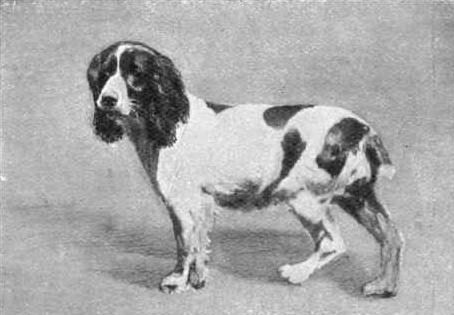

- One litter, two breeds. Through the nineteenth century, English Springer Spaniels, Welsh Springer Spaniels, and English Cocker Spaniels were treated as varieties of the same breed and were regularly born in the same litter. The larger dogs, over about 25 pounds, were treated as Springers; the smaller ones became Cockers. The split was functional — cockers worked woodcock, springers flushed and sprang game.
- 1902: a breed of its own. The Kennel Club in England formally recognized the English Springer Spaniel as a distinct breed in 1902, and the separation from the Cocker Spaniel was complete.
- 1907: the first imports. The first pedigreed English Springer Spaniels arrived in America in 1907, imported for Robert Dumont Foote of Morristown, New Jersey.
- 1910: AKC recognition. The American Kennel Club first registered an English Springer Spaniel in 1910 — a bitch named Denne Lucy became the first registered dog of the breed.
- 1926: the parent club. The English Springer Spaniel Field Trial Association was founded in 1926 — the only AKC breed parent club whose name carries a field-trial connotation — and the AKC recognized it as the breed’s parent club in 1927. The club celebrated its centennial in 2026.
- 1947: the first national championship stake. The first National Championship Stake for English Springer Spaniels was held by the ESSFTA at Crab Orchard Lake, Herrin, Illinois, with 32 starters.
- One standard, two types. Field-bred and show-bred Springers have drifted apart in looks — field dogs lighter and shorter-coated, show dogs heavier-coated and more feathered — but the AKC standard does not separate the two types, and both are judged by the same written description.
- A modern record holder. GCHP Telltale Bohemian Rhapsody, “Freddie,” won Best in Specialty Show at the 2024 ESSFTA national, then won the Sporting Group at the Westminster Kennel Club Dog Show in 2025 and retired as the breed’s record holder with 102 all-breed Best in Shows.
From a flushing dog in the English coverts to a fixture of American dog shows and hunting fields, the Springer has kept the same job for centuries: find the bird, spring it, and come back wagging. (Sources: AKC, Spaniel Field Trials: History of the Sport; English Springer Rescue America, About Springers; Spaniel Journal, Fisher’s Island: Birthplace of the ESSFTA; Canine Chronicle TV, New Record Holder – Freddie.)
3. The standard and why it is written that way
The standard opens with the breed in two sentences: “The English Springer Spaniel is a medium-sized sporting dog, with a compact body and a docked tail. His coat is moderately long, with feathering on his legs, ears, chest and brisket.” Everything else follows from the working job — the dog is meant to look like it can cover rough ground with agility and reasonable speed, and keep going. The current standard was approved February 12, 1994, and has been effective since March 31, 1994.

- Size. The ideal height at the shoulder is 20 inches for dogs and 19 inches for bitches; dogs more than one inch under or over the ideal are to be faulted. A 20-inch dog in good condition weighs approximately 50 pounds, a 19-inch bitch approximately 40 pounds. The body is slightly longer than the height at the withers, and a Springer with correct substance appears well-knit and sturdy with good bone, never coarse or ponderous.
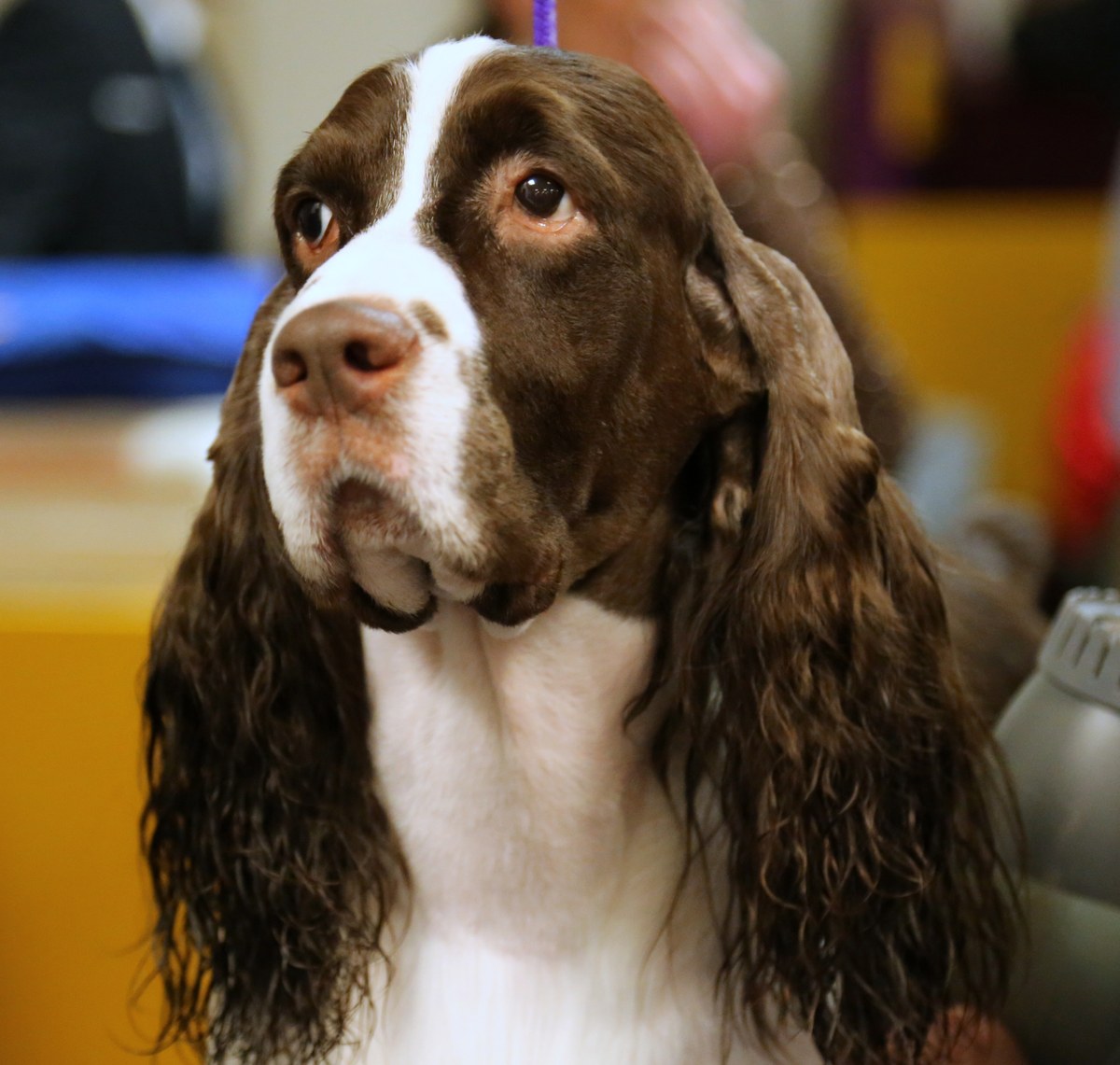
- Head. The head is impressive without being heavy, and its beauty lies in a combination of strength and refinement. The expression is alert, kindly, and trusting — the eyes, more than any other feature, are the essence of the Springer’s appeal. The eyes are medium-sized and oval, set rather well apart and fairly deep in their sockets; the iris harmonizes with the coat, preferably dark hazel in liver-and-white dogs and black or deep brown in black-and-white dogs. Yellow or brassy eyes are highly undesirable. The ears are long and fairly wide, hanging close to the cheeks, with leather thin and approximately long enough to reach the tip of the nose. The muzzle is approximately the same length as the skull and one half its width. Teeth ideally meet in a close scissors bite; undershot, overshot, and wry jaws are serious faults, to be severely penalized.
- Body and tail. The neck is moderately long, muscular, clean, and slightly arched at the crest. The topline from withers to tail is firm and slopes very gently. The body is short-coupled, strong, and compact, with a deep chest reaching the level of the elbows. The tail is carried horizontally or slightly elevated and displays a characteristic lively, merry action, particularly when the dog is on game. A clamped tail is to be faulted, as is a tail carried at a right angle to the backline in terrier fashion. The standard describes the tail as docked; in practice, natural tails also appear in the ring — the 2026 national drew warm comment from ringside for the undocked tails on show.
- Coat. The Springer has an outer coat and an undercoat. The outer coat is of medium length, flat or wavy; the undercoat is short, soft, and dense. Together they make the dog substantially waterproof, weatherproof, and thornproof. The ears, chest, legs, and belly carry a fringe of feathering of moderate length and heaviness. It is legitimate to trim about the head, ears, neck, and feet, to remove dead undercoat, and to thin and shorten excess feathering — but overtrimming, especially of the body coat, or any chopped, barbered, or artificial effect is to be penalized, as is excessive feathering that destroys the clean outline.
- Color. Black or liver with white markings, or predominantly white with black or liver markings; blue or liver roan; and tricolor — black and white or liver and white with tan markings, usually found on the eyebrows, cheeks, inside of the ears, and under the tail. Any white portion of the coat may be flecked with ticking. Off colors such as lemon, red, or orange are not to place.
- Gait. The final test of the Springer’s conformation and soundness is proper movement: a long, ground-covering stride with a firm back, front and rear assemblies equivalent in angulation and muscular development, so the gait is smooth and effortless. High-stepping, wasted motion, a short choppy stride, crabbing, and moving wide are all movement faults.
- Temperament in the standard. The typical Springer is friendly, eager to please, quick to learn, and willing to obey — traits the standard calls essential for appropriate handler control in the field. In the ring the dog should show poise and attentiveness and permit examination without resentment or cringing. Aggression toward people and aggression toward other dogs is not in keeping with sporting dog character and purpose and is not acceptable, and excessive timidity is to be equally penalized.
The color rule is worth knowing before you shop: because lemon, red, and orange are not to place, a breeder selling a “rare” orange or lemon Springer as special is selling against the standard. Judge the dog, not the novelty. (Sources: AKC, Official Standard of the English Springer Spaniel; AKC, English Springer Spaniel.)
4. Temperament & living with one
Springers are friendly, eager to please, quick to learn, and willing to obey — the standard’s own words, and a fair summary of living with one. They are merry dogs with a wagging tail and a strong need to be with their people and to have something to do.
- Company first. This is a breed that wants to be with you — in the field, on the couch, or following you from room to room. A Springer left alone all day will be unhappy, and an unhappy Springer is usually a destructive one.
- With children and other dogs. Usually good with children and with other dogs, especially when socialized young. They are sturdy and tolerant, but they are always ready to play, and small children need to be taught to respect a dog that never seems to run out of energy.
- Energy is the deal. Springers need real work every day — not just a walk around the block. Training, retrieving, scent games, agility, and field work all count, and a Springer that has been worked is a calm and delightful house dog.
- Smart and sensitive. They are quick learners, but they are also sensitive to tone — harsh corrections shut a Springer down. Short, upbeat, reward-based training sessions work best, and they double as the mental exercise the breed needs.
- Apartment life. Possible, but only with a serious daily exercise commitment. A Springer in an apartment without a job will find one, and you will not like what it chooses.
The honest summary: this is a wonderful family dog for an active household that wants a dog to do things with, and a poor fit for a household that is out all day or wants a low-energy pet. (Sources: AKC, English Springer Spaniel; AKC, Official Standard of the English Springer Spaniel.)
5. Grooming
Grooming a Springer is steady work, not occasional work. The medium-length double coat sheds year-round, and the feathering on the ears, chest, legs, and belly tangles and mats if it is not brushed several times a week.
Most pet owners keep the coat trimmed back, which the standard allows around the head, ears, neck, and feet, and many clip the feathering shorter for ease — but the body coat should never be chopped or barbered into an artificial shape. The ears need regular cleaning and checking, because the long, pendulous ears trap moisture and ear infections are one of the breed’s most common problems. The eyes should be kept clean, the teeth brushed, and the feet trimmed, with the hair between the toes kept tidy. A bath every few weeks keeps the coat clean and glossy — the standard calls for a clean, glossy, “live” appearance that shows good health. (Sources: AKC, English Springer Spaniel; AKC, Official Standard of the English Springer Spaniel.)
6. Health testing
The English Springer Spaniel Field Trial Association’s CHIC program sets the health testing a responsible breeder should do — and the results should be registered with the Orthopedic Foundation for Animals, where anyone can look them up.
- Hips. An OFA hip evaluation, or a PennHIP evaluation, required for a CHIC number, performed at 24 months of age or older — the screen for hip dysplasia, which is common enough in the breed that it heads the list.
- Elbows. An OFA elbow evaluation, required for a CHIC number — the screen for elbow dysplasia.
- Eyes. An annual eye exam by a board-certified veterinary ophthalmologist (CAER), required for a CHIC number. The exam is annual, not one-time, because heritable eye conditions — cataracts, progressive retinal atrophy, and glaucoma — can appear and progress during a breeding dog’s life.
- PRA-crd4/cord1. A DNA test for progressive retinal atrophy, cone-rod dystrophy 4, required for a CHIC number, from an approved laboratory, with results registered with the OFA. DNA testing of both parents eliminates the risk of producing affected puppies.
- DNA repository. A DNA sample banked with the ESSFTA/University of Missouri DNA Bank or the OFA/CHIC DNA Repository, required for a CHIC number.
- Fucosidosis — optional, but ask. A DNA test for fucosidosis, a fatal inherited storage disease in English Springer Spaniels, is optional for a CHIC number but widely done. Many breeders also test for PFK deficiency, an inherited metabolic disorder that causes episodic muscle damage.
Two things worth knowing that are not on a test list: the long ears need regular cleaning, because ear infections are one of the breed’s most common and most preventable problems. And the breed is long-lived for its size — the AKC lists 12 to 14 years. A CHIC number confirms the testing was done and published; it is not a guarantee of health, and it does not replace asking the breeder what they know about the health of their own lines. (Sources: AKC, Sporting Group Health Testing Requirements; Furry Critter Network, English Springer Spaniel (ESSFTA CHIC requirements).)
7. The annual English Springer Spaniel specialty dog show
A specialty is the breed’s All-Star show — its Super Bowl. Once a year, the best English Springer Spaniels from across the country, and often from around the world, come together in one place.
The English Springer Spaniel Field Trial Association’s national specialty: one national event each year, with conformation, sweepstakes, obedience, rally, agility, scent work, hunt tests, and junior showmanship, usually a multi-day week in the late summer or fall. The 2026 national: October 12–17 in Albany, Oregon, in the club’s centennial year, with 124 dogs and 143 entries in conformation on the national days. The 2027 national: not yet announced as of November 7, 2026.
The standard, in brief: a medium-sized sporting dog with a compact body, 20 inches at the shoulder for dogs and 19 for bitches, with a moderately long double coat and feathering on the legs, ears, chest, and brisket. Colors are black or liver with white markings, blue or liver roan, or tricolor — and off colors such as lemon, red, or orange are not to place. The tail is carried horizontally or slightly elevated with a characteristic lively, merry action, and the gait is a long, ground-covering stride with a firm back.
The 2026 National Specialty — Monday, October 12–Saturday, October 17, 2026, at the Linn County Fair & Expo Center, 3700 Knox Butte Road, Albany, Oregon 97322, in the English Springer Spaniel Field Trial Association’s centennial year. The National Specialty Show with junior showmanship ran Wednesday, October 14–Saturday, October 17, 2026: sweepstakes on Wednesday, dog classes on Thursday, bitch classes on Friday, and Best of Breed, junior showmanship, stud dog, brood bitch, brace, and the Rescue Parade on Saturday. Entries opened Wednesday, August 19, 2026, at noon PT and closed Wednesday, September 23, 2026, at 6:00 p.m. PT. Event Secretary: Lorraine Yu, c/o DogZibit. Event Chair: Liz Pike. National Specialty Co-chair: Kathy Patregnani. The national drew 124 dogs and 143 entries (124 Ent — 50d — 74b; 123 competitors). AKC event 2026166415. (Sources: 2026 premium list (English Springer Spaniel Field Trial Association, via AKC); AKC event search, event 2026166415.)
National specialty judge: Mrs. Kathy Lorentzen — conformation and the 4-to-6-month beginner puppy competition. Sweepstakes judge: Mrs. Robin Novack (Wednesday, October 14, 2026). Junior Showmanship judge: Mrs. Jackie Esperance (12 entries, 11 competitors). Obedience and rally judge: Mr. Donald Rennick (Obedience Veteran and Rally Novice judged by Mrs. Carolyn Wray). Best Junior Handler: Vanessa Barrett; Reserve Best Junior Handler: Jolin Fong. All conformation was judged on a ramp. (Sources: 2026 premium list (English Springer Spaniel Field Trial Association, via AKC); AKC event search, event 2026166415.)
Results (2026 national). Best of Breed: GCH Chivalry’s Miss Popularity (“Poppy”), a black-and-white bitch handled by Lisa Knight Somers, owned by Jack West Belvin, Lamonn West Belvin, and Lisa Knight Somers, and bred by Lisa Knight Somers. Best of Opposite Sex, Best of Winners, Winners Dog, Winners Bitch, and Best in Sweepstakes were not confirmed in an official source as of November 7, 2026. (Sources: Chivalry Springers, The Girls (GCh. Chivalry’s Miss Popularity); DogZibit, 2026 national specialty Best of Breed reel (Facebook, October 17, 2026).)
The 2027 National Specialty had not been announced as of November 7, 2026. The AKC’s Upcoming National Specialties list carries no English Springer Spaniel Field Trial Association entry, and no date, venue, or judge had been published by the club. Dates, venue, and judges will be added here when they are announced. (Source: AKC, Upcoming National Specialties.)
Past national specialties: 2025 · 2024
English Springer Spaniel Field Trial Association — essfta.org
8. Regional specialties through the year: smaller regional shows
The national is the anchor, but the breed’s year also runs through regional specialties — smaller regional shows, not the national — held around the country, including the regional specialties that run with the national. These are the 2026 regionals verified from club and AKC sources so far:
Regional English Springer Spaniel specialties verified for 2026, including the specialties that ran with the national in Albany, Oregon, and the ESSFTA’s own regional specialties around the country:
- Puget Sound English Springer Spaniel Association 80th Specialty — Monday, October 12, 2026, Albany, Oregon: at the Linn County Fair & Expo Center, opening national specialty week (AKC events 2026166609 and 2026166610, 4-to-6-month beginner puppy). Puppy and veteran sweepstakes and junior showmanship were offered.
- English Springer Spaniel Field Trial Association specialty — Saturday, March 7, 2026, City of Industry, California: at the Industry Hills Exposition Center. Judge: Mr. C G Liepmann. The specialty drew 23 entries (11 dogs, 12 bitches).
- English Springer Spaniel Field Trial Association specialties — Friday, October 30–Sunday, November 1, 2026, Fort Wayne, Indiana: Friday judge Mrs. Libby Naimo (sweepstakes Mr. Joao Machado; AKC events 2026166430 and 2026166429, 4-to-6-month beginner puppy); Saturday judge Mr. John Naimo; Sunday judge Mrs. Janet Warner (sweepstakes Mrs. Valerie Stern).
- English Springer Spaniel Field Trial Association specialty — Sunday, December 13, 2026, Orlando, Florida: Judge: Mrs. Nancy Talbott. Sweepstakes judge: Mr. Doug Belter.
Past regional specialties: 2025
More regional specialties will be added here as their programs are verified — this section is built from show data, not guesswork. Browse upcoming show weekends →
9. Clubs
The parent club is the English Springer Spaniel Field Trial Association, Inc. (ESSFTA), at essfta.org — founded in 1926 and recognized by the AKC as the breed’s parent club in 1927, the club that runs the national specialty, publishes the breed’s health guidance, and stewards the standard in the United States.
Regional specialty clubs verified in club and AKC sources during this build:
- Puget Sound English Springer Spaniel Association
Regional clubs run the regional specialties listed in section 8 and are the best first contact for anyone looking for a breeder, a local event, or a rescue contact. (Sources: English Springer Spaniel Field Trial Association; AKC, Club Search and Directory (English Springer Spaniel Field Trial Association).)
10. Rescue
Springers come into rescue for ordinary reasons — a move, a divorce, an owner’s health, or a hunting dog that did not make the grade — and the breed has a national rescue to catch them. Groups verified for this page:
- English Springer Rescue America (ESRA). The breed’s national rescue organization, at springerrescue.org. Founded in 1982 by Judy Manley, it is a volunteer-run 501(c)(3) that has rescued more than 40,000 English Springer Spaniels nationwide; Manley herself has fostered more than 1,000 dogs. ESRA takes part in the Rescue Parade at the ESSFTA national specialty.
A rescue Springer is usually an adult, so you know its size, coat, and temperament before you commit — and an adult that has already lived in a house is a real advantage with a breed this energetic. Field-bred dogs that wash out of hunting homes can make superb active pets for the right household. (Sources: English Springer Rescue America, About Springers; Ashtabula Kennel Club, Judy Manley candidate biography.)
11. Breeder vs. rescue: honest guidance
Both routes can end with a great dog. The honest difference is what you know going in.
- Choose a breeder if you want a puppy for showing, field work, or a specific purpose, and you want the health testing, pedigree, and early socialization that come with a careful breeding program. Ask for the CHIC health results in section 6, meet the dam if you can, and be ready to wait — good breeders have waiting lists. Decide first whether you want a field-bred or a show-bred dog, because they live differently.
- Choose rescue if you want an adult dog whose temperament, size, and coat you can see before you commit, and you are comfortable with a dog that may need training help and patience. Rescue is also the right route if you want to give a home to a dog that needs one — including field dogs that did not make it as hunting dogs.
- Either way, verify. Ask for health testing, ask what the dog’s lines are known for, and meet the dog before you commit. A breeder who will not show you health results and a rescue that will not let you meet the dog are both telling you something.
A Springer is a twelve-to-fourteen-year commitment to a dog that needs exercise, training, grooming, and company every day. The right question is not breeder or rescue — it is whether your life has room for a dog that was built to work all day and then sleep at your feet.
12. Claim this page
This page was built from public sources — the AKC standard, the parent club’s own material, AKC event records, and the rescue group’s site — and it is a starting point, not the last word. If you are with the English Springer Spaniel Field Trial Association or a regional club and something here is wrong or missing, you can claim this page and set it straight: email [email protected] and tell us what needs fixing. Corrections from the people who own the breed’s knowledge are always welcome.
Sources
- AKC, English Springer Spaniel
- AKC, Official Standard of the English Springer Spaniel (approved February 12, 1994; effective March 31, 1994)
- AKC, Sporting Group Health Testing Requirements
- AKC, Spaniel Field Trials: History of the Sport
- English Springer Spaniel Field Trial Association
- AKC, Club Search and Directory (English Springer Spaniel Field Trial Association)
- AKC, Upcoming National Specialties
- English Springer Rescue America, About Springers
- Spaniel Journal, Fisher's Island: Birthplace of the ESSFTA
- Furry Critter Network, English Springer Spaniel (ESSFTA CHIC requirements)
- Canine Chronicle TV, New Record Holder – Freddie
- Chivalry Springers, The Girls (GCh. Chivalry's Miss Popularity)
- Wikimedia Commons, English-Springer-Spaniel show (hero photo)
- Wikimedia Commons, A Springer Spaniel at Westminster Dog Show (head photo)
- Wikimedia Commons, English Springer Spaniel Fansome 1903