
Breed profile · Non-Sporting Group · The cotton-coated clown from Madagascar
Coton de Tulear
The Coton de Tulear is a small, white, cotton-coated companion from Madagascar — a happy, clownish little dog the AKC places in the Non-Sporting Group. It came to the United States in 1973, entered the AKC’s Foundation Stock Service in 1996, and has been fully recognized since July 1, 2014. What follows is the standard, the temperament, the grooming reality, the health tests that matter, and the breed’s year in the ring.
Help us improve it. This is one of ThePetAdvisor’s breed profiles, built from public sources with generous links to the people who actually own this breed’s knowledge. If something’s off or missing, the parent club can claim the page and set it straight — see the bottom of the page.
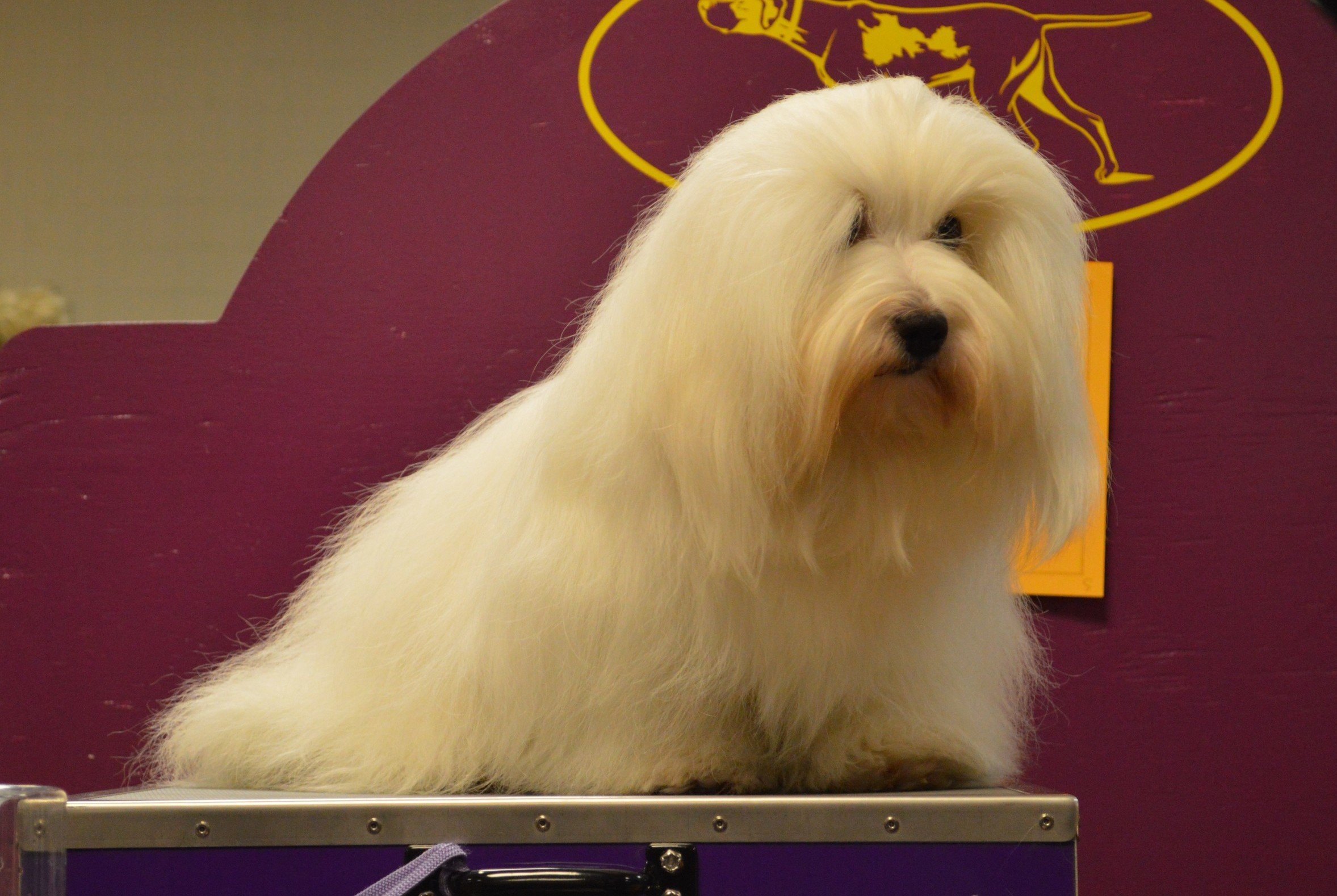
Do you have a better photo of a Coton de Tulear in the American show ring? If you have a show photo you’d let us use, email it to [email protected] — tell us the dog’s name and the show, and it may be featured here. Please only send photos you took yourself or have the photographer’s permission to share, and tell us the photographer’s name.
1. Breed at a glance
Non-Sporting — fully recognized by the AKC July 1, 2014
Bitches 9–10 in, dogs 10–11 in at the shoulder. Bitches 8–13 lb, dogs 9–15 lb.
White; very soft, supple, cotton texture; dense and profuse, can be very slightly wavy.
Happy, stable, very sociable; clownish and lighthearted, calm and easygoing.
15–19 years
Madagascar, the port of Tulear (now Toliara); companion of the Merina nobility.
Size, coat, and temperament facts are from the AKC standard as published by the parent club, the United States of America Coton de Tulear Club. Lifespan is the AKC breed-profile figure. Popularity: the Coton is No. 79 in the AKC’s 2025 registrations, up from No. 92 in 2024 (AKC most popular breeds 2025).
2. History
The Coton de Tulear takes its name from the port of Tulear, now Toliara, on the southwest coast of Madagascar — coton is French for cotton, for the coat. The breed’s histories say its ancestors came to the island aboard ships in the 16th and 17th centuries; the story the breed tells about itself is that small white dogs swam ashore from a wrecked ship and made their way inland, where they became the companions of the Merina nobility. That royal connection is why the breed is still called the “Royal Dog of Madagascar.” (Sources: Wikipedia, Coton de Tulear; AKC Coton de Tulear breed page.)
The phrase “Royal Dog of Madagascar” was coined by Dr. Robert Jay Russell, who encountered the breed in Madagascar in 1973 and brought the first Cotons to America. He founded the Coton de Tulear Club of America in 1976. France’s Société Centrale Canine had recognized the breed in 1970, and the FCI published its standard in 1972 — so by the time the first American Cotons arrived, the breed already had a written standard and a European following. (Sources: Wikipedia, Coton de Tulear; United States of America Coton de Tulear Club.)
The American road to recognition ran through the parent club that exists today. The United States of America Coton de Tulear Club (USACTC) was formed in 1993 and is the AKC parent club for the breed. The Coton entered the AKC’s Foundation Stock Service in 1996, moved to the Miscellaneous Class in 2012, and was fully recognized in the Non-Sporting Group on July 1, 2014. The American Coton Club, an older body that predates AKC recognition, still runs its own registry, health program, and rescue. (Sources: United States of America Coton de Tulear Club; AKC Coton de Tulear breed page; Wikipedia, Coton de Tulear.)
3. The standard and why it’s written that way
The standard opens with the job, which is companionship: the Coton is “a small, bright, merry, white companion dog.” Everything in the standard serves that description. The dog is small but sturdy — bitches 9 to 10 inches at the shoulder, dogs 10 to 11, bitches 8 to 13 pounds, dogs 9 to 15 — and the height limits are enforced as disqualifications: a bitch under 8.5 inches or over 11, a dog under 9.5 or over 12, is disqualified (the minimum-height disqualification does not apply to puppies under 12 months). There is no smaller variety and no “teacup” Coton in the standard. (Source: AKC Coton de Tulear standard, as published by the parent club.)
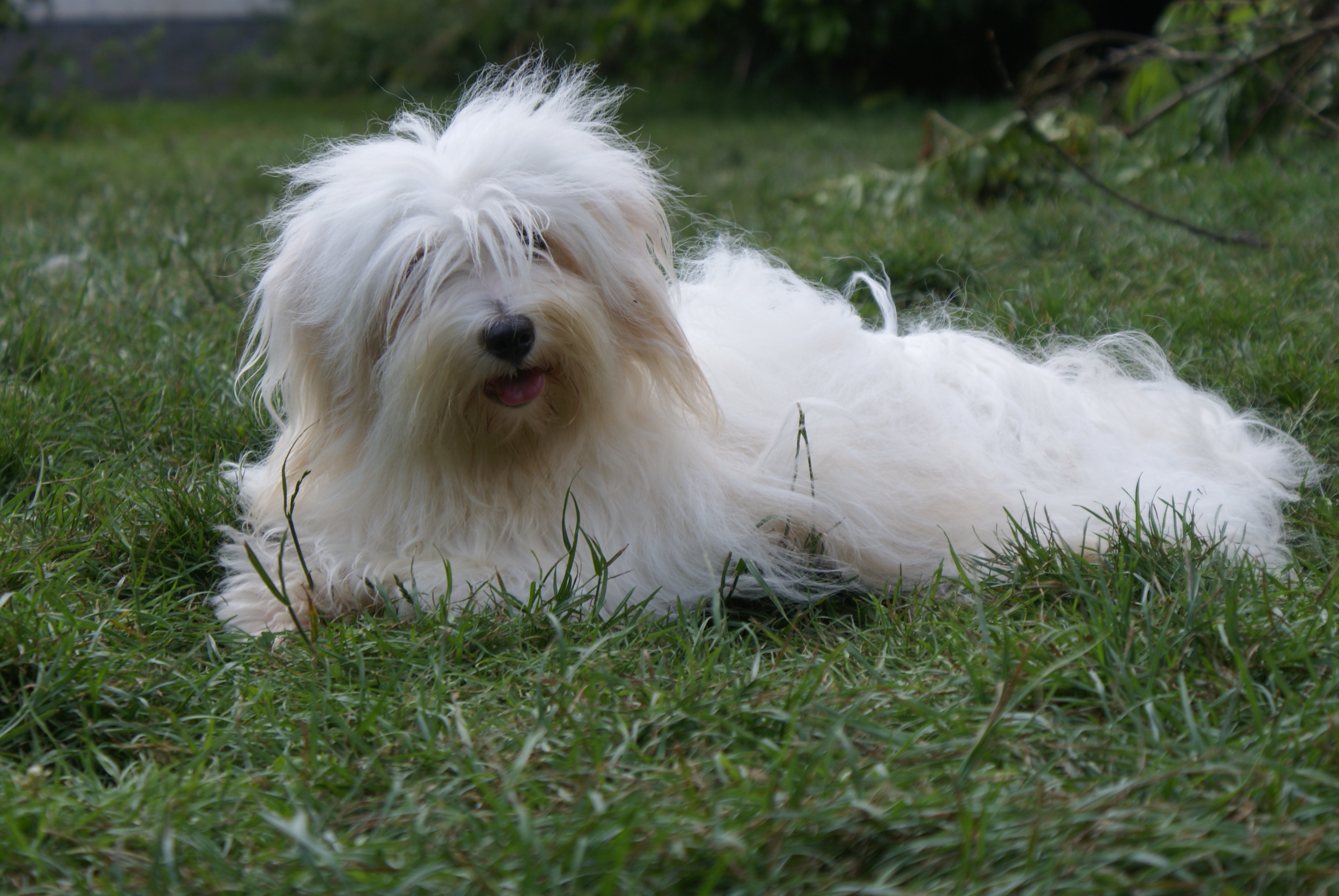
- The cotton coat. The coat is the breed, and the standard is exact about it. It is white; very soft, supple, and cotton in texture; never hard or rough; dense, profuse, and can be very slightly wavy. Light tan shadings are permitted on up to 5% of the body of an adult over 12 months, and slight light grey or light tan shadings are permitted on the ears.
- Faults and disqualifications. More than 5% light tan on the body is a severe fault, and black on the body is a disqualification at any age. Any trimming or sculpting that alters the natural appearance is severely penalized — a Coton in the ring is shown in its natural coat. The other disqualifications are eyes of any color other than brown or black; total lack of pigment on the eye rims, nose, or lips; and no tail. (Source: AKC Coton de Tulear standard.)
- Puppy markings fade. Puppies get an exception the adults do not. A puppy under 12 months may show light tan, light brown, dark brown, chestnut, or grey markings without penalty — most of it fades to white as the adult coat comes in, which is why a buyer should never pick a puppy for its markings and never pay a premium for them. The head is short, with a happy, alert expression the standard calls “joie de vivre”; the eyes are dark brown or black, round, and set wide apart. The gait is free and easy, with a topline that stays level. (Source: AKC Coton de Tulear standard.)
4. Temperament & living with one
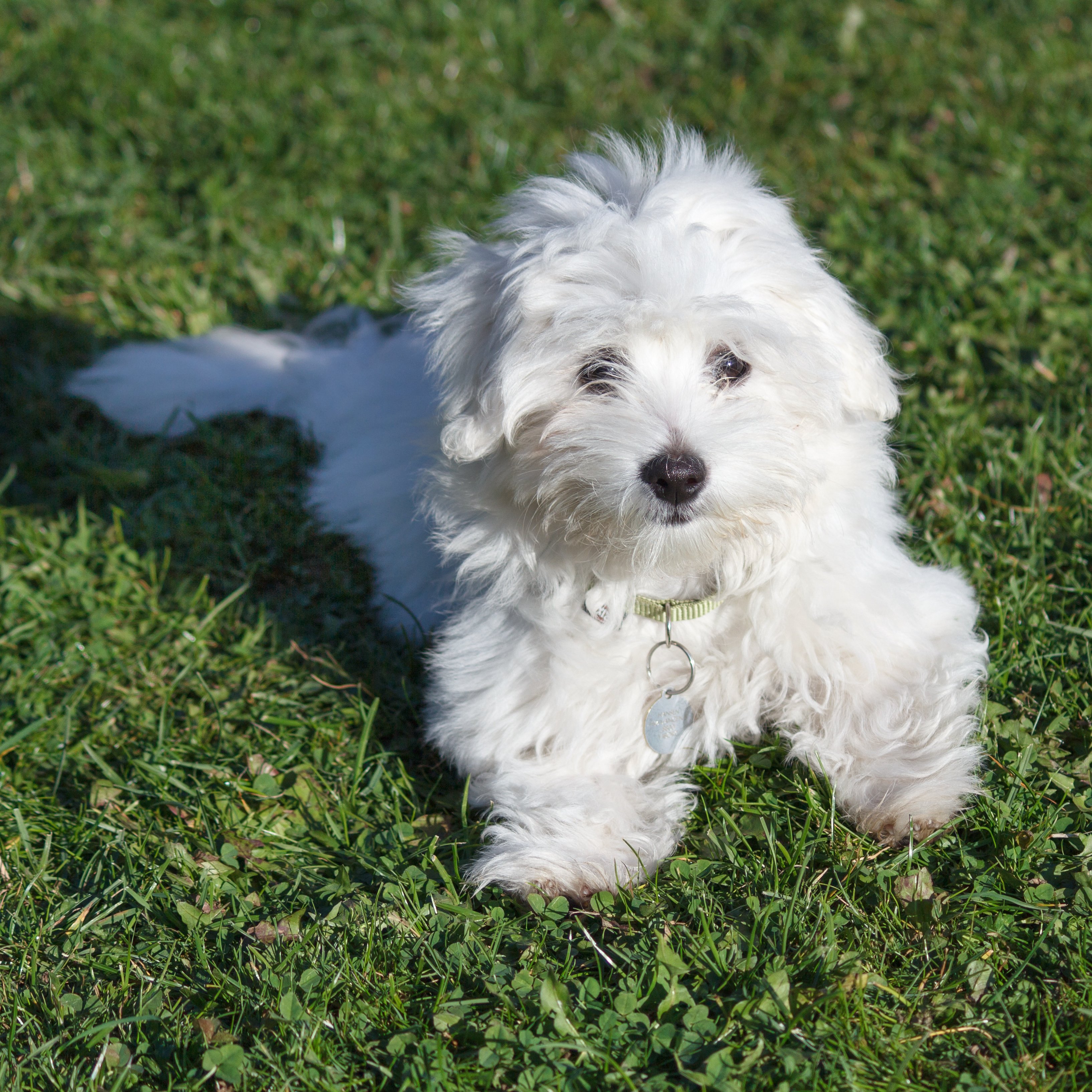
The standard’s temperament line is short and it is the whole breed in one sentence: the Coton is “happy, stable, [and] very sociable with humans and other dogs,” with a “joie de vivre” expression. The AKC’s breed profile says the same thing in plainer words: a “bright, happy-go-lucky companion dog whose favorite activities include clowning, cavorting, and following their special human around the house.” The breed’s people describe it the same way — naturally clownish and lighthearted, calm and easygoing — and add one detail the standard does not: Cotons are known for unique vocalizations, a chattering, grumbling, almost talking voice that is not barking and is not a behavior problem. (Sources: AKC Coton de Tulear standard; AKC Coton de Tulear breed page.)
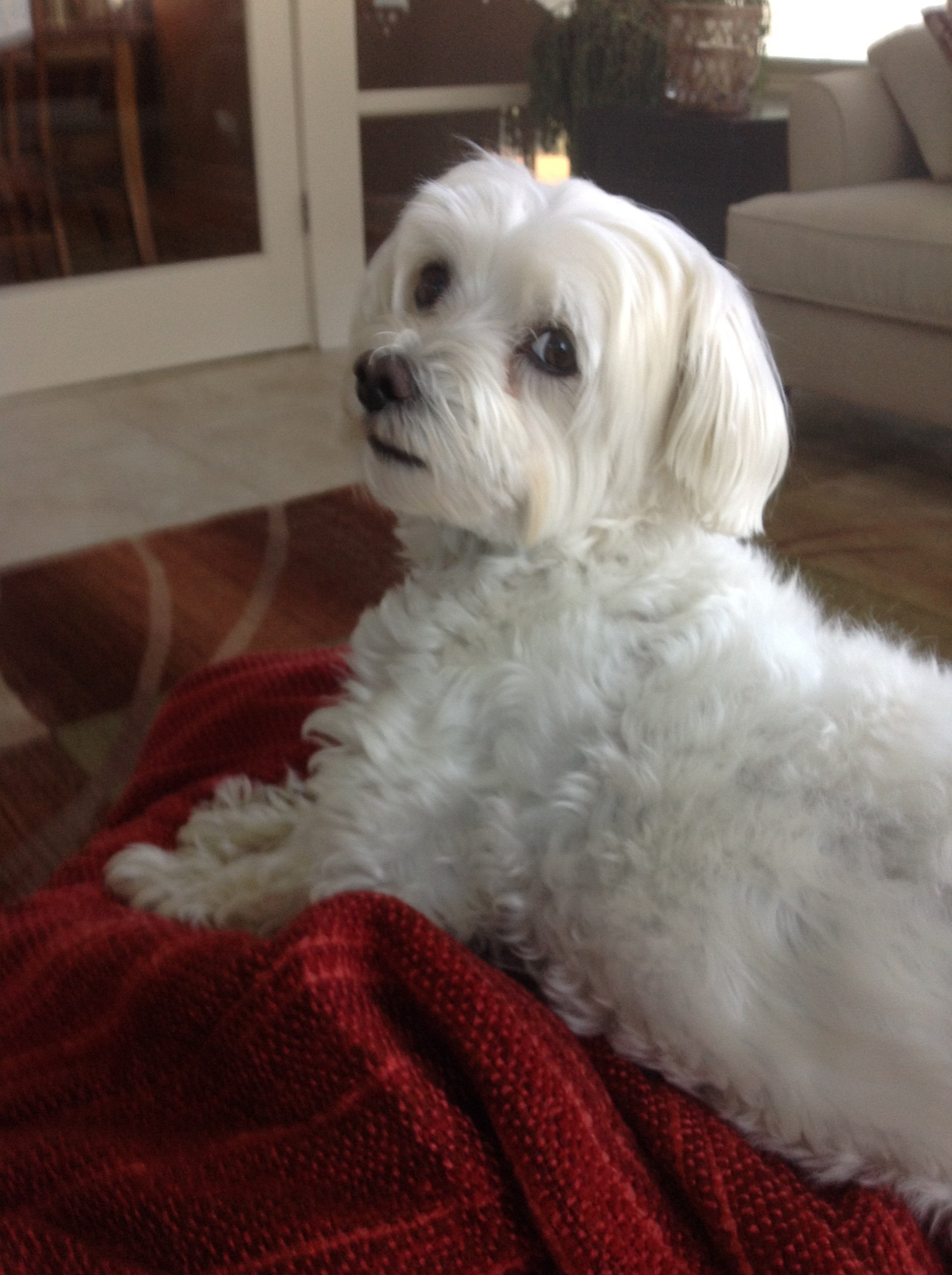
What that means at home is a dog built for company, not for a kennel. A Coton is small but robustly sturdy, good with children and other dogs, and happiest within a few feet of its person — the following-around-the-house habit is the breed’s signature, and a buyer who works long hours away from home should know it before they buy. The dog is not fragile and not a yapper, but it is a companion first: it wants to be where you are, and it will tell you so, in its own voice. Exercise needs are modest — daily play and walks, not a job — and the breed suits an apartment as well as a house, provided the coat gets its attention. (Source: AKC Coton de Tulear breed page.)

Training is straightforward: the breed is bright, food-motivated, and eager to please, and it does best with the same short, cheerful sessions a companion dog should get anyway. The thing to train for is not obedience but the coat — a puppy that learns to stand still for brushing is a dog that will let you keep a full coat for fifteen years. (Source: AKC Coton de Tulear breed page.)
5. Grooming
Grooming is the real work of owning a Coton, and it is the work the coat demands every day. The cotton coat mats if it is left alone, so a full coat gets a brush-through with a comb to the skin daily — not a skim over the top, which leaves mats forming underneath — and a bath when the coat is dirty, with a conditioner that keeps the cotton texture soft. The ears need checking and cleaning, the nails need keeping short, and the teeth need brushing like any small companion breed. (Source: AKC Coton de Tulear breed page.)
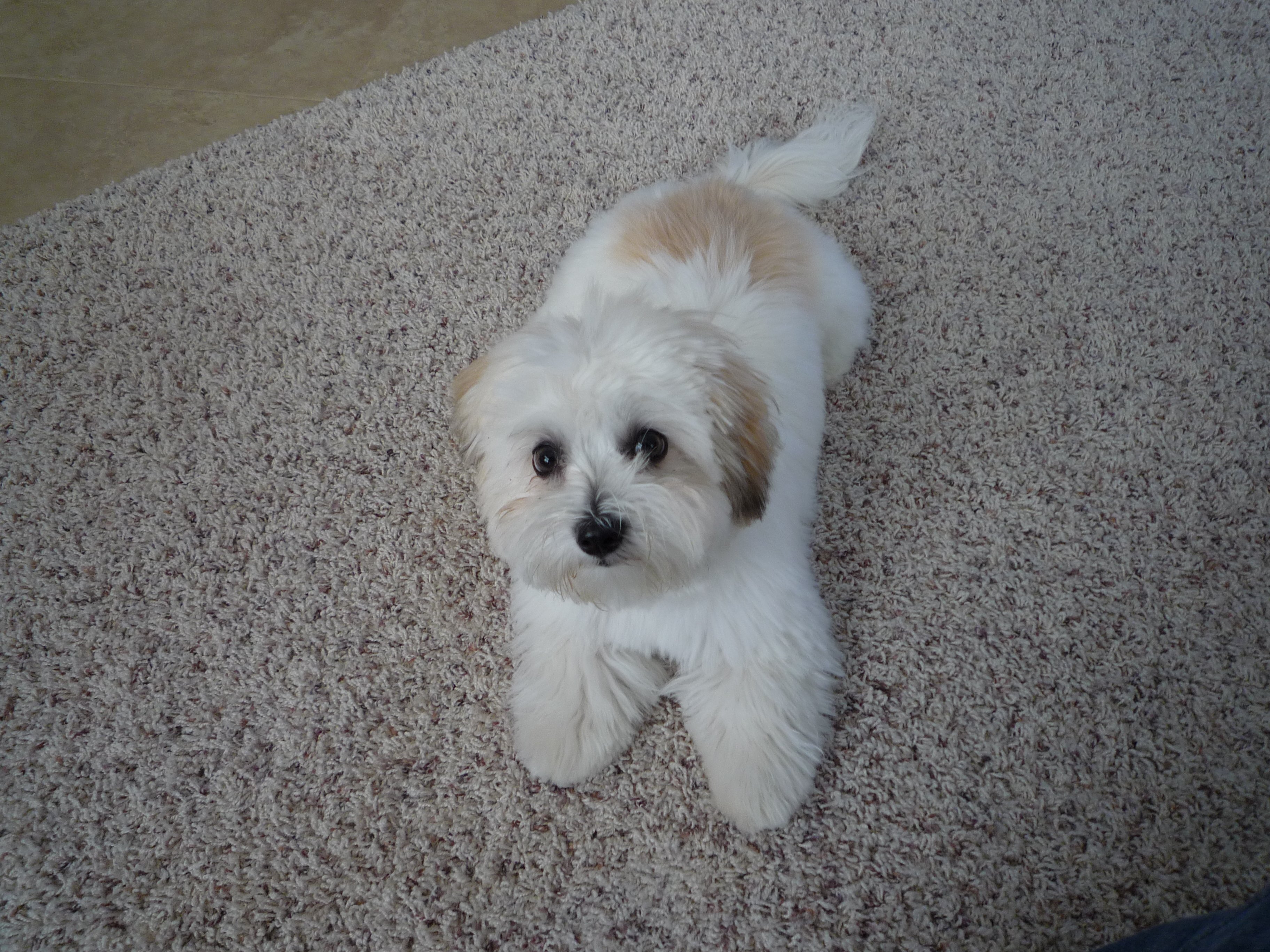
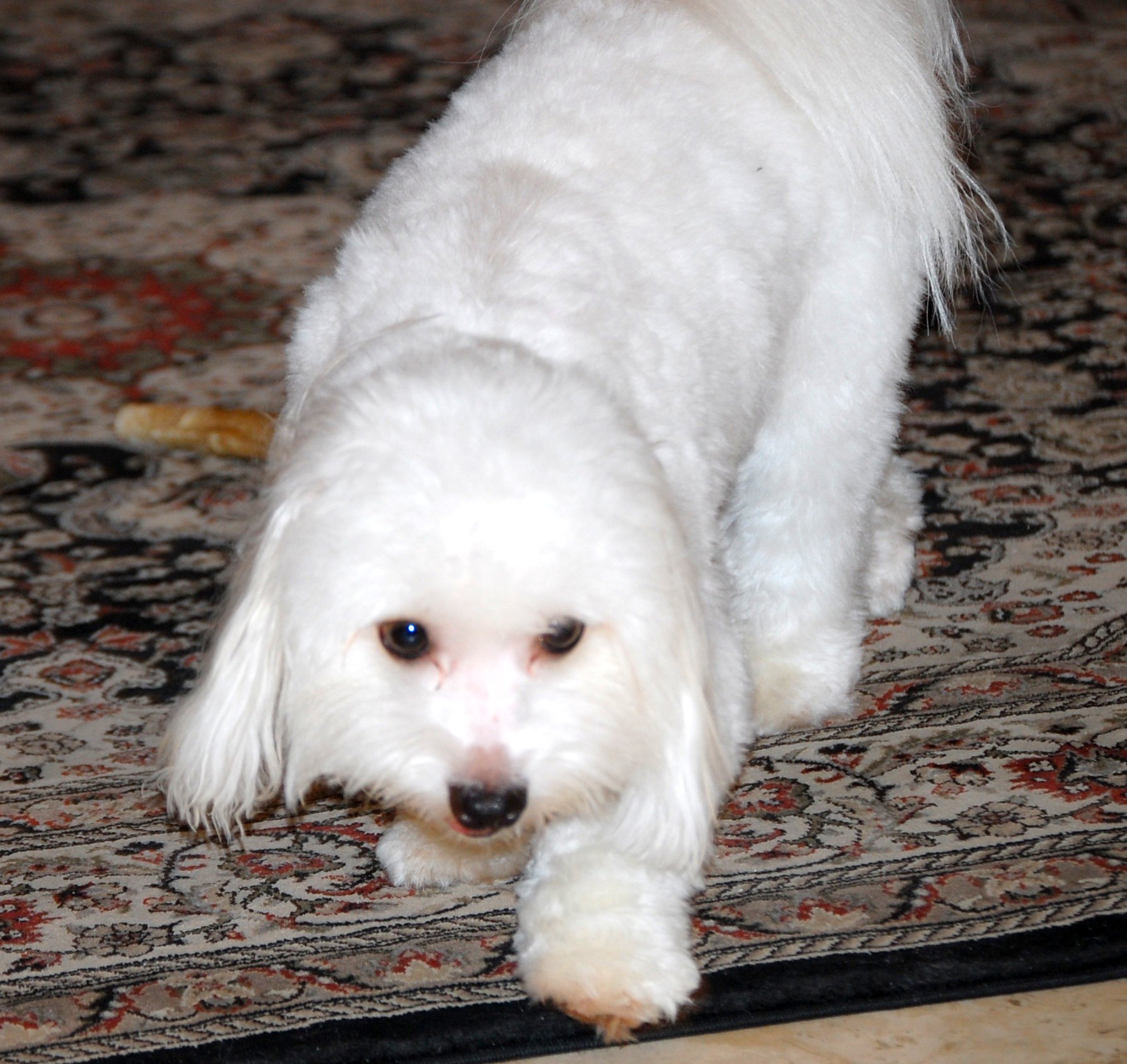
Every Coton owner faces the same choice: full coat or puppy cut. The full coat is what the standard describes and what the ring requires — trimming or sculpting that alters the natural appearance is severely penalized — but it is a daily commitment for the life of the dog. The puppy cut is a short, even pet trim that keeps the dog comfortable and the grooming time down; it is the right choice for most pet homes, and it buys time, not freedom from brushing — a puppy cut still mats if it is never brushed. Cotons shed little, which is why the breed is often described as low-shedding, but no dog is truly hypoallergenic, and anyone with allergies should spend time with the breed before buying. (Sources: AKC Coton de Tulear standard; AKC Coton de Tulear breed page.)
6. Health testing
- A CHIC-built health program. The Coton is a long-lived breed — 15 to 19 years — and the parent club’s health program is built around the OFA’s CHIC program. The USACTC’s CHIC requirements are an eye examination by a board-certified ACVO ophthalmologist, with results registered with OFA or CERF; a patellar luxation evaluation by OFA; and a hip dysplasia evaluation by OFA — plus two electives chosen from a congenital cardiac examination, OFA thyroid, von Willebrand’s disease DNA test, OFA elbow, Neonatal Cerebellar Ataxia (Bandera’s Syndrome) DNA test, and an advanced cardiac examination.
- The breeder directory asks more. The club’s breeder directory asks more before a breeder may list: a normal OFA congenital cardiac examination, hip certification, patellar luxation evaluation, and a CERF number, all in place before breeding. (Source: USACTC health statement, via AKC Marketplace.)
- Conditions behind the tests. The conditions behind those tests are the ones a buyer should hear about before they sign anything. Patellar luxation — a slipping kneecap — is the most prominent problem in the breed. Hip dysplasia, progressive retinal atrophy, von Willebrand’s disease type I (for which a DNA test is available), canine multifocal retinopathy, and primary hyperoxaluria are all documented in the breed. A breeder who does the CHIC testing and will show you the actual OFA results — not just say the tests were done — is the breeder to buy from. (Source: USACTC health statement, via AKC Marketplace.)
7. The annual Coton de Tulear specialty dog show
A specialty is the breed’s All-Star show — its Super Bowl. Once a year, the best Coton de Tulears from across the country, and often from around the world, come together in one place.
The United States of America Coton de Tulear Club’s national specialty is the anchor of the Coton’s year — a one-day show held inside the Philadelphia Cluster at the Greater Philadelphia Expo Center in Oaks, Pennsylvania, with the breed’s people gathered around it. The club is small and the entry is small; the specialty is where the breed’s serious breeders, handlers, and judges meet.
The National Specialty: a one-day show, Friday, November 13, 2026, at the Greater Philadelphia Expo Center, 100 Station Ave., Oaks, Pennsylvania — held inside the Greater Philadelphia Dog Fanciers Association all-breed show, with the Penn Treaty show Thursday and the National Dog Show weekend Saturday–Sunday around it. AKC event number 2026702101; host event 2026104501; entries closed October 28, 2026. (Sources: official premium list; AKC Upcoming National Specialties.)
Specialty judge: Ms. Deirdre Petrie of Gordonville, Pennsylvania — all regular and non-regular classes, including Veteran classes for dogs and bitches seven years and over. No Puppy Sweepstakes on the 2026 schedule. On the schedule as well: the AKC National Owner-Handled Series, and Crufts Qualifier Award Certificates for Best of Breed, Best of Opposite Sex, Select Dog and Bitch, Best Bred by Exhibitor, and Awards of Merit. (Source: official premium list.)
USACTC seminar and workshop: Thursday, November 12, 2026, 10:00 a.m., $20 registration, with a supported Coton entry at the Penn Treaty show to follow. Contact: Gregory Beach. (Source: official premium list.)
Winners from the 2026 specialty had not been published in an official source as of November 2026 and will be added here when they are.
The 2027 national specialty dates had not been announced as of November 2026.
Past national specialties: 2025
8. Regional specialties through the year: smaller regional shows
The United States of America Coton de Tulear Club is the breed’s only specialty club, so the Coton’s year runs through the national specialty and the club’s supported entries at the Philadelphia Cluster, rather than a circuit of regional specialties. These are the 2027 regionals verified from club sources so far:
No regional specialties announced yet for 2027.
The club supports Coton entries at the Philadelphia Cluster — a supported entry at the Penn Treaty show Thursday and the national specialty Friday — and runs a seminar and workshop the Thursday morning before the specialty. Browse upcoming show weekends →
9. Clubs
- United States of America Coton de Tulear Club (USACTC) (parent club) — the AKC parent club for the breed in the United States, formed in 1993. It runs the national specialty, publishes the breed standard, and keeps the breeder directory. President Greg Beach, Vice-President/Secretary Danna Deimler, Treasurer Nan Lou Brown (2026 officers).
- American Coton Club — the older body that predates AKC recognition, with its own registry, health program, and foster & adoption program.
- Coton de Tulear Club of America — founded in 1976 by Dr. Robert Jay Russell, who brought the first Cotons to America.
- North American Coton Association — serves the UKC side of the breed.
- Canadian Coton de Tulear Club — serves the breed in Canada.
10. Rescue
There is no USACTC-run national rescue that could be verified, so start with the breed rescues that do the work. The American Coton Club runs a foster & adoption program (a 501(c)(3)) for Cotons in need. UCARE — United Coton de Tulear Association for Rescue & Education is an independent 501(c)(3) that takes in purebred Cotons only; adoption usually runs $350 to $500, and every dog is spayed or neutered before placement. A Coton in rescue is usually an adult, often already in a puppy cut, and often already house-trained — a different, and sometimes easier, way into the breed than a puppy.
11. Breeder vs. rescue: honest guidance
- If you buy: start with the parent club, the United States of America Coton de Tulear Club, and its breeder directory — directory breeders must have the cardiac, hip, patellar, and eye clearances in place before breeding. Ask for the OFA numbers and check them yourself on ofa.org; ask what the breeder will take back, for life, if the dog ever needs a home; and expect a waitlist, because a good Coton breeder does not have puppies on the shelf. A breeder who will not show you test results is a breeder to walk away from, whatever the price.
- Watch the color. The standard calls for a white dog, and black on the body is a disqualification at any age. A breeder advertising black-and-white, heavily marked, or parti-color Cotons as AKC show prospects is selling against the standard — and a breeder selling a “teacup” Coton is selling a dog the standard would disqualify for height. Puppy markings fade; adult color does not come back. Buy the dog, not the marking, and buy it from someone who will tell you that.
- If you rescue: the American Coton Club’s foster & adoption program and UCARE both place purebred Cotons, usually adults, usually already spayed or neutered. Ask what the dog’s coat is like under the puppy cut, what its knees feel like — patellar luxation is the breed’s most common problem — and whether it has lived with children or other dogs. A rescue Coton is the same clown in a shorter coat, and it needs the same daily brushing.
12. Claim this page
This page belongs to the breed, and the people who know the breed best are the United States of America Coton de Tulear Club and its members. If you are with the parent club — or you are a breeder, a judge, a handler, or a rescue volunteer who spotted something wrong, missing, or out of date — this page is yours to set straight. Tell us what needs fixing and where the correction is documented, and we will fix it and credit the source. Contact the site through the About page, and mention “Coton de Tulear breed profile.”
Sources
- AKC Coton de Tulear breed page — akc.org/dog-breeds/coton-de-tulear
- AKC Coton de Tulear standard, as published by the parent club — usactc.dog/breed-standard
- United States of America Coton de Tulear Club — usactc.dog
- USACTC health statement (CHIC requirements) — cdn.akc.org/Marketplace/Health-Statement/Coton-de-Tulear.pdf
- AKC, most popular dog breeds of 2025 — akc.org/expert-advice/dog-breeds/most-popular-dog-breeds-2025
- AKC Upcoming National Specialties — apps.akc.org/apps/events/conformation/national_specialties.cfm
- 2026 Philadelphia Cluster premium list (MB-F) — Philadelphia Cluster premium, November 12 & 13, 2026
- American Coton Club, foster & adoption program — americancotonclub.com/foster.htm
- UCARE — United Coton de Tulear Association for Rescue & Education — cotonrescue.us
- Wikipedia, Coton de Tulear (history, name origin) — en.wikipedia.org/wiki/Coton_De_Tulear
- AKC event page, Greater Philadelphia Dog Fanciers Association, November 14, 2025 — AKC event search, event 2025104501
- Justine Romano-Kostecki, 2025 national specialty winner announcement (Facebook, February 2, 2026) — facebook.com/justine.romanokostecki