Breed profile · Working Group · The tawny American sled dog
Chinook
The Chinook is the tawny American sled dog that nearly vanished: developed in New Hampshire by Arthur Walden, taken to Antarctica with Admiral Byrd, down to eleven dogs fit to breed by 1981, and now the official state dog of New Hampshire and one of the rarest breeds in the AKC’s Working Group — a dignified, affectionate family dog with a special devotion to children.
Help us improve it. This is one of ThePetAdvisor’s breed profiles, built from public sources with generous links to the people who actually own this breed’s knowledge. If something’s off or missing, the parent club can claim the page and set it straight — see the bottom of the page.
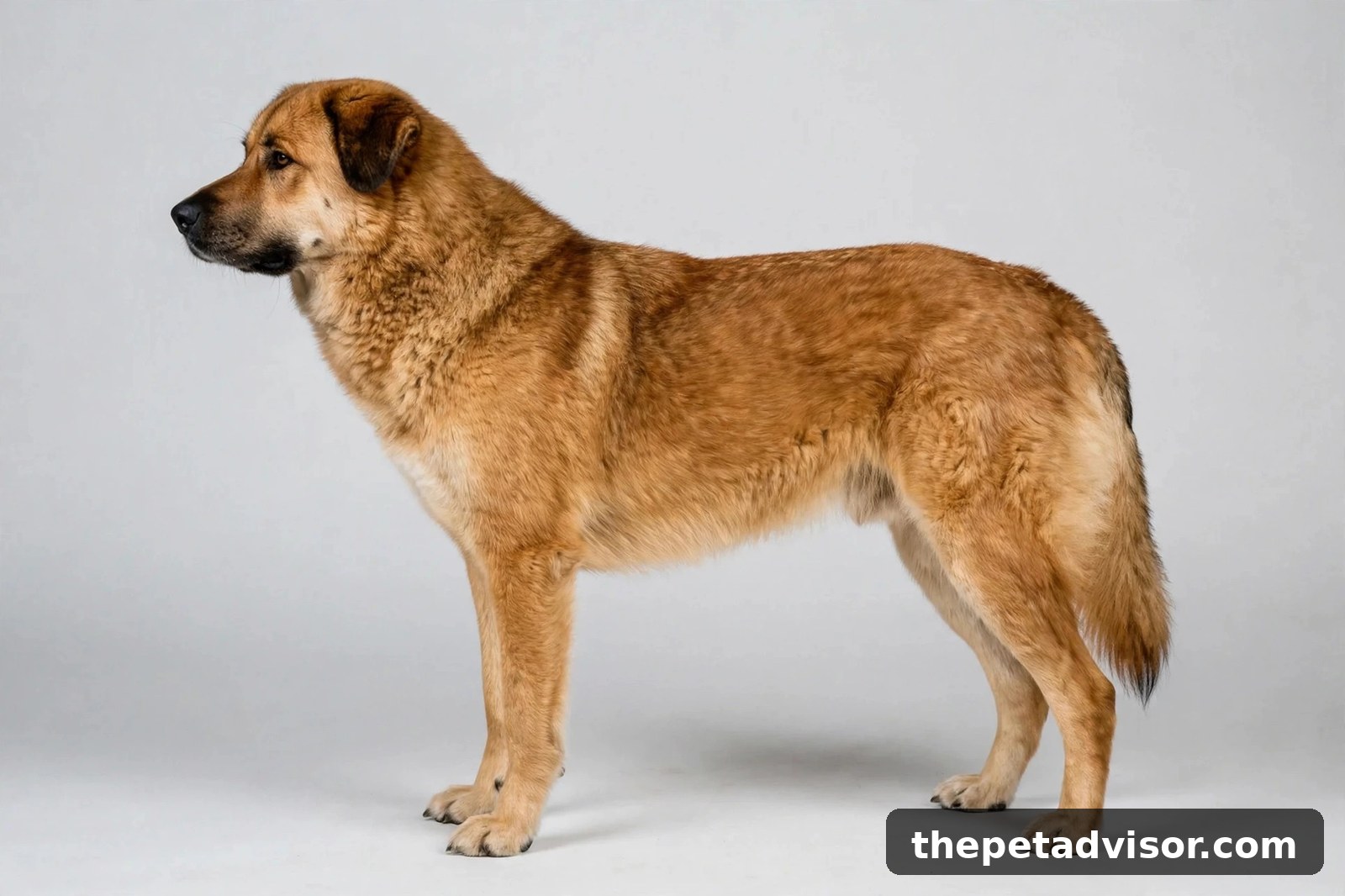
Do you have a photo of a Chinook in the American show ring? We’d love this page to lead with one. If you have a show photo you’d let us use, email it to [email protected] — tell us the dog’s name and the show, and it may be featured here. Please only send photos you took yourself or have the photographer’s permission to share, and tell us the photographer’s name. We couldn’t find a public photo of a Chinook in the American show ring that we were free to share, so the photo leading this page was made with AI. We’d much rather lead with a real one — if you’re a club member with an approved photo, we’d love to feature it.
1. Breed at a glance
Working — recognized by the AKC in 2013, the 176th breed
Males 24–27 in, females 22–25 in at the shoulder. Weight 55–90 lb (males), 50–65 lb (females).
Thick double coat, close-lying. Tawny, honey to deep reddish-gold, with darker ears and muzzle.
Affectionate and playful family companion, devoted to children; dignified, a willing worker eager to please.
High stamina, built for drafting and sled racing. A Chinook needs work for its body every day, with long rests between outings.
Size and coat facts are from the AKC standard as reproduced by the parent club. Weight and lifespan are the AKC breed-profile figures. Popularity: the Chinook is No. 198 of 202 in the AKC’s 2025 registrations, and the 5th rarest breed of 2025 (AKC rarest dog breeds 2025).
2. History
The Chinook owes its existence to one man: Arthur Treadwell Walden of Wonalancet, New Hampshire, a dog driver who had learned mushing in the Alaska gold rush and came home determined to build his own line of sled dogs. He wanted a dog with the power of the freighting breeds and the speed of the lighter racing dogs. The foundation dog was born in 1917, a cross between a Mastiff-type dog and a Greenland Husky, and Walden named him Chinook after a favorite sled dog from his Alaska days. That dog’s offspring took his name as the breed’s name. (Sources: AKC, Meet the Chinook; Wikipedia, Chinook (dog).)
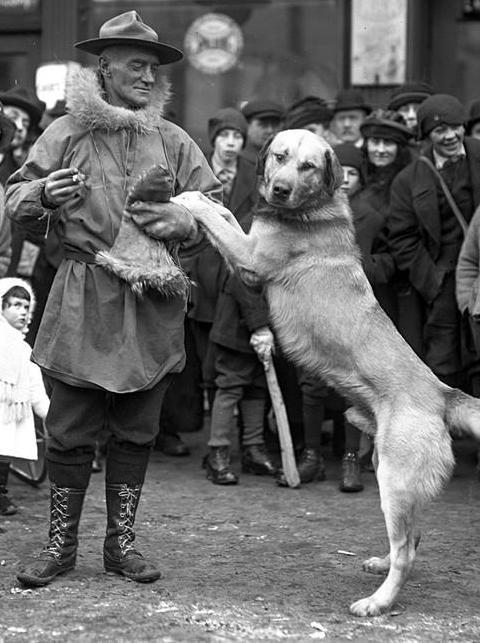
Walden and his Chinooks went with Admiral Richard Byrd’s first Antarctic expedition as the dog team, hauling freight from the ships to base camp — and the original Chinook, twelve years old, disappeared on the ice and was never recovered. The breed’s fame never became numbers: Walden died in 1947 trying to save his wife from a house fire, and without him the breed sank. The Guinness Book of World Records listed the Chinook as the world’s rarest breed in 1965, with 125 dogs left; by 1981 only eleven dogs suitable for breeding remained. A small group of dedicated breeders divided the remaining stock and rebuilt the breed from it. (Sources: AKC, Meet the Chinook; Wikipedia, Chinook (dog).)
The recovery took decades and the recognition came in steps: the United Kennel Club registered the breed in 1991; New Hampshire named the Chinook its official state dog in 2009; the AKC took the breed into the Foundation Stock Service in 2001 and the Miscellaneous Class in 2010; and on January 1, 2013, the Chinook became the AKC’s 176th breed and joined the Working Group. It is still one of the scarcest AKC breeds — No. 198 of 202 in 2025 registrations — with only about 100 puppies born each year worldwide. (Sources: Wikipedia, Chinook (dog); AKC, Rarest dog breeds 2025.)
3. The standard and why it’s written that way
- Built to pull and race. The standard opens with the job: “The Chinook was developed in the United States as a sled dog whose unique function was both drafting and sled dog racing. Bred to combine the power of freighting breeds with the speed of the lighter racing sled dogs, the Chinook is an athletic, hard bodied dog showing excellent forward reach and rear extension in a seemingly tireless gait.” Everything after that is built around a dog that can pull a load all day and still move like a racer. (Source: AKC standard, as reproduced by the parent club.)
- Height, head, and tail. The numbers are simple. Ideal height at the withers: males 24 to 27 inches, females 22 to 25, the body slightly longer than tall. The head is broad and wedge-shaped, with an aquiline muzzle, dark almond eyes with black rims, and a black mark at and just above the inner corner of each eye. The ears are medium and V-shaped, and any ear carriage is allowed — drop, prick, or propeller — with dropped ears desirable for historical reasons. The saber tail is carried in a graceful sickle curve, never curling to the side or touching the back. The Chinook is slow to mature, often not reaching maturity before 4 to 5 years of age, and it is shown in a natural condition with no trimming. (Source: AKC standard.)
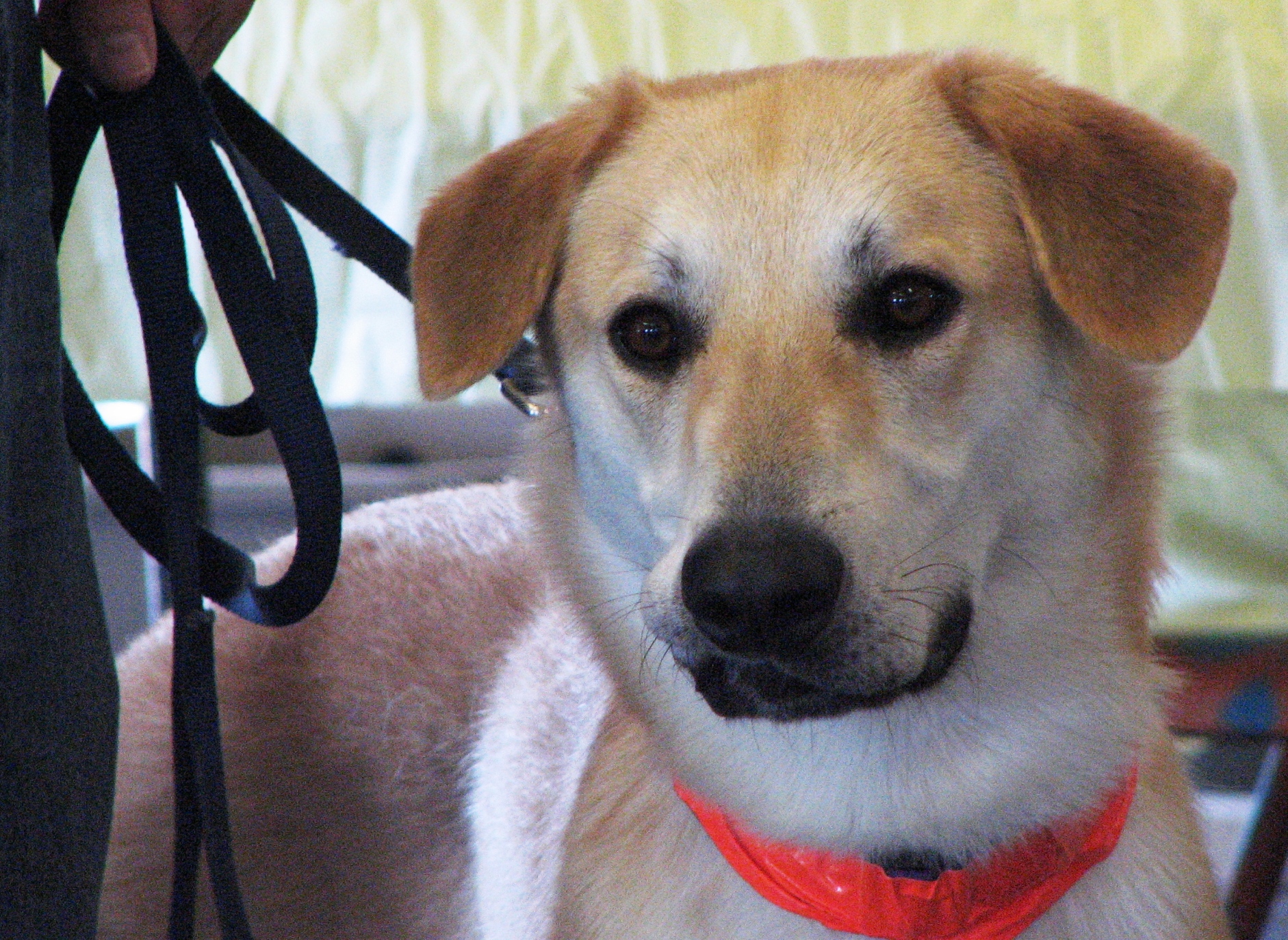
- Color is the signature — and the strictest rule. Tawny coloration, from honey to a deep reddish-gold, is a distinguishing characteristic and is preferred; dilute tawny is acceptable.
- Darker ears and muzzle. Darker coloring on the ears and muzzle is desirable, with some black shading the most preferred.
- White markings, in the right places only. Symmetrical white or cream to pale gold markings are acceptable on the cheeks, throat, chest, breeches, and underside — any other white markings, including blazes, socks, and scarves, are undesirable.
- Two disqualifications. Any eye color other than brown, and any color other than tawny as described. A Chinook of another color may be a fine dog, but in the AKC ring it is disqualified. (Source: AKC standard.)
4. Temperament & living with one
The standard’s temperament line is short and the AKC’s breed profile says the same thing in plainer words: the Chinook is “an affectionate and playful family companion with a special devotion toward children” — a dignified dog, a willing worker eager to please and enthusiastic to learn, highly trainable, adaptable, and versatile. The AKC calls it a rugged working dog and devoted family pet known for intelligence, patience, and eagerness to please. Some Chinooks may be reserved with strangers but should never appear shy or aggressive, and they are gregarious with other dogs, working well in teams and within family packs. (Sources: AKC standard; AKC Chinook breed page.)
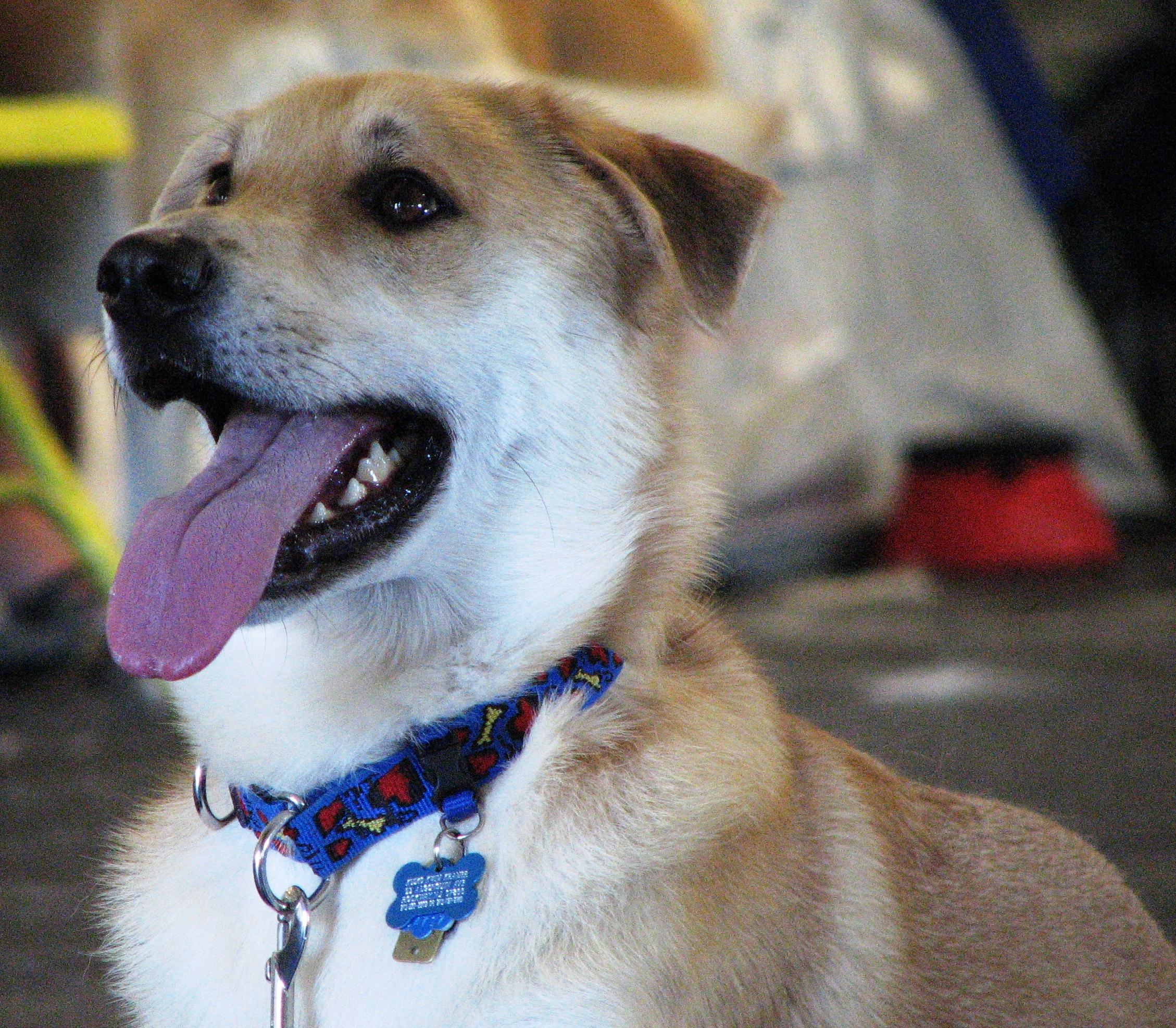
What that means at home is a dog that is easy to live with and hard to tire out. A Chinook is good with children and other dogs, food-motivated enough to train well, and calm indoors once it has had its work — drafting, sledding, skijoring, weight pull, agility, or a long hike with a job attached. Without the work, the same dog is a large, strong, bored adolescent, and adolescence lasts a long time here: the breed is slow to mature, often not adult until four or five. They bond hard to their people and can develop separation anxiety if left alone all day, so a Chinook fits a household where someone is usually around. (Sources: AKC standard; Chinook Club of America, new Chinook owner flyer.)
5. Grooming
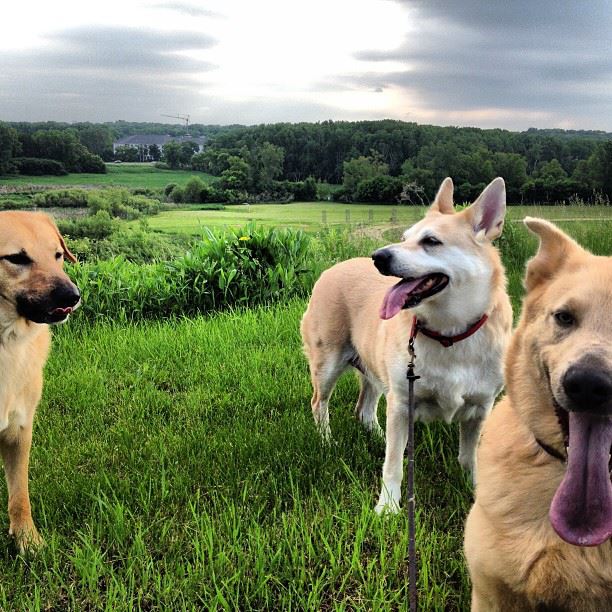
- Easy, except twice a year. Grooming is the easy part of owning a Chinook, except twice a year when it is the hard part. The coat is a thick double coat lying close to the body — a straight, strong, coarse outer coat over a short, dense, downy undercoat — and a weekly brushing keeps it in shape most of the year. Twice a year, in spring and fall, the undercoat blows out over about three weeks, and the dog needs brushing far more often while it does. Baths are rarely necessary. (Sources: AKC standard; DogZone, Chinook grooming.)
- Nails weekly, never trimmed. Two things are not optional. The nails grow quickly and need trimming weekly. And nothing on the coat is ever trimmed: the standard says the Chinook is shown naturally and trimming is not acceptable, with trimming of the coat, including whiskers, to be severely penalized. A Chinook in the ring is shown as it works — thick-coated, clean, and untrimmed.
6. Health testing
- Four disorders, four screens. The Chinook is a long-lived breed — 12 to 15 years — and the parent club’s health statement, approved by the AKC and effective September 1, 2022, names four disorders in the breed: hip dysplasia, eye issues, the MDR1 mutation, and chondrodysplasia. A CHIC number requires all four screens: a hip evaluation through OFA or PennHIP, an eye examination through OFA, and MDR1 and chondrodystrophy DNA testing through an OFA-approved lab, plus permanent identification, usually a microchip. (Source: Chinook Club of America, Health and Genetics.)
- The watch list goes further. The club’s watch list goes further: elbows, patellas, cardiac, and thyroid screening, plus selected DNA tests, are suggested extras. Seizures, allergies, and cryptorchidism — about 10% of males, by one breed account — are also watched in the breed. None of this is a reason not to own a Chinook. All of it is a reason to buy from a breeder who tests: ask for the parents’ CHIC numbers and look the results up in the OFA database yourself, rather than taking a breeder’s word for it. (Sources: Chinook Club of America, Health and Genetics; Wikipedia, Chinook (dog).)
7. The annual Chinook specialty dog show
A specialty is the breed’s All-Star show — its Super Bowl. Once a year, the best Chinooks from across the country, and often from around the world, come together in one place.
The Chinook Club of America’s national specialty is the anchor of the Chinook’s year — a one-day designated specialty held inside the Kennel Club of Philadelphia’s National Dog Show, the televised show filmed for NBC’s Thanksgiving Day broadcast. The breed is small and the entry is small; the specialty is where the breed’s serious breeders, handlers, and judges meet, in front of a national television audience.
The National Specialty: a one-day designated specialty, Saturday, November 14, 2026, at the Greater Philadelphia Expo Center, 100 Station Ave., Oaks, Pennsylvania — held inside the Kennel Club of Philadelphia’s National Dog Show weekend (November 14–15), the televised show filmed for NBC’s Thanksgiving Day broadcast. AKC event number 2026037501 (Kennel Club of Philadelphia, Saturday). (Sources: official premium list; AKC Upcoming National Specialties.)
Specialty judge: Mrs. Sioux Forsyth-Green of Ivins, Utah — all regular classes. Puppy Sweepstakes (6 to 18 months) and Veteran Sweepstakes (7 years and over): Mrs. Dawn Cox of Hanover, Pennsylvania. Supported entry the following day, Sunday, November 15, under Ms. Janet Cohen of Boynton Beach, Florida. (Source: official premium list.)
Winners from the 2026 specialty had not been published in an official source as of November 2026 and will be added here when they are.
The 2027 national specialty: Orlando, Florida, alongside the AKC National Championship presented by Royal Canin, according to the club’s Winter 2026 Advocate; dates not announced as of November 2026.
Past national specialties: 2025
8. Regional specialties through the year: smaller regional shows
The Chinook Club of America is the breed’s only AKC specialty club, so the Chinook’s year runs through the national specialty and the club’s supported entry the next day, rather than a circuit of regional specialties. These are the 2027 regionals verified from club sources so far:
No regional specialties announced yet for 2027.
The club supports Chinook entries at the Kennel Club of Philadelphia on Sunday, November 15, 2026, the day after the specialty. Browse upcoming show weekends →
9. Clubs
- Chinook Club of America (parent club) — the AKC parent club for the breed in the United States. It runs the national specialty, which is held inside the Kennel Club of Philadelphia’s National Dog Show. President Kathleen Riley Daniels, Vice-President Perry Richards, Treasurer Jo-Ann Smith, Secretary Heather Osborne (2026).
- Chinook Owners Association — the original national parent club for the breed and the UKC-recognized club, founded by the owners responsible for the breed’s recovery from near-extinction in 1981. It runs its own UKC national specialty (most recently at the World Equestrian Center, Ocala, Florida, in December 2025) and a cross-breeding program for the breed’s small gene pool.
No separate regional Chinook specialty clubs could be verified — the Chinook Club of America is the breed’s only AKC specialty club. If you are new to the breed, the national specialty itself is the better first stop than a breeder’s website: the people there have owned, shown, and worked Chinooks, and they will tell you the truth about the exercise before you fall for a puppy.
10. Rescue
- No standalone rescue, by design. There is no standalone Chinook rescue, and that is by design rather than by neglect. The Chinook population is small — fewer than 150 puppies are born each year — and breeders place their puppies under detailed contracts that require the dog to come back to the breeder if the owner cannot keep it. The parent club says it is extremely rare for a Chinook to be relinquished to a shelter or to wind up in a true rescue situation without the Chinook community already knowing and being involved. (Source: Chinook Club of America, Chinooks: Re-homing and Adoptions.)
- Start with the breeders. If you want to adopt a mature Chinook, start with the breeders: the club’s advice is to contact breeders directly, and for help placing a Chinook, to contact the club — the adoptions page names Patti Richards as the contact for adoptions and placements. The AKC Rescue Network lists the Chinook Club of America as the breed’s rescue contact (Joan McMahon, Centerville, Ohio). A rescued Chinook is usually an adult whose owner could not keep it, and it will arrive with a history you may never fully know. What you get in return is a dog whose temperament you can see before you commit — and in this breed, a rescue that is really the breeder and the club standing behind the dog for life.
11. Breeder vs. rescue: honest guidance
- If you buy: start with the parent club, the Chinook Club of America, and its breeder list. Fewer than 150 Chinook puppies are born each year, so expect a waitlist and a breeder who interviews you. Ask for the parents’ CHIC numbers — hips, eyes, MDR1, and chondrodystrophy — and look the results up yourself. A good breeder will have the answers, will ask you as many questions as you ask them, and will take the puppy back for its whole life if you cannot keep it; the contract says so.
- If you rescue: a rescued Chinook is usually an adult, often one whose owner could not keep it, and it will arrive with a coat that needs weekly brushing and a body that needs work every day. What you get in return is a dog whose temperament you can see before you commit and a lower price. Either way, budget the exercise first: a Chinook without a job is a large, strong, bored dog, and a Chinook is slow to mature — puppy behavior can last until four or five years old.
- No rare color worth a premium. One thing that is not what a seller tells you: there is no such thing as a rare color worth a premium. The standard disqualifies any color other than tawny in the AKC ring, and a breeder selling a “rare” black-and-tan, silver, or white Chinook at a premium is selling you a label — the dog may be a fine Chinook and a fine pet, but it cannot compete in AKC conformation, and the color is not a reason to pay more.
12. Claim this page
This page belongs to the breed, and the people who know the breed best are the Chinook Club of America and its members. If you are with the parent club — or you are a breeder, a judge, a handler, or a rescue volunteer who spotted something wrong, missing, or out of date — this page is yours to set straight. Tell us what needs fixing and where the correction is documented, and we will fix it and credit the source. Contact the site through the About page, and mention “Chinook breed profile.”
Sources
- AKC Chinook breed standard, as reproduced by the parent club — chinookclubofamerica.org/breed-standard.html
- AKC, Chinook breed page — akc.org/dog-breeds/chinook
- AKC, Agility League Spotlight: Meet the Chinook, a True American Breed — akc.org/sports/agility/in-the-zone/akc-agility-league-spotlight-meet-chinook-true-american-breed
- AKC, Rarest dog breeds of 2025 — akc.org/expert-advice/dog-breeds/rarest-dog-breeds-2025
- AKC Upcoming National Specialties — apps.akc.org/apps/events/conformation/national_specialties.cfm
- 2026 premium list, Kennel Club of Philadelphia (official) — chinookclubofamerica.org/uploads/2026_dog_show.pdf
- Chinook Club of America, Health and Genetics — chinookclubofamerica.org/chinook-health.html
- Chinook Club of America, Chinooks: Re-homing and Adoptions — chinookclubofamerica.org/chinook-adoptions.html
- Chinook Club of America, AKC Dog Shows (2025 specialty results) — chinookclubofamerica.org/akc-dog-shows.html
- CCA Spring 2025 Advocate (2025 national, Enumclaw) — chinookclubofamerica.org/uploads/cca_spring__2025_advocate_.pdf
- CCA Winter 2026 Advocate (2027 national, Orlando) — chinookclubofamerica.org/uploads/cca_winter__2026_advocate_.pdf
- AKC Rescue Network, C breeds — akc.org/akc-rescue-network/rescue-network-c-breeds
- Chinook Owners Association — chinook.org
- Showsight, Chinook — showsightmagazine.com/dog-breeds/chinook
- DogZone, Chinook grooming — dogzone.com/breeds/chinook
- Wikipedia, Chinook (dog) (recognition timeline, 1981 bottleneck, health notes) — en.wikipedia.org/wiki/Chinook_(dog)