Breed profile · Herding Group · the yard-long dog
Cardigan Welsh Corgi
The Cardigan Welsh Corgi is the older of the two corgi breeds — a long, low, heavy-boned cattle drover from Cardiganshire in Wales, and the one corgi that keeps its long fox-brush tail. The Cardigan Welsh Corgi Club of America runs the national specialty every year in May, and the 2026 national ran May 14–16 in Kingsport, Tennessee.
Help us improve it. This is one of ThePetAdvisor’s breed profiles, built from public sources with generous links to the people who actually own this breed’s knowledge. If something’s off or missing, the parent club can claim the page and set it straight — see the bottom of the page.
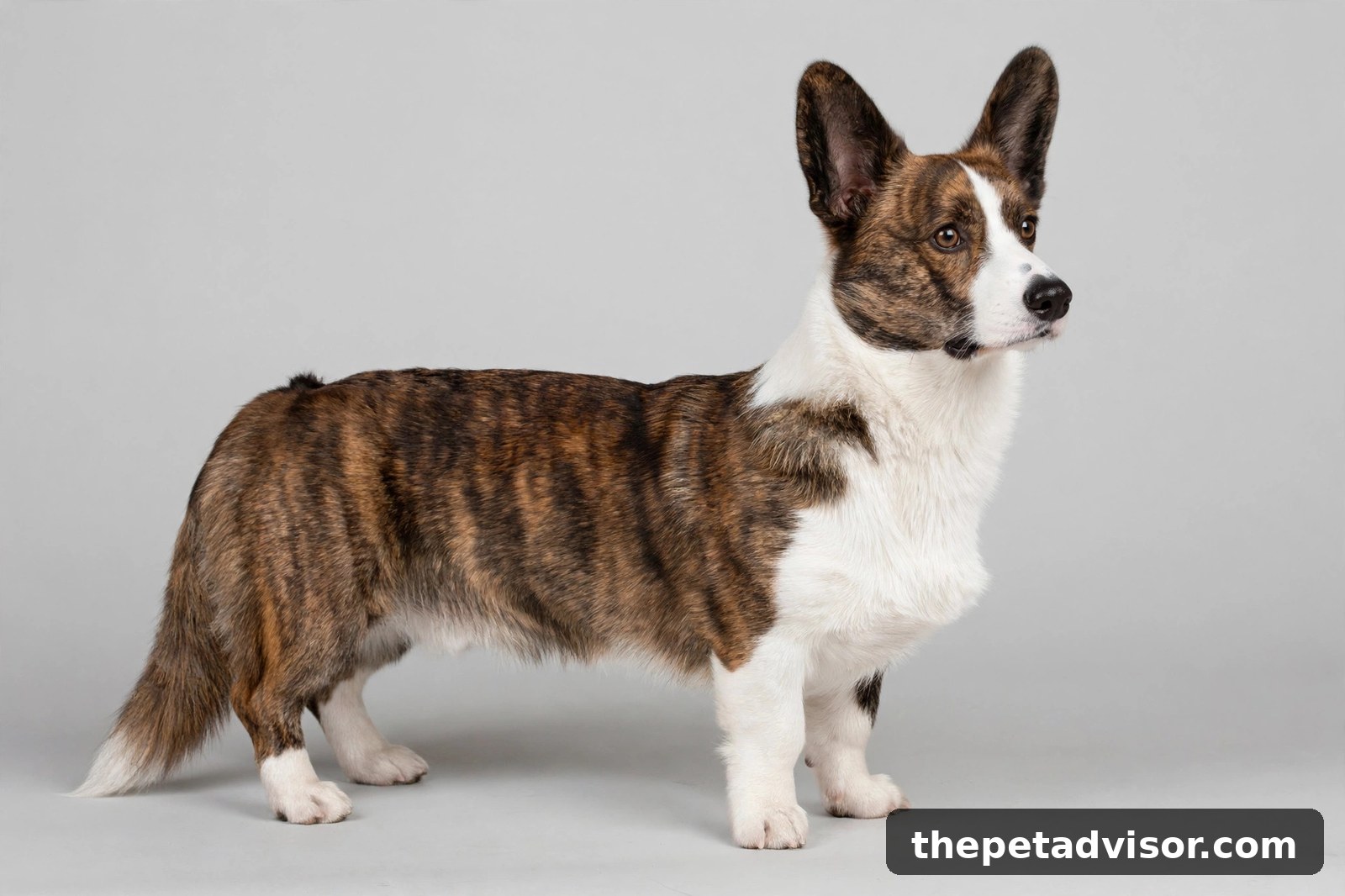
Do you have a photo of a Cardigan Welsh Corgi in the American show ring? We’d love this page to lead with one. If you have a show photo you’d let us use, email it to [email protected] — tell us the dog’s name and the show, and it may be featured here. Please only send photos you took yourself or have the photographer’s permission to share, and tell us the photographer’s name. We couldn’t find a public photo of a Cardigan Welsh Corgi in the American show ring that we were free to share, so the photo leading this page was made with AI. We’d much rather lead with a real one — if you’re a club member with an approved photo, we’d love to feature it.
1. Breed at a glance
Herding Group; AKC-recognized 1935
10½–12½ in at the withers; dogs 30–38 lb, bitches 25–34 lb
Medium-length double coat; red, sable, brindle, black, blue merle, with white flashings
12–14 years (AKC)
Even-tempered, loyal, affectionate, adaptable; never shy nor vicious
Cardigan Welsh Corgi Club of America
2. History: three thousand years a cattle drover
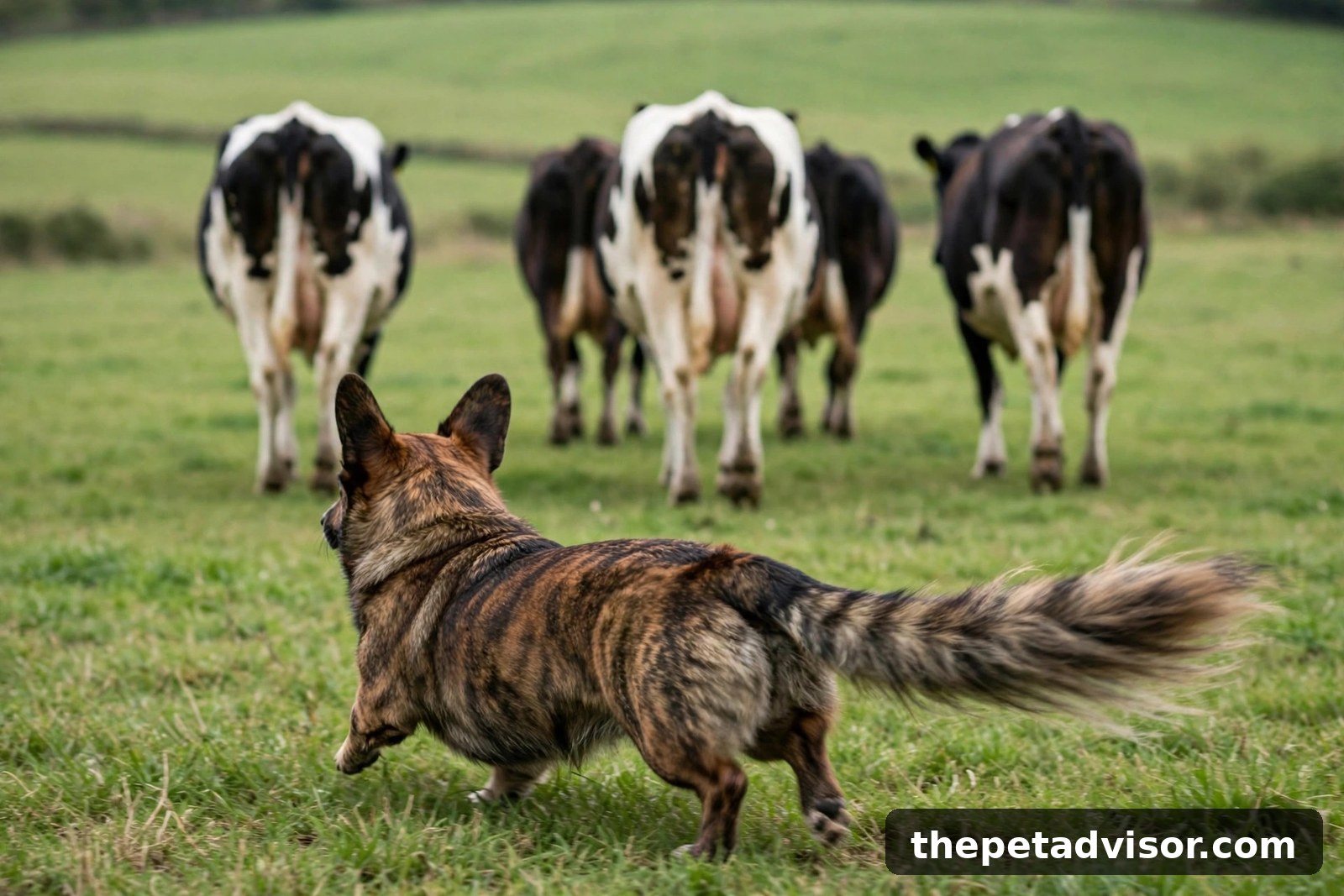
The Cardigan Welsh Corgi is descended from the Teckel family of dogs — the same family that produced the Dachshund — and the breed is believed to have been in Wales for over 3,000 years, brought there by Celtic tribes who moved from central Europe to the coastal hills of Cardiganshire around 1200 BCE. The dogs were cattle drovers and general-purpose farm dogs: low enough to duck under a cow’s kick, long enough to cover ground, and tough enough to work the rough Welsh hills. An old Welsh law imposed heavy penalties on anyone who hurt or stole one, because the dogs were so valuable to the farmers’ livelihoods.
The breed’s show history starts in England: Cardigans were first shown there in 1919, the English Cardigan Welsh Corgi Association was founded in 1926, and The Kennel Club did not declare the Cardigan and the Pembroke to be separate breeds until 1934. A red and white dog named Bob Llwyd, whelped in 1917, was the most influential stud dog of the mid and late 1920s, and the first breed standard is said to have been based on him; his red and white son, Ch. Golden Arrow, born in 1928, was the breed’s first champion, finishing his championship in 1931.
The first pair of Cardigans was imported to the United States by Mrs. B.P. Bole in 1931. The first American champion was a red and white bitch, Ch. Megan, whelped in 1933 — and the club’s champions-only competition at the national specialty, The Megan, is named for her. The AKC recognized the Cardigan separately in 1935, and the Cardigan Welsh Corgi Club of America was founded the same year. The breed has since moved through the AKC groups, from Non-Sporting to Working to the Herding Group, where it sits today.
The nickname is the “yard-long dog,” and it is literal: a Cardigan measures about a yard from the tip of its nose to the tip of its tail. That tail is the breed’s signature — the Cardigan is the corgi that kept it, while the Pembroke’s tail is docked — and the standard is explicit about it: set fairly low, reaching well below the hock, carried low when standing or moving slowly, streaming out parallel to the ground at a dead run, and never curled over the back.
3. The standard: low set, long in proportion, fox-like brush
The AKC standard was approved December 13, 1994, and effective January 31, 1995. It opens with the general appearance: “Low set with moderately heavy bone and deep chest. Overall silhouette long in proportion to height, culminating in a low tail set and fox-like brush.”
Size and proportion. Overall balance matters more than absolute size. Dogs and bitches should be from 10½ to 12½ inches at the withers when standing naturally. The ideal length-to-height ratio is 1.8 to 1, measuring from the point of the breastbone to the rear of the hip against the height at the withers. Ideally, dogs weigh 30 to 38 pounds and bitches 25 to 34 pounds. Lack of overall balance, and being oversized or undersized, are serious faults.
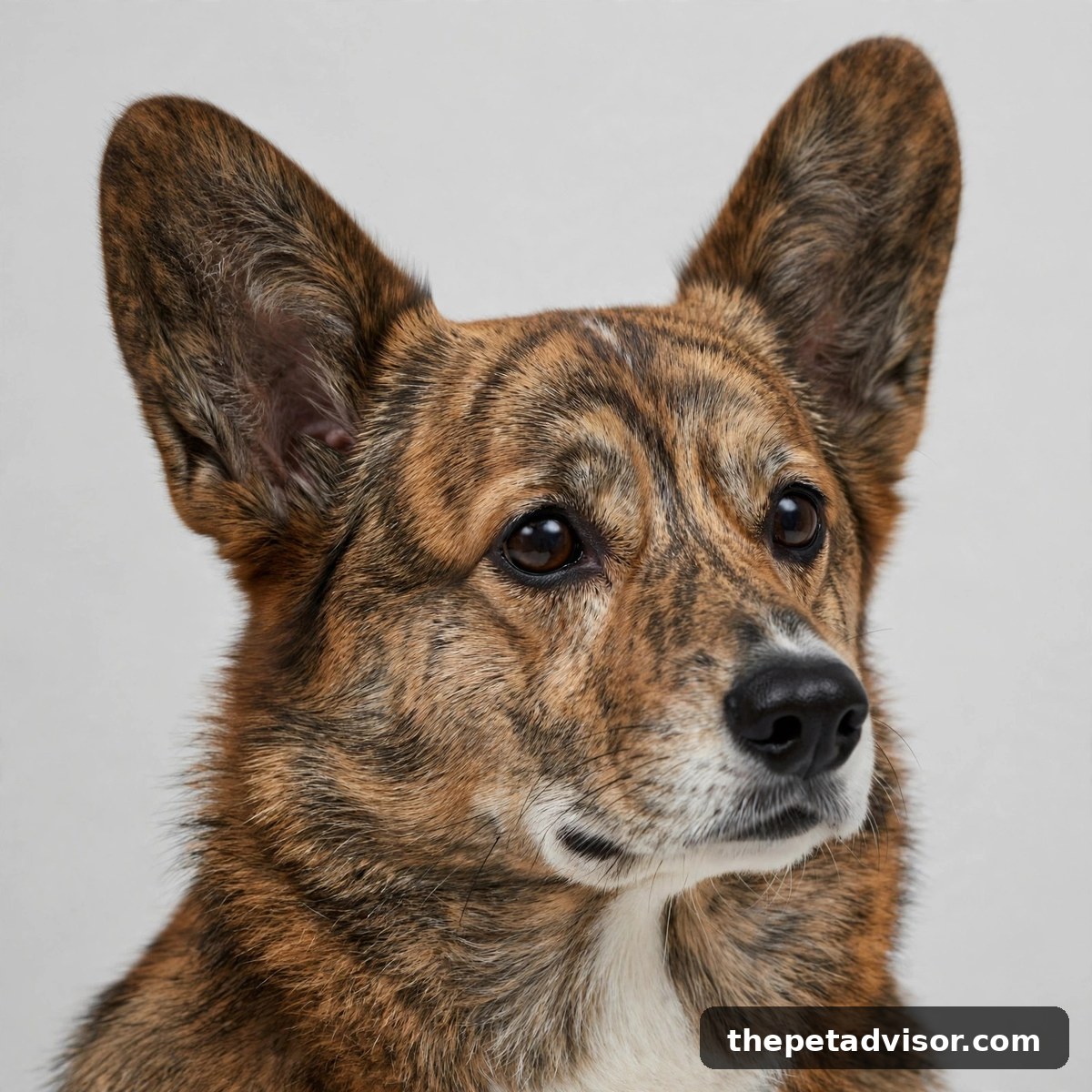
Head. The head is refined in accordance with the sex and substance of the dog, and should never appear so large and heavy nor so small and fine as to be out of balance with the rest of the dog. The expression is alert and gentle, watchful, yet friendly. The eyes are medium to large, not bulging, with dark rims and distinct corners, widely set, clear and dark in harmony with the coat color. The muzzle is about three parts to the skull’s five parts, rounded but not blunt, tapered but not pointed, and the bite is scissors preferred; an overshot, undershot, or wry bite is a serious fault. The ears are large and prominent in proportion to the size of the dog, slightly rounded at the tip, carried erect and sloping slightly forward when alert. Small and/or pointed ears are serious faults.
Body and gait. The neck is moderately long and muscular, without throatiness. The topline is level, the body long and strong, the chest moderately broad with a prominent breastbone and a deep brisket. The forequarters are the breed’s engineering: the moderately broad chest tapers to a deep brisket, the forearms curve to fit the spring of the ribs, and the feet are relatively large and rounded, pointing slightly outward. The hindquarters are well muscled and strong, with moderate angulation at stifle and hock. The gait is free and smooth, effortless, with a long free stride in front and a powerful drive behind — a herding dog that must have the agility, freedom of movement, and endurance to do the work for which it was developed.
Coat. Medium length but dense, because it is double: the outer hairs are slightly harsh in texture, never wiry, curly, or silky, lying relatively smooth and weather resistant, over a short, soft, thick undercoat. The coat is short on the ears, head, and legs; medium on the body; and slightly longer and thicker in the ruff, on the backs of the thighs to form “pants,” and on the underside of the tail. Trimming is not allowed except to tidy the feet and, if desired, remove the whiskers. A distinctly long or fluffy coat is an extremely serious fault.
Color. All shades of red, sable, and brindle. Black with or without tan or brindle points. Blue merle (black and gray; marbled) with or without tan or brindle points. There is no color preference. White flashings are usual on the neck, chest, legs, muzzle, underparts, tip of tail, and as a blaze on the head; white on the head should not predominate and should never surround the eyes.
Disqualifications. Five: blue eyes, or partially blue eyes, in any coat color other than blue merle; drop ears; a nose other than solid black except in blue merles; any color other than specified; and a body color that is predominantly white.
4. Temperament: even-tempered, loyal, affectionate, adaptable
The standard’s temperament line is short and worth quoting in full: “Even-tempered, loyal, affectionate, and adaptable. Never shy nor vicious.” That is the Cardigan in one sentence — a steady, devoted dog that takes new situations in stride and wants to be with its people.
In daily life that means a smart, watchful companion with a herding brain. Cardigans are alert and gentle, friendly without being frantic, and they bond hard to their families. They are good with children and generally good with other dogs, and they are at their best when they have something to do: herding, agility, obedience, rally, scent work, or simply a long walk with a job at the end of it. A bored Cardigan invents its own work, and the work it invents is usually herding the household — including heel-nipping in play, which is instinct, not malice, and needs training.
Cardigans are not kennel dogs and not yard ornaments. They were built to work alongside a farmer all day, and they are happiest as house dogs with a routine, a walk, and a task. They are vocal enough to announce visitors and watchful enough to notice them, but they are not guard dogs in the usual sense — they are too friendly for that, and too small to be intimidating. Give them a job, a walk, and a place at your feet, and they are content.
5. Grooming and everyday care
Grooming is straightforward but not optional: a weekly brush through the double coat, more often in spring and fall when the undercoat comes out in earnest. Bathe only when the dog is dirty, check the ears, trim the nails, and brush the teeth. Do not clip the coat — the standard forbids trimming except to tidy the feet and remove the whiskers, and a clipped Cardigan coat grows back wrong.
Exercise is moderate but daily: walks, play, and training, plus a sport or a job if you can give one. Cardigans were built for endurance over rough terrain, not for sprinting, and they are more athletic than their short legs suggest. They do well in agility, obedience, rally, herding, and scent work, and the national specialty runs all of those events in a single week for a reason.
Feeding is the one place Cardigan owners get into trouble: the breed gains weight easily, and extra pounds on a long, low back are a real problem. Measure the food, count the treats, keep the dog lean enough to feel the ribs under a thin layer of fat, and do not free-feed. Like other deep-chested herding breeds, Cardigans should also be fed in measured meals rather than one large one, and exercised sensibly rather than hard right after eating.
6. Health: the tests that matter
The Cardigan Welsh Corgi Club of America’s CHIC profile calls for three tests for breeding stock: a hip evaluation, a degenerative myelopathy (DM) DNA test, and a progressive retinal atrophy, rod-cone dysplasia 3 (PRA-rcd3) DNA test. A CHIC number means the tests were done and published by the OFA — it does not mean the dog passed them. Ask for the parents’ CHIC numbers and look them up yourself on the OFA database.
The tests point at the breed’s known weak spots. Hip dysplasia is the orthopedic concern in a dog this heavy for its height, and weight is a risk factor: a Cardigan that carries extra pounds loads joints that are already working hard. The DM DNA test screens for degenerative myelopathy, a progressive disease of the spinal cord, and the PRA-rcd3 DNA test screens for a form of progressive retinal atrophy that causes blindness. Many breeders also run annual eye examinations, even though the eye exam is not one of the three CHIC tests.
The long, low build carries its own risk: intervertebral disc disease, the spinal-disc problem that affects long-backed breeds. Keep the dog lean, avoid repeated jumping from heights, use ramps or steps for the car and the couch, and talk to your veterinarian about the signs — a reluctance to jump or climb, a hunched back, or hind-leg weakness. The AKC lists the breed’s lifespan as 12 to 14 years.
7. The annual Cardigan Welsh Corgi specialty dog show
A specialty is the breed’s All-Star show — its Super Bowl. Once a year, the best Cardigan Welsh Corgis from across the country, and often from around the world, come together in one place.
The Cardigan Welsh Corgi Club of America holds its national specialty every year in May, rotating around the country — and it runs a full week, not a single day: herding trials, agility, obedience, rally, scent work, The Megan (the club’s champions-only competition, named for the breed’s first American champion), and the conformation specialty itself. The 83rd national ran May 14–16, 2026, at MeadowView in Kingsport, Tennessee, judged by Dayl Phillip, with 272 Cardigans entered. The 2027 national is announced for May 10–17, 2027, at Purina Farms in Gray Summit, Missouri.
The standard, in brief: low set, with moderately heavy bone and a deep chest, long in proportion to height — the ideal length-to-height ratio is 1.8 to 1 — culminating in a low tail set and a fox-like brush. Dogs and bitches stand 10½ to 12½ inches at the withers; dogs ideally weigh 30 to 38 pounds, bitches 25 to 34 pounds. The coat comes in all shades of red, sable, and brindle, black with or without tan or brindle points, and blue merle. The temperament is even-tempered, loyal, affectionate, and adaptable — never shy nor vicious.
The 83rd CWCCA National Specialty — May 14–16, 2026, at the MeadowView Conference Resort and Convention Center, 1901 Meadowview Parkway, Kingsport, Tennessee (national week May 9–16, 2026; conformation event 2026204210). Dayl Phillip judged the regular and non-regular classes, junior showmanship, and Best of Breed; Jane Crenshaw judged the puppy and veteran sweepstakes. The Megan — the club’s champions-only competition, in its 32nd year — was judged by Cindy Bossi, Mary Sue Olcott, and Jessica Viera. Entries closed at 6:00 p.m. EDT on Wednesday, April 15, 2026. Show Chair: Donna Ozdowski. Assistant Show Chairs: Gail LaBerge and Garrett Ramsay. Performance/Companion Chair: Patti Burgess.
The week ran the full Cardigan calendar: herding trials Saturday–Sunday, May 9–10, at Maple Grove Farm, Denton, North Carolina; agility Monday, May 11, at Three Bulls Event Center, Bulls Gap, Tennessee; obedience and The Megan on Tuesday, May 12; puppy and veteran sweepstakes Wednesday, May 13; conformation Thursday–Friday, May 14–15; and junior showmanship and Best of Breed on Saturday, May 16. The national drew 272 Cardigan Welsh Corgis entered, for a total entry of 482.
Results (2026 national). Best of Breed and Best Veteran: GCHG CH Redbud Across The Universe. Best of Opposite Sex: CH Heritage Hill Letsgetfysical BCAT. Best of Winners and Winners Dog: Allegro Hook, Line And Sinker. Winners Bitch, Best Puppy, and Best Bred-By Exhibitor: Bendi’s Redbud Everything’s Better With Butter. Select Dog: GCHS Kingsbury Bossis Gentleman Caller. Select Bitch: CH Sunkissed Telltail Diamond In The Ruff. Best Owner-Handled: GCHS CH Turick Bossis Angel Eyes Dont Tell. Reserve Winners Dog: Cornerstone’s Light My Fire. Reserve Winners Bitch: Cub Run Phi Firefly. Best Junior: Emily McGuire. Best in Megan: GCHS Madegann’s Espresso Luv FCAT CGC TKN; Runner Up to Best in Megan: GCH Ebonwalds Priority One; Best Opposite Sex in Megan: GCH Rocky Ridges Ticket To Ride.
The 84th CWCCA National Specialty is announced for May 10–17, 2027, at Purina Farms, 500 William Danforth Way, Gray Summit, Missouri, with the National Specialty Herding events May 8–9, 2027, at RottiEwe Farm, Wright City, Missouri. The dates and venue are published on the Cardigan Welsh Corgi Club of America’s events calendar; the event had not yet appeared on the AKC’s Upcoming National Specialties list as of November 2026. Judges and the within-week schedule had not been announced as of November 2026. This page will be updated when the club publishes them.
Past national specialties: 2025 · 2024
Cardigan Welsh Corgi Club of America — cardigancorgis.com
8. Regional specialties through the year: smaller regional shows
The national is the anchor, but the breed’s year also runs through regional specialties — smaller regional shows, not the national — held around the country. These are the 2026 regionals verified from club and AKC sources.
- January 22–23, 2026 — Cardigan Welsh Corgi Club of Southern California, Ventura, California. 57th Independent Specialty (Thursday, January 22; judge Denise Waiting; 36 dogs, 52 entries) and 58th Specialty Concurrent (Friday, January 23; judge Terry Hansen; 31 dogs, 33 entries), Ventura County Fairgrounds & Seaside Park, 10 W Harbor Blvd, Ventura, California.
- February 21–22, 2026 — CWCCA concurrent specialties. Saturday (event 2026204222, judge Emily Fish) and Sunday (event 2026204221, judge Denise Waiting); 32 Cardigan Welsh Corgis and 30 entries each day. Venue not stated in the marked catalogues.
- October 9–11, 2026 — Chesapeake Cardigan Welsh Corgi Club Regional Specialty, West Friendship, Maryland. Howard County Fairgrounds. Show Chair: Kyrie Garretson. Superintendent: MB-F, Inc.
- November 6–7, 2026 — Three Trails Specialty, Springfield, Missouri. Missouri Entertainment and Events Center, N Grant Ave & Norton Rd, Springfield, Missouri.
- November 27, 2026 — Bluebonnet Cardigan Welsh Corgi Club, Conroe, Texas. Montgomery County Fairgrounds, 9055 Airport Rd, Conroe, Texas.
- November 28–29, 2026 — Northwest Cardigan Welsh Corgi Fanciers Winter Specialty, Ridgefield, Washington. Clark County Fairgrounds, Northeast Delfel Road, Ridgefield, Washington.
More regional specialties will be added here as their programs are verified — this section is built from show data, not guesswork. Browse upcoming show weekends →
9. Clubs
The Cardigan Welsh Corgi Club of America (CWCCA), founded in 1935, is the AKC parent club for the breed in the United States. It is the guardian of the breed and determines the official breed standard, runs the national specialty every year in May, and publishes the Cardigan News-Bulletin, the Newsletter, and a Yearbook every other year. The club’s 2026 officers: President Donna Ozdowski, First Vice-President Keith Bonin, Second Vice-President Robert LaBerge, Treasurer Carolyn Cannon, Recording Secretary Tiffany Green, and Corresponding Secretary Cindy McDonald. The club’s website is at cardigancorgis.com.
Regional clubs carry the breed across the country, including the Chesapeake Cardigan Welsh Corgi Club, the Bluebonnet Cardigan Welsh Corgi Club, the Northwest Cardigan Welsh Corgi Fanciers, the Cardigan Welsh Corgi Club of Southern California, and the Three Trails Cardigan Welsh Corgi Club of Kansas City. The club’s events calendar is the best single place to find the breed’s regional specialties — and the national specialty, which the club announces there before the AKC processes the application.
10. Rescue
The Cardigan Welsh Corgi National Rescue Trust (CWCNRT), at cardiganrescue.org, is the breed’s national rescue: a 501(c)(3) organization of regional coordinators and volunteers covering the United States and Canada, whose mission is permanent, loving homes for purebred Cardigan Welsh Corgis. Dogs are given the care, health and temperament screening, and rehabilitation they need, and adopters get ongoing support. All placements are on a trial basis, all dogs are spayed or neutered and examined by a veterinarian, and the adoption fee is $500. The Trust is independent of the Cardigan Welsh Corgi Club of America — the two organizations share a dedication to the breed, but the club does not regulate or supervise the Trust’s operations.
CorgiAid, at corgiaid.org, also lists Cardigan rescue contacts, including independent rescuers around the country. Expect an application, a home visit, and a wait: Cardigans are uncommon, and rescue Cardigans are usually adults with known temperaments, placed by people who know the breed’s long back and herding brain.
11. Breeder vs. rescue: honest guidance
Either route starts with the same question: has this dog’s health been tested? From a breeder, ask for the CHIC numbers of both parents — the hip evaluation, the degenerative myelopathy DNA test, and the PRA-rcd3 DNA test — and check them on the OFA database yourself, by the parents’ registered names. Ask what health issues the breeder sees in their stock, and meet at least the dam. A good breeder will ask about your fencing, your exercise plans, and whether you understand that a Cardigan needs a job and a lean weight — and will want the dog back, by contract, if you ever cannot keep it.
From rescue, expect an adult dog whose temperament is already known, placed on a trial basis by a program that will match the dog to your life rather than the other way around. Budget for the same things either way: a good-quality food in measured meals, training that channels the herding instinct, and veterinary care for a long-backed breed. Whichever route you take, the dog that fits is a smart, loyal, even-tempered herder that wants to work — and will be happiest with something to do and someone to do it with.
12. Claim this page
This page was built from public sources — the AKC standard, the parent club’s own material, AKC event records, and the rescue program’s site — and it is a starting point, not the last word. If you are with the Cardigan Welsh Corgi Club of America or a regional club and something here is wrong or missing, you can claim this page and set it straight: email [email protected] and tell us what needs fixing. Corrections from the people who own the breed are how this page gets better.
Sources
- AKC, Cardigan Welsh Corgi
- AKC, Official Standard of the Cardigan Welsh Corgi (approved December 13, 1994, effective January 31, 1995)
- Cardigan Welsh Corgi Club of Southern California, Official AKC Standard of the Cardigan Welsh Corgi
- AKC, Herding Group Health Testing Requirements
- AKC, Breed-Specific DNA Testing Recommendations
- AKC, Upcoming National Specialties list
- Cardigan Welsh Corgi Club of America
- Cardigan Welsh Corgi Club of America, General Info — A Brief History
- Cardigan Welsh Corgi Club of America, History of the Cardigan Welsh Corgi
- Cardigan Welsh Corgi Club of America, 2026 National Specialty
- Cardigan Welsh Corgi Club of America, 2025 National Specialty
- Cardigan Welsh Corgi Club of America, 2024 National Specialty
- 2026 CWCCA National Specialty judging program (AKC)
- 2026 CWCCA National Specialty premium
- 2026 CWCCA National Specialty show results
- 2026 Megan results
- Cardigan Welsh Corgi Club of America, The Cardigan Welsh Corgi National Rescue Trust
- Cardigan Welsh Corgi National Rescue Trust
- Cardigan Welsh Corgi Club of Southern California, January 2026 judging program (AKC)
- Cardigan Welsh Corgi Club of America, 2026 National Specialty Committees