
Breed profile · Terrier Group · the little Scottish earthdog
Cairn Terrier
The Cairn Terrier is a small, shaggy, fearless little earthdog from the Scottish Highlands — one of Scotland's oldest working terriers, built to bolt foxes and vermin out of the piles of stones called cairns. It is happy, busy, curious, and alert, with a hard weather-resistant double coat in wheaten, red, brindle, gray, black, sandy, or silver, and a foxy expression under small pointed ears. The breed has been an American favorite since the AKC recognized it in 1913 — and a famous one since a Cairn named Terry played Toto in The Wizard of Oz in 1939. The Cairn Terrier Club of America is the parent club.
Help us improve it. This is one of ThePetAdvisor’s breed profiles, built from public sources with generous links to the people who actually own this breed’s knowledge. If something’s off or missing, the parent club can claim the page and set it straight — see the bottom of the page.
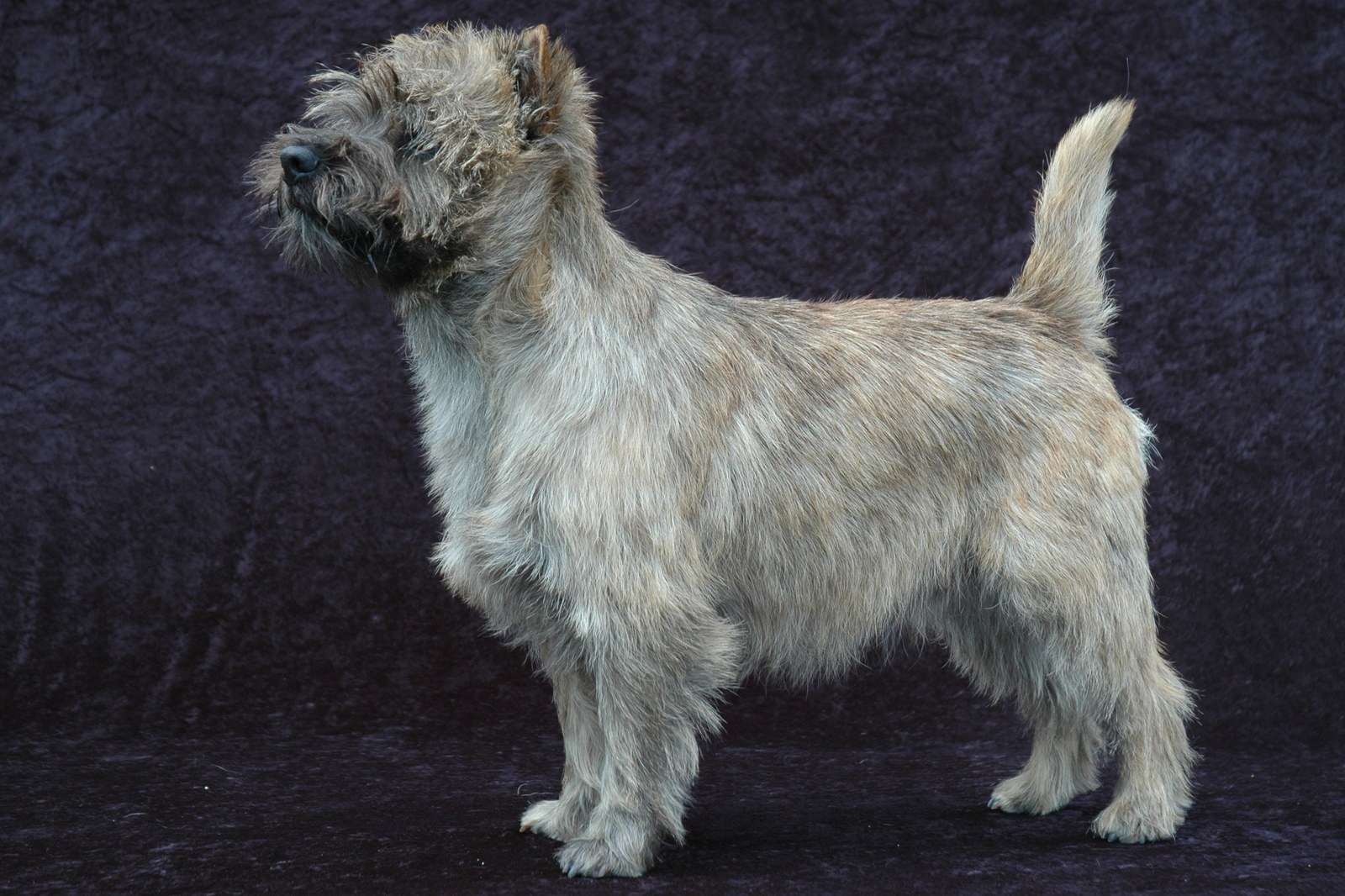
Do you have a better photo of a Cairn Terrier in the American show ring? If you have a show photo you’d let us use, email it to [email protected] — tell us the dog’s name and the show, and it may be featured here. Please only send photos you took yourself or have the photographer’s permission to share, and tell us the photographer’s name.
1. Breed at a glance
Terrier Group; recognized by the AKC in 1913
Dogs 10 in at the withers, 14 lb; bitches 9½ in, 13 lb
Hard, weather-resistant double coat; any color except white — wheaten, red, brindle, gray, black, sandy, silver
13–15 years
Happy, busy, curious, alert, fearless, independent
The Cairn Terrier is, in the standard's own words, “an active, game, hardy, small working terrier of the short-legged class” — strongly but not heavily built, standing well forward on its forelegs, deep in the ribs, with strong hindquarters and a medium-length back. The head is shorter and wider than any other terrier's, well furnished with hair, giving a foxy expression. The coat is the working part: a profuse, harsh outer coat over a short, soft, close undercoat, made to turn Highland wind and rain. Underneath it is a dog that still thinks it is on the job — fearless, busy, and always looking for something to investigate. (Sources: AKC, Cairn Terrier; Cairn Terrier Club of America, Education — Cairn Terrier Standard.)
2. History
The Cairn Terrier is one of Scotland's oldest working terriers, from the western Highlands and the Isle of Skye, where small game dogs worked the stone piles — cairns — that marked graves and boundaries, bolting foxes, badgers, otters, and vermin out of the rocks. The breed's name is its job description.
- What's in a name. Before 1873, terriers in Scotland were collectively called Scottish Terriers. The short-coated type was shown as the “Short-haired Skye Terrier,” but Skye Terrier breeders objected, and when the breed came to official shows in the United Kingdom in 1909, “Cairn Terrier” was the compromise name adopted instead.
- Recognition. The Kennel Club of the United Kingdom gave the Cairn a separate register in 1912 — 134 were registered in the first year — and the breed was given championship status. The AKC recognized the breed in 1913, and the Cairn Terrier Club of America was granted AKC membership in 1917 and has been the parent club since.
- Old stock. The Cairn is the progenitor of several of the other Scottish terrier breeds: the Scottish Terrier and the West Highland White Terrier were developed from Cairn-type stock, and white Cairns were registered separately as West Highland White Terriers after 1917.
- Toto. The breed's enduring fame came in 1939, when a brindle Cairn named Terry played Toto in MGM's The Wizard of Oz, alongside Judy Garland. The parent club still tells the story on its own homepage: the famous Toto was a Cairn Terrier named Terry.
From a working dog in the Highland cairns to a movie star and a family companion, the Cairn has changed remarkably little: it is still small, shaggy, hard-coated, and convinced there is something worth digging for. (Sources: Wikipedia, Cairn Terrier; Cairn Terrier Club of America; Sumac Cairn Terrier Club, Meet the Breed.)
3. The standard and why it is written that way
The standard describes a small working terrier, and every part of it follows from the job in the rocks. The Cairn is short-legged and strongly built, with a level back of medium length, a broad head, and a hard, weather-resisting coat — a dog made to squeeze into a cairn, bark to hold the varmint, and come back out again.
- Size. Ideal size is a matter of weight, height, and length together: dogs fourteen pounds and ten inches at the withers, bitches thirteen pounds and nine and a half inches, with a body fourteen and a quarter to fifteen inches from the front of the chest to the back of the hindquarters. The dog must be balanced — neither leggy nor too low to the ground, neither too short nor too long in body. The weights and measurements are for mature dogs at two years of age.
- Coat. Hard and weather-resistant, and it must be double-coated: a profuse, harsh outer coat and a short, soft, close, furry undercoat. Open coats, blousy coats, too-short or dead coats, lack of undercoat or head furnishings, silkiness, or curliness are all faults; a slight wave is permissible.
- Color. The standard allows any color except white, and dark ears, muzzle, and tail tip are desirable. In practice the colors are cream, wheaten, red, sandy, gray, brindle, and nearly black. Brindled Cairns frequently change color through their lives, often going progressively darker or more silver as they age.
- Head, ears, tail. The skull is broad in proportion to its length, with a decided stop; the muzzle is strong but not too long or heavy, and the mouth is neither overshot nor undershot. The ears are small, pointed, and carried erect, set wide apart. The tail is in proportion to the head, well furnished with hair but not feathery, carried gaily, and must not curl over the back.
- Movement and condition. The Cairn is “very free in its movements” and should be shown in good hard flesh, well muscled, in full good coat, moving freely and easily on a loose lead — a working dog, not a pampered one.
- Faults, not disqualifications. The AKC standard carries a list of faults rather than disqualifications. White on the chest, feet, or other parts of the body is a fault, as are an overshot or undershot mouth, eyes too large, prominent, yellow, or ringed, a flesh or light-colored nose, and an open or silky coat. There is no color disqualification in the Cairn standard.
The most important thing to know about the standard is the coat: a correct Cairn looks rough-and-ready, not sculpted. A soft, silky, or clipped coat is not just a grooming choice — it is a fault. (Sources: Cairn Terrier Club of America, Education — Cairn Terrier Standard; Wikipedia, Cairn Terrier.)
4. Temperament & living with one
The AKC sums the breed up in one sentence: Cairn Terriers are “happy, busy little earthdogs originally bred to fearlessly root out foxes and other small, furred prey in the rocky Scottish countryside. Curious and alert, Cairns like having a place where they can explore and dig.” The parent club adds that they are friendly, independent, and highly intelligent — and that they want enrichment in the form of training, games, and activities.
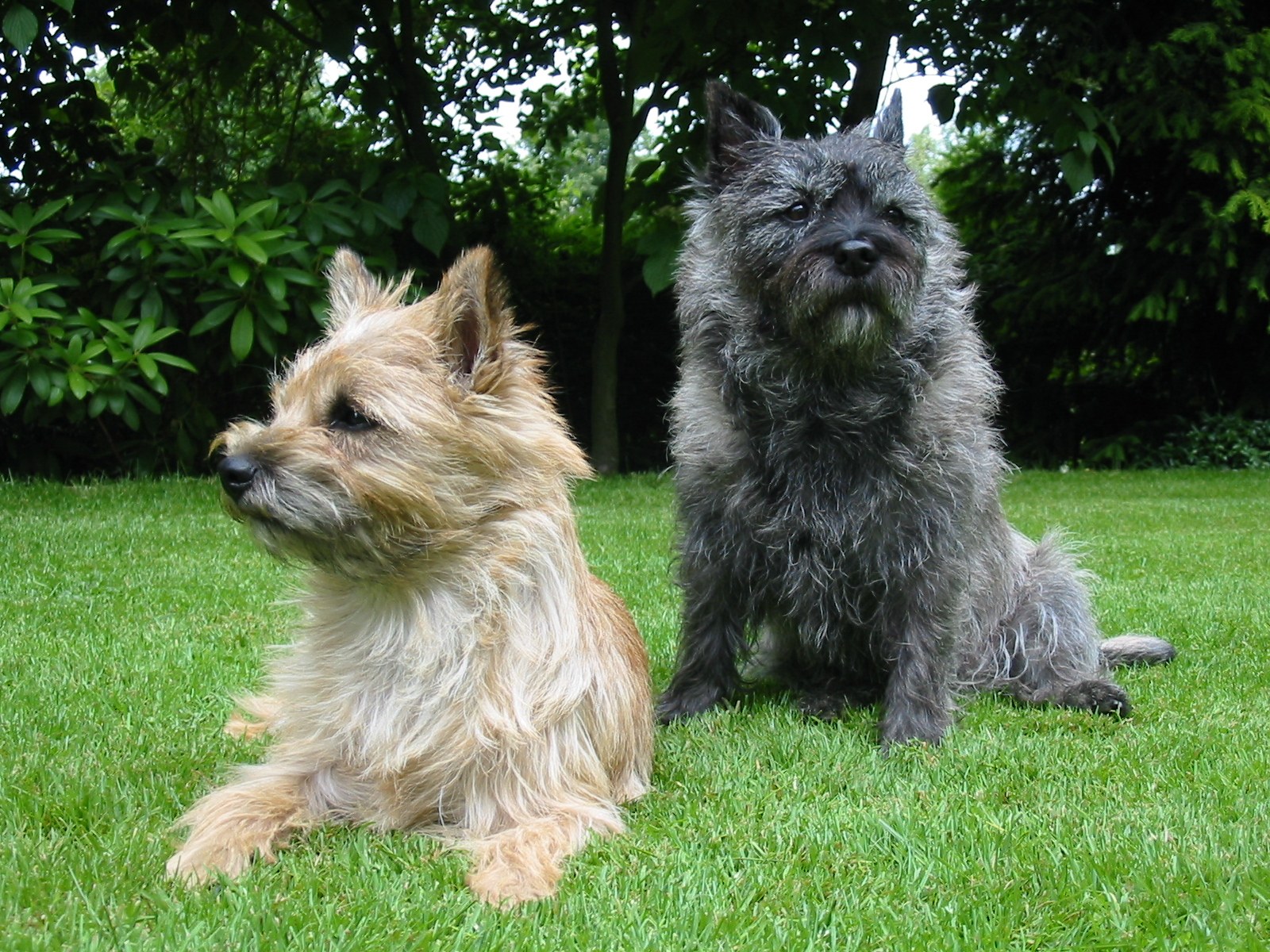
- A family dog, with supervision. The parent club calls Cairns great pets: intelligent, good with children, playful, and flexible about where they live — city apartments, suburban homes, or quiet farmhouses all suit them. Their strong personality and sturdy body mean they get along well with children, though children should be supervised until they learn how to treat their Cairn kindly.
- Independent, not obedient by default. Cairns are friendly, but they have a mind of their own. They were bred to work away from the handler, down in the rocks, and that independence survives: they want to know what is in it for them, and they do best with training that keeps them thinking.
- Exercise is not optional. This is not a sedentary lapdog. Plan on leashed walks every day plus play and something to learn — earthdog, barn hunt, scent work, agility, and diving are all activities the parent club lists for the breed. A Cairn with nothing to do will dig, chase, and redecorate.
- Digging and chasing come with the breed. The instinct to go to ground after vermin is the whole point of the dog. Give it a legal outlet — a digging patch, earthdog practice, scent games — and keep it leashed where small animals run, because a Cairn that spots a squirrel is a Cairn that has already decided.
- Not a yard dog. Cairns want to live in the house with their people. A Cairn tied out in a yard gets bored, lonely, and destructive — and a bored terrier with a digging habit is a problem for the whole garden.
The honest summary: this is a cheerful, hardy, funny little dog for an owner who will train it, exercise it, and give it a job — and a poor fit for a quiet household that wants a dog to lie around. (Sources: AKC, Cairn Terrier; Cairn Terrier Club of America.)
5. Grooming
Grooming a Cairn Terrier is straightforward, and the rule is simple: keep the coat harsh and the dog will do the rest. Regular brushing — at least once a week — followed by a careful combing will keep shedding to a minimum. Trim the excess hair from the tips of the ears, the tail, and the feet, keep the nails short and the teeth clean, and bathe seldom, so the coat keeps its weatherproof texture and the skin does not dry out.
The show coat is maintained by hand-stripping: plucking out the dead hairs, roughly every six months, so new harsh coat grows in. Do not clip or shave the coat — cutting softens it and ruins the weather-resistant texture the standard requires. Shedding is below average, but many Cairns are allergic to flea bites, so keeping the dog flea-free matters more than it does for most breeds. (Sources: Cairn Terrier Club of America, Cairn Terrier flyer (AKC); VCA Animal Hospitals, Cairn Terrier.)
6. Health testing
The Cairn Terrier Club of America takes part in the Orthopedic Foundation for Animals' Canine Health Information Center (CHIC) program, and the parent club's recommended tests are the CHIC requirements for the breed — with results registered with OFA, where anyone can look them up.
- Patella evaluation. Puppies at 12–16 weeks, and any adult before breeding; if abnormalities are found, a veterinary orthopedist should be consulted.
- Cardiac exam. Puppies at 12–16 weeks, and any adult before breeding; if abnormalities are found, a veterinary cardiologist should be consulted.
- Kidney ultrasound. An ultrasound for a missing kidney (aplasia) or a deformed kidney (dysplasia), done by a board-certified veterinary ultrasonographer or radiologist — puppies at 12–15 weeks, and any adult before breeding who has not been cleared as normal.
- Ocular melanosis eye exam. A formal CERF/CAER eye examination, with dilation, by a veterinary ophthalmologist — all Cairns two years of age and older before breeding, with follow-up exams periodically through life, since ocular melanosis can appear as a new problem in older dogs.
- Globoid cell leukodystrophy (GLD) DNA test. A DNA swab test for the GALC gene mutation behind Krabbe disease — any adult before breeding who has not already been cleared by test or parentage.
- Liver PSVA and MVD. A bile-acid blood test for portosystemic vascular anomaly and microvascular dysplasia — puppies at 12–16 weeks, and any adult before breeding.
Also worth asking about: the DNA test for craniomandibular osteopathy (CMO), which the parent club lists on its care page alongside the CHIC tests, and the eye conditions the breed is prone to, including cataracts and progressive retinal atrophy. A CHIC number confirms the testing was done and published; it is not a guarantee of health, and it does not replace asking the breeder what they know about the health of their own lines. (Sources: AKC, Terrier Group Health Testing Requirements; Cairn Terrier Club of America, Care & Health.)
7. The annual Cairn Terrier specialty dog show
A specialty is the breed’s All-Star show — its Super Bowl. The Cairn Terrier Club of America holds two national specialties a year: the August national and the Roving National Specialty, which moves to a different city each year.
The club calls it the roving national specialty — the same kind of event other clubs call a floating, rotating, or traveling national.
Every breed has one show a year that matters most: the parent club’s national specialty — and the Cairn Terrier Club of America holds two a year: a national specialty each August and a roving national that moves to a different city each year — in 2026 the roving national was at Montgomery, in October, as part of the Montgomery weekend cluster.
The 2026 National Specialty was Thursday, August 13, 2026, at Island Grove Regional Park, Greeley, Colorado, judged by Mrs. Pamela A. Davis.
The roving national
The year’s other national specialty, the roving national, was Sunday, October 4, 2026, at the Montgomery County Kennel Club show in Macungie, Pennsylvania, judged by Mrs. Linda Firth. The Montgomery premium states the Cairn classes at the show are the club’s national specialty show. (Sources: Montgomery County KC premium list.)
The 2027 national specialty had not been announced as of November 2026.
The roving national
The 2027 roving national specialty had not been announced as of November 2026.
Cairn Terrier Club of America — cairnterrier.org
8. Regional specialties through the year: smaller regional shows
The national is the anchor, but the breed’s year also runs through regional specialties — smaller regional shows, not the national — held by regional Cairn Terrier clubs around the country. These are the 2026 regionals verified from club sources so far:
No regional specialties announced yet for 2026.
More regional specialties will be added here as their programs are verified — this section is built from show data, not guesswork. Browse upcoming show weekends →
9. Clubs
The parent club is the Cairn Terrier Club of America (CTCA), at cairnterrier.org — the AKC's parent club for the breed since 1917. It publishes the standard and the breed's health guidance, keeps a breeder referral list (it does not endorse anyone on it, but updates it when it learns of a complaint), runs the two national specialties, and publishes the quarterly newsletter The Highlander and an annual yearbook.
The Cairn Terrier Club of Denver hosted the 2026 national week in Greeley, Colorado, August 11–17, 2026: earthdog and puppy events, the CTCA sweepstakes on Wednesday, August 12 (Judge Dick Reuter), the national specialty on Thursday, August 13 (Judge Pamela A. Davis), and the Denver club's own concurrent specialty on Friday, August 14.
Regional specialty clubs listed by the parent club:
- Cairn Terrier Club of Denver
- Cairn Terrier Club of Northern California
- Cairn Terrier Club of Southern California
- Greater Twin Cities Su-Mac Cairn Terrier Club
- Housatonic Cairn Terrier Club
- Potomac Cairn Terrier Club
- The Cairn Terrier Club of Greater Detroit
- The Central Florida Cairn Terrier Club
- The Columbia River Cairn Terrier Club
Regional clubs run the regional specialties and the breed's rescue work, and they are the best first contact for anyone looking for a breeder, a training contact, or a local event. (Sources: Cairn Terrier Club of America; Cairn Terrier Club of America, Upcoming Events.)
10. Rescue
Cairn Terriers come into rescue because their owners can no longer keep them — family moves, death, divorce, and abandonment are the usual reasons — and because the breed's digging, chasing, and independence outrun an owner's expectations. The parent club does not run a rescue program itself: the Cairn Terrier Club of America supports the rescue efforts of its affiliated regional clubs and gives them financial support on request, so a rescue search starts with the regional clubs.
- Regional club rescue. The CTCA's rescue contacts are its regional clubs — Denver, Northern California, Southern California, Greater Twin Cities Su-Mac, Housatonic, Potomac, Greater Detroit, Central Florida, and Columbia River. cairnterrier.org
- Potomac Cairn Terrier Club Rescue. The Potomac club's foster-based rescue, adopting to Virginia, West Virginia, Delaware, Maryland, and Washington D.C., with home checks and a take-back promise if a placement does not work out. potomacctc.org/rescue/faqs.php
- Cairn Rescue USA. A nationwide rescue for purebred and mixed Cairn Terriers. cairnrescueusa.com
- AKC Rescue Network. The AKC's breed rescue listing for Cairn Terriers. akc.org/akc-rescue-network/rescue-network-d-breeds/
A rescue Cairn is usually an adult, so you know its size, coat color, and temperament before you commit — and with a breed whose brindles change color with age, that is worth something. Ask what health testing the dog has had, and whether it has been screened for the conditions in section 6. (Sources: Cairn Terrier Club of America; Potomac Cairn Terrier Club, Rescue FAQs.)
11. Breeder vs. rescue: honest guidance
Both routes can end with a great dog. The honest difference is what you know going in — and with a Cairn, what you know about health testing and about digging matters more than usual.
- Choose a breeder if you want a puppy for showing, performance, or a specific purpose, and you want the health testing, pedigree, and early socialization that come with a careful breeding program. Ask for the CHIC health results in section 6, start from the parent club's breeder referral list, check references, and be ready to wait — good breeders have waiting lists, and the club does not endorse anyone on its list.
- Choose rescue if you want an adult dog whose temperament, energy level, and digging habits you can see before you commit, and you are comfortable with a dog that may need training and patience. Rescue is also the right route if you want to give a home to a dog that needs one.
- Either way, verify. Ask for health testing, ask what the dog's lines are known for, and meet the dog before you commit. A breeder who will not show you health results and a rescue that will not let you meet the dog are both telling you something.
A Cairn Terrier is a thirteen-to-fifteen-year commitment to a small, fearless dog that needs real work and real training every day. The right question is not breeder or rescue — it is whether your life has room for a dog that was bred to go to ground after vermin in a pile of rocks.
12. Claim this page
This page was built from public sources — the AKC standard, the parent club's own material, AKC event records, and the rescue groups' sites — and it is a starting point, not the last word. If you are with the Cairn Terrier Club of America or a regional club and something here is wrong or missing, you can claim this page and set it straight: email [email protected] and tell us what needs fixing. Corrections from the people who own the breed's knowledge are always welcome.
Sources
- AKC, Cairn Terrier
- Cairn Terrier Club of America, Education — Cairn Terrier Standard
- Cairn Terrier Club of America
- Cairn Terrier Club of America, Care & Health
- Cairn Terrier Club of America, Upcoming Events
- AKC, Terrier Group Health Testing Requirements
- Cairn Terrier Club of America, Cairn Terrier flyer (AKC)
- VCA Animal Hospitals, Cairn Terrier
- Wikipedia, Cairn Terrier
- Sumac Cairn Terrier Club, Meet the Breed
- Cairn Terrier Club of America, 2025 Roving National Specialty information
- Montgomery County KC premium list, Oct 4, 2026
- AKC, Rescue Network D Breeds
- Potomac Cairn Terrier Club, Rescue FAQs
- Cairn Rescue USA
- PickADogBreed, Image Credits (hero photo license)