Breed profile · Sporting Group · The compact French pointing dog
Brittany
The Brittany is the smallest of the pointing breeds and one of the busiest: a compact, leggy French gundog that points its birds like a setter, retrieves like a spaniel, and goes home to be the family’s shadow. It is also the breed with more Dual Champions — dogs titled in both the show ring and the field — than any other Sporting breed, which is the whole point of the dog: it was never meant to be only a show dog or only a hunter.
Help us improve it. This is one of ThePetAdvisor’s breed profiles, built from public sources with generous links to the people who actually own this breed’s knowledge. If something’s off or missing, the parent club can claim the page and set it straight — see the bottom of the page.
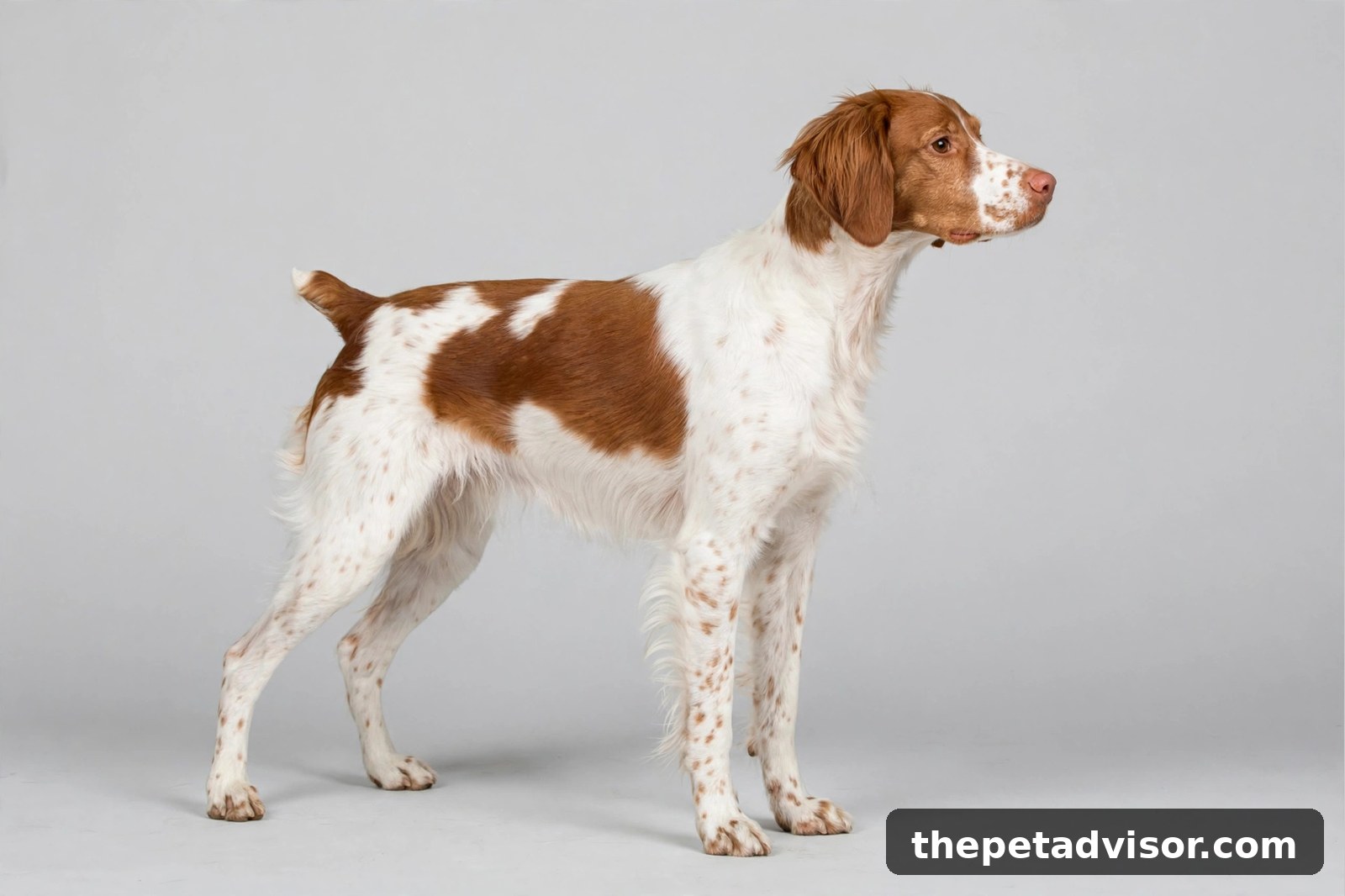
Do you have a photo of a Brittany in the American show ring? We’d love this page to lead with one. If you have a show photo you’d let us use, email it to [email protected] — tell us the dog’s name and the show, and it may be featured here. Please only send photos you took yourself or have the photographer’s permission to share, and tell us the photographer’s name. We couldn’t find a public photo of a Brittany in the American show ring that we were free to share, so the photo leading this page was made with AI. We’d much rather lead with a real one — if you’re a club member with an approved photo, we’d love to feature it.
1. Breed at a glance
Sporting — recognized by the AKC in 1934 as the Brittany Spaniel; renamed Brittany in 1982
17½–20½ in at the shoulder. Weight 30–40 lb, in proportion to height and bone.
Dense, flat or wavy, with feathering. Orange and white or liver and white, in clear or roan patterns. Black is a disqualification.
Bright, fun-loving, upbeat — eager at home, tireless afield. Sensitive and eager to please; does not do well with harsh handling.
Very high. Needs one to two hours of real exercise a day, with a job for its nose and legs.
Size, coat, and color facts are from the AKC standard as reproduced by the parent club. Lifespan (12–14 years) and temperament are the AKC breed-profile figures. Popularity: the Brittany is No. 31 in the AKC’s 2025 registrations (AKC most popular breeds 2025).
2. History
The Brittany comes from the province of Brittany in northwestern France, where hunters needed a compact bird dog that could work hedgerows and woodcock cover on foot, without a horse to keep pace. Local spaniel-type dogs were crossed with English pointers and setters brought over by British sportsmen hunting woodcock in the region, and the result was a dog that pointed its birds instead of flushing them — a spaniel’s body with a pointer’s job. The first breed standard was written in 1907, and the French registry recognized the breed that same year, under the name Épagneul Breton. (Sources: AKC Brittany breed page; AKC, Facts About the Brittany.)
The first Brittanys reached the United States in the early 1930s, and the AKC registered the breed in 1934 under the name Brittany Spaniel, in the Sporting Group. The American Brittany Club was founded in 1942 as the breed’s parent club, with a mission that has shaped the breed ever since: to keep it forever a dual dog, never split into field dogs and show dogs. In 1982 the AKC dropped “Spaniel” from the name at the club’s request — a spaniel flushes game, and the Brittany points it. (Sources: AKC, Facts About the Brittany; AKC Brittany breed page.)
The dual mission worked. Brittanys have earned the Dual Champion title — a show championship and a field championship on the same dog — more than any other Sporting breed, reaching the 500th Dual Champion in 2006. That record is the breed’s calling card and its defense: a Brittany that can win in the ring and still find birds is the breed as it was meant to be. (Source: AKC, Facts About the Brittany.)
3. The standard and why it’s written that way
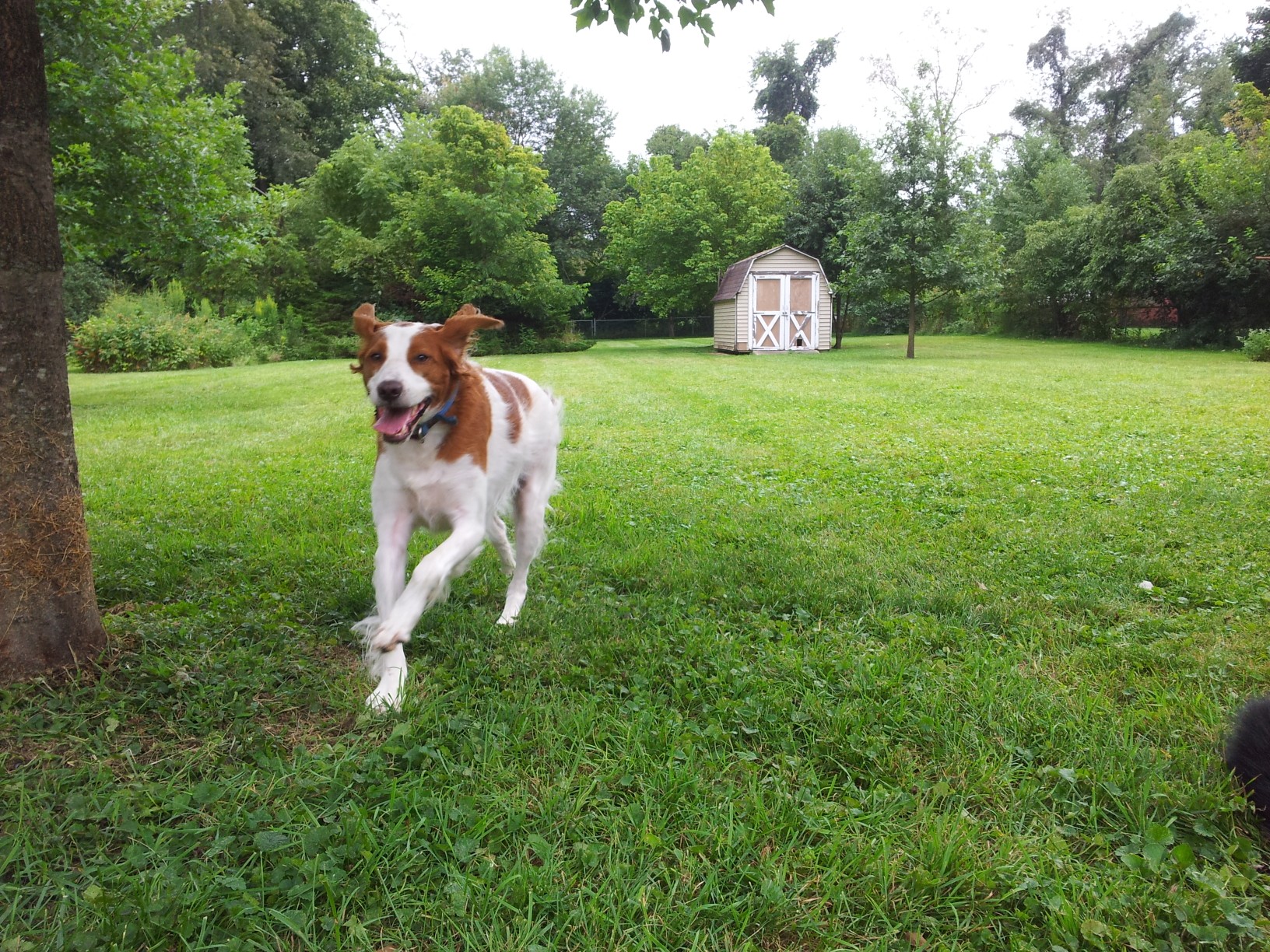
- Built to cover ground. The standard opens with the job, not the looks: the Brittany is “a compact, closely knit dog of medium size, a leggy dog having the appearance, as well as the agility, of a great ground coverer.” Everything in it follows from a dog that has to range for hours on foot and still be small enough to lift into a truck. The height at the shoulders is about the same as the length of the body — the dog is square, not long — and a long body is heavily penalized. (Source: AKC standard, as reproduced by the parent club.)
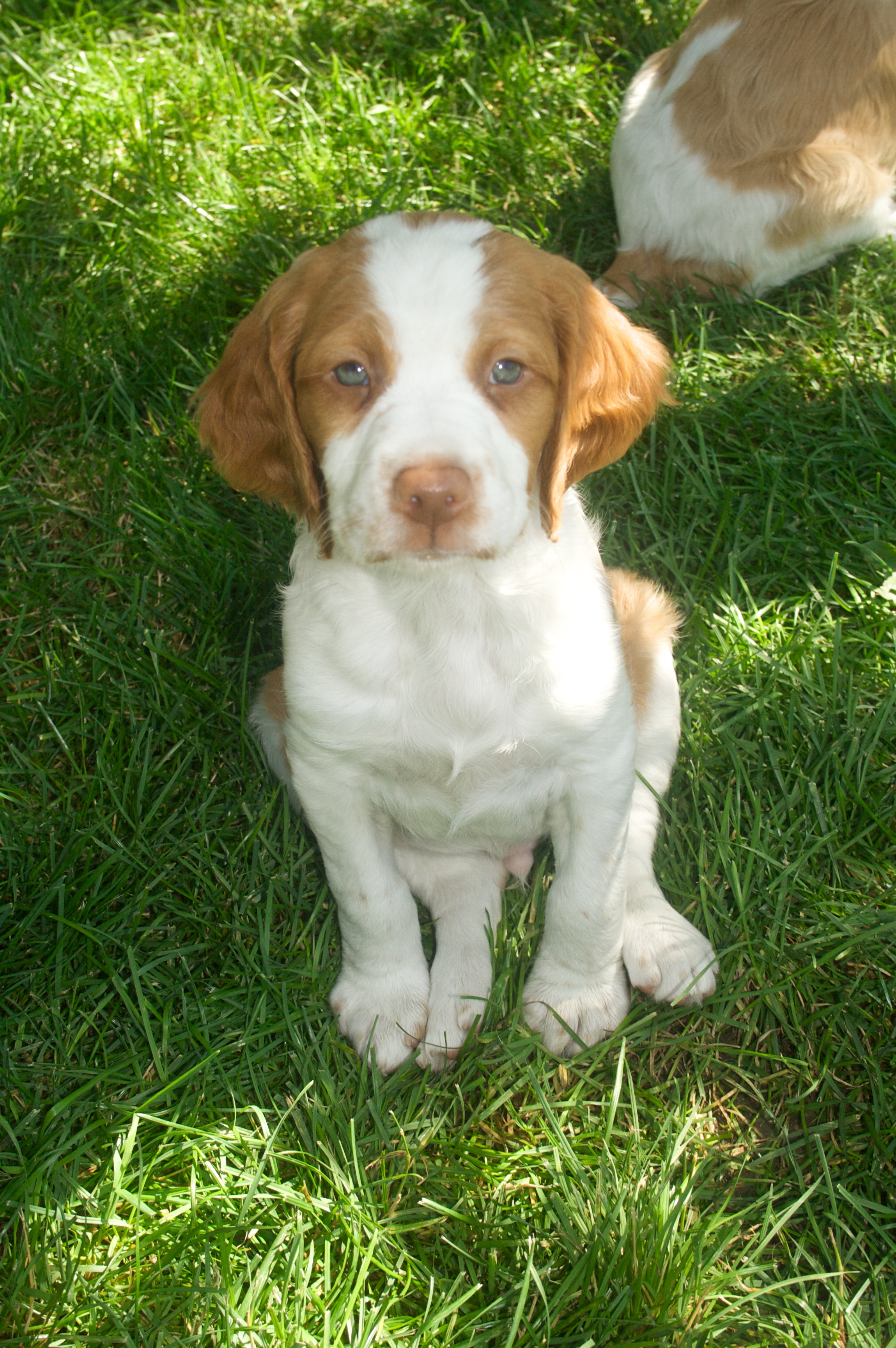
- Simple and strict numbers. The numbers are simple and strict. Height 17½ to 20½ inches, measured from the ground to the highest point of the shoulders; any Brittany measuring under 17½ inches or over 20½ inches is disqualified. Weight should be between 30 and 40 pounds. The head is medium length with a rounded skull and a muzzle slightly shorter than the skull; the ears are set high, triangular, and lie flat against the head; the nose is fawn, tan, shades of brown, or deep pink — a black nose is a disqualification. The coat is dense, flat or wavy, with feathering on the ears, legs, and belly, and the tail is tailless to approximately four inches, natural or docked. (Source: AKC standard.)
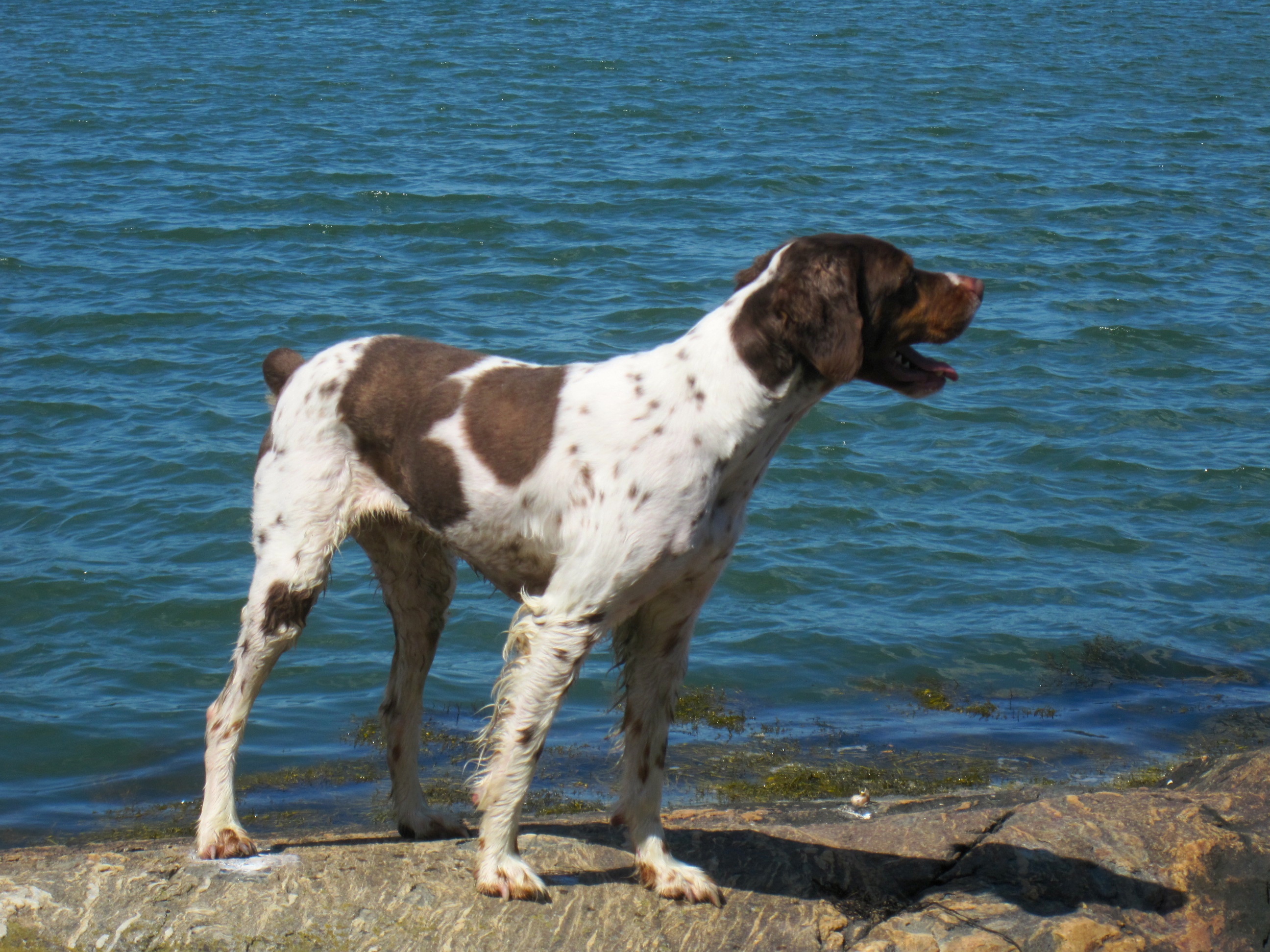
- Color is where the standard draws its hardest line. Orange and white or liver and white, in either clear or roan patterns, with some ticking desirable; washed-out colors are not desirable. Tri-colors are allowed but not preferred — a liver and white dog with classic orange markings on eyebrows, muzzle and cheeks, inside the ears and under the tail — and anything beyond those markings is severely penalized. Black is a disqualification. That matters beyond the ring: the French standard permits black, so a black “Brittany” is a French-type dog, not an American AKC Brittany. Read the standard as a working specification, not a beauty list: the leggy square build is for covering ground, the dense coat is for pushing through cover, and the short tail is so there is nothing for the brush to catch.
4. Temperament & living with one
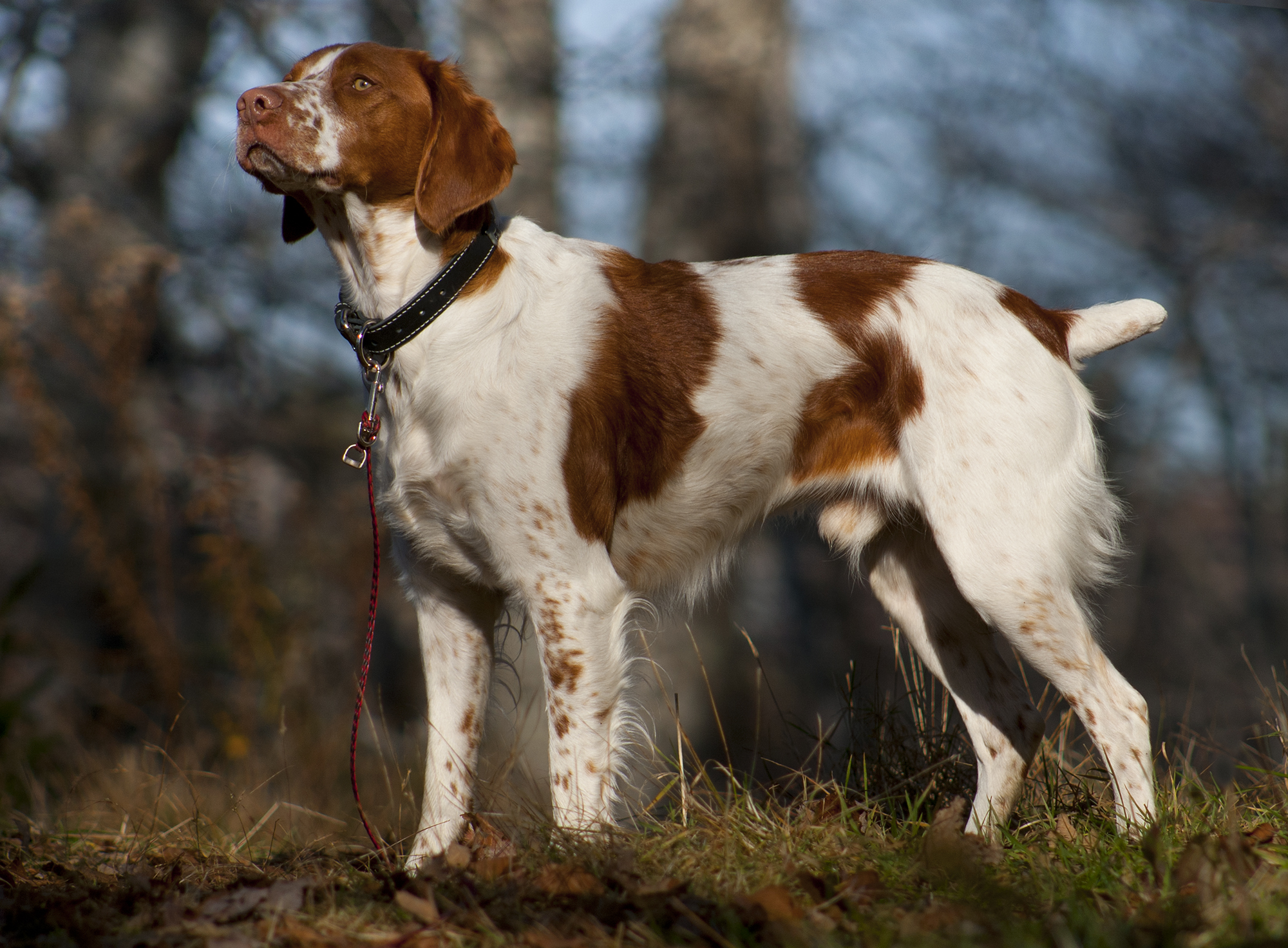
The AKC’s breed profile says it in one line: the Brittany is “bright and eager at home, and tireless afield.” At home the dog is affectionate, sensitive, and eager to please — a shadow that reads human mood quickly and wants to cooperate. Afield it is a different animal: intense, fast, and unwilling to quit, ranging wide and checking back, which is why the breed’s people say a Brittany hunts for you, not for itself. (Sources: AKC Brittany breed page; AKC, Facts About the Brittany.)
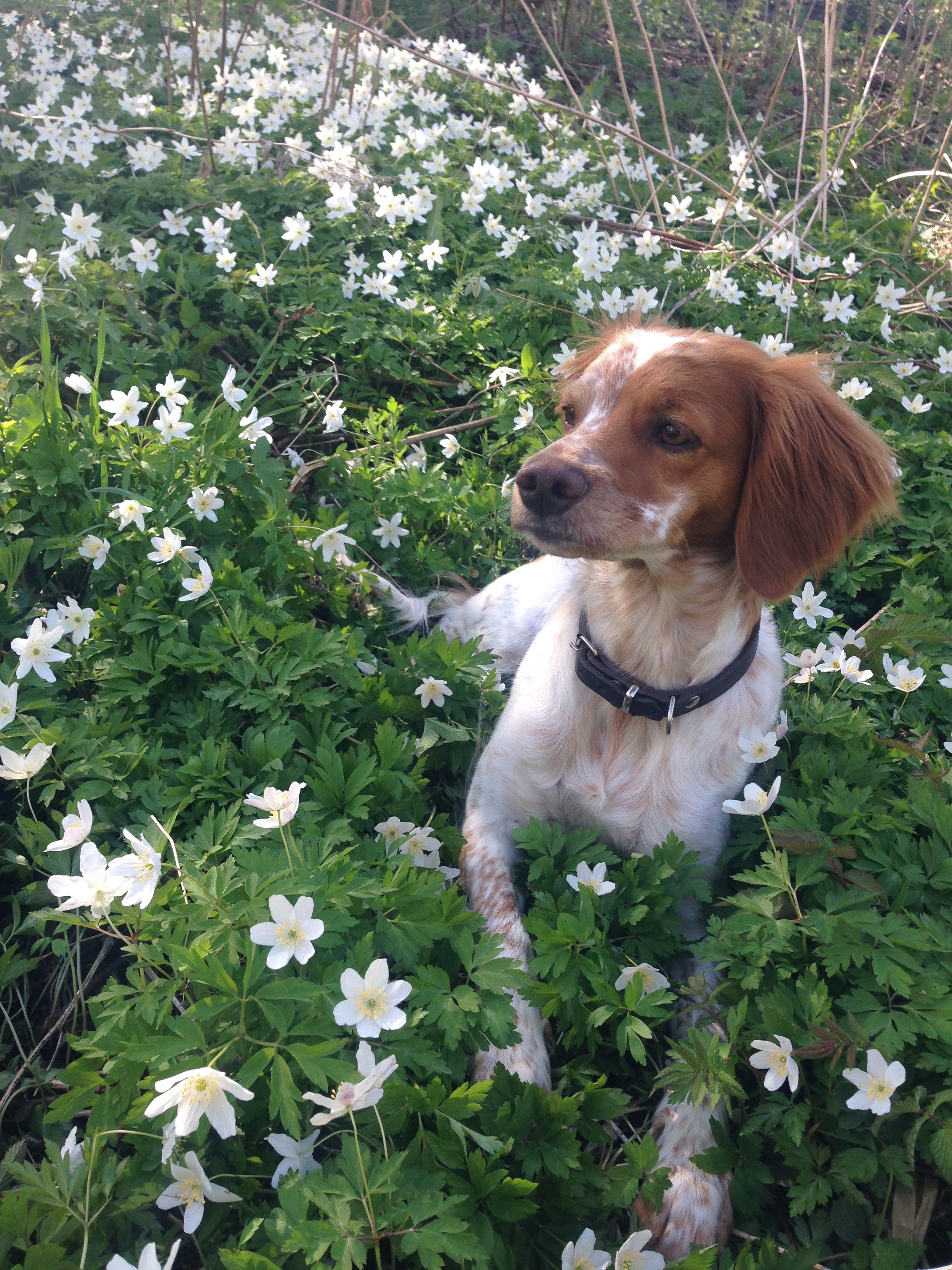
What that means at home is a dog that is easy to love and hard to tire. A Brittany is good with children old enough to respect a dog’s space, gets along with other dogs, and tolerates cats with early socialization — and it cannot tolerate extended isolation. It was built to work alongside a human partner for hours at a stretch, and a Brittany left alone all day will find its own work, usually destructive. The sensitivity cuts both ways: the breed responds poorly to harsh corrections and can shut down if handled roughly, which is why the standard’s people train with patience and a pocket full of rewards. (Sources: AKC Brittany breed page; LiveCub, Owning a Brittany Spaniel.)
5. Grooming
- The easy part. Grooming is the easy part of owning a Brittany. The coat is dense, flat or wavy, with feathering on the ears, legs, and belly; a weekly brushing keeps it in shape and keeps the feathering free of mats, and a bath when the dog has rolled in something — which, given the nose, will be often. Brittanys shed moderately year-round, and no amount of brushing stops it. (Source: AKC Brittany breed page.)
- Ears need the attention. The ears need the attention the coat does not. Ears that hang close to the head trap moisture, and Brittany ears should be checked and cleaned regularly for infection, especially after swimming or a wet day in the field. Keep the nails short — a Brittany that runs will wear them down, and a Brittany that does not run will need them trimmed. There is no clipping, stripping, or trimming to the coat: a Brittany in the ring is shown as it hunts, clean and untrimmed.
6. Health testing
- Healthy and long-lived. The Brittany is a generally healthy, long-lived breed — 12 to 14 years — and the parent club’s health program is built around the OFA Canine Health Information Center (CHIC). For a CHIC number, a Brittany needs an OFA or PennHIP hip evaluation, a CAER eye examination by a board-certified veterinary ophthalmologist (annual, ages two through eight), and one elective evaluation: a cardiac exam, an elbow evaluation, a patella evaluation, or a thyroid panel. A CHIC number means the testing was done and the results made public; it is not a guarantee that every result was normal. (Sources: OFA CHIC program, Brittany; LiveCub, Owning a Brittany Spaniel.)
- Hear this before signing. What a buyer should hear about before signing anything: hip dysplasia, the most commonly screened orthopedic condition in the breed; epilepsy, which the American Brittany Club’s code of ethics names among the serious inheritable concerns; hypothyroidism, which shows as weight gain, lethargy, and coat changes and is managed with daily hormone treatment; and eye concerns, including hereditary cataracts, which is why the eye examination is annual. None of these is a reason not to own a Brittany. All of them are reasons to buy from a breeder who will show you the actual results — the CHIC numbers, not just the words “health tested.”
7. The annual Brittany specialty dog show
A specialty is the breed’s All-Star show — its Super Bowl. Once a year, the best Brittanys from across the country, and often from around the world, come together in one place.
The American Brittany Club’s national specialty is the anchor of the Brittany’s year — a four-day show week in Fort Smith, Arkansas, with the 84th Annual National Specialty Show at its center: two days of conformation, plus sweepstakes, obedience, rally, agility, scent work, and a Top 20. The Brittany is the dual dog — more Dual Champions than any other Sporting breed — and the national is where that dual identity shows, in the ring and in the field events around it.
The 84th Annual National Specialty Show: Friday, November 20, and Saturday, November 21, 2026, at the Kay Rodgers Park Expo Center, 4400 Midland Blvd, Fort Smith, Arkansas — show week November 18–21, 2026, with the 3rd Annual Independent Specialty on Wednesday, November 18, and Obedience and Rally on Thursday, November 19. AKC event number 2026027624 (as printed in the premium header and marked Friday; the number-to-day mapping has not been independently verified against AKC records). Entry closing: noon ET, Wednesday, October 28, 2026. (Sources: official premium; AKC Upcoming National Specialties.)
National Specialty judge (Juniors & Conformation): Mr. Jerome Elliott of Harrisburg, Pennsylvania. Sweepstakes: Helen Riggle. Obedience & Rally: Sarah Schroeder. Friday classes: Puppy Sweepstakes, Veteran Sweepstakes, Dual Champion Sweepstakes, Judges Education, Class Dogs, Class Bitches, Town Hall. Saturday classes: Junior Showmanship, Non-Regular Classes (Veteran dog & bitch, Dual Champion, National Qualifier, Field Trial), Best of Breed, Brace, Stud Dog & Brood Bitch. National Owner-Handled Series offered. (Source: official premium.)
Winners from the 2026 specialty had not been published in an official source as of November 2026 and will be added here when they are.
The 2027 national specialty dates had not been announced as of November 2026.
Past national specialties: 2025
2026 National Specialty Show — American Brittany Club
8. Regional specialties through the year: smaller regional shows
The national is the anchor, but the breed’s year runs through its regional clubs, which hold designated specialties across the country. These are the 2027 regionals verified from club sources so far:
- Central New England Brittany Club — designated specialty, Friday, February 26, 2027, Eastern States Exposition Center, West Springfield, Massachusetts. Breed judge: David Kittredge; Sweepstakes judge: Terry Hilliard. (Source: Northern New England Brittany Club announcement, November 1, 2026.)
- Southern New England Brittany Club — designated specialty, Saturday, February 27, 2027, Eastern States Exposition Center, West Springfield, Massachusetts. Breed judge: Sherry Webster. (Source: Northern New England Brittany Club announcement, November 1, 2026.)
- Northern New England Brittany Club — designated specialty, Sunday, February 28, 2027, Eastern States Exposition Center, West Springfield, Massachusetts. Breed judge: Stephanie Kaul. Superintendent: MBF. (Source: Northern New England Brittany Club announcement, November 1, 2026.)
More regional specialties will be added here as their programs are verified — this section is built from show data, not guesswork. Browse upcoming show weekends →
9. Clubs
- American Brittany Club (parent club) — the AKC parent club for the breed in the United States, founded in 1942. It runs the national specialty, the field trial championships, and the breed’s health program, and its secretary gives breeder referrals. President Joe Droel (2026).
- Skyline Brittany Club (Colorado) — a regional club holding specialty shows, field trials, and hunt tests, including the ABC Summer Specialty weekend in Greeley. (Source: Skyline Brittany Club premium, August 2026.)
- Georgia Brittany Club — a regional club running field trials and the Southern Open Brittany championships. (Source: AKC field trial premium, January 2026.)
- Central, Southern, and Northern New England Brittany Clubs — three regional clubs that hold a joint designated-specialty weekend each February at the Eastern States Exposition Center in West Springfield, Massachusetts. (Source: Northern New England Brittany Club announcement, November 1, 2026.)
The American Brittany Club has dozens of regional clubs across the country — the four above are the ones verified from current event sources for this page, not a complete directory. If you are new to the breed, a regional club’s specialty or field trial is the better first stop than a breeder’s website: the people there have owned, shown, and hunted Brittanys, and they will tell you the truth about the exercise before you fall for a puppy.
10. Rescue
Brittanys come into rescue for the most predictable reason in the breed: an owner who bought the energy and the face and did not buy the exercise. A rescued Brittany is usually an adult, often one whose owner underestimated the running, and it will arrive with a history you may never fully know. What you get in return is a dog whose temperament you can see before you commit, and a rescue that will take the dog back for life if it does not work out.
- Two national rescues. Two national rescues cover the breed. American Brittany Rescue (ABR) is a registered 501(c)(3) formed in 1991 as a cooperative effort of Brittany owners, breeders, trainers, and fanciers; it works through a nationwide foster network, with volunteers in all 50 states and Canada, and has rescued and placed nearly 9,000 Brittanys. Adoption fees run $275–$500 depending on the dog’s veterinary expenses. National Brittany Rescue and Adoption Network (NBRAN) is also a nationwide foster-based 501(c)(3), based in Greensburg, Pennsylvania, rescuing homeless Brittanys across the contiguous United States. (Sources: americanbrittanyrescue.org; nbran.org.)
- Budget the exercise first. Either way, budget the exercise first: a rescued Brittany that gets its run is the affectionate, biddable dog the breed is famous for, and a rescued Brittany that does not is the same dog, pacing the fence.
11. Breeder vs. rescue: honest guidance
If you buy: start with the parent club, the American Brittany Club, and ask for a breeder referral. Then ask the breeder for the CHIC numbers of both parents — hip evaluation, eye examination, plus one elective — and look them up in the OFA database yourself. Ask what they will take back: a good breeder takes the puppy back for its whole life if you cannot keep it. Ask, too, whether the breeder’s dogs work: the Brittany’s whole identity is the dual dog, and a breeder who shows and hunts the same lines is keeping the breed honest.
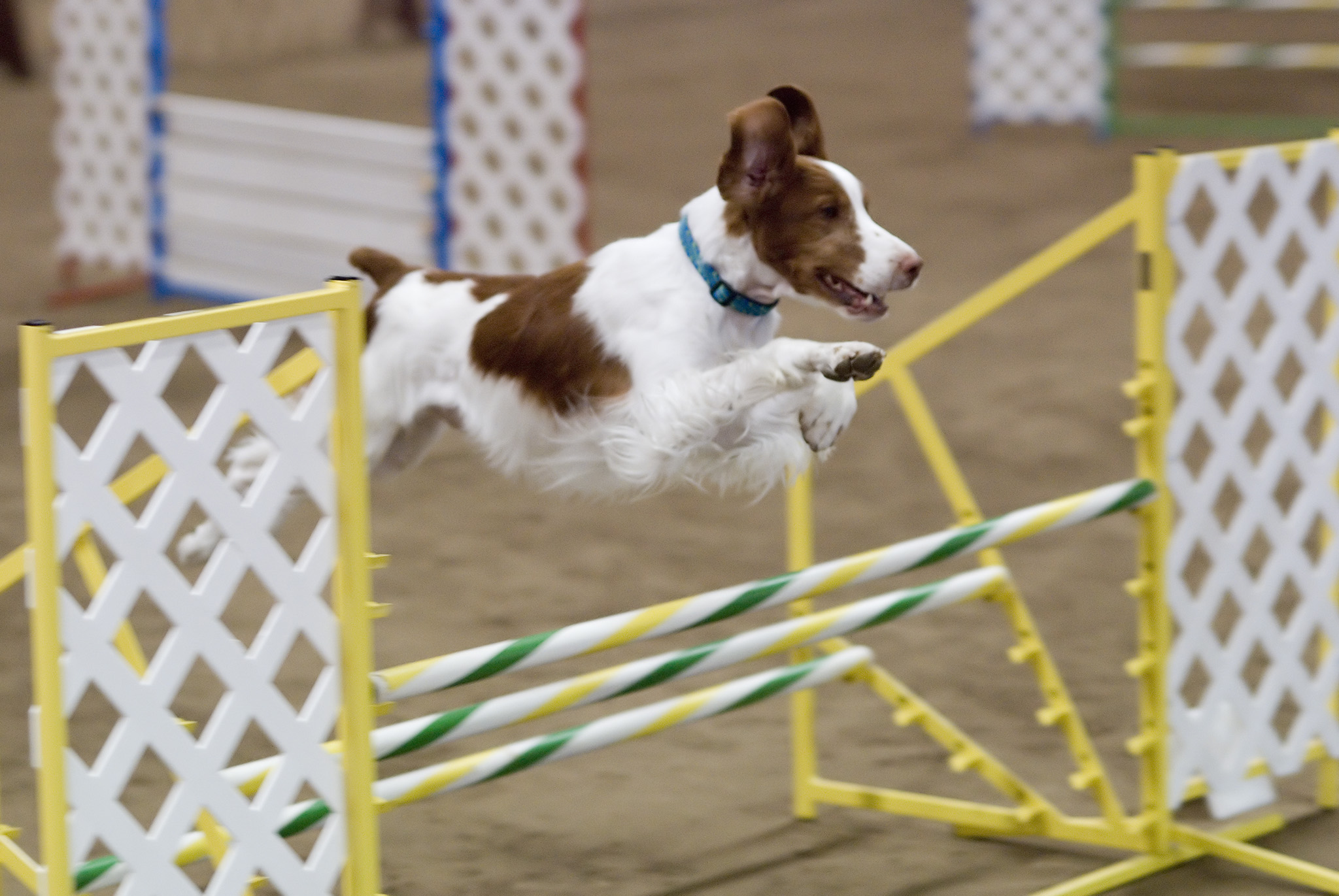
- If you rescue: a rescued Brittany is usually an adult, often one whose owner underestimated the exercise, and it will arrive with a coat that needs little work and legs that need a lot. What you get in return is a dog whose temperament you can see before you commit and a lower price. Either way, the deciding question is the same: can you give this dog one to two hours of real work a day, every day, for 12 to 14 years?
- No rare black Brittany. One thing that is not what a seller tells you: there is no such thing as a rare black Brittany. Black in the coat is a disqualification under the AKC standard, and a breeder selling a black Brittany — or charging a premium for a “rare” color — is selling you a label, not a Brittany the standard recognizes.
12. Claim this page
This page belongs to the breed, and the people who know the breed best are the American Brittany Club and its members. If you are with the parent club — or you are a breeder, a judge, a handler, or a rescue volunteer who spotted something wrong, missing, or out of date — this page is yours to set straight. Tell us what needs fixing and where the correction is documented, and we will fix it and credit the source. Contact the site through the About page, and mention “Brittany breed profile.”
Sources
- AKC Brittany breed standard, as reproduced by the parent club — theamericanbrittanyclub.org/brittany-breed-standard
- AKC, Brittany breed page — akc.org/dog-breeds/brittany
- AKC, Facts About the Brittany That You May Not Know (Dual Champions, history) — akc.org/expert-advice/lifestyle/fun-facts-brittany
- AKC, most popular dog breeds of 2025 — akc.org/expert-advice/dog-breeds/most-popular-dog-breeds-2025
- AKC Upcoming National Specialties — apps.akc.org/apps/events/conformation/national_specialties.cfm
- 2026 National Specialty premium (Rau Dog Shows) — thepetadvisor.com/assets/premiums/2026-specialties/american-brittany-club-national-2026-premium.pdf
- 2026 National Specialty Show, American Brittany Club — theamericanbrittanyclub.org/2026-national-specialty-show
- Canine Chronicle, American Brittany Club National Specialty results, November 24, 2025 — caninechronicle.com/author/liz-powell/page/359
- OFA CHIC program, Brittany — ofa.org/chic-programs/browse-by-breed/?breed=BS
- American Brittany Rescue, about — americanbrittanyrescue.org/about-american-brittany-rescue
- National Brittany Rescue and Adoption Network — nbran.org
- American Brittany Club — theamericanbrittanyclub.org