
Breed profile · Terrier Group · the tough, no-frills working terrier
Border Terrier
The Border Terrier is a small, active terrier of medium bone, strongly put together, suggesting endurance and agility, but rather narrow in shoulder, body and quarter — a working terrier built to run with the hounds and go to ground after a fox. Its head is like that of an otter, its coat hard, dense and wiry, and its manner, in the standard’s words, affectionate, obedient and easily trained. The AKC recognized the breed in 1930, and the Border Terrier Club of America is the parent club.
Help us improve it. This is one of ThePetAdvisor’s breed profiles, built from public sources with generous links to the people who actually own this breed’s knowledge. If something’s off or missing, the parent club can claim the page and set it straight — see the bottom of the page.
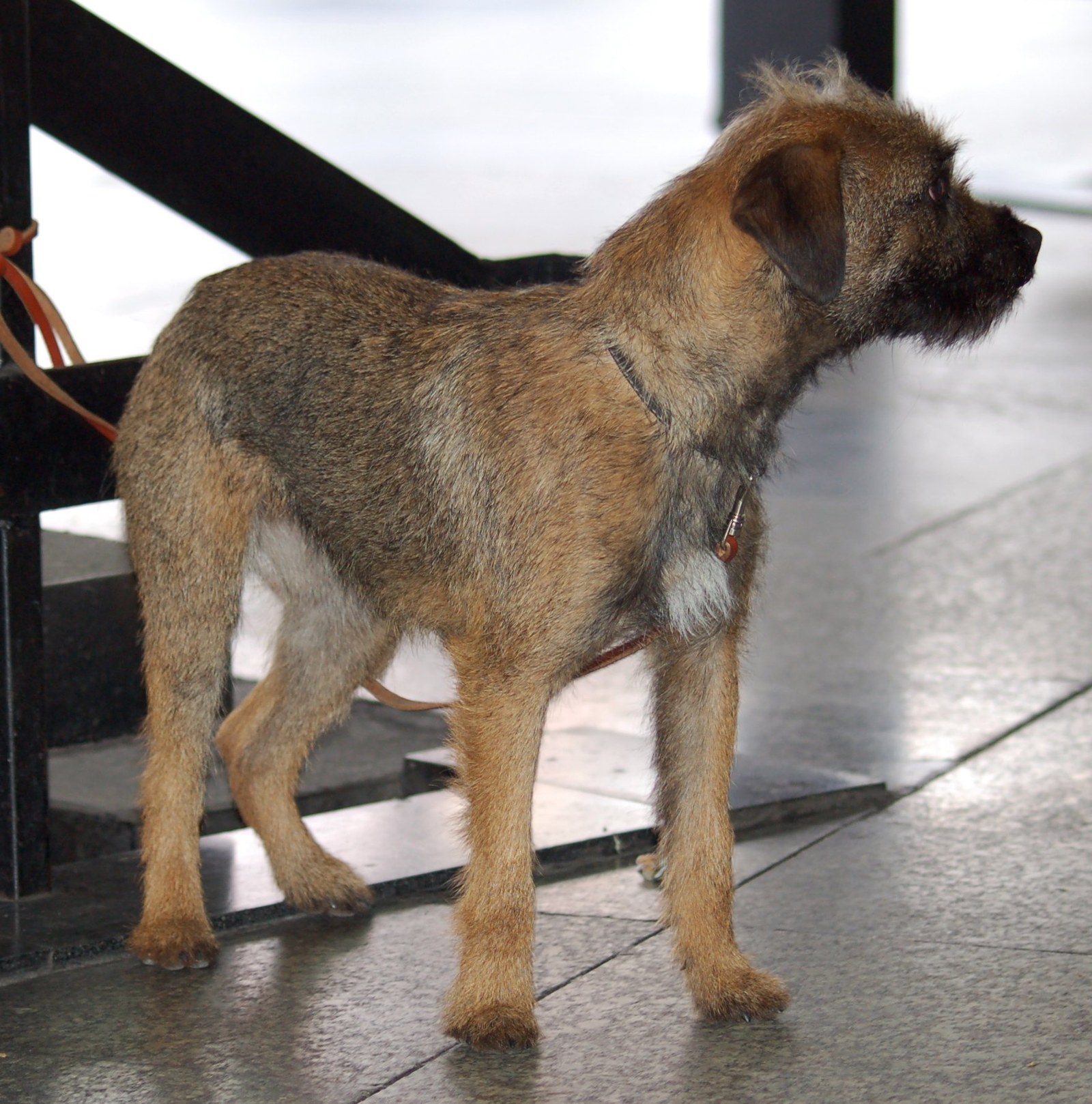

Do you have a better photo of a Border Terrier in the American show ring? If you have a show photo you’d let us use, email it to [email protected] — tell us the dog’s name and the show, and it may be featured here. Please only send photos you took yourself or have the photographer’s permission to share, and tell us the photographer’s name.
1. Breed at a glance
The Border Terrier is a tough, no-frills working terrier in a small package — plucky, happy, and affectionate, and popular as a pet in town and country. The AKC calls the wiry coat an easy keeper, and the breed’s reputation is a dog that works hard in the field and settles happily into family life. (AKC, Border Terrier.)
- AKC group
- Terrier; recognized 1930
- Size
- Dogs 13–15½ lb; bitches 11½–14 lb; height at the withers slightly greater than the length from withers to tail
- Coat & color
- Hard, dense, wiry double coat; red, grizzle and tan, blue and tan, or wheaten
- Lifespan
- 12–15 years
- Temperament
- Affectionate, obedient, easily trained; hard as nails in the field
- Parent club
- Border Terrier Club of America
2. History
The Border Terrier comes from the border country between England and Scotland — the Cheviot Hills — where it worked with the Border Hunt and the other foxhound packs. It was bred to have legs long enough to keep up with horses and hounds, and a body narrow enough to crawl into a fox’s burrow and bolt it. Before it had its modern name it was known as the Coquetdale Terrier or the Redesdale Terrier, after the valleys where it was worked. (Sources: Wikipedia, Border Terrier; Hill’s Pet, Border Terrier.)
The first Border Terrier registered with The Kennel Club was The Moss Trooper, a dog sired by Jacob Robson’s Chip in 1912 and registered in the Any Other Variety listing in 1913. The Kennel Club rejected the breeders’ application for recognition in 1914, but The Border Terrier Club was formed on June 24, 1920, with Jasper Dodd as its first president, and on September 1, 1920, the club applied for a separate register for the breed — both applications were accepted that same month. The first standard was written by Jacob Robson and John Dodd. (Sources: Wikipedia, Border Terrier; EasyPetMD, Border Terrier.)
In the United States, the AKC recognized the breed in 1930 — only five Border Terriers were registered that year, none in 1931, and twelve in 1932. The Border Terrier Club of America was formed in 1949, with ten members, to protect the breed’s natural instincts and characteristics; its mission, then and now, is to keep the Border Terrier as much like the original working dog as possible. The AKC approved a revised breed standard in March 1950. (Sources: Scottish at Heart, History of the Border Terrier; EasyPetMD, Border Terrier; 101DogBreeds, Border Terrier.)
3. The standard and why it is written that way
The standard’s first line is the whole breed in one sentence: an active terrier of medium bone, strongly put together, suggesting endurance and agility, but rather narrow in shoulder, body and quarter. (AKC, Official Standard of the Border Terrier, approved March 14, 1950; reformatted July 13, 1990.)
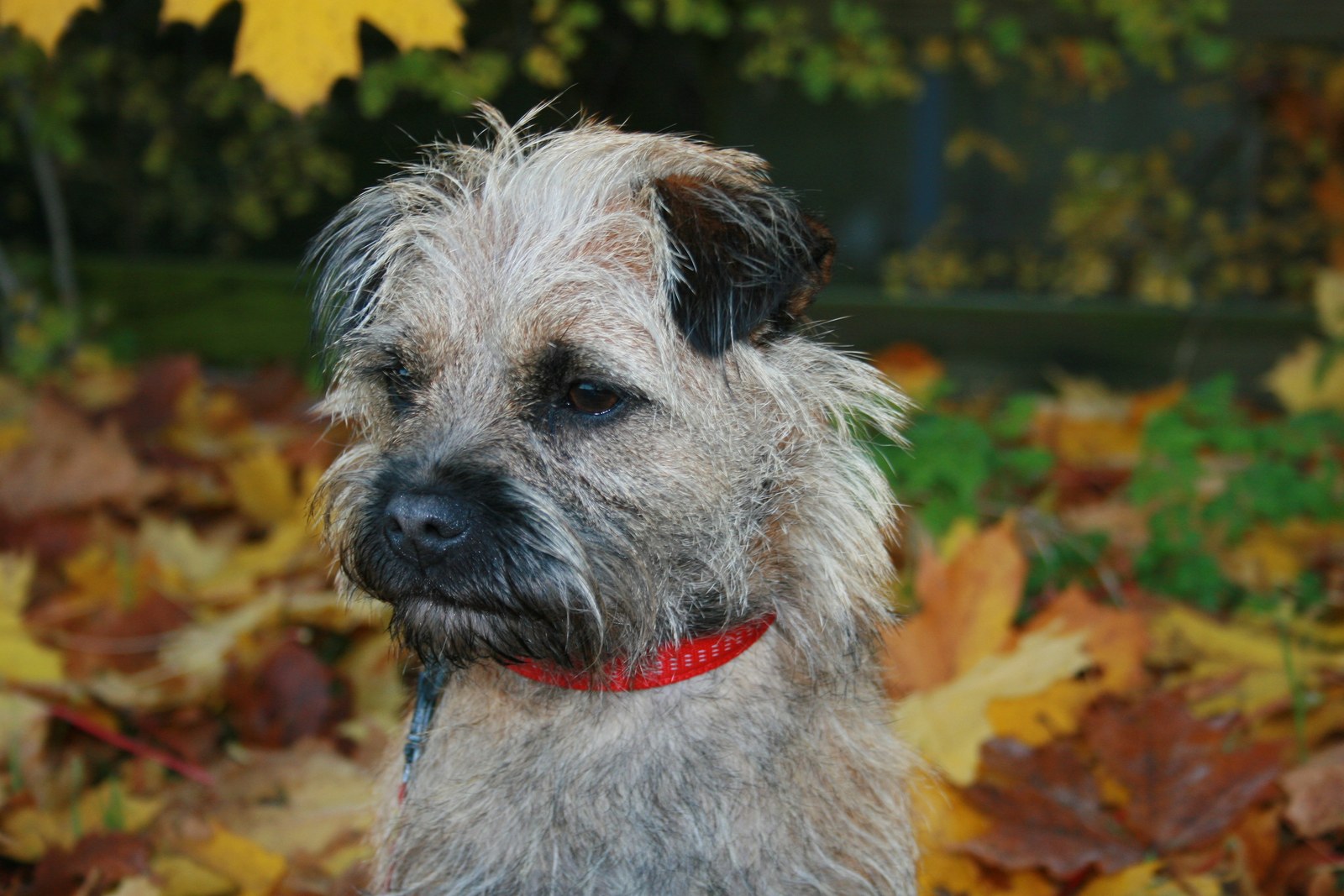
- Head — like that of an otter: moderately broad in skull, with a short muzzle, a dark nose, and small ears that fold forward close to the cheek. Eyes dark, full, and keen in expression. A dark muzzle is characteristic and desirable. Whiskers few and short.
- Size & body: dogs 13 to 15½ pounds, bitches 11½ to 14 pounds, in hard-working condition. The proportions should be that the height at the withers is slightly greater than the distance from the withers to the tail — by possibly 1 to 1½ inches in a 14-pound dog. Of medium bone, strongly put together, rather narrow in shoulder, body and quarter. The tail is naturally moderately short, thick at the base and tapering.
- Coat: hard, dense and wiry, with a close undercoat — a weatherproof working coat, not a show coat. It is what lets the dog work through bramble and wet ground and come out of it.
- Color: red, grizzle and tan, blue and tan, or wheaten. A small amount of white may be allowed on the chest but white on the feet should be penalized.
- Temperament (in the standard): in the field he is hard as nails, game as they come and driving in attack; at home he is affectionate, obedient, and easily trained.
Why it is written that way. The standard is a working standard, and almost every line in it is about work. The narrow body is not a fashion choice — it is the width of a fox’s earth. The height-to-length proportion keeps the dog leggy enough to run with hounds. The hard, dense, wiry coat with a close undercoat is weatherproofing, not decoration. The otter head, the dark muzzle, the small folded ears — all of it is a dog built to go to ground. And the color rule is a working rule too: only four colors are allowed, and white on the feet is penalized, because a working terrier is judged as a working terrier, not as a pattern.

4. Temperament & living with one
Borders are atypical terriers in one important way: they were bred to run peacefully with foxhounds, so they were bred for a less dog-aggressive temperament than terriers that hunted on their own. The standard says the dog is, in the field, hard as nails, game as they come and driving in attack — and at home, affectionate, obedient and easily trained. (Source: Hill’s Pet, Border Terrier.)
- With its own people: a dog that wants to be part of the family, not a kennel dog. If you are looking for just a part-time dog or one to put in the kennel, the border is not for you. They want to be with you.
- With other dogs: bred to work and live peacefully with other dogs. Lively, they enjoy playing with children, and they are affectionate, mild-mannered dogs that aim to please their owners, which makes them easy to train.
- With small animals: a hunting terrier with a strong prey drive. It can be a tricky companion for cats or small pets, and it needs a real plan for them, not hope.
- Training: intelligent and easy to train, but bred to think for himself, which can be both his most endearing and most frustrating quality. Early socialization and consistent, positive training matter.
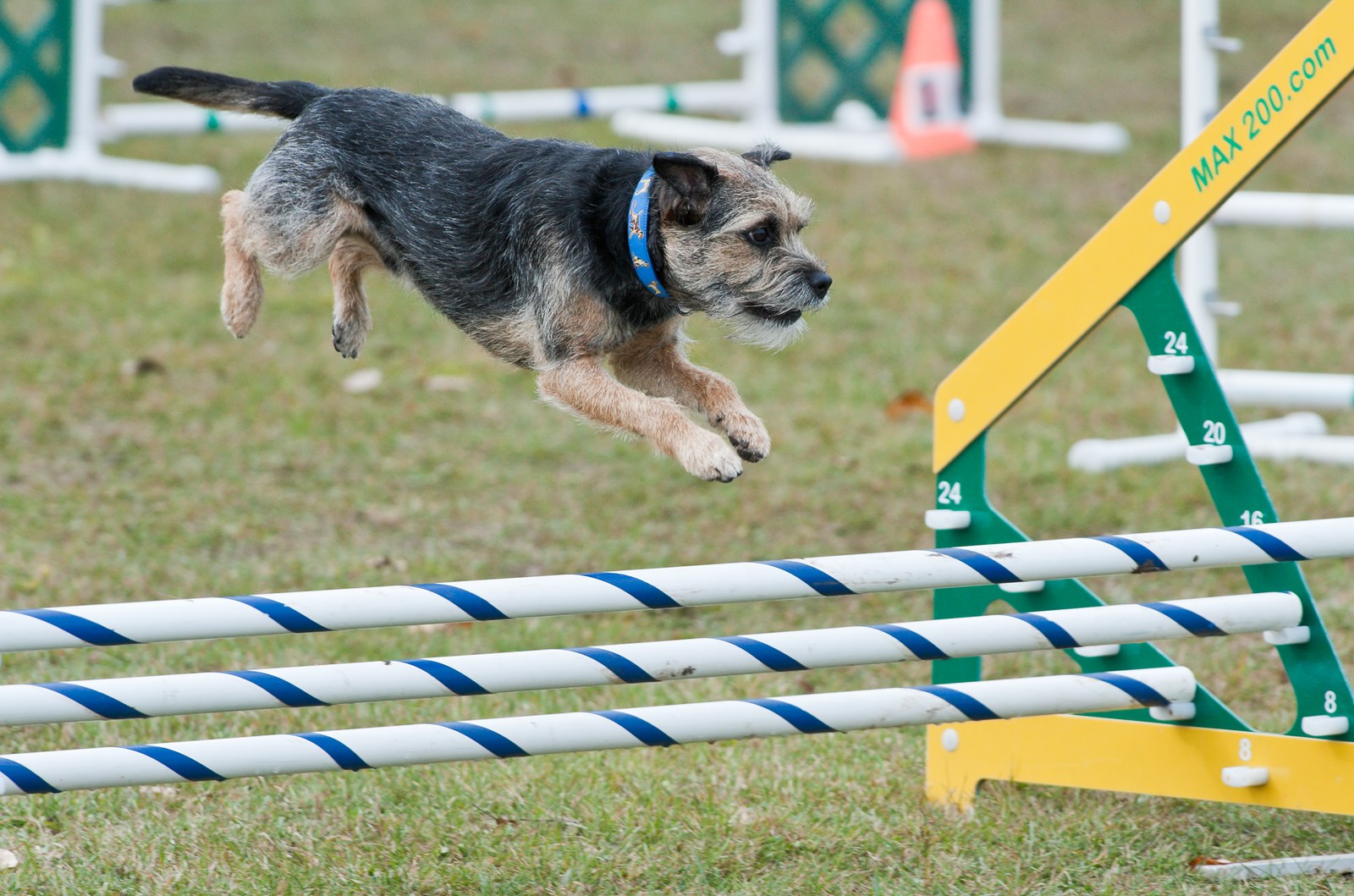
- Exercise: active dogs that love and need regular exercise in fairly large quantities. A Border that works is a contented dog — and the breed’s work is still there to be done: Border Terriers have earned more AKC Earthdog titles than any other terrier, and they excel at agility, scent work, and tracking.
- Digging: they were trained to follow fox to the ground, so expect a determined digger. A securely fenced yard matters, and so does a job to do.
- First-dog honesty: a good first dog for an active household that will include it in everything. A poor fit for a household that leaves a dog alone for long periods — Borders do not like to be left alone.

5. Grooming
The wiry coat is an easy keeper — the AKC’s words. It is a hard, dense, wiry double coat with a close undercoat, and it needs hand-stripping, not clipping, to keep its texture.
- Brushing: brush the coat through weekly. Borders do not require frequent bathing, and toweling off is usually enough when wet and dirty.
- Hand-stripping: the coat is maintained by hand-stripping — pulling the dead outer coat out by hand as it loosens, a few times a year — rather than clipping. Clipping softens the wiry texture, changes the color, and takes away the coat’s weatherproofing. A stripped coat is the show coat.
- Bathing: bathe only when the dog is actually dirty. The wiry coat sheds dirt and dries quickly.
- Ears & teeth: check the small folded ears regularly and keep them clean and dry. Brush the teeth — terrier mouths crowd, and dental care matters.
- Nails: trim regularly, and keep the feet tidy.
6. Health testing
The parent club’s health-testing recommendations, published by the AKC and the OFA, are the starting point. Border Terriers are generally healthy dogs with a 12–15-year lifespan, and the breed’s CHIC program covers five tests.
- Patella Evaluation (CHIC): the kneecaps. Patellar luxation, where the kneecap slips out of place, is the most common orthopedic problem in small terriers, and the parent club asks for a patella evaluation on every breeding dog.
- Hip Evaluation (CHIC): the hips. X-rays evaluated by the OFA or PennHIP, for hip dysplasia.
- Cardiac Exam (CHIC): the heart. A basic cardiac examination by a board-certified cardiologist, or an advanced cardiac exam (echocardiogram) if a murmur is detected.
- Ophthalmologist Evaluation (CHIC): the eyes. An examination by a board-certified veterinary ophthalmologist, because inherited eye disease is a concern in the breed.
- Spongiform Leukoencephalomyelopathy (SLEM) — DNA Test (CHIC): also called Shaking Puppy Syndrome, a fatal inherited disease of the nervous system. It is recessive, so a puppy is only affected if it inherits the gene from both parents — and a breeder who tests and never pairs two carriers cannot produce affected puppies. The test is a one-time DNA test.
Ask the breeder for the parents’ patella, hip, cardiac, eye, and SLEM results, and look them up in the OFA database yourself before you commit. (Sources: AKC, Terrier Group Health Testing Requirements; OFA, CHIC Program.)
7. The annual Border Terrier specialty dog show
A specialty is the breed’s All-Star show — its Super Bowl. Once a year, the best Border Terriers from across the country, and often from around the world, come together in one place.
The Border Terrier Club of America’s national specialty: one national event each year, with conformation, sweepstakes, and junior showmanship. The 2026 national: June 3–4, at the Cheshire Fairgrounds in Swanzey, New Hampshire, with 131 competitors and 148 entries in conformation. The 2025 national: July 1–2, at the Cowlitz County Fairgrounds in Longview, Washington, with 150 competitors and 157 entries. The 2027 national: June 4–5, at the Douglas County Fairgrounds Event Center in Castle Rock, Colorado.
The standard, in brief: an active terrier of medium bone, strongly put together, suggesting endurance and agility, but rather narrow in shoulder, body and quarter — built to follow a horse and go to ground after a fox. Dogs 13 to 15½ pounds, bitches 11½ to 14 pounds. Coat hard, dense and wiry, with a close undercoat. Colors: red, grizzle and tan, blue and tan, or wheaten — a small amount of white may be allowed on the chest, but white on the feet should be penalized, and a dark muzzle is characteristic and desirable.
The 2026 National Specialty — Wednesday, June 3, and Thursday, June 4, 2026, at the Cheshire Fairgrounds, 247 Monadnock Highway, Swanzey, New Hampshire. Entry: 148 entries / 131 competitors in conformation. Entries opened March 11, 2026; entries closed May 6, 2026. Event Chair: Holly Woodward. Superintendent: Jim Rau Dog Shows. The national closed a week of events running May 30–June 4, with puppy and veteran sweepstakes on Tuesday, June 2. (Sources: AKC event search, event 2026205113; 2026 BTCA National Specialty Judging Program (Jim Rau Dog Shows).)
National specialty judge: Ms. Julie LaFreniere — conformation. Sweepstakes judge: Mr. Duane Pulford — puppy sweepstakes and veteran sweepstakes (Tuesday, June 2). Junior Showmanship judge: Ms. Lori Pelletier. Judging program counts: 80 Border Terriers on Wednesday, 75 on Thursday, with 55 in Best of Breed competition. (Sources: AKC event search, event 2026205113; 2026 BTCA National Specialty Judging Program (Jim Rau Dog Shows).)
Results (2026 national). Best of Breed: CH Dobereich’s Hawthorne at Foxrun JE (dog, owner Jen Holder). Best of Opposite Sex: GCHS CH Duskland’s Dress Has Pockets at Cedar Run (bitch). Winners Dog: Duskland’s Rockin’ My Harris Tweed Jacket; Winners Bitch and Best of Winners: Jewetthill Princess Ahleia at Bandersnatch. Select Dog: GCH CH Steel Ridge You Got Another Thing Coming; Select Bitch: CH Hideaways Mum’s The Word. Awards of Merit: GCH CH Tilted Kilt Bada Bing, Bada Boom; GCHP2 CH Roschel Foxrun Thistle Do; GCHB CH Coldstream’s Livin’ The Fairy Tail Life At Dewey; GCHB CH Greywoode Inca Dove JE; Full Throttle’s Crown Jewel!; GCHS CH Bridan Highland Toddy At Thistle Do; CH Sunkist Starry Starry Knight. Best Junior Handler: Samantha Michel; Reserve Best Junior Handler: Mary Dominik Zharova. (Sources: BTCA 2026 National Specialty Conformation Results; BTCA 2026 results.)
The 2027 National Specialty: Friday, June 4, and Saturday, June 5, 2027, at the Douglas County Fairgrounds Event Center, 500 Fairgrounds Drive, Castle Rock, Colorado. Entries open March 24, 2027; entries close May 19, 2027. Event Chair: Darcy Bartholomay. Superintendent: Emerald Coast Dog Shows. Conformation judge: Mrs. Tracey Jane Anscombe. Junior Showmanship judge: Mrs. Louise Leone. Sweepstakes judge not yet published as of November 2026. A 4–6 Month Beginner Puppy competition runs Thursday, June 3, and an obedience trial runs Wednesday, June 2, at the same venue. (Sources: AKC event search, event 2027205111; AKC Upcoming National Specialties.)
Past national specialties: 2025 · 2024 · 2023
Border Terrier Club of America — btcoa.org
8. Regional specialties through the year: smaller regional shows
The national is the anchor, but the breed’s year also runs through regional specialties — smaller regional shows, not the national — held around the country through the year. These are the 2026 regionals verified from the club’s show schedule so far:
Eleven regional Border Terrier specialties verified for 2026, from the Border Terrier Club of America’s show schedule:
- Orange Coast Border Terrier Club specialties — January 2–4, 2026, Indio, California: with the Desert Empire Terrier Club of Southern California and the Kennel Club of Palm Springs. Judges: David A. Alexander, Gayle Denman, Colin Bohler.
- Border Terrier Club of Central Arizona specialties — January 29–31, 2026, Phoenix, Arizona: with the Sun Country Terrier Club and the Sahuaro State Kennel Club.
- Border Terrier Club of America specialty — Saturday, January 31, 2026, Phoenix, Arizona: with the Sahuaro State Kennel Club. Judge: Duff Harris. Sweepstakes judge: Gail Harlamoff. Superintendent: Onofrio Dog Shows.
- Border Terrier Club of St. Louis independent specialties — March 6–8, 2026, Wentzville, Missouri: Judges: Peggy Beisel-McIlwaine, Stuart Cairns, Meghan Barnes.
- Border Terrier Club of Dallas independent specialties — March 27–28, 2026, Azle, Texas: Judges: Terri Cournoyer, Gayle M. Denman.
- Barbary Coast Border Terrier Club specialties — April 9–10, 2026, Lodi, California: with the Northern California Terrier Association. Judges: Gayle M. Denman, Pete Blair.
- Golden Triangle Border Terrier Club specialty — April 24, 2026, Morgantown, West Virginia: Judge: Glenn Snyder.
- Border Terrier Club of Philadelphia specialty — May 16, 2026, West Friendship, Maryland: with the Ann Arundel Kennel Club. Judge: Dale R. Schuur.
- Border Terrier Club of Metro Detroit specialties — July 3–4, 2026, Monroe, Michigan: Judges: Alison Ibbitson, Luis Manuel Benitez. A designated specialty ran July 4 at the Ann Arbor Kennel Club (Rebecca P. Poole).
- Border Terrier Club of Canada regional specialty — July 18, 2026, Welland, Ontario, Canada: Judge: Paula Pressler-Tash.
- Border Terrier Club of America specialty — Thursday, October 29, 2026, Louisville, Kentucky: Judge: Humberto Lara.
The BTCA also supported the Border Terrier entry at Hatboro (October 2) and Devon (October 3) — supported entries, not specialties. AKC event numbers for these 2026 regional specialties were not verified as of November 2026.
The 2027 regionals announced so far:
Six regional Border Terrier specialties announced for 2027 so far, from the Border Terrier Club of America’s show schedule:
- Border Terrier Club of America specialty — Saturday, February 6, 2027, Phoenix, Arizona: with the Sahuaro State Kennel Club. Judge: Gayle Denman. Sweepstakes judge: Sheila Salmon. Superintendent: Onofrio Dog Shows.
- Border Terrier Club of St. Louis independent specialties — March 12–14, 2027, Wentzville, Missouri: Judges: Tyrone Probert, Gayle Denman, Jane Messineo Lindquist.
- Border Terrier Club of Dallas independent specialties — April 2–4, 2027, Azle, Texas: Judges: German Otero, Dale Schuur, Crissy Brown, Cleo Parker.
- Barbary Coast Border Terrier Club specialties — April 15–18, 2027, Lodi, California: with the Northern California Terrier Association and the Sacramento Kennel Club. Judges: Terri Cournoyer, David Alexander, Mary Remer, Jon Cole.
- Ft. Dearborn Border Terrier Club and Illiana Border Terrier Fanciers specialties — May 28–31, 2027, Bloomington, Illinois: with the Illinois Valley and Corn Belt Kennel Clubs. Judges: Candy Aron, Desmond Murphy, Diane Foote, Ginny Wendland, Carl Pew.
- Barbary Coast Border Terrier Club specialties — August 27–28, 2027, Santa Barbara, California: with the Moorpark and Santa Barbara Kennel Clubs. Judges: Tony Ingram, Carlos Otero.
The 2027 schedule also lists specialties from the Mile High Border Terrier Club (Greeley, Colorado), the Knickerbocker Border Terrier Club (Bridgewater, New Jersey), the Border Terrier Club of the Southeast (McDonald, Tennessee), the Border Terrier Club of Tampa Bay (Orlando, Florida), and a BTCA specialty at Montgomery County (Macungie, Pennsylvania); dates for those were not confirmed in the sources consulted as of November 2026. AKC event numbers for the 2027 regional specialties were not verified as of November 2026.
More regional specialties will be added here as their programs are verified — this section is built from show data, not guesswork. Browse upcoming show weekends →
9. Clubs
The Border Terrier Club of America is the parent club — the breed’s national organization, and the club that runs the national specialty. Founded in 1949 with ten members, its aim is to protect the natural instincts and characteristics of the breed and to keep the Border Terrier as much like the original working dog as possible. (Sources: Border Terrier Club of America; EasyPetMD, Border Terrier.)
- Border Terrier Club of America (parent club) — btcoa.org. National specialty, breeder referral, health programs, show schedule.
- Regional clubs — from the BTCA show schedule: Border Terrier Club of Central Arizona; Border Terrier Club of St. Louis; Border Terrier Club of Dallas; Barbary Coast Border Terrier Club; Golden Triangle Border Terrier Club; Border Terrier Club of Philadelphia; Border Terrier Club of Metro Detroit; Border Terrier Club of Canada; Mile High Border Terrier Club; Knickerbocker Border Terrier Club; Border Terrier Club of the Southeast; Border Terrier Club of Tampa Bay; Ft. Dearborn Border Terrier Club; Illiana Border Terrier Fanciers.
- AKC Marketplace — marketplace.akc.org/puppies/border-terrier — for puppies from AKC-registered breeders. The parent club’s breeder referral is the better first step.
10. Rescue
Most Border Terriers in rescue are adults, and most come through a breed-only rescue rather than a shelter.
- North American Border Terrier Welfare (NABTW) — the breed rescue in the United States: it obtains Border Terriers that are unwanted, impounded, neglected, abused, or in other unpleasant situations, gives them temporary foster care, basic health care, and temperament evaluation, and places adoptable dogs in loving, permanent homes. borderterrierrescue.com. (Source: Border Terrier Canada, Rescue.)
- Canadian Border Terrier Welfare (CBTW) — the Canadian rescue. For many years it operated as an extension of NABTW and is now a separate organization. Dogs come from animal welfare shelters, animal control pounds, off the streets, or owner surrenders; puppies are very rare — mature adults and sometimes seniors are more likely. Adoption fees vary by the dog’s age, from $0 to $1,000. cbtwelfare.org. (Source: Canadian Border Terrier Welfare.)
- AKC Rescue Network — the AKC’s rescue directory also lists Border Terrier rescue contacts: akc.org/akc-rescue-network.
Rescue dogs are almost always adults, and their temperaments are already visible — which matters in a breed that thinks for itself. A rescue will want to know your home, your schedule, and your other animals before it places a dog with you. That is the process working, not a delay.
11. Breeder vs. rescue: honest guidance
The honest version, before you decide:
- There is one size. Dogs 13 to 15½ pounds, bitches 11½ to 14 pounds. Anyone selling an extra-small or extra-large Border Terrier is selling outside the standard, not a variety.
- Color is not a rarity. Only four colors are allowed — red, grizzle and tan, blue and tan, wheaten — and white on the feet is penalized. A “rare” black, chocolate, or white Border Terrier is a dog that cannot be shown, sold as a rarity.
- Ask for the five health tests. Patella, hip, cardiac, eye, and the SLEM DNA test — and look the parents up in the OFA database yourself. A breeder who has done the tests will be glad to show them; a breeder who has not will change the subject.
- Be honest about the prey drive and the digging. A Border Terrier will chase small animals and will dig. Cats, rabbits, and unfenced yards need a real plan, not hope.
- Rescue adults are a real option. NABTW rehomes adults across the country, and an adult’s temperament is already visible — which matters in a breed that thinks for itself.
12. Claim this page
Do you own a Border Terrier? Have a photo from a national specialty or a regional specialty, or a correction to something on this page? Border Terrier Club of America members, breeders, and exhibitors — and anyone with a standard-conforming dog — can help this page get better. See the photo note under the photo above for how to send a picture, or contact us with a correction.
Sources
- AKC, Official Standard of the Border Terrier (PDF) — images.akc.org/pdf/breeds/standards/BorderTerrier.pdf
- AKC, Border Terrier breed page — www.akc.org/dog-breeds/border-terrier
- AKC, Terrier Group Health Testing Requirements — www.akc.org/breeder-programs/breed-health-testing-requirements/terrier-group-health-testing-requirements
- AKC, Upcoming National Specialties — www.apps.akc.org/apps/events/conformation/national_specialties.cfm
- AKC event search, event 2027205111 (2027 national) — www.apps.akc.org/apps/events/search/index_results.cfm
- AKC event search, event 2026205113 (2026 national) — www.apps.akc.org/apps/events/search/index_results.cfm
- AKC event search, event 2025205109 (2025 national) — www.apps.akc.org/apps/events/search/index_results.cfm
- AKC event search, event 2024205106 (2024 national) — www.apps.akc.org/apps/events/search/index_results.cfm
- AKC event search, event 2023205102 (2023 national) — www.apps.akc.org/apps/events/search/index_results.cfm
- Border Terrier Club of America — btcoa.org
- BTCA, 2026 National Specialty Conformation Results — btcoa.org/wp-content/uploads/2026/06/2026-BTCA-Conformation-Results.pdf
- BTCA, 2026 results — btcoa.org/portfolio-items/2026
- 2026 BTCA National Specialty Judging Program (Jim Rau Dog Shows) — www.raudogshows.com/wp-content/uploads/20260602-Border-Terrier-reduced.pdf
- 2023 BTCA National Specialty Judging Program (Foy Trent Dog Shows) — foytrentdogshows.com/forms/JPs/JP2023/JP_2023_Border_Terrier_Club_of_America.pdf
- 2023 BTCA National Specialty Premium List (Foy Trent Dog Shows) — foytrentdogshows.com/forms/PLs/PL2023/PL_2023_Border_Terrier_Club_of_America.pdf
- Border Terrier Club of America, 2026 Show Schedule — btca.com/wp-content/uploads/2026/06/2026-Schedule-06182026.pdf
- Border Terrier Club of America, 2027 Show Schedule — btca.com/wp-content/uploads/2026/08/2027-Schedule.pdf
- Richard Reynolds, “Everything’s Coming Up Rosie’s” (Dog Writers Association) — dogwriters.org/wp-content/uploads/gravity_forms/41-5c4b9d90b5903b1f60283ce4f5ba214f/2025/10/F-Everythings-Coming-Up-Rosies-Richard-Reynolds-2-2.pdf
- OFA, CHIC Program — ofa.org/chic-programs
- North American Border Terrier Welfare — www.borderterrierrescue.com
- Canadian Border Terrier Welfare — www.cbtwelfare.org
- Hill’s Pet, Border Terrier — www.hillspet.com.au/dog-care/dog-breeds/border-terrier
- Wikipedia, Border Terrier — en.wikipedia.org/wiki/Border_Terrier
- Wikimedia Commons, File:Border terrier 766 LM.jpg (hero photo) — commons.wikimedia.org/wiki/File:Border_terrier_766_LM.jpg
- Wikimedia Commons, File:Border Terrier Fond Du Lac County Kennel Club.jpg (agility photo) — commons.wikimedia.org/wiki/File:Border_Terrier_Fond_Du_Lac_County_Kennel_Club.jpg
- Wikimedia Commons, File:Border Terrier Image 001.jpg (head photo) — commons.wikimedia.org/wiki/File:Border_Terrier_Image_001.jpg