
Breed profile · Herding Group · the world’s premier sheep herding dog
Border Collie
The Border Collie is the world’s premier sheep herding dog — a medium-sized athlete bred for centuries on the border between Scotland and England to gather and fetch stock with wide sweeping outruns, an intense gaze known as “eye,” and a stalking style of movement. The AKC recognized the breed in 1995, in the Herding Group, after decades of opposition from working-dog advocates who feared show breeding would dilute the working instinct. The Border Collie Society of America is the parent club.
Help us improve it. This is one of ThePetAdvisor’s breed profiles, built from public sources with generous links to the people who actually own this breed’s knowledge. If something’s off or missing, the parent club can claim the page and set it straight — see the bottom of the page.
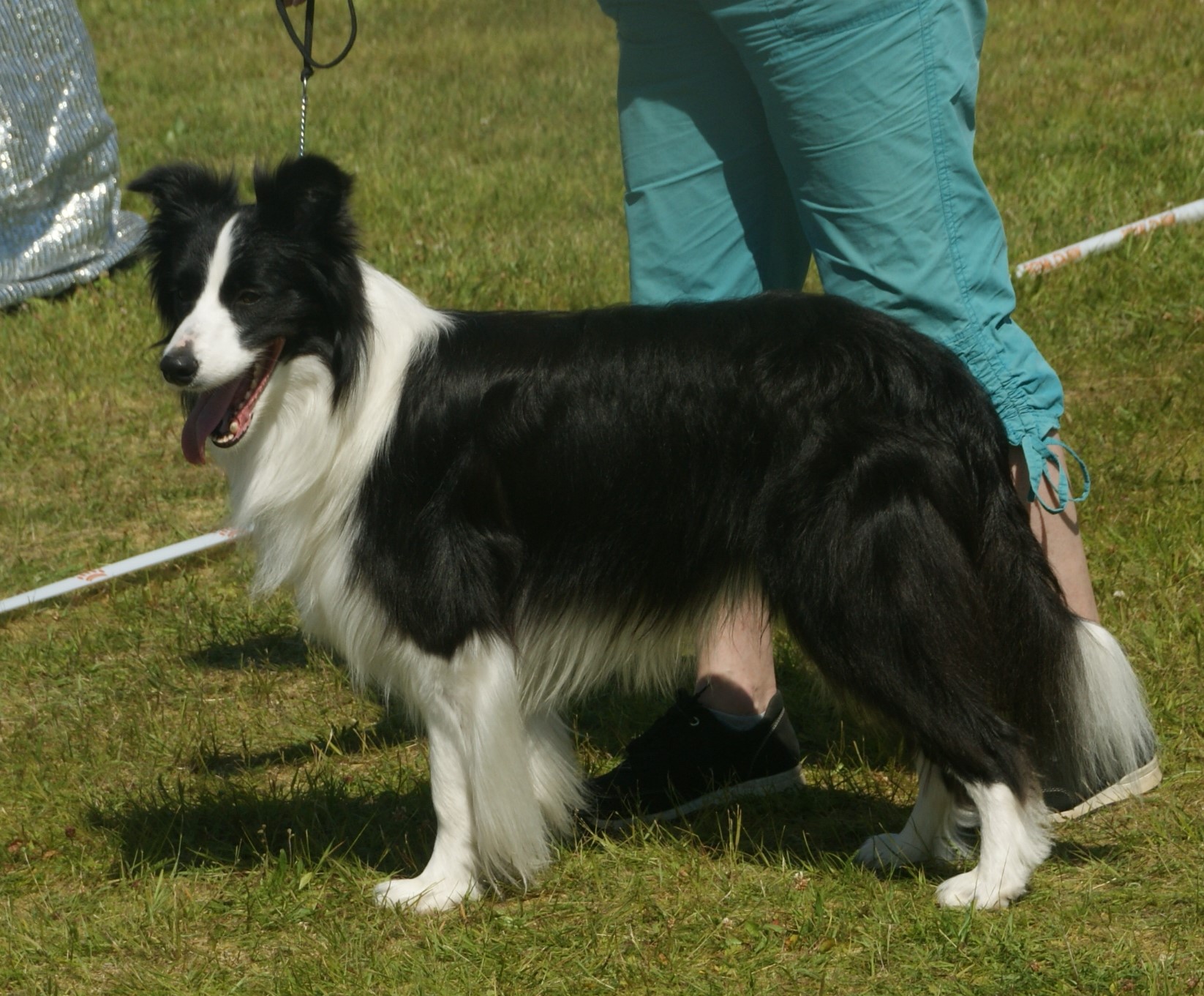

Do you have a better photo of a Border Collie in the American show ring? If you have a show photo you’d let us use, email it to [email protected] — tell us the dog’s name and the show, and it may be featured here. Please only send photos you took yourself or have the photographer’s permission to share, and tell us the photographer’s name.
1. Breed at a glance
Herding Group; recognized by the AKC in 1995
18–22 in at the withers (males 19–22, females 18–21), 30–55 lb
Rough or smooth dense double coat; all colors and markings judged equally, no color preferred
12–15 years (AKC)
Energetic, intelligent, keen, alert, responsive
The Border Collie is a working dog first and a show dog second — the standard says so in its preamble, and the breed’s history says so louder. It is well balanced and medium-sized, hard and muscular, built for effortless movement and endless endurance, with a keen, alert expression the standard calls a very important characteristic of the breed. Any aspect of structure or temperament that would impede the dog’s ability to function as a herding dog should be severely faulted. (Sources: AKC, Official Standard of the Border Collie; AKC, Border Collie.)
2. History
The Border Collie comes from the border country between Scotland and England, where shepherds bred dogs for one job — moving sheep — and judged them on biddable stock sense and the ability to work long days on rugged terrain. The dogs are much older than their name.

- The first trials. The first recorded sheepdog trial was held in 1873 at Bala, Wales. Trials became the way to prove a working dog, and the dogs that won them became the breed.
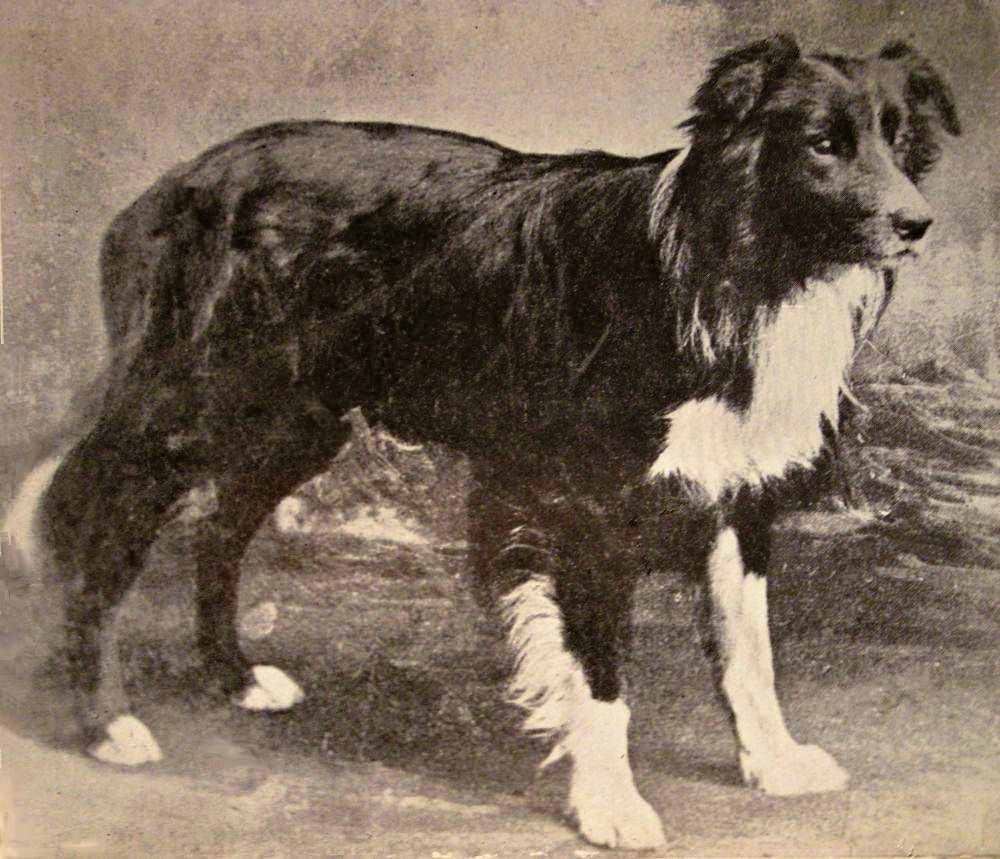
- Old Hemp. The modern breed traces to a single dog: Old Hemp, a tricolor rough-coated sheepdog born in September 1893 in Cambo, Northumberland, bred by Adam Telfer. He worked sheep intensely but quietly — unlike the louder sheepdogs of his day — and was so biddable and so able that he sired more than 200 puppies. Virtually every Border Collie alive today traces back to him, and the International Sheep Dog Society entered him posthumously as number nine in its stud book.
- The registry. The International Sheep Dog Society was founded in 1906 to bring order to the growing trials, and held its first International trial that same year at Gullane Hill in East Lothian, Scotland. Its stud book now holds more than 300,000 entries.
- The name. The term “Border Collie” was coined in 1915 by James Reid, secretary of the International Sheep Dog Society, to distinguish these working sheepdogs from the show Collie, which had already diverged sharply in type.
- Recognition — and opposition. The Kennel Club in Britain recognized the breed in 1976. The AKC put the Border Collie in the Miscellaneous class in 1955 and fully recognized it in 1995, in the Herding Group — a decision the American Border Collie Association and many working-dog advocates opposed, fearing conformation breeding would dilute the working instinct. The ABCA still maintains its own registry, based on working merit.
- The parent club. The Border Collie Society of America is the AKC parent club, and it maintains the breed standard used in conformation.
From a Northumberland hillside to the world’s sheep farms and agility rings, the Border Collie has kept the same job for more than a century: think, watch, and move stock. (Sources: Furry Critter Network, Border Collie — Complete Breed Guide; Rigel Border Collies, History of the Border Collie; AKC, Border Collie.)
3. The standard and why it is written that way
The standard opens with the breed’s origin and its working style, and it never lets go of the work: “The Border Collie originated in the Border country between Scotland and England where the shepherds’ breeding selection was based on biddable stock sense and the ability to work long days on rugged terrain.” The dog it describes is “a well balanced, medium-sized dog of athletic appearance, displaying style and agility in equal measure with soundness and strength.” The current standard was approved January 13, 2004, and has been effective since March 2, 2004.
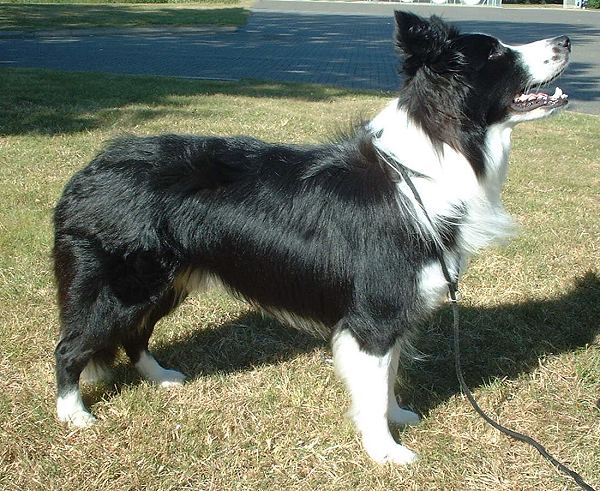

- Size. Height at the withers is 19 to 22 inches for males and 18 to 21 inches for females. The body, from prosternum to point of buttocks, is slightly longer than the height, about 10:9. Bone is strong and medium — lighter bone is preferred over heavy — and overall balance matters more than any absolute measurement. Dogs must be presented in hard working condition; excess body weight is not to be mistaken for muscle or substance. The AKC lists weight at 30 to 55 pounds.
- Head. Expression is intelligent, alert, eager, and full of interest. Eyes are set well apart, of moderate size and oval in shape; the color covers the full range of brown, and dogs with body colors other than black may have noticeably lighter eyes. Blue eyes in dogs other than merle are acceptable but not preferred. Ears are medium, set well apart, one or both carried erect and/or semi-erect. The skull and muzzle are approximately equal in length, the stop is moderate but distinct, and the bite is scissors — complete dentition is required, and missing molars or premolars are serious faults.
- Coat. Two varieties are permissible, and neither is preferred over the other: the rough variety is medium in length, feathered on forelegs, haunches, chest, and underside; the smooth variety is short over the entire body and may have slight feathering. Both are close-fitting, dense, weather-resistant double coats. Seasonal shedding is normal and should not be penalized. Whiskers are untrimmed, and dogs that are overly groomed — trimmed or sculpted — should be penalized.
- Color. The Border Collie appears in all colors or combinations of colors and markings. Solid color, bi-color, tri-color, merle, and sable dogs are to be judged equally, with no one color or pattern preferred over another. White markings may be clear white or ticked to any degree, and random white patches on body and head are permissible but should not predominate. Color and markings are always secondary to physical evaluation and gait.
- Tail and gait. The tail is set on low and is moderately long, with the bone reaching at least to the hock; the ideal carriage is low, with a slight upward swirl at the end like a shepherd’s crook, and a tail curled over the back is a fault. The most used working gaits are the gallop and a moving crouch — a stealthy, stalking trot with minimum lift of the feet and the head carried level with or slightly below the withers. When shown, Border Collies should move on a loose lead and at moderate speed, never raced around the ring with the head held high.
- Temperament in the standard. The Border Collie is energetic, intelligent, keen, alert, and responsive — an intense worker of great tractability, affectionate towards friends but sensibly reserved towards strangers. When approached, it should stand its ground, alert and interested, never showing fear, dullness, or resentment. Any tendencies toward viciousness, nervousness, or shyness are very serious faults.
- Presentation. Honorable scars and broken teeth incurred in the line of duty are acceptable. Excess hair on the feet, hock, and pastern areas may be neatened for the show ring — but the dog should still look like a working sheepdog, not a sculpture.
The color rule is the most important thing to know about the modern standard: because all colors are judged equally, no one can sell you a “rare” color as better, or mark down a color as lesser. Judge the dog, not the shade — and judge it moving, on a loose lead, the way it works. (Sources: AKC, Official Standard of the Border Collie; AKC, Border Collie.)
4. Temperament & living with one
Border Collies are energetic, intelligent, keen, alert, and responsive — and the AKC’s first line about them is that they are remarkably bright workaholics, maybe a bit too amazing for owners without the time, energy, or means to keep them occupied.
- A job, every day. This is the defining need. Herding is the original job, but agility, obedience, rally, flyball, scent work, and trick training all count. A Border Collie with work is calm, settled, and affectionate in the house; one without it will herd the children, chase the cars, dig the yard, and invent games you will not enjoy.
- With children and other dogs. Usually good with children and with other dogs, especially when socialized young — but the herding instinct is real, and small children who run are, to a Border Collie, stock to be gathered. Teach children to stand still and the dog to leave them alone, and supervise until both have learned.
- Reserved, not shy. The standard says the breed may be sensibly reserved towards strangers and should stand its ground when approached. That is not shyness — shyness is a very serious fault — it is a dog that sizes people up before deciding they are friends.
- Exercise is substantial. An hour and a half to two hours of activity a day is the honest baseline, and much of it should be mental: training, problem-solving, and work, not just running. A tired Border Collie is a happy one; a merely walked Border Collie is a fit, frustrated one.
- Apartment dogs — with a caveat. A Border Collie can live in an apartment, but only if the owner commits to serious daily work outside it. Without a yard, the owner becomes the entire exercise program, and skipping a day is not an option.
The honest summary: this is a wonderful dog for an active household that wants a partner for training and sport and can give it a job every day, and a poor fit for a household that wants a dog that takes care of itself. (Source: AKC, Border Collie.)
5. Grooming
Grooming a Border Collie is moderate work — the rough coat needs regular brushing, the smooth coat much less, and neither needs sculpting.
Brush the rough coat two or three times a week, daily during the spring and fall shedding seasons, when the dense undercoat comes out in earnest. The smooth variety needs only a weekly brush. Both coats are weather-resistant double coats, and the dog should be bathed as needed rather than on a schedule. The ears need regular checking, the teeth should be brushed, and the nails kept short — a working dog’s feet matter. In the ring the coat is shown naturally: whiskers are untrimmed, excess hair on the feet, hocks, and pasterns may be neatened, and a dog that is overly groomed, trimmed, or sculpted should be penalized. (Sources: AKC, Border Collie; AKC, Official Standard of the Border Collie.)
6. Health testing
The Border Collie Society of America’s CHIC program sets the health testing a responsible breeder should do — and the results should be recorded with the Orthopedic Foundation for Animals, where anyone can look them up.
- Hips. A hip evaluation — OFA, PennHIP, or OVC — required for a CHIC number, performed after the dog is 24 months old. Hip dysplasia is the breed’s most common structural problem; OFA data shows roughly 8 to 10 percent of evaluated Border Collies dysplastic.
- Eyes. An examination by a board-certified veterinary ophthalmologist, required for a CHIC number, repeated annually until age seven. The exam screens for heritable eye conditions — Collie Eye Anomaly, progressive retinal atrophy, glaucoma — that a DNA test alone cannot catch.
- DNA repository. A DNA sample for the OFA/CHIC DNA Repository is the third CHIC requirement, so future tests can be run on the breed’s gene pool.
- DNA tests breeders should run. Collie Eye Anomaly (CEA), the MDR1 drug-sensitivity mutation, trapped neutrophil syndrome (TNS), and neuronal ceroid lipofuscinosis type 5 (NCL5) all have DNA tests, and responsible breeders test for them.
- Also recommended. OFA elbow, shoulder, heart, and thyroid evaluations are optional submissions, as is a BAER hearing test for congenital deafness. Epilepsy occurs in the breed and has no simple screening test, which is one more reason to ask a breeder what they know about the health of their own lines.
The breed is long-lived — the AKC lists 12 to 15 years — and generally healthy, but it is an athletic dog that works hard, so sound hips and sound eyes are not optional extras. A CHIC number confirms the testing was done and published; it is not a guarantee of health, and it does not replace asking the breeder what they know about the health of their own lines. (Sources: Border Collie Society of America, BCSA Health Statement (October 2016); Vetstreet, Border Collie; AKC, Border Collie.)
7. The annual Border Collie specialty dog show
A specialty is the breed’s All-Star show — its Super Bowl. Once a year, the best Border Collies from across the country, and often from around the world, come together in one place.
The Border Collie Society of America’s national specialty: one national event each year, with conformation, sweepstakes, futurity, obedience, rally, agility, herding, and junior showmanship, usually a multi-day week in the fall at Purina Farms in Gray Summit, Missouri. The 2026 national: October 1–4, with 157 dogs and 166 entries in conformation on the national days. The 2027 national: not yet announced as of November 7, 2026.
The standard, in brief: a well-balanced, medium-sized dog of athletic appearance, 18 to 22 inches at the shoulder, with two coat varieties — rough and smooth — and all colors and markings judged equally, no one color preferred. The tail is set on low, and the gait is a balanced, free trot with minimum lift of the feet, the head carried level with or slightly below the withers, on a loose lead at a moderate speed — never raced around the ring.
The 2026 National Specialty — Thursday, October 1–Sunday, October 4, 2026, at the Purina Farms Event Center, 300 Checkerboard Loop, Gray Summit, Missouri 63039, under the theme “Shoot for the Stars.” Dogs were judged Friday, October 2, and bitches and Best of Breed on Saturday, October 3, with the parent specialty closing the week on Sunday, October 4. Entries opened Wednesday, July 15, 2026, at 8:00 a.m. PT and closed Wednesday, September 2, 2026, at 8:00 a.m. PT. Event Secretary: Susan Bleckley, c/o DogZibit. Conformation Chair: Diana Smith. The national drew 157 dogs and 166 entries (157 Ent — 75d — 82b; 157 competitors). AKC event 2026507021. (Sources: 2026 premium list (Border Collie Society of America, hosted by ThePetAdvisor); AKC event search, event 2026507021.)
National specialty judge: Ms. Linda Robey — conformation (Regular Class Dogs Friday, Regular Class Bitches and Best of Breed Saturday). Sweepstakes judge: Ms. Ellie Allen Cook (Friday, October 2, 2026). Futurity judge: Mr. Billy Rodriguez Jr (Thursday, October 1, 2026). Junior Showmanship judge: Mrs. Katherine Halton Berns (Friday, October 2, 2026; 8 entries, 6 competitors). Obedience and rally judges: Mrs. Loretta Lazzara and Ms. Marina Pavlovsky. Best Junior Handler: Keagan Stanton; Reserve Best Junior Handler: Madelyn Cartwright. Up to ten Awards of Merit were offered on Saturday, and Reserve Winners Dog and Reserve Winners Bitch could earn a three-point major if the conditions were met. Saturday’s national winners (Best of Breed, Best of Opposite Sex, Best Bred By Exhibitor, Awards of Merit, and Selects) were eligible for Crufts 2027/2028 as United States International qualifiers. (Sources: 2026 premium list (Border Collie Society of America, hosted by ThePetAdvisor); AKC event search, event 2026507021.)
Results (2026 national). Best of Breed: GCHG Sporting Fields Vintage HSAs (“Mia”), handled by Amanda Giles, owned by Jeff & Vicky Scofield and co-owners; she also won Best Bred By Exhibitor and earned her Grand Champion Gold with the win. Reserve Winners Bitch was “Bethany,” who finished her championship (registered name not confirmed in an official source). Best of Opposite Sex, Best of Winners, Winners Dog, Winners Bitch, and Best in Sweepstakes were not confirmed in an official source as of November 7, 2026. (Sources: Victoria Scofield, 2026 national win (Facebook, October 7, 2026); Debbie Butt, Mia wins the 2026 National Specialty (Facebook, October 4, 2026); Amanda Giles, Mia (GCHS Sporting Fields Vintage HSAs) advertisement (Facebook, March 28, 2026).)
The 2027 National Specialty had not been announced as of November 7, 2026. The AKC’s Upcoming National Specialties list carries no Border Collie Society of America entry, and no date, venue, or judge had been published by the club. Dates, venue, and judges will be added here when they are announced. (Source: AKC, Upcoming National Specialties.)
Past national specialties: 2025 · 2024
Border Collie Society of America — bordercolliesocietyofamerica.com
8. Regional specialties through the year: smaller regional shows
The national is the anchor, but the breed’s year also runs through regional specialties — smaller regional shows, not the national — held around the country, including the regional specialties that run with the national. These are the 2026 regionals verified from club and AKC sources so far:
One regional Border Collie specialty verified for 2026, closing national specialty week at Purina Farms in Gray Summit, Missouri:
- Border Collie Society of America parent specialty (regional specialty) — Sunday, October 4, 2026, Gray Summit, Missouri: at the Purina Farms Event Center (AKC event 2026507024). Judge: Mr. Raymond Filburn. The regional drew 129 dogs and 143 entries (129 Ent — 61d — 68b; 129 competitors). Best of Breed: GCHP My Soul I’ll Never Sell DH By FMA (“Aladdin”), handled by David Harper, owned by D M Baletka & J Yarling. Best Junior Handler: Madelyn Cartwright; Reserve Best Junior Handler: Frano Marquez Guillermo. Junior Showmanship judge: Mrs. Robyn Powley. Reserve Winners Dog was “Paddington” (Twin Silos Can Ewe Bear It), who finished his championship.
Past regional specialties: 2025 · 2024
More regional specialties will be added here as their programs are verified — this section is built from show data, not guesswork. Browse upcoming show weekends →
9. Clubs
The parent club is the Border Collie Society of America (BCSA), at bordercolliesocietyofamerica.com — the club that runs the national specialty, publishes the breed’s health guidance, and keeps the rescue program. The 2026 president is Diana Smith, and the corresponding secretary is Chylie Sweeney.
Regional specialty clubs verified in club sources during this build:
- Bay Colony Border Collie Club (Massachusetts)
- Border Collie Club of Greater Los Angeles
- Heartland Border Collie Club of Illinois
- Kentuckiana Tartan Border Collie Club (Louisville, Kentucky)
- Nutmeg Border Collie Club (Connecticut)
Regional clubs run the regional specialties listed in section 8 and are the best first contact for anyone looking for a breeder, a local event, or a rescue contact. The American Border Collie Association is the working registry, not a conformation club — it registers dogs on working merit and opposed AKC recognition. (Sources: Border Collie Society of America; Border Collie Society of America, Board of Directors; Border Collie Society of America, Affiliated Clubs.)
10. Rescue
Border Collies come into rescue for the most predictable reason in dogs: someone got the smartest breed in the world and discovered what that actually costs in time and energy. The breed has a strong rescue network, and the parent club runs its own program. Groups verified for this page:
- Border Collie Society of America Rescue. The parent club’s rescue program, run by its Rescue Committee (chair Linda Ramas), which coordinates with BCSA-affiliated rescue groups and runs a rescue grant program. Contact through the club at bordercolliesocietyofamerica.com.
- Arizona Border Collie Rescue (AZBCR). Tempe, Arizona, at azbcr.org.
- Border Collies In Need, Inc. (BCIN). Southern California, rehabilitating and placing dogs since September 2007, at bordercolliesinneed.org.
- Border Collie Save and Rescue, Inc. (BCSAVE). Central and North Texas, at bcsave.org; merged with All Border Collie Rescue in 2024.
- Glen Highland Farm. Morris, New York, established in 2001; since 2019 it has focused on senior Border Collies, at glenhighlandfarm.com.
- Mid-Atlantic Border Collie Rescue (MABCR). Serving Delaware, Maryland, Pennsylvania, New Jersey, Virginia, parts of New York, and the District of Columbia for thirty years, at mabcr.org.
- Midwest Border Collie Rescue (MWBCR). Wisconsin-based, no-kill, at mwbcr.org.
A rescue Border Collie is usually an adult, so you know its size, coat, and energy level before you commit — and with this breed, knowing the energy level in advance is worth a great deal. Many rescues also assess whether a dog should go to a pet home or a working home. (Sources: Border Collie Society of America, Committees (Rescue); Bubbly Pet, 10 Best Border Collie Rescues for Adoption.)
11. Breeder vs. rescue: honest guidance
Both routes can end with a great dog. The honest difference is what you know going in — and with this breed, energy is the thing to know.
- Choose a breeder if you want a puppy for showing, herding, or a specific sport, and you want the health testing, pedigree, and early socialization that come with a careful breeding program. Ask for the CHIC health results in section 6, meet the dam if you can, and be ready to wait — good breeders have waiting lists. Ask whether the lines are show-bred, trial-bred, or both: the two types can differ noticeably in drive and style.
- Choose rescue if you want an adult dog whose temperament, size, and energy level you can see before you commit, and you are comfortable with a dog that may need training help and patience. Rescue is also the right route if you want to give a home to a dog that needs one — and Border Collie rescues are unusually good at matching dogs to pet homes versus working homes.
- Either way, verify. Ask for health testing, ask what the dog’s lines are known for, and meet the dog before you commit. A breeder who will not show you health results and a rescue that will not let you meet the dog are both telling you something.
A Border Collie is a twelve-to-fifteen-year commitment to a dog that needs a job every day. The right question is not breeder or rescue — it is whether your life has room for a dog that will out-think you if you let it, and out-work you if you give it the chance.
12. Claim this page
This page was built from public sources — the AKC standard, the parent club’s own material, AKC event records, and the rescue groups’ sites — and it is a starting point, not the last word. If you are with the Border Collie Society of America or a regional club and something here is wrong or missing, you can claim this page and set it straight: email [email protected] and tell us what needs fixing. Corrections from the people who own the breed’s knowledge are always welcome.
Sources
- AKC, Border Collie
- AKC, Official Standard of the Border Collie (approved January 13, 2004; effective March 2, 2004)
- Border Collie Society of America, BCSA Health Statement (October 2016)
- Vetstreet, Border Collie
- Furry Critter Network, Border Collie — Complete Breed Guide
- Rigel Border Collies, History of the Border Collie
- Border Collie Society of America
- Border Collie Society of America, Board of Directors
- Border Collie Society of America, Committees (Rescue)
- Border Collie Society of America, Affiliated Clubs
- 2026 BCSA National Specialty premium list
- 2025 BCSA National Specialty premium list
- Bubbly Pet, 10 Best Border Collie Rescues for Adoption
- Wikimedia Commons, Border Collie, black-and-white (hero photo)
- Wikimedia Commons, Border Collie 600 (stacked profile photo)
- Wikimedia Commons, Old Hemp (AuldHemp)