
Breed profile · Non-Sporting Group · the merry powder puff
Bichon Frise
The Bichon Frise — pronounced “Be-shahn Freezay,” which means curly lapdog — is the merry white powder puff of the Non-Sporting Group: a small, sturdy companion with a plumed tail carried jauntily over the back and a dark-eyed, inquisitive expression. The AKC recognized the breed in 1972, and the Bichon Frise Club of America runs the national specialty every year — a full week of conformation, obedience, rally, sweepstakes, and futurity.
Help us improve it. This is one of ThePetAdvisor’s breed profiles, built from public sources with generous links to the people who actually own this breed’s knowledge. If something’s off or missing, the parent club can claim the page and set it straight — see the bottom of the page.
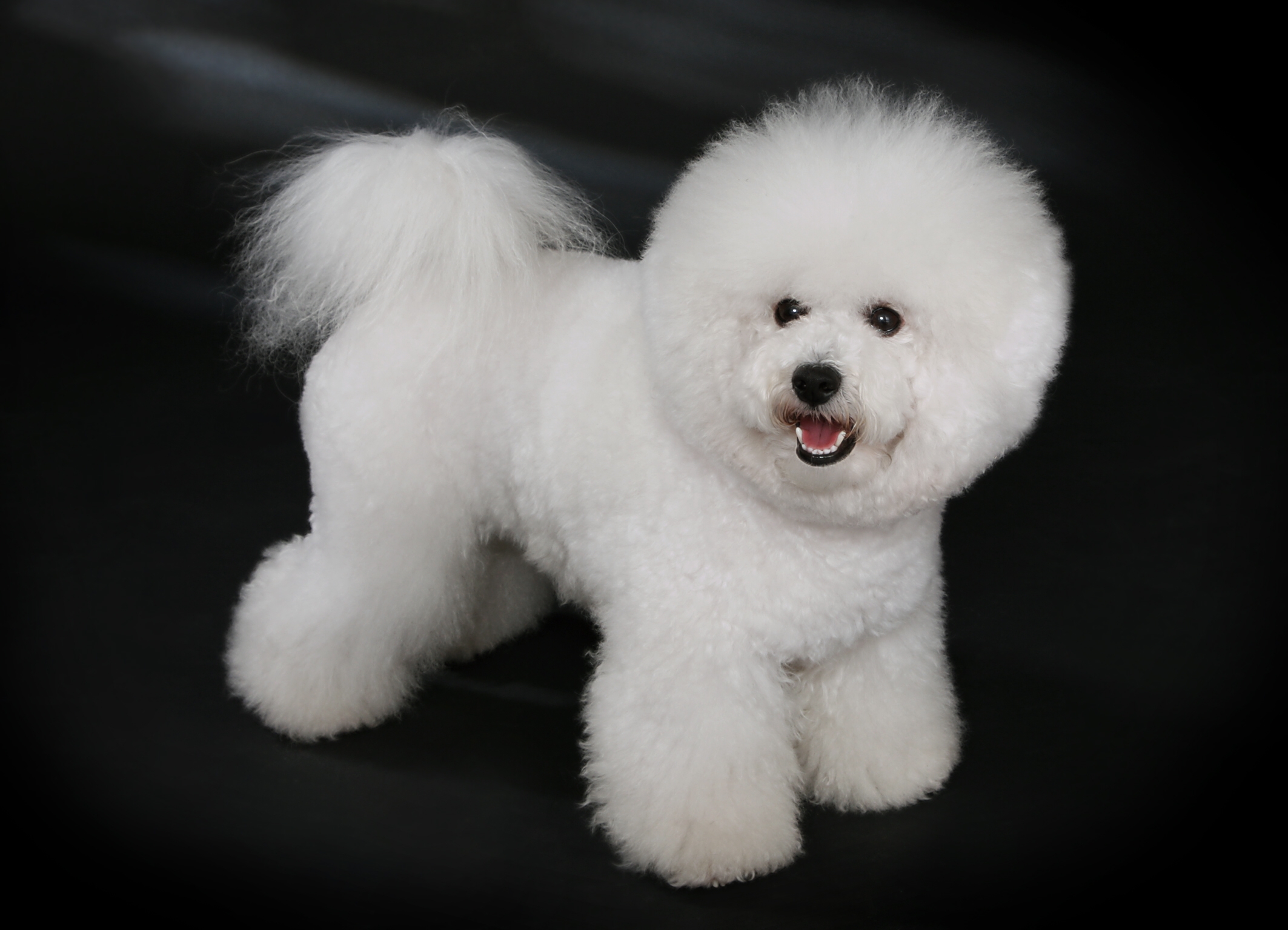

Do you have a better photo of a Bichon Frise in the American show ring? If you have a show photo you’d let us use, email it to [email protected] — tell us the dog’s name and the show, and it may be featured here. Please only send photos you took yourself or have the photographer’s permission to share, and tell us the photographer’s name.
1. Breed at a glance
Non-Sporting Group; AKC-recognized since 1972
Dogs and bitches 9½–11½ in; 12–18 lb (AKC)
White double coat; may have buff, cream, or apricot shadings around the ears or on the body
14–15 years (AKC)
Gentle mannered, sensitive, playful, affectionate; cheerful
Bichon Frise Club of America
2. History: the curly lapdog
The Bichon’s ancestors were small white water dogs of the Mediterranean, and the modern breed takes its name from Tenerife in the Canary Islands, where the dogs were developed — “Bichon Tenerife,” later shortened to Bichon Frise. French and Belgian fanciers shaped the modern breed, and the first Bichons were brought to the United States in the 1950s. The Bichon Frise Club of America was founded in 1964, and the club held its first national specialty in 1975.
The AKC granted the breed Miscellaneous Class status in 1971 and full recognition in 1972, placing it in the Non-Sporting Group. The Bichon has been a show-ring star ever since: only two Bichons have ever won Best in Show at Westminster — Ch. Special Times Just Right, “J.R.,” in 2001, who became a household name after sitting in the silver-bowl trophy and pumping his paw at admirers, and GCHP CH Belle Creek’s All I Care About Is Love, “Flynn,” in 2018, handled by Bill McFadden. Flynn was only the second of his breed to win the Garden, and he was related to J.R.
Today the Bichon is one of the most popular companion breeds in the country — a small, sturdy, cheerful dog that fits an apartment as well as a house, and a regular in the show ring, in obedience and rally, and in the therapy-dog world.
3. The standard: the powder puff
The AKC standard was approved on October 11, 1988, and effective November 30, 1988. It opens with the general appearance: “The Bichon Frise is a small, sturdy, white powder puff of a dog whose merry temperament is evidenced by his plumed tail carried jauntily over the back and his darkeyed inquisitive expression.” The body is one-quarter longer than the height, and the whole dog should give the impression of a sturdy, well-balanced little dog, neither coarse nor delicate.
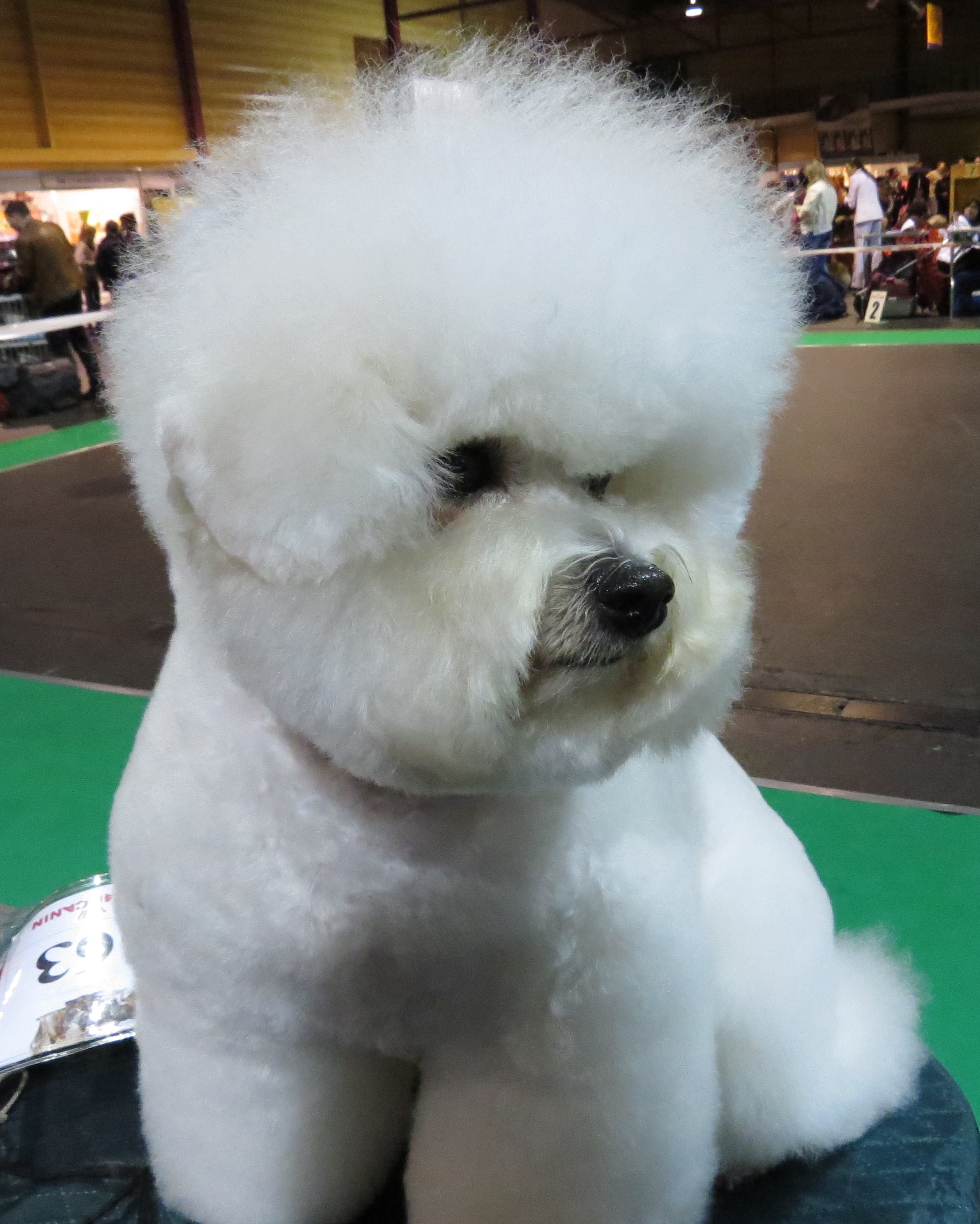

Size. Dogs and bitches 9½ to 11½ inches at the shoulder, preferred — and the standard sets hard limits: never over 12 inches or under 9, though the minimums do not apply to puppies. Weight is 12 to 18 pounds.
Head and body. The head is in proportion to the size of the dog, with a slightly rounded skull, a slight but definite stop, and a muzzle that is in balance with the skull. The eyes are round, black or dark brown, and set to look directly forward, with the black or dark-brown skin surrounding the eye — the halos — that the standard calls necessary, and eye rims that must be black. The nose is always black. The bite is scissors; an undershot or overshot bite is severely penalized. The ears hang close to the head, are covered with long flowing hair, and blend into the mane. The tail is well plumed, set on level with the topline, and curved gracefully over the back so that the hair rests on the back; a corkscrew tail is a very serious fault.
Coat and color. The coat is the breed’s signature: a soft, dense undercoat and a coarser, curlier outercoat, so that the whole coat feels plush and velvety, springs back when patted, and — when bathed and brushed — stands off the body to give the powder-puff appearance. A wiry coat is not desirable, and a limp, silky coat, a coat that lies down, or a lack of undercoat are very serious faults. Color is white, and may have shadings of buff, cream, or apricot around the ears or on the body; any color in excess of 10 percent of the entire coat of a mature specimen is a fault.
4. Temperament: gentle, playful, and cheerful
The standard’s temperament paragraph is the whole pitch: “Gentle mannered, sensitive, playful and affectionate. A cheerful attitude is the hallmark of the breed and one should settle for nothing less.” The AKC sums the breed up as peppy, curious, and playful, and the parent club calls the Bichon unsurpassed as a companion — a gentle mannered, sensitive, playful, and affectionate member of the family.
That cheerfulness is the breed’s charm and its training note in equal measure. Bichons are people dogs: they want to be with their family, they are happiest in the middle of the household, and they are sensitive enough that harsh corrections do more harm than good — firm, cheerful, consistent training suits them far better. They are generally good with children where interactions are appropriate, best with older children who can handle a small dog gently, and they are social with other dogs and with visitors.
In the house, expect a dog that is playful, affectionate, and alert without being yappy — a companion that follows its people from room to room and announces visitors with interest rather than alarm. Give them a daily walk, a play session, and a place beside their people, and they give back a cheerfulness that is hard to match — for 14 to 15 years.
5. Grooming and everyday care
The powder-puff coat is the real commitment, and it is not optional. The double coat needs daily brushing to prevent mats — a neglected Bichon coat mats fast and painfully — plus regular bathing to keep the white bright and the coat standing off the body, and professional grooming every few weeks to hold the show or pet trim. The ears should be checked and cleaned regularly, the nails trimmed, the teeth brushed, and the tear staining around the eyes wiped, over a 14- to 15-year life.
Exercise is moderate, and that is part of the breed’s appeal: a daily walk and a play session suit a Bichon, and they are adaptable to an apartment as long as they get out every day. They are small enough to travel easily and sturdy enough to keep up on a long walk. A securely fenced yard is a convenience, not a necessity — what a Bichon really needs is its people, every day.
Feeding is straightforward but scaled to a small dog: a good-quality food, measured meals, and a lean weight at 12 to 18 pounds. Extra weight makes the knees work harder, and a Bichon that is allowed to get fat is a Bichon heading for the vet. Because the breed is so cheerful and food-motivated, watch the treats — you should be able to feel the ribs without pressing hard under the coat.
6. Health: the tests that matter
The Bichon Frise Club of America takes part in the Canine Health Information Center (CHIC) program run by the Orthopedic Foundation for Animals, and three tests are required for a CHIC number: a hip evaluation (OFA at two years or older, or PennHIP), a patella evaluation (OFA at one year or older, recertified yearly), and an ophthalmologist evaluation (an annual eye exam, CAER/CERF). The club also lists a cardiac evaluation, Legg-Calve-Perthes disease screening, and elbows as optional or recommended. The club joined CHIC in 2007. A CHIC number means the tests were done and published by the OFA — it does not mean the dog passed them.
The main issues to watch are patellar luxation — the most significant orthopedic concern in the breed, whose incidence has climbed over the years — cataracts and other eye disease, hip dysplasia (rare in the breed, but it exists and is debilitating when it occurs), bladder stones, and allergies. The AKC lists the breed’s lifespan as 14 to 15 years — long-lived for a small breed, and the reason the testing above matters so much: a Bichon is a long commitment, and the health screening is how you protect it.
7. The annual Bichon Frise specialty dog show
A specialty is the breed’s All-Star show — its Super Bowl. Once a year, the best Bichon Frises from across the country, and often from around the world, come together in one place.
The Bichon Frise Club of America’s national specialty: one national event each year, a full specialty week of conformation, obedience, rally, sweepstakes, junior showmanship, and futurity, with a Top 20 and a parade of titleholders alongside the conformation show. The 2026 national — the club’s 50th — ran May 11–16 in St. Louis, Missouri. The 2027 national: not yet announced.
The standard, in brief: a small, sturdy, white powder puff of a dog, 9½ to 11½ inches at the shoulder, with a white double coat that may carry shadings of buff, cream, or apricot around the ears or on the body, a black nose, round dark eyes with the black or dark-brown halos the standard calls necessary, and a plumed tail carried jauntily over the back. In temperament it is gentle mannered, sensitive, playful, and affectionate — and, in the standard’s words, “a cheerful attitude is the hallmark of the breed and one should settle for nothing less.”
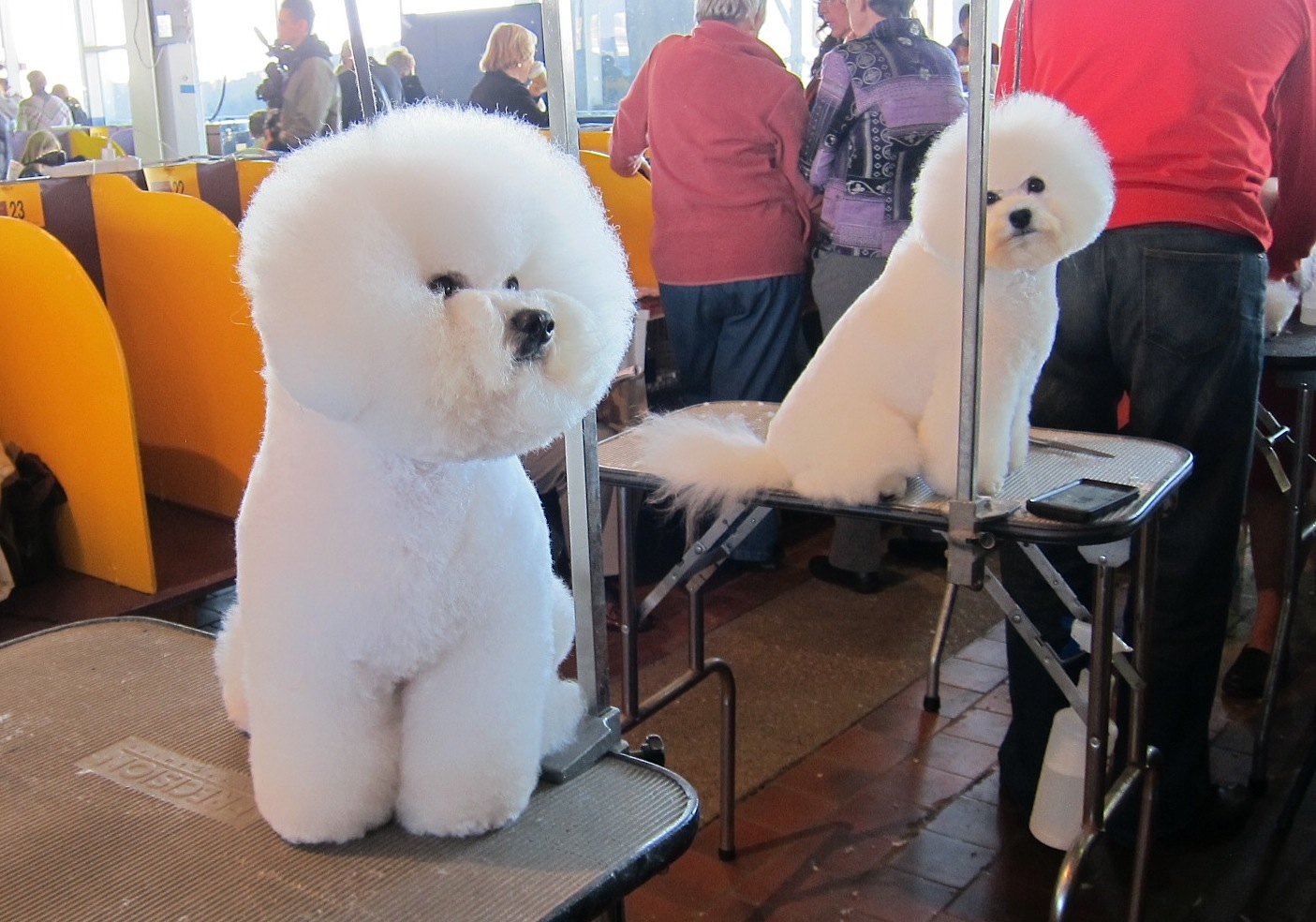

The 50th BFCA National Specialty — Specialty Week Monday, May 11–Saturday, May 16, 2026, at the Hilton St. Louis Airport, 10330 Natural Bridge Road, St. Louis, Missouri 63134, all events indoors at the host hotel. Conformation was Saturday, May 16 — 92 Bichons entered (51 dogs, 41 bitches), 107 total entries. Entries closed Wednesday, April 15, 2026. Event Chair: Merry Nicole Meyer. Superintendent: Executive Dog Shows, LLC.
The week ran the full Bichon program: a Welcome Night on Monday, May 11; a Just Groom a Bichon grooming competition and the club’s inaugural Top 20 on Tuesday, May 12; obedience and rally plus the Bichon Frise Club of Puget Sound specialty and the awards banquet on Wednesday, May 13; the parent specialty on Thursday, May 14 — judged by D Sorenson, 83 Bichons, 97 entries — followed by the club’s annual meeting; puppy and junior sweepstakes, a Bred-By-Exhibitor special attraction, a parade of titleholders and champions, and the futurity on Friday, May 15; and conformation, the 4–6 Month Beginner Puppy competition, and junior showmanship on Saturday, May 16. The City of St. Louis issued a mayoral proclamation dated May 13, 2026, naming the week “The Bichon Frise Club of America’s 50th National Specialty Week.”
Results (2026 national). Best Junior Handler was MaKenzie Aaron. Best of Breed and the other top winners had not been published in an official source as of November 2026 and will be added here when they are.
The dates for the annual 2027 Bichon Frise specialty dog show had not been announced as of November 2026. The AKC’s Upcoming National Specialties list, which runs through October 2027, carries no Bichon Frise Club of America entry. This page will be updated when the club announces the 2027 national.
The club has held its national specialty in May in recent years — 2024 in Naperville, Illinois, 2025 in Springfield, Missouri, and 2026 in St. Louis, Missouri — so a spring date is the pattern to watch for.
Past national specialties: 2025 · 2024
Bichon Frise Club of America — bichon.org
8. Regional specialties through the year: smaller regional shows
The national is the anchor, but the breed’s year also runs through regional specialties — smaller regional shows, not the national — held around the country, including the regional specialties that run with the national. These are the 2026 regionals verified from club and AKC sources.
Regional Bichon Frise specialties verified for 2026:
- Bichon Frise Club of Greater Houston Specialty — Sunday, July 19, 2026, Houston, Texas: NRG Arena, 1 Reliant Center Dr. Judge M B Napper — 4 Bichons, 5 entries. Entries closed Wednesday, July 1, 2026, limited to 100. Event Chair: Lynda Bowman. Superintendent: Onofrio Dog Shows.
- Bichon Frise Club of Puget Sound Specialty — Wednesday, May 13, 2026, St. Louis, Missouri: held at the Hilton St. Louis Airport with the BFCA national specialty week. Judge unconfirmed.
Other 2026 regional specialties had not been verified from club or AKC sources as of November 7, 2026.
More regional specialties will be added here as their programs are verified — this section is built from show data, not guesswork. Browse upcoming show weekends →
9. Clubs
The Bichon Frise Club of America, Inc. (BFCA) is the AKC parent club for the breed in the United States. Founded in 1964, it is the guardian of the breed and determines the official breed conformation standard, runs the national specialty every year, and promotes responsible breeding, education, research, and rescue. The club’s current officers are listed on its website at bichon.org.
Regional clubs around the country run the regional specialties and the local life of the breed, among them the Bichon Frise Club of Greater Houston, the Bichon Frise Club of Puget Sound, and the Bichon Frise Club of Northern New Jersey, which held its 33rd annual specialty show in March 2026.
10. Rescue
The main breed-specific rescue is the Bichon Frise Club of America Charitable Trust (BFCACT), established in January 2003 and founded by the AKC parent club. It is a national, foster-based rescue: dogs are fully vetted, heartworm tested, microchipped, vaccinated, and spayed or neutered (except young puppies), and every adoption requires a home visit. The trust does not ship dogs and does not adopt outside the United States, and it does not recommend Bichons for homes with children under five. Contact: bichonrescue.org, 866-473-0722, [email protected]. Co-chairs: Lynn Ramich and Zandra Kern.
A rescue Bichon is usually an adult whose personality is already known, which is a real advantage with a breed this people-oriented: you will know how it is with children, with other dogs, and in a home before you commit. Expect an application, references, and a home visit. Ask about knees, eyes, and the coat’s condition before you commit, and budget for the vet care an older or surrendered dog may need. A rescue Bichon still needs the same things a puppy does: daily brushing, regular professional grooming, and a household ready for a cheerful shadow.
11. Breeder vs. rescue: honest guidance
Either route starts with the same question: has this dog’s health been tested? From a breeder, ask for the CHIC numbers of both parents — the hip evaluation, the patella evaluation, and the annual ophthalmologist’s eye examination — and check them on the OFA database yourself, by the parents’ registered names. Ask about cardiac, Legg-Calve-Perthes, and elbow testing too, and ask what health issues the breeder sees in their stock: a responsible breeder tests, and will talk about the breed’s faults as readily as its virtues. Meet at least the dam, and be honest with yourself about the grooming: this is a dog that needs brushing every day and a professional groomer every few weeks, not just a bath when it looks dirty.
From rescue, expect an adult dog whose personality is already known, placed by a network that has vetted the dog and will tell you what it is actually like in a home. Budget for the same things either way: knee and eye care, grooming, and the time a companion dog demands. Whichever route you take, the dog that fits is a gentle, cheerful, white powder puff that wants to be with its people — and will follow you from room to room to make sure of it.
12. Claim this page
This page was built from public sources — the AKC standard, the parent club’s own material, AKC event records, and the rescue trust’s site — and it is a starting point, not the last word. If you are with the Bichon Frise Club of America or a regional club and something here is wrong or missing, you can claim this page and set it straight: email [email protected] and tell us what needs fixing. Corrections from the people who own the breed are how this page gets better.
Sources
- AKC, Bichon Frise
- AKC, Official Standard of the Bichon Frise (approved October 11, 1988; effective November 30, 1988)
- Bichon Frise Club of America
- Bichon Frise Club of America, 2026 National Specialty
- Bichon Frise Club of America, 2026 National Specialty schedule
- Bichon Frise Club of America, Genetic Testing in Bichons
- AKC, Non-Sporting Group Health Testing Requirements
- Bichon Frise Club of America Charitable Trust (rescue)
- AKC event search, BFCA National Specialty Conformation, May 16, 2026 (event 2026186403)
- AKC event search, BFCA Parent Specialty, May 14, 2026 (event 2026186405)
- AKC event search, BFCA National Specialty Conformation, May 9, 2025 (event 2025186402)
- AKC event search, BFCA National Specialty Conformation, May 2–3, 2024 (event 2024186402)
- AKC event search, Bichon Frise Club of Greater Houston Specialty, July 19, 2026 (event 2026299001)
- AKC, Upcoming National Specialties list
- AKC, Westminster Best in Show Winners Through the Years
- Wikipedia, Bichon Frise (history, Tenerife name)
- Wikimedia Commons, Bichon Frisé (Heike Andres, CC BY-SA 3.0 de)
- Wikimedia Commons, 2014 Westminster Kennel Club Dog Show (Pets Adviser, CC BY 2.0)
- Wikimedia Commons, Bichon Frise in Riga (Томасина, CC BY-SA 3.0)