
Breed profile · Working Group · The powerful Japanese guardian
Akita
The Akita is the powerful Japanese guardian dog famous for dignity, courage, and loyalty: the dog of Hachiko, the breed Helen Keller brought to America in 1937, and a Working Group dog that has guarded Japanese homes for centuries — a devoted family protector that is reserved with strangers and serious about its own people.
Help us improve it. This is one of ThePetAdvisor’s breed profiles, built from public sources with generous links to the people who actually own this breed’s knowledge. If something’s off or missing, the parent club can claim the page and set it straight — see the bottom of the page.
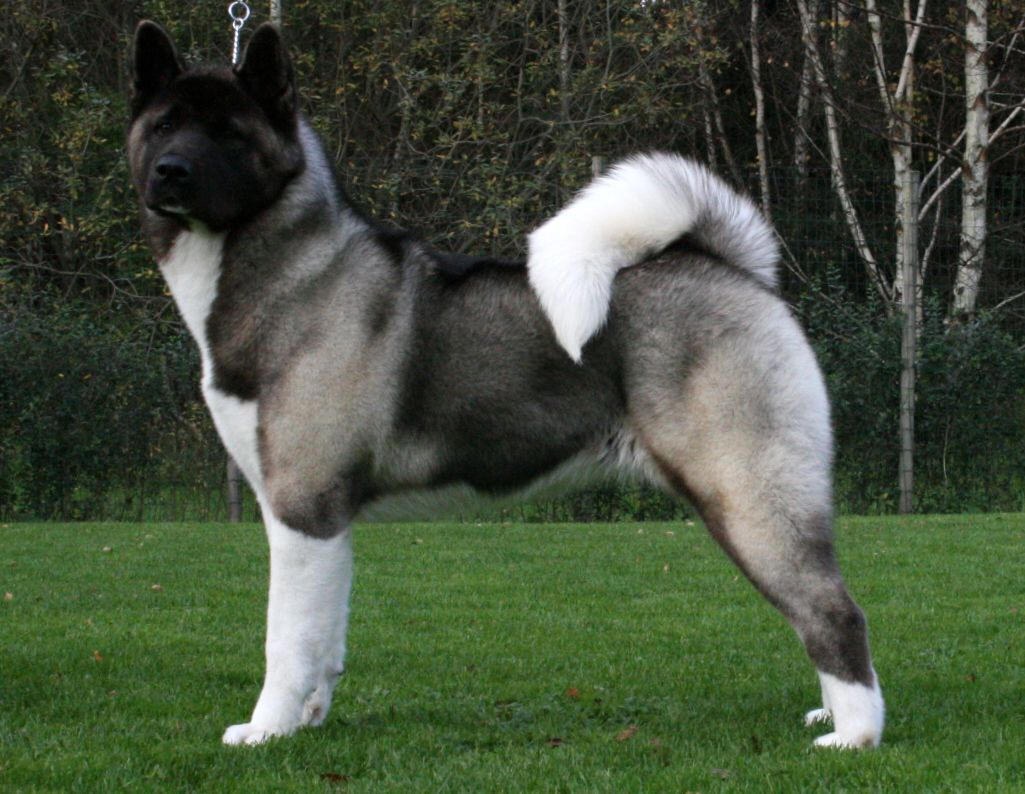
Do you have a better photo of an Akita in the American show ring? If you have a show photo you’d let us use, email it to [email protected] — tell us the dog’s name and the show, and it may be featured here. Please only send photos you took yourself or have the photographer’s permission to share, and tell us the photographer’s name.
1. Breed at a glance
Working — recognized by the AKC in 1972
Males 26–28 in, females 24–26 in at the shoulder. Weight 100–130 lb (males), 70–100 lb (females).
Thick double coat. Any color including white, brindle, or pinto, with or without a mask or blaze.
Alert and responsive, dignified and courageous. Loyal to its own family, reserved with strangers.
Moderate exercise needs, but a guardian that needs a purpose and firm, consistent handling every day.
Size, coat, and temperament facts are from the AKC standard. Weight and lifespan (10 to 14 years) are the AKC breed-profile figures (AKC Akita breed page).
2. History
The Akita takes its name from the Akita Prefecture in the mountains of northern Honshu, Japan, where it was bred as a versatile hunting dog — for deer, boar, and even black bear — and as a guardian of the home. In Japan the breed was designated a National Monument in 1931, one of seven breeds so honored, and it carries a spiritual significance there that no other breed quite matches: when a child is born, the family traditionally receives a small statue of an Akita signifying health, happiness, and a long life, and when a person is ill, friends send one to wish a speedy recovery. (Source: AKC standard.)
The dog the world knows best is Hachiko, the Akita who waited at Tokyo’s Shibuya Station every day for a master who never came home, for nearly ten years after his death in 1925. The breed reached America through Helen Keller, who is credited with bringing the first Akita into the United States in 1937; after World War II, American servicemen of the occupation forces, who so admired the noble dogs, took them home to their families, and the breed’s popularity in the United States dates from them. The AKC recognized the breed in 1972, approving the standard on December 12, 1972 (revised in 2009). (Sources: AKC standard; Wikipedia, Akita (dog breed).)
One naming wrinkle is worth knowing before you go looking for a puppy. The American dogs that came home after the war were bred heavier, with more bone and a wider range of colors than the dogs preserved in Japan, and the split grew until the FCI recognized the two as separate breeds in 1999 — the Japanese Akita Inu and the American Akita. The AKC still shows them under a single Akita standard, and the Japanese Akitainu sits in the AKC’s Foundation Stock Service. This page covers the AKC Akita. (Source: Wikipedia, Akita (dog breed).)
3. The standard and why it’s written that way
- Large, powerful, alert. The standard opens with the silhouette: “Large, powerful, alert, with much substance and heavy bone. The broad head, forming a blunt triangle, with deep muzzle, small eyes and erect ears carried forward in line with back of neck, is characteristic of the breed. The large, curled tail, balancing the broad head, is also characteristic of the breed.” (Source: AKC standard.)
- Head, ears, eyes, and tail. The head is massive but in balance with the body, forming a blunt triangle when viewed from above, with a broad, full muzzle. The ears are strongly erect and small in relation to the rest of the head — triangular, slightly rounded at the tip, wide at the base, carried slightly forward over the eyes. The eyes are dark brown, small, deep-set, and triangular, with black, tight rims. The tail is large and full, set high and carried over the back or against the flank in a three-quarter, full, or double curl, always dipping to or below the level of the back. A sickle or uncurled tail is a disqualification, as are drop or broken ears. (Source: AKC standard.)
- Any color including white; brindle; or pinto. “Colors are brilliant and clear and markings are well balanced, with or without mask or blaze. White Akitas have no mask. Pinto has a white background with large, evenly placed patches covering head and more than one-third of body.” The undercoat may be a different color from the outer coat. There is no disqualified color in the AKC ring — the disqualifications are about structure, not color. (Source: AKC standard.)
- Size — and the height disqualification. Males 26 to 28 inches at the shoulder, bitches 24 to 26 inches, with the body longer than high — as 10 is to 9 in males, 11 to 9 in bitches. The one size disqualification is absolute: dogs under 25 inches and bitches under 23 inches are disqualified. The other disqualifications are a butterfly nose or total lack of nose pigmentation, and a noticeably undershot or overshot bite. (Source: AKC standard.)
- Temperament, in the standard’s own words. “Alert and responsive, dignified and courageous. Aggressive toward other dogs.” That last sentence is the one that matters most to a prospective owner, and the standard does not soften it. (Source: AKC standard.)
4. Temperament & living with one
The AKC sums the breed up in a sentence: Akitas are “muscular, double-coated dogs of ancient Japanese lineage famous for their dignity, courage, and loyalty. In their native land, they are venerated as family protectors and symbols of good health, happiness, and long life.” At home that means a dog that bonds hard to its own people and watches the world from a reserved distance. An Akita is affectionate and playful with the family it trusts, dignified and composed with everyone else, and protective of its home and its people without needing to be taught. (Sources: AKC Akita breed page; AKC standard.)
What that means in practice is a dog that needs an experienced owner. Akitas are typically aggressive toward other dogs, especially of the same sex, and they will defend their territory — early socialization and firm, consistent handling are not optional, and a dog park is not the place for one. They are quiet dogs that do not bark without reason, clean in the house, and content to be with their family rather than entertaining themselves. They need moderate daily exercise and a purpose, and they do not thrive in the heat under that thick double coat. A bored Akita with no rules is a large, strong, willful dog; the same dog with clear rules and a job is one of the most loyal companions in the Working Group. (Sources: AKC standard; Sunshine Animal Hospital, Akita breed info.)
5. Grooming
- Easy, except twice a year. Grooming is the easy part of owning an Akita, except twice a year when it is the hard part. The coat is double — a thick, soft, dense undercoat under a straight, harsh outer coat standing somewhat off the body — and a weekly brushing keeps it in shape most of the year. Twice a year, in spring and fall, the undercoat sheds heavily over several weeks, and the dog needs brushing far more often while it does. Baths are rarely necessary. (Source: AKC standard.)
- Never clip the coat. One thing the ring will not forgive: the coat is never trimmed or clipped. The AKC standard faults any indication of ruff or feathering, and the UKC standard lists altering the coat or general appearance by clipping or scissoring as a disqualification. An Akita in the ring is shown as it lives — thick-coated, clean, and untrimmed. (Source: AKC and UKC standards.)
6. Health testing
- Three tests for a CHIC number. The Akita Club of America participates in the AKC’s Canine Health Information Center program. For an Akita to earn a CHIC number, it must have an OFA or PennHIP evaluation for hips, an eye clearance from the Canine Eye Registry Foundation (now the OFA Companion Animal Eye Registry), and an OFA thyroid evaluation from an approved laboratory, including the TgAA antibody test for autoimmune thyroiditis. OFA patella and elbow evaluations are recommended but not required, and breeders must agree to have all test results, positive or negative, published in the CHIC database. (Sources: Embrace, Akita breed library; Akita Club of America health statement (AKC).)
- The watch list is immune-mediated. The breed’s health story is dominated by conditions where the immune system turns on the dog itself: autoimmune thyroiditis and hypothyroidism, sebaceous adenitis (the immune system attacking the skin’s oil glands), and uveodermatologic syndrome, the VKH-like disease that attacks pigment cells in the eyes and skin and to which Akitas are the most-affected breed. Hip dysplasia, eye problems including progressive retinal atrophy and entropion, and bloat (gastric dilatation-volvulus) round out the list. None of this is a reason not to own an Akita. All of it is a reason to buy from a breeder who tests: ask for the parents’ CHIC numbers and look the results up in the OFA database yourself, rather than taking a breeder’s word for it. Lifespan is 10 to 14 years. (Sources: Embrace, Akita breed library; Akita Club of America health statement (AKC).)
7. The annual Akita specialty dog show
A specialty is the breed’s All-Star show — its Super Bowl. Once a year, the best Akitas from across the country, and often from around the world, come together in one place.
The Akita Club of America’s national specialty is the anchor of the Akita’s year — a full week at one hotel, not a single show day, with the pre-national, performance trials, the Top 20, an International Extravaganza for foreign-bred Akitas, and a judges’ education seminar around the conformation specialty itself. It is where the breed’s serious breeders, handlers, and judges meet, with dogs coming from across the country and from outside the United States.
The National Specialty ran Monday to Saturday, October 26–31, 2026, at the University Plaza Hotel, 333 S John Q Hammons Pkwy, Springfield, Missouri — a full national week, with the pre-national on Tuesday, October 27, performance trials (rally and obedience) October 27–28, the Top 20 event, an International Extravaganza for foreign-bred Akitas, and a judges’ education seminar October 30–31. The show was dedicated in memory of Dr. Sterling Milton and Logan Ingemi. Show Chair: Elizabeth Fulghum. Club President: Chris Ann Moore. (Sources: 2026 ACA National Specialty; National Specialty Shop.)
National specialty judges: Mrs. Kim Holmes — Best of Breed. Mrs. Mona Shaw — dogs and bitches. Mr. Richard Shaw — Sweepstakes. Mr. Chris Stanley — Futurity and Maturity. Pre-national (Tuesday, October 27): Mrs. Beverly Vics. Regional specialties during the week: Mr. Roger Gifford and Mr. John Schoeneman. (Source: 2026 ACA National Specialty.)
Results (official). Best of Breed and Best Owner-Handled: CH Stecal’s All Guns Blazing (dog, owners Carol & Faye Bevis & Rachael Corr & Peng Jiang). Best of Opposite Sex: GCHB CH Midnite Do You Believe (bitch, owners Lynn Morgan & Kortney Vincent). Best of Winners, Winners Bitch, and Best Bred-By Exhibitor: Silverado’s Almost Heaven (owner-breeder Michelle Mosher). Winners Dog: Shinto’s The Best of Bogart. Select Dog: GCH Marqway’s Creating Chaos. Select Bitch: GCH Mayoke’s Walkin’ in High Cotton. Awards of Merit: CH Nakodo’s Life in the Fast Lane, GCHB CrownRoyal-Ninjitsu Iron Sharpens Iron, GCH CH Timbersky’s Tree of Hearts Is Mimarcable, and GCH CH Stardust’s Viva La Vida. Best Veteran: GCHS Sundevil’s Fresh Squeezed OHP — the same dog won the pre-national Best of Breed under Mrs. Vics. Best Puppy: Timbersky’s TOH Champagne Supernova at Jenscot. Sweepstakes: Best Junior Kuroi Kao Gallant Forged From Ash at Firebrand; Best Senior and Best in Sweepstakes Shinjiru Forged in Fyre at Excel Shu-Ku. Grand Futurity: CH Sundevil’s Fresh Brewed. Grand Maturity: CH Midnite My Heart Will Go On and On. (Source: 2026 National Results, Akita Club of America.)
The 2027 national specialty: October 18–23, 2027, University Plaza Hotel, Springfield, Missouri. (Source: 2026 ACA National Specialty.)
2026 ACA National Specialty — Akita Club of America
8. Regional specialties through the year: smaller regional shows
The national is the anchor, but the breed’s year also runs through regional specialties held by the Akita Club of America’s regional clubs — the Akita Club of Puget Sound, the Akita Club of Tampa Bay, the Piedmont Akita Club of Georgia, the Channel Islands Akita Club of Southern California, the Golden Gate Akita Club, and the Akita Club of Puerto Rico. These are the 2027 regionals verified from club sources so far:
No regional specialties announced yet for 2027.
More regional specialties will be added here as their programs are verified — this section is built from show data, not guesswork. Browse upcoming show weekends →
9. Clubs
- Akita Club of America (parent club) — the AKC parent club for the breed in the United States. It runs the national specialty, held in Springfield, Missouri in 2026 and again in 2027. President Chris Ann Moore, Show Chair Elizabeth Fulghum (2026).
- Regional specialty clubs. The breed’s regional AKC specialty clubs are the Akita Club of Puget Sound, the Akita Club of Tampa Bay, the Piedmont Akita Club of Georgia, the Channel Islands Akita Club of Southern California, the Golden Gate Akita Club, and the Akita Club of Puerto Rico. (Source: AKC club search.)
If you are new to the breed, the national specialty itself is the better first stop than a breeder’s website: the people there have owned, shown, and worked Akitas, and they will tell you the truth about the temperament before you fall for a puppy.
10. Rescue
- Start with the parent club’s rescue. Akita Club of America Rescue (ACAR) is the parent rescue for the Akita Club of America, coordinating the regional Akita rescues across the country. If an Akita near you needs help, ACAR is the first call. (Source: Akita Club of America, Rescue.)
- The regional rescues. The ACA’s rescue page lists the regional groups, including Big East Akita Rescue, the Midwest Akita Rescue Society (serving Illinois, Indiana, Wisconsin, Michigan, Ohio, Iowa, Missouri, and Minnesota, plus parts of Kentucky and Kansas), the Akita Rescue Society of Florida, and Akita Rescue Mid-Atlantic Coast, founded in 1984 and serving the greater Washington, DC area. A rescued Akita is usually an adult whose owner could not keep it, and it will arrive with a history you may never fully know. What you get in return is a dog whose temperament you can see before you commit — and in this breed, a rescue that knows Akitas is worth more than a general shelter, because the temperament is the whole question. (Sources: Akita Club of America, Rescue; Midwest Akita Rescue Society.)
11. Breeder vs. rescue: honest guidance
- If you buy: start with the parent club, the Akita Club of America, and its breeder list. Ask for the parents’ CHIC numbers — hips, eyes, and thyroid — and look the results up in the OFA database yourself. A good breeder will have the answers, will ask you as many questions as you ask them, and will take the puppy back for its whole life if you cannot keep it.
- If you rescue: a rescued Akita is usually an adult, often one whose owner could not keep it, and it will arrive with a coat that sheds heavily twice a year and a guardian’s instincts fully formed. What you get in return is a dog whose temperament you can see before you commit and a lower price. Either way, be honest with yourself first: an Akita needs an experienced owner, early socialization, and a household that sets clear rules. It is not a first dog, not a dog-park dog, and not a dog to leave unsupervised with other dogs.
- No rare color worth a premium. One thing that is not what a seller tells you: there is no such thing as a rare color worth a premium. The standard accepts any color including white, brindle, and pinto, and a breeder selling a “rare” color at a premium is selling you a label — the dog may be a fine Akita and a fine pet, but the color is not a reason to pay more.
12. Claim this page
This page belongs to the breed, and the people who know the breed best are the Akita Club of America and its members. If you are with the parent club — or you are a breeder, a judge, a handler, or a rescue volunteer who spotted something wrong, missing, or out of date — this page is yours to set straight. Tell us what needs fixing and where the correction is documented, and we will fix it and credit the source. Contact the site through the About page, and mention “Akita breed profile.”
Sources
- AKC Akita breed page — akc.org/dog-breeds/akita
- AKC Akita breed standard (approved Dec. 12, 1972) — thedogplace.org/Breeds/Akita/Standards-AKC-UKC.asp
- Akita Club of America health statement (AKC) — cdn.akc.org/Marketplace/Health-Statement/Akita.pdf
- Embrace, Akita breed library (CHIC requirements) — rc.embracepetinsurance.com/dog-breeds/akita
- 2026 ACA National Specialty — akitaclub.org/aca-national-specialty
- 2026 National Results (official) — akitaclub.org/2026-national-results
- 2026 Pre-National Results — akitaclub.org/2026-pre-national-results
- Akita Club of America, Rescue — akitaclub.org/rescue-page
- Akita Club of America Rescue — akitaclubrescue.org
- Midwest Akita Rescue Society — akitas.org
- AKC club search (Akita specialty clubs) — apps.akc.org/apps/club_search/search/index.cfm?clubs=A
- AKC Upcoming National Specialties — apps.akc.org/apps/events/conformation/national_specialties.cfm
- Sunshine Animal Hospital, Akita breed info — sunshineanimalhospital.net/client-resources/breed-info/akita
- Wikipedia, Akita (dog breed) (history, Helen Keller, FCI split) — en.wikipedia.org/wiki/Akita_(dog_breed)