Breed profile · Sporting Group · America’s No. 2 breed
Labrador Retriever
The Labrador Retriever is the dog America’s families, hunters, and show rings have agreed on for a century: a strongly built, short-coupled retrieving gun dog with a coat that turns water off like oil, an otter tail, and a temperament the standard calls “kindly, outgoing, tractable… eager to please.” It held the AKC’s No. 1 registration spot for 31 straight years before the French Bulldog took it in 2022. It has never won Best in Show at Westminster. That fact, and the split between the show ring and the field that sits behind it, is the story of this breed.
Help us improve it. This is one of ThePetAdvisor’s breed profiles, built from public sources with generous links to the people who actually own this breed’s knowledge. If something’s off or missing, the parent club can claim the page and set it straight — see the bottom of the page.

1. Breed at a glance
Sporting — first AKC registration in 1917
Dogs 22½–24½ in, 65–80 lbs; bitches 21½–23½ in, 55–70 lbs — in working condition
Short, straight, dense double coat. Black, yellow, chocolate — and nothing else
“Kindly, outgoing, tractable… eager to please and non-aggressive towards man or animal.”
High. The AKC rates it 5 out of 5 — bred to hunt waterfowl and upland game “for long hours under difficult conditions.”
Size, weight, coat, and temperament facts are from the AKC standard (approved February 12, 1994; effective March 31, 1994), as republished by the Puget Sound Labrador Retriever Association. Height, weight, life expectancy (11–13 years), and energy and shedding ratings from the AKC breed profile.
2. History
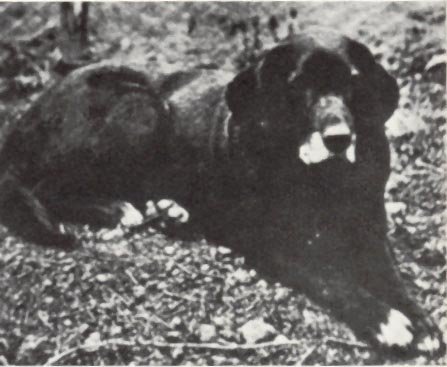
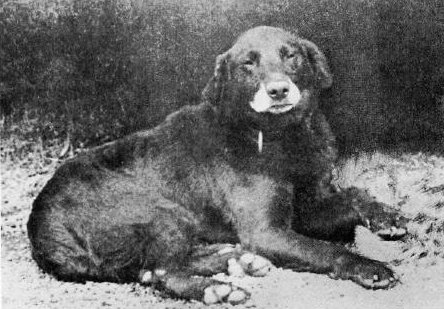
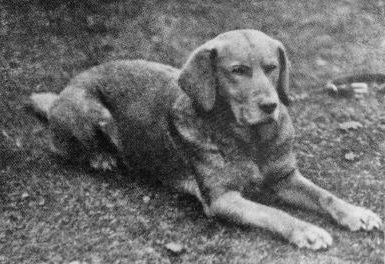
The Labrador starts as the St. John’s water dog of Newfoundland — the short-coated dogs fishermen kept to pull in nets and retrieve fish that escaped. Ships trading salted cod between Newfoundland and Poole, in Dorset, brought them to England, and in the 1830s the 10th Earl of Home, the 5th Duke of Buccleuch, and Lord John Scott began importing them as gun dogs. The breed as we know it was made in the 1880s, when the third Earl of Malmesbury, the sixth Duke of Buccleuch, and the twelfth Earl of Home worked together on the dogs — Malmesbury sent two of his, “Ned” and “Avon,” to Buccleuch, and their offspring are the ancestors of all modern Labradors. Malmesbury’s letters describe the dogs’ coats as turning “the water off like oil” and praise the “tail like an otter” — the two hallmarks the standard still names. (Sources: AKC breed history; The Field.)
The St. John’s dog itself is gone — extinct as a distinct type, its last two known dogs found in a remote area of Newfoundland in the late 1970s. The Labrador it became was recognized by the Kennel Club in 1903 and first registered with the AKC in 1917. Black came first: the early dogs were all black, and other colors were long treated as faults. The first yellow Labrador to be registered was Ben of Hyde, born in 1899 at Major C. J. Radclyffe’s kennels. Liver-colored — chocolate — puppies were recorded at the Buccleuch kennels as early as 1892, but the color was not accepted until the 1930s. (Sources: AKC breed history; Gundog Journal; The Field.)
The breed’s show history has a peak no Labrador has matched since. Dual Champion Bramshaw Bob — a show champion and a field trial champion in one dog — won Best in Show at Crufts in 1932 and again in 1933, owned by Lorna, Countess Howe, the first woman to own a Crufts Best in Show winner. He remains the only Dual Champion ever to win Best in Show at Crufts. Countess Howe won it again in 1937 with Cheverell’s Ben of Banchory. No Labrador has won Best in Show at Westminster, ever — or even the Sporting Group. The best group placements were second, in 1933, 1934, 1939, and 1978, and third in 2016. (Sources: Crufts: Iconic moments at Crufts; The Field; AKC, “Popular Dog Breeds to Never Win Best In Show at Westminster.”)
The American story is the parent club’s story. The Labrador Retriever Club, Inc. was incorporated on October 24, 1931, in New York, by sportsmen led by Franklin B. Lord. The club held the first AKC-licensed retriever field trial on December 21, 1931, and its first annual specialty on May 18, 1933, in New York City, judged by Mrs. Marshall Field — Best in Show went to Mr. Lord’s Boli of Blake, who became the first Labrador American champion on November 1, 1933. The club sponsors a National Specialty event week in October each year. (Source: LRC club history.)
3. The standard, and why it’s written that way
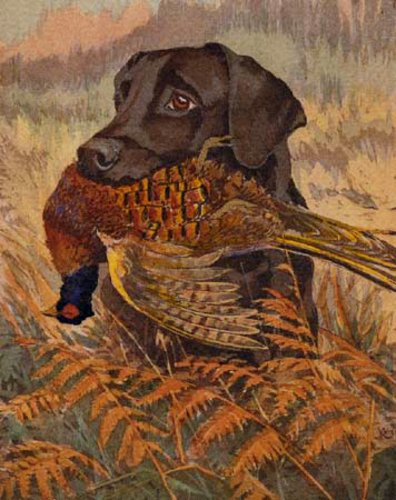
Read the Labrador standard as a job description for a retrieving gun dog — and every line is a guardrail against breeding a dog that cannot do the job. The quotes below are from the official standard (approved February 12, 1994; effective March 31, 1994):
- Bred to work, first. “The Labrador is bred primarily as a working gun dog; structure and soundness are of great importance.” And: “strongly built, medium-sized, short-coupled, [with] the substance and soundness to hunt waterfowl or upland game for long hours under difficult conditions; the character and quality to win in the show ring; and the temperament to be a family companion.” The standard asks one dog to do all three jobs — that is the whole breed in one sentence.
- Size, with a hard edge. Dogs 22½ to 24½ inches at the shoulder, bitches 21½ to 23½ inches; approximate weight in working condition 65 to 80 pounds for dogs, 55 to 70 for bitches. More than half an inch over the height range is a disqualification. And: “Labrador Retrievers shall be shown in working condition, well-muscled and without excess fat.” Fat is not a cosmetic issue in this breed — it is a failure to meet the standard.
- The coat and the otter tail. “The coat is short, straight and very dense, giving a fairly hard feeling to the hand,” with a soft, weather-resistant undercoat. The tail is “very thick at the base, gradually tapering toward the tip… clothed thickly all around with the Labrador’s short, dense coat, thus having that peculiar rounded appearance that has been described as the ‘otter’ tail.” Docking or otherwise altering the length or carriage of the tail is a disqualification.
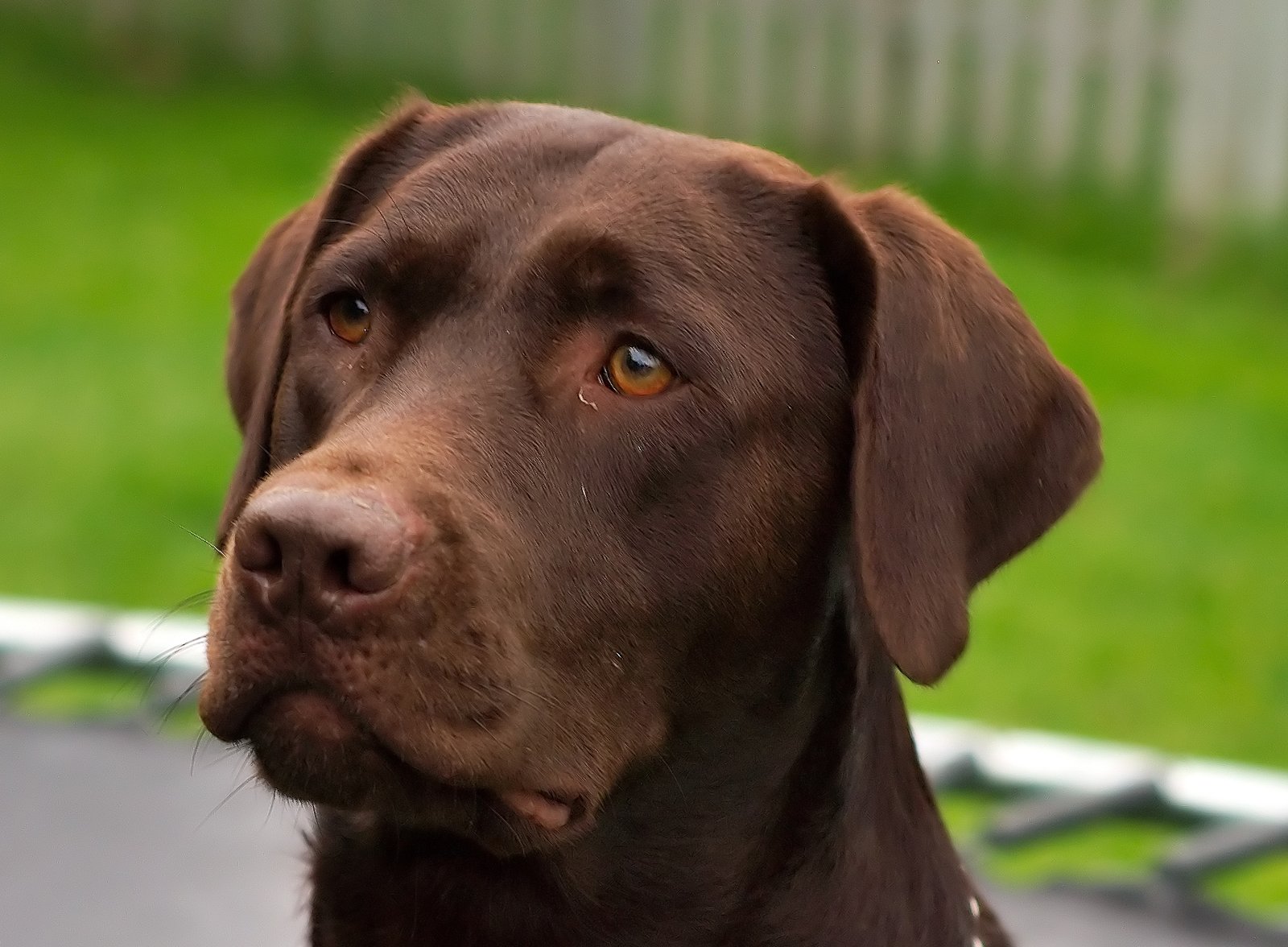
- Three colors, and only three. “The Labrador Retriever coat colors are black, yellow and chocolate. Any other color or a combination of colors is a disqualification.” Yellow runs from fox-red to light cream; chocolate from light to dark; black is all black. Brindle or tan markings are a disqualification. On the dogs sold as “silver,” “charcoal,” or “champagne,” the parent club’s position is blunt: “It is the opinion of the Labrador Retriever Club, Inc., the AKC parent club for the breed, that a silver, charcoal or champagne Labrador is not a purebred Labrador retriever.” The AKC registers silver dogs as chocolate — registration records parentage, it does not certify that a dog meets the standard. That is also why the D locus (dilute) DNA test is a CHIC requirement: see section 6.
- Temperament is a hallmark, not a footnote. “True Labrador Retriever temperament is as much a hallmark of the breed as the ‘otter’ tail. The ideal disposition is one of a kindly, outgoing, tractable nature; eager to please and non-aggressive towards man or animal.” A Labrador that is shy, sharp, or aggressive is not just unpleasant — it is wrong by the standard.
- Movement is the working test. The standard wants a dog that covers ground freely and tirelessly — the gait of a dog built to work all day in water and cover, not a dog built to pose. A judge who watches a Labrador move is watching the working half of the standard.
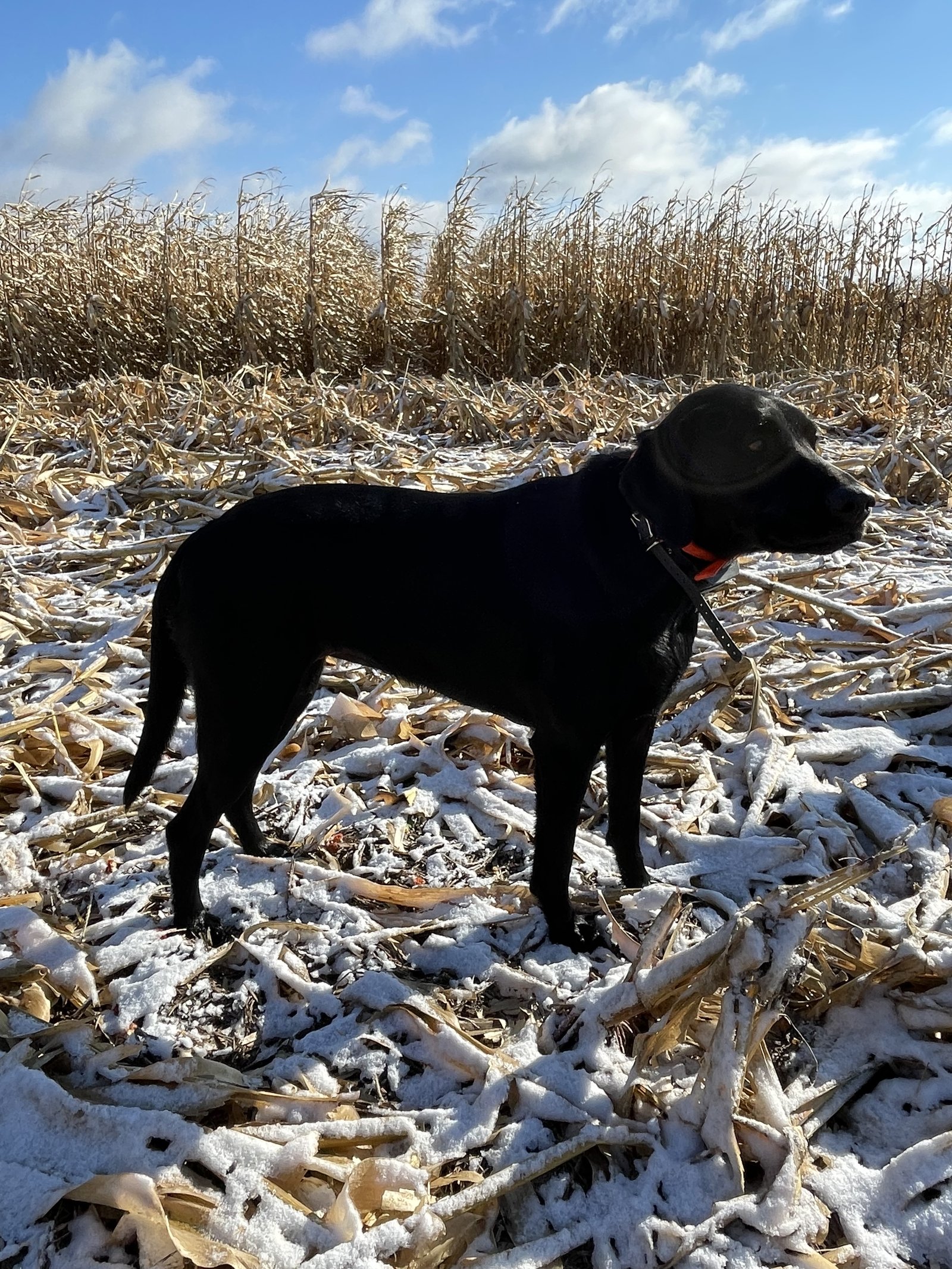
The honest argument in this breed is the split the standard cannot settle: the show ring and the field have bred two different Labradors from the same words. Show-bred — “bench” or “English” — Labradors are heavier, broader-headed, shorter-legged, and closer to the standard’s substance. Field-bred — “American” — Labradors are leaner, narrower-headed, longer-legged, and built for all-day work, and they rarely win in the show ring. The two types barely cross over now, and each side reads the same standard as vindication. The standard’s own line — “shown in working condition, well-muscled and without excess fat” — is the bridge between them, and the argument. Know which type you are looking at before you buy, because they are different dogs to live with.
4. Temperament & living with one
The standard’s own description: “True Labrador Retriever temperament is as much a hallmark of the breed as the ‘otter’ tail. The ideal disposition is one of a kindly, outgoing, tractable nature; eager to please and non-aggressive towards man or animal.” That is not marketing language — it is the test a judge is supposed to apply, and it is also why the breed does the jobs it does: guide dogs, assistance dogs, detection dogs, therapy dogs. A Labrador wants a job and wants to be told it did the job well. (Source: the standard.)
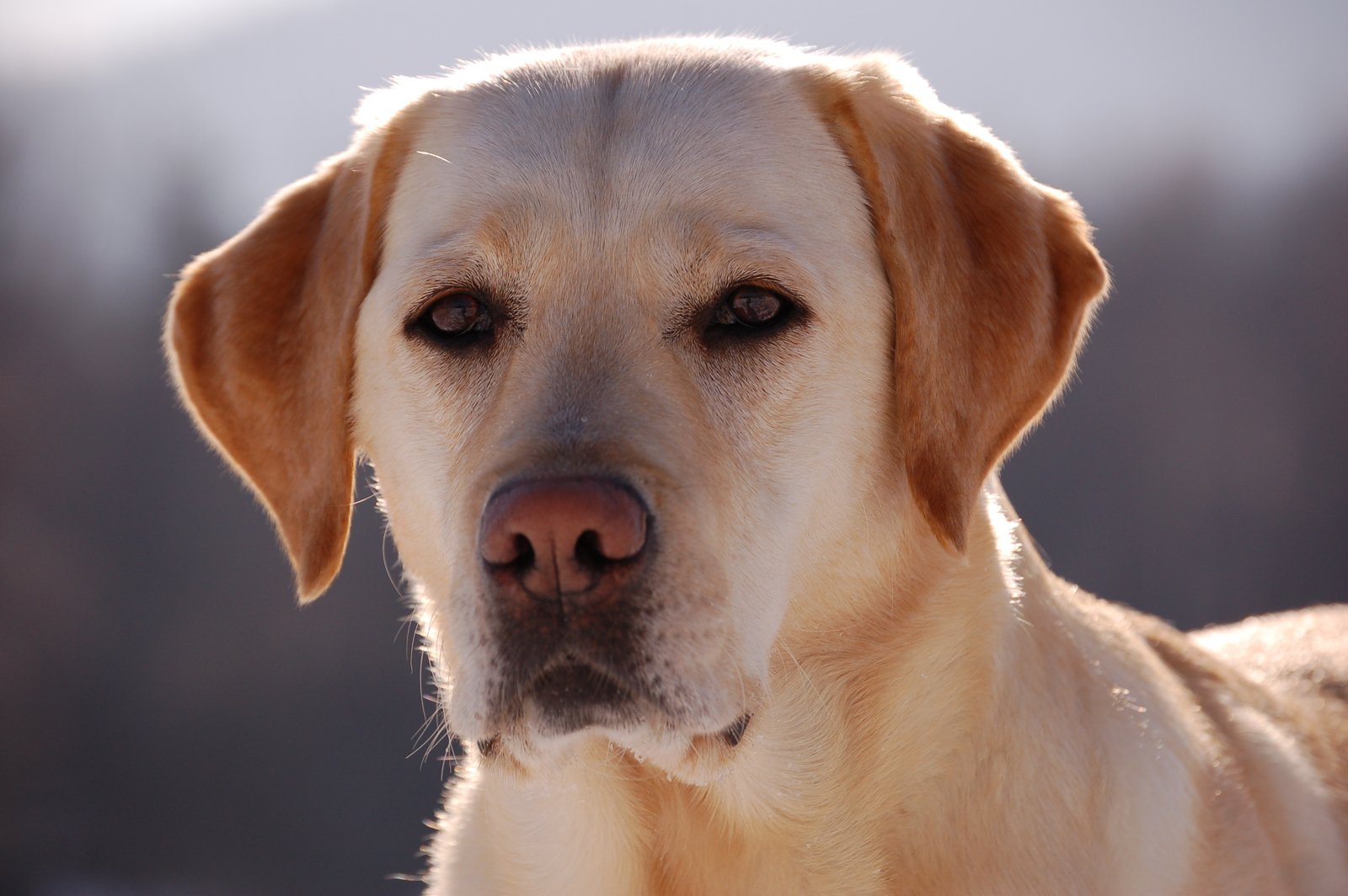
The honest version: this is a high-energy sporting dog, and the energy is the price of the temperament. A Labrador was bred to hunt waterfowl and upland game “for long hours under difficult conditions,” and a dog with that engine needs real work every day — retrieving, swimming, field work, long walks with a purpose. A bored Labrador invents jobs, and its jobs are chewing, digging, and counter-surfing. Puppies and adolescents are big, boisterous, and mouthy for a long time; a young Lab can knock a small child over by enthusiasm alone. Train early, exercise daily, and the dog the standard describes is the dog you get.
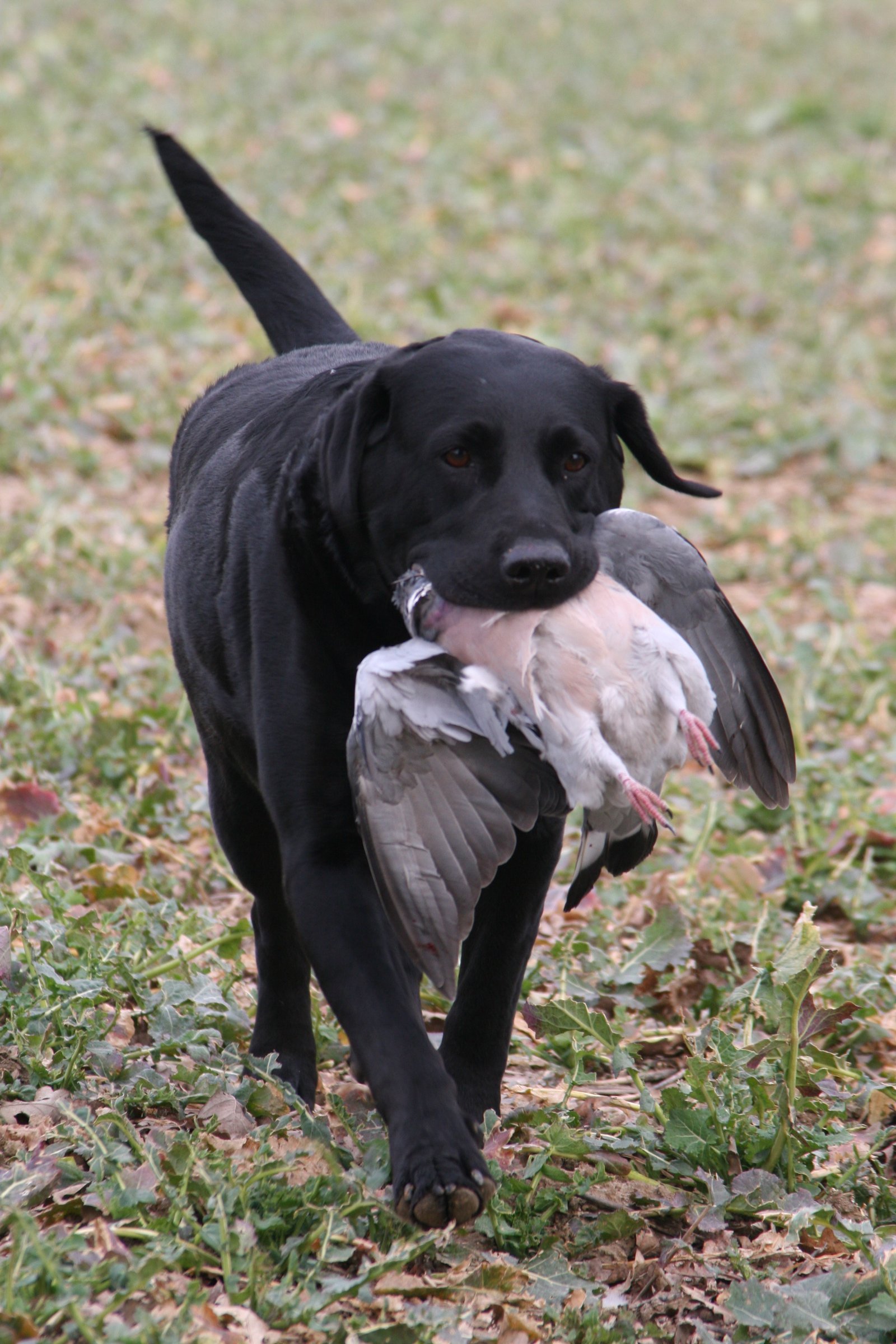
They are famously good with children and famously bad at being left alone all day. The standard’s “non-aggressive towards man or animal” is real, but so is the appetite: Labs love food, and the standard’s “without excess fat” line is a warning that belongs at the dinner bowl as much as in the ring. Measure the food, count the treats, and weigh the dog — the most common thing that goes wrong with a Labrador’s health is weight, and it is the one the owner controls. (See section 6.)
5. Grooming: the coat is the easy part
The coat takes minutes a week. The standard wants it “short, straight and very dense,” with a soft, weather-resistant undercoat — a working coat, not a styled one. A weekly brushing to remove dead hair is enough, and there is no trimming, stripping, or clipping: this is a wash-and-wear breed. The price is hair on everything you own — the AKC rates the breed’s shedding 4 out of 5, and the undercoat comes out in earnest twice a year. (Coat facts from the standard; shedding rating from the AKC breed profile.)
What the breed demands instead is ears and weight. Labradors swim, and wet ears are the breed’s most common trouble — ear infections top the list of conditions vets see in the breed (see section 6), so check the ears, dry them after swimming, and do not let a head-shake go unexamined. Nails trimmed, teeth brushed, and the otter tail needs nothing at all. A Labrador is low-maintenance on the coat and high-maintenance on the scale, and anyone selling you a complicated grooming story for this breed is selling you something else.
6. Health testing
The honest version first: Labradors are generally hardy — the AKC lists a life expectancy of 11 to 13 years — but the list is real, and a buyer should know it before falling in love with a puppy. Hip and elbow dysplasia. Exercise-induced collapse (EIC): a dog that collapses after intense exercise. Centronuclear myopathy (CNM): a progressive muscle disease. Progressive retinal atrophy, prcd-PRA: a blinding eye disease. Hereditary nasal parakeratosis (HNPK): a crusting condition of the nose, with a DNA test available. And obesity, which the standard itself warns against when it demands a dog “shown in working condition, well-muscled and without excess fat.” (Sources: AKC Labrador Retriever DNA tests; AKC DNA + Health Kit included tests; AKC breed profile.)
One study deserves a straight reading, because it gets quoted crookedly. McGreevy and colleagues (2018) studied 33,320 Labradors under primary veterinary care in the UK and found chocolate Labradors lived a median of 10.7 years against 12.1 years for non-chocolate dogs, with ear infections (otitis externa) in 23.4% of chocolate dogs against 12.8% of black and 17% of yellow, and hot spots (pyo-traumatic dermatitis) in 4% against 1.1% of black and 1.6% of yellow. Three caveats matter. The dogs were British, not American. The lifespan figure rests on only 34 chocolate deaths. And the authors’ explanation is not the pigment: breeding hard for a recessive color narrows the gene pool, and a narrower gene pool carries more disease. Link, not cause — and a reason to ask a chocolate breeder about health testing, not a reason to fear a color. (Source: McGreevy et al., Canine Genetics and Epidemiology, 2018.)
The parent club’s testing requirements for a CHIC number (per the LRC’s own health statement, and the club’s Getting a Puppy page):
- Permanent identification — microchip or tattoo, so the results belong to the right dog
- Hip dysplasia — OFA radiographic evaluation, registered with OFA
- Elbow dysplasia — OFA radiographic evaluation, registered with OFA
- Eye exam (CAER) — examination by a board-certified veterinary ophthalmologist, registered with OFA
- Exercise-induced collapse (EIC) — DNA test, registered with OFA
- D locus (dilute) — DNA test for the dilute gene, registered with OFA
Recommended on top of those: centronuclear myopathy (CNM) and prcd-PRA DNA tests, a cardiac exam (including the Advanced Cardiac exam for many dogs), and a patella exam. Two things a buyer should know: a CHIC number means the required tests were done and made public — it does not imply normal or passing results. And the parent club’s own advice to puppy buyers is blunt: a committed breeder will show proof the parents were tested for OFA hips, OFA elbows, OFA eyes, EIC, and the dilute gene — “if the breeder cannot do so, I would recommend searching elsewhere.” (Sources: LRC health statement; LRC: Getting a Puppy.)
If you’re buying a puppy, ask the breeder to show you these results — and check the current OFA/CHIC requirements for the breed, which the parent club updates over time. If a breeder cannot show you the hips, elbows, eyes, EIC, and dilute results, that is your answer.
7. The specialty year: the national specialty is the anchor
Every breed has one show a year that matters most: the parent club’s national specialty. For Labradors, that’s the Labrador Retriever Club, Inc.’s National Specialty, the center of a full event week the club sponsors each October — conformation, hunt tests, obedience, rally, agility, scent work, and a judges-education seminar on the standard, all in one place. It draws the deepest Labrador entry of the year, from the most serious fanciers in the country, and a Best of Breed win there is among the most prestigious in the breed. (Sources: LRC club history; LRC 2026 National Specialty.)
The most recent national specialty ran October 1–2, 2026, at T90 Ranch, 16641 Old Hwy 99 SE, Tenino, Washington, show secretary DogZibit, entries closing September 9, 2026, at 6:00 PM PT. Dogs were judged by Michael Faulkner (Center Cross, Virginia) and bitches by Sharon Celentano (Wallkill, New York); sweepstakes by Kathryn Mines (Columbia, New Jersey) and junior showmanship by Ron Morelos (Palm Springs, California). The national drew 139 dogs and 180 entries; Best Junior Handler was Mia Marsh. The full week ran September 23 to October 2: hunt tests September 23–25, Mt. Rainier Labrador Retriever Club specialties September 27–28, the Central California Labrador Retriever Club specialty September 29, the LRC Regional Specialty September 30, and obedience, rally, agility, and scent work trials through the week, plus a judges-education seminar on the standard on September 30. (Sources: combined premium list, 2026 LRC National Events; AKC event results, event #2026077319; LRC 2026 National Specialty.)
For comparison, the 2025 National Specialty week was held at Purina Farms, Gray Summit, Missouri. The 2026 Best of Breed winner had not been published in a verifiable source as of November 2026 — results will be added here when they are published. The 2027 dates had not been announced as of November 2026. LRC National Specialty page →
8. Regional specialties through the year
The national is the anchor, but it’s not the only specialty. Regional Labrador clubs hold their own specialties through the year, and they’re where most exhibitors actually campaign their dogs. These are the verified 2026 events:
- Labrador Retriever Club of the Potomac — “The Potomac” — April 7–10, 2026, Walkersville, Maryland. The club calls it “the largest single-breed specialty in the world.” Best of Breed: Faith Hyndman; dogs: Linda McGillivray; bitches: Mary McCulloch; sweepstakes: Angela Ewald and Angela Rogalla; non-regular: Richard Powell; juniors: Jessica Craun. Entry counts were not published in a verifiable source.
- Labrador Retriever Club of the Pioneer Valley — May 8–9, 2026, 57th and 58th specialties.
- Mt. Rainier Labrador Retriever Club — Sunday, September 27, 2026, T90 Ranch, Tenino, Washington (national week): 154 dogs / 167 entries, judge Margaret Brown. Monday, September 28, 2026: 141 dogs / 167 entries, judge Janis Grannemann.
- Central California Labrador Retriever Club — Tuesday, September 29, 2026, T90 Ranch, Tenino, Washington (national week). Judge: Jennifer Stotts.
- Labrador Retriever Club, Inc. — Regional Specialty — Wednesday, September 30, 2026, T90 Ranch, Tenino, Washington (national week): 149 dogs / 183 entries, judge Cheryl Curtis.
- Golden Gate Labrador Retriever Club — 66th Specialty, Friday, October 23, 2026, Dixon, California (Dixon May Fairgrounds, with Sacramento Valley Dog Fanciers). Breed judge: Vicki Lord; sweepstakes: Sandi McCue. 67th “Snapshot” Specialty, Saturday, October 24, 2026. Judge: Phil Booth.
- Labrador Retriever Club of the Potomac — Bare Bones Specialty — Friday, October 23, 2026, Meadow Event Park, Doswell, Virginia (three-day event, October 23–25): 90 dogs / 129 entries. Judges: Dr. Frances O. Smith, Mrs. Pierrette McLean, Mr. Chad Howard.
- Dallas–Ft. Worth Labrador Retriever Club — December 4–6, 2026, Alvarado, Texas. Judges: Jennifer Kelly, Ron Kelly, Greg Lynch; sweepstakes: Nicole McCarthy and Beth McCarthy.
- Labrador Retriever Club, Inc. — Orlando specialties — Friday, December 11, and Sunday, December 13, 2026, Orange County Convention Center, Orlando, Florida. Judges: Marilyn Little (December 11), Janis Grannemann (December 13); juniors December 11: Tammy Hirstein Stinton. Entries close November 11, 2026, via Onofrio.
Other regional specialties and supported entries will be listed here as they are verified — this section is built from show data, not guesswork. Browse upcoming show weekends →
9. Clubs
- The Labrador Retriever Club, Inc. — the AKC parent club, incorporated October 24, 1931, in New York. Breeder search, rescue contacts, health testing, and the national specialty live here.
Regional Labrador clubs — the ones holding the specialties in section 8, from the Potomac to Golden Gate to Mt. Rainier — are the working clubs of the breed. Start at the parent club’s site for regional club contacts.
10. Rescue
- The Labrador Retriever Club, Inc. — rescue — the parent club runs no single national rescue of its own. Instead it keeps a rescue directory of groups (updated April 2025), a National Rescue Fund established in 1997 for emergency care of Labradors abandoned in numbers — floods, tornadoes, the death of an owner, a puppy-mill shutdown — and a Labrador Rescue Taskforce. The directory carries an explicit non-endorsement disclaimer: inclusion is not a recommendation.
- Lab Rescue of the Labrador Retriever Club of the Potomac — serves the Washington, DC metro area, rescuing and rehoming Labradors.
Start with the parent club’s rescue directory for a group near you, and ask what the dog in front of you actually needs — a good rescue will tell you honestly when a Labrador isn’t the right fit.
11. Breeder vs. rescue: honest guidance
Want a puppy from health-tested parents with a predictable temperament? Go through the LRC’s breeder search — listed breeders must have been club members in good standing for at least two years, active in the breed for at least five, belong to another AKC-recognized club, follow the club’s Breeders Code of Conduct, and submit health clearances including an OFA CHIC certificate (hips, elbows, eyes, EIC) plus the D locus dilute test — and ask for the hips, elbows, eyes, EIC, and dilute results in section 6 above.
And beware the “rare color” market. The parent club’s position is plain: a silver, charcoal, or champagne Labrador “is not a purebred Labrador retriever.” An AKC registration does not change that — registration records parentage, it does not certify that a dog meets the standard. Dogs sold in disqualifying colors, usually for an inflated price, are a red flag, not a bargain. The parent club’s own advice to puppy buyers says it plainly: if a breeder cannot show proof of the health tests, search elsewhere.
Open to an adult dog? A breed rescue like the ones in section 10 knows its dogs’ personalities and will match you honestly — including telling you when a Labrador isn’t the right fit. Either path beats a pet store or a no-questions-asked online seller. And remember what the standard asks for: a dog in working condition, well-muscled and without excess fat, with a kindly, outgoing temperament. Buy the dog the standard describes, not the color or the price tag.
12. Is this your club’s breed? Claim this page.
Parent club, regional club, or rescue: this page is yours to improve. Send corrections, better history, show-grooming tips, upcoming specialty dates, or rescue updates to [email protected] and we’ll update it — with credit to your club. ThePetAdvisor is the front door, not a replacement: every page here funnels visitors to you.
Sources
- AKC: most popular dog breeds of 2025 (Labrador Retriever No. 2; full top 10)
- AKC press release, March 18, 2026 (fourth year at No. 1 for the French Bulldog; 2022 takeover ending the Labrador’s 31-year reign)
- AKC: Labrador Retriever breed page (popularity rank 2 of 210; height, weight, life expectancy 11–13 years; energy 5/5; shedding 4/5)
- AKC: Labrador Retriever breed history (St. John’s water dog; Poole; the 1830s imports; Malmesbury, Buccleuch, and Home; Ned and Avon; 1903; 1917)
- AKC Labrador Retriever standard (as published by the Puget Sound Labrador Retriever Association; approved February 12, 1994; effective March 31, 1994)
- AKC: Labrador Retriever health-testing recommendations (from the parent club) (CNM, D locus, EIC, prcd-PRA)
- AKC: DNA + Health Kit included tests (hereditary nasal parakeratosis, Labrador Retriever type, SUV39H2)
- AKC: Popular Dog Breeds to Never Win Best In Show at Westminster (updated February 12, 2025; Labrador never won Best in Show or Reserve Best in Show)
- The Field: Long live the labrador (Ben of Hyde, first registered yellow; liver puppies at Buccleuch in 1892; chocolate accepted in the 1930s; Bramshaw Bob; Cheverell’s Ben of Banchory, 1937)
- Gundog Journal: The labrador pioneers (Ben of Hyde, first yellow Labrador registered with the Kennel Club)
- Crufts: Iconic moments at Crufts (Dual Champion Bramshaw Bob, Best in Show 1932 and 1933; Lorna, Countess Howe, first female Best in Show owner)
- The Labrador Retriever Club, Inc.
- LRC: club history (incorporated October 24, 1931; first AKC-licensed retriever field trial December 21, 1931; first annual specialty May 18, 1933; Boli of Blake; National Specialty week each October)
- LRC: 2026 National Specialty
- LRC: health statement (AKC-hosted PDF) (CHIC requirements: permanent identification, OFA hips, elbows, eyes, EIC, D locus; recommended additional: prcd-PRA, CNM, cardiac, patella)
- LRC: Getting a Puppy (health-test proof a committed breeder provides; three colors only)
- LRC: About the Breeders Directory (listing criteria; OFA CHIC plus D locus)
- LRC: Breeder Search
- LRC: The Issue of the Silver (Charcoal or Champagne) Labrador (“not a purebred Labrador retriever”)
- LRC: Rescue Organizations (rescue directory, April 2025; National Rescue Fund, established 1997; Labrador Rescue Taskforce; non-endorsement disclaimer)
- LRC: Rescue Directory
- Lab Rescue of the Labrador Retriever Club of the Potomac (Washington, DC metro area)
- McGreevy et al., Canine Genetics and Epidemiology, 2018 (33,320 UK Labradors; chocolate median longevity 10.7 vs. 12.1 years; otitis externa and hot-spot rates by color)
- Labrador Retriever Club of the Potomac: The Potomac (April 7–10, 2026; “largest single-breed specialty in the world”; judges)
- MB-F judging program, LRCP Bare Bones Specialty, October 23, 2026 (90 dogs / 129 entries; judges)
- AKC-hosted premium, Golden Gate Labrador Retriever Club 66th & 67th Specialties, October 23–24, 2026
- Combined premium list, 2026 LRC National Events (T90 Ranch, Tenino, WA; October 1–2, 2026; event #2026077319; judges; entries close September 9, 2026)
- AKC event results, event #2026077319 (2026 LRC National Specialty) — 139 dogs / 180 entries; Best Junior Handler Mia Marsh. (No direct public URL; cited by event number.)
- OFA Canine Health Information Center (CHIC)
- Onofrio entry gateway (LRC Orlando specialties, entries close November 11, 2026)
Photographs on this page are used under their Creative Commons licenses or are in the public domain; each caption names the photographer or source and links the license where one applies. ThePetAdvisor is an independent guide and is not affiliated with, endorsed by, or sponsored by the American Kennel Club, the Labrador Retriever Club, Inc., or any show superintendent.