
Breed profile · Sporting Group · No. 3 in AKC registrations
Golden Retriever
The Golden Retriever is an exuberant Scottish gundog that has become one of America’s most popular dogs — No. 3 in the AKC registrations for 2025 — and it is also the breed whose health story buyers most need to understand before they buy. The standard’s own portrait says it plainly: “a symmetrical, powerful, active dog, sound and well put together, not clumsy nor long in the leg, displaying a kindly expression and possessing a personality that is eager, alert and self-confident.”
Help us improve it. This is one of ThePetAdvisor’s breed profiles, built from public sources with generous links to the people who actually own this breed’s knowledge. If something’s off or missing, the parent club can claim the page and set it straight — see the bottom of the page.

1. Breed at a glance
Sporting — first AKC registration 1925; recognized as a separate variety of Retriever in 1932
Males 23–24 inches at the withers; females 21½–22½ inches. Deviation of more than one inch either way is a disqualification. Dogs 65–75 lbs; bitches 55–65 lbs.
Dense, water-repellent double coat with good undercoat; outer coat firm and resilient, straight or wavy, with feathering. “Rich, lustrous golden of various shades.”
“Friendly, reliable and trustworthy.” Quarrelsomeness or hostility, or unwarranted timidity or nervousness, is not in keeping with Golden character.
High. A working gundog bred for a long day in the field — field-bred lines in particular need an hour or more of vigorous daily work, not a walk around the block.
Size, coat, and temperament facts are from the AKC standard as published by the Golden Retriever Club of America (approved October 13, 1981; reformatted August 18, 1990; effective September 1990). Popularity from the AKC most popular breeds 2025.
2. History
The Golden Retriever has one of the best-documented origin stories of any breed — and it starts with a single dog bought from a cobbler. In 1865, Dudley Marjoribanks — later the first Lord Tweedmouth — bought an unregistered Yellow Retriever named Nous from a cobbler in Brighton, England. He bred Nous to Belle, a Tweed Water Spaniel, a breed now extinct. That breeding produced a litter of four bitches — Crocus, Ada, Cowslip, and Primrose — from whom, the parent club says, all Golden Retrievers today are descended. The work happened at Marjoribanks’s Guisachan estate in the Scottish Highlands, near Tomich in Glen Affric. (Sources: GRCA, “The Origins of the Golden Retriever Revisited”; GRCA breed history.)
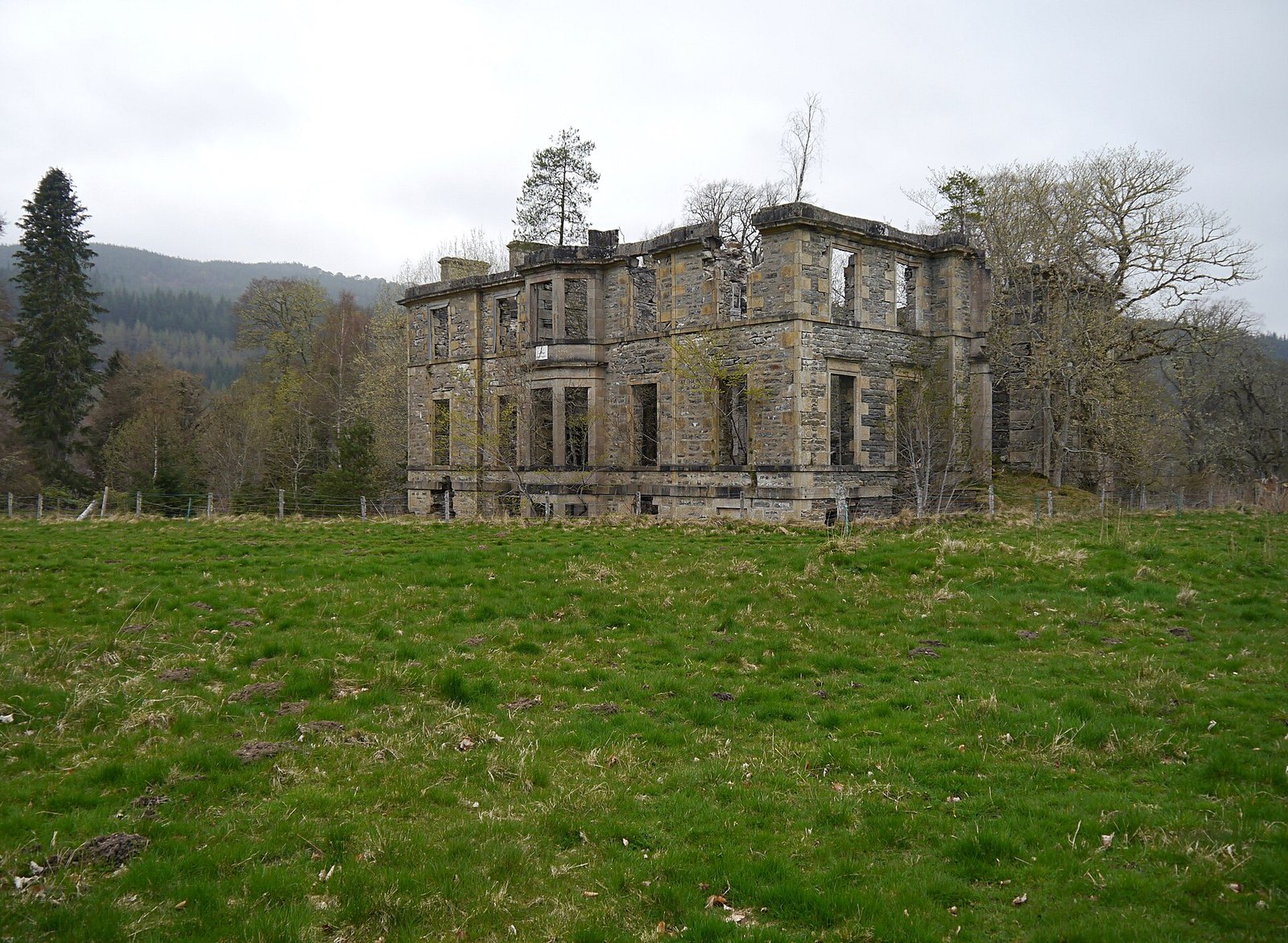
For decades the accepted story was different: that the breed descended from Russian circus dogs Lord Tweedmouth had supposedly bought. That theory held until the early 1950s, when Tweedmouth’s original studbooks were made available and Elma Stonex’s research showed the Nous-and-Belle account was the true one. The studbooks are the reason this breed’s history is unusually solid — most breeds have a founding myth; the Golden has a ledger.
The breed’s formal recognition followed the usual slow path. The Kennel Club in Britain first allowed registration in 1903 (as flat coats, yellow or golden) and granted separate recognition in 1911, classifying them “Yellow or Golden.” In America, the AKC first registered a Golden Retriever in 1925, recognized the Golden as a separate variety of Retriever in 1932, and the Golden Retriever Club of America was founded in 1938. A new, more complete standard written by the GRCA was approved by the AKC, effective 1955. (Sources: GRCA breed history; GRCA origins article.)
In the show ring, the Golden has one conspicuous gap on its résumé: a Golden Retriever has never won Best in Show at Westminster. Goldens have won the Sporting Group there — in 1968, in 2006 with Andy, and in 2020 with GCHP CH Hillock’s Jack Daniel’s, known as Daniel, who also won the GRCA National Specialty that year. At Westminster 2026, Best of Breed was CH Hillock’s Burl Oak Mtn CD BN RA CGC, and Best of Opposite Sex was GCHP Rohan & Chuckanut Livin’ For The Weekend At Alloro. (Sources: AKC, breeds that have never won Westminster; Canine Chronicle, Westminster 2026 Sporting Best of Breed list.)
3. The standard, and why it’s written that way
Read the Golden standard as a portrait of a working gundog that must also be beautiful — and every line is a guardrail against the things that go wrong when either half of that is forgotten. The quotes below are from the official standard (approved October 13, 1981; effective September 1990):
- Primarily a hunting dog. “Primarily a hunting dog, he should be shown in hard working condition. Over-all appearance, balance, gait and purpose to be given more emphasis than any of his component parts.” The standard opens by telling the judge what the dog is for — and that condition matters more than any single feature.
- Kindly expression, self-confident personality. “A symmetrical, powerful, active dog, sound and well put together, not clumsy nor long in the leg, displaying a kindly expression and possessing a personality that is eager, alert and self-confident.” The kindly expression is not decoration; it is the breed’s temperament written on its face.
- Temperament is a standard, not a wish. “Friendly, reliable and trustworthy. Quarrelsomeness or hostility towards other dogs or people in normal situations, or an unwarranted show of timidity or nervousness, is not in keeping with Golden Retriever character.” A Golden that is hostile or nervy fails the standard, not just the ring.
- Coat: dense, water-repellent, and natural. “Dense and water repellent with good undercoat. Outer coat firm and resilient, neither coarse nor silky, lying close to body; may be straight or wavy.” And: “Feet may be trimmed and stray hairs neatened, but the natural appearance of coat or outline should not be altered by cutting or clipping.” A Golden is shown as nature made it, tidied — never sculpted.
- Color: golden, and only golden. “Rich, lustrous golden of various shades. Feathering may be lighter than rest of coat… Predominant body color which is either extremely pale or extremely dark is undesirable… Any noticeable area of black or other off-color hair is a serious fault.” A few white hairs on the chest are allowed; anything more is penalized. The standard has a range, and it has edges.
- Movement on a loose lead. “When trotting, gait is free, smooth, powerful and well co-ordinated, showing good reach… It is recommended that dogs be shown on a loose lead to reflect true gait.” A Golden that needs to be hauled around the ring is not moving correctly.
- Only two disqualifications. Deviation in height of more than one inch from the standard either way, and an undershot or overshot bite. Everything else is a matter of degree — which is why the standard leans so hard on balance, gait, and purpose.
The honest complication is the field-versus-show split. Field-bred and show-bred Goldens are the same AKC-registered breed — the AKC does not register separate varieties — but generations of selective breeding have pulled them apart. Field-bred dogs run leaner and lighter, often 50–65 pounds, with longer legs, narrower heads and chests, shorter and coarser coats with minimal feathering, and darker gold to deep red coats; their pedigrees carry field titles (FC, AFC, WC, WCX) and their owners expect 60 to 90 minutes or more of vigorous daily work. Show-bred dogs are stockier, with heavier bone, broader heads and chests, long dense coats with extensive feathering, and pale to medium gold coats; they are calmer as companions and their pedigrees carry championship titles. There is also a regional layer: American, Canadian, and English (British) types under one AKC standard, and the UK Kennel Club standard accepts “any shade of gold or cream, neither red nor mahogany” — where the AKC standard calls extremely pale or extremely dark undesirable. A buyer who wants a field dog should not buy a show dog, and vice versa; the standard describes one breed, but the breeding tells you which half of the breed you are getting.
4. Temperament & living with one
The standard’s own description is the whole of it: “friendly, reliable and trustworthy.” Goldens are the default family dog for a reason — eager, alert, self-confident, and famously tolerant — and they are also serious workers: guides for the blind, search-and-rescue dogs, and service dogs, a role the breed’s temperament and trainability make it one of the best in the world at. (Sources: the standard; AKC breed page.)

The honest version: this is a dog that needs a job and needs its people. A Golden left alone in a yard all day will invent its own entertainment, and you will not like it. Field-bred lines need the most work — an hour or more of vigorous exercise and training daily — and show-bred lines need less, but no Golden is a couch dog. They shed, they carry mud and water into the house, they mouth everything when young, and they want to be where you are. What you get in return is the temperament the standard describes, for ten to twelve years if the health holds — which is the subject of section 6.
5. Grooming: the coat is the work
The coat is the breed’s glory and its upkeep. The standard wants it “dense and water repellent with good undercoat,” the outer coat “firm and resilient, neither coarse nor silky,” with feathering on the legs, chest, and tail — and it forbids the shortcut: “Feet may be trimmed and stray hairs neatened, but the natural appearance of coat or outline should not be altered by cutting or clipping.” “Excessive length, open coats and limp, soft coats are very undesirable.” (Coat facts from the standard.)
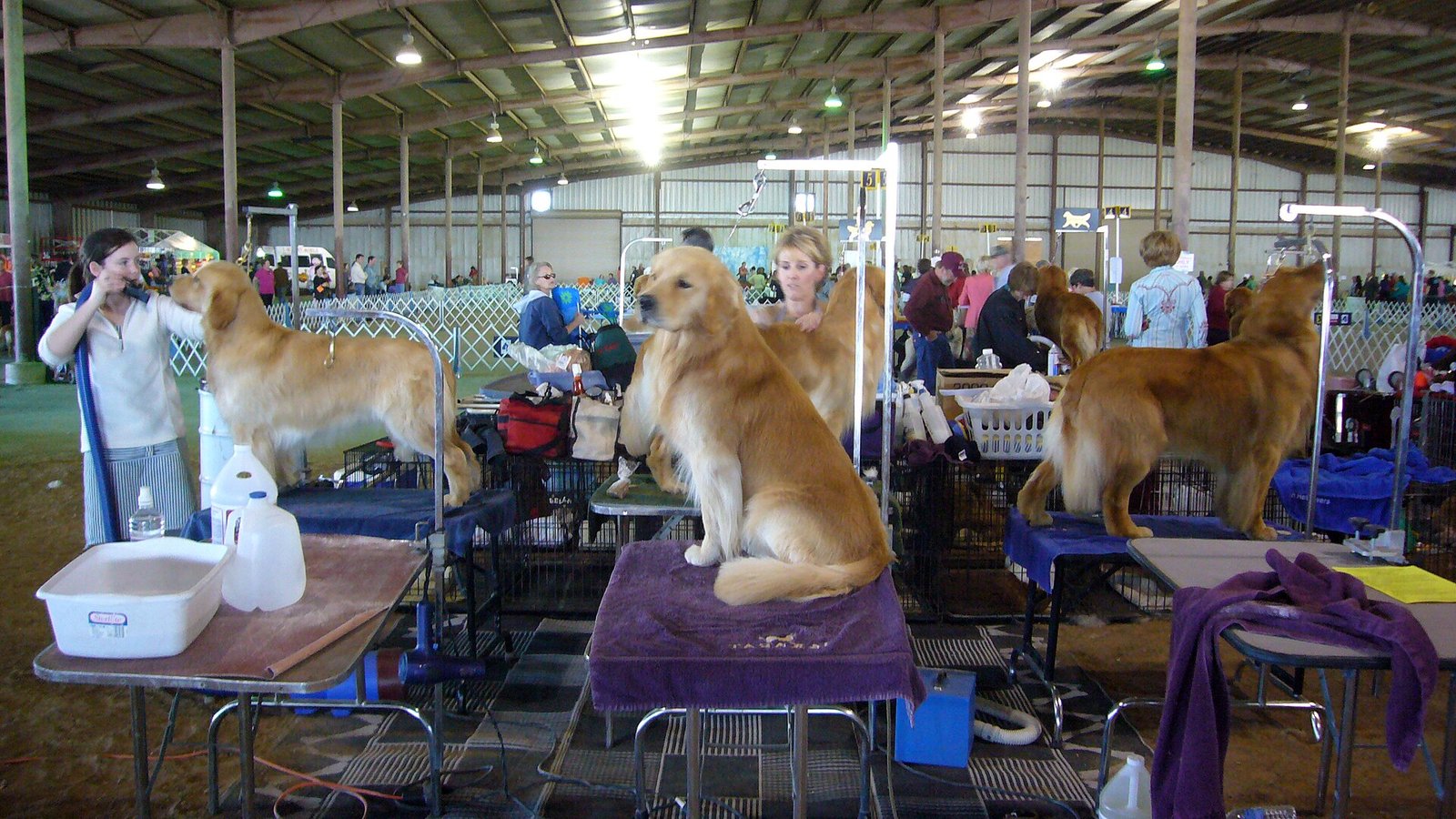
In practice: a dense double coat that sheds, heavily twice a year, and feathering that mats if it is ignored — regular brushing keeps it free of tangles, and the ears, which hang close to the head, need checking and cleaning. The show rule is also the pet rule: this is not a breed to clip down. A clipped Golden is a Golden whose coat has been altered out of its standard, and the coat takes a long time to grow back right.
6. Health testing
The honest version first, because this is the central question for anyone buying a Golden Retriever, and it should not be softened: cancer kills most Goldens. In the Golden Retriever Club of America’s 1998–1999 National Health Survey — the largest survey of its kind at the time, covering 1,444 dogs — cancer was the cause of death for 61.4% of the Goldens that died between 1993 and 1998, and lifespan remained at 11 years. The same survey put the lifetime risk of hemangiosarcoma at one in five (mean age of death 10.3 years) and of lymphoma at one in eight (mean age of death 8.5 years). A University of California, Davis necropsy study of 652 Golden Retrievers (1989–2016) found 424 of 652 — 65.0% — died because of cancer, most often hemangiosarcoma (22.64%) and lymphoid neoplasia (18.40%); median age of death was 9.15 years, and dogs that died of cancer died at a median of 9.83 years against 6.93 years for non-cancer deaths. European studies tell a different story — median age of death 11.0 to 12.5 years, with only 20 to 39% of deaths attributed to cancer — which is itself a clue that something about the American population, its breeding, or its environment is different. The AKC lists 10–12 years for lifespan. (Sources: Purina, on the GRCA national health survey; Kent et al., PLOS ONE, 2018; AKC breed page.)
The breed’s owners have not ignored this. The Morris Animal Foundation Golden Retriever Lifetime Study enrolled 3,044 Golden Retrievers aged 6 months to 2 years between June 2012 and April 2015 and follows them for life, with primary endpoints of hemangiosarcoma, lymphoma, osteosarcoma, and high-grade mast cell tumors — the four cancers that define the breed’s risk. One early result is genuinely reassuring: a 2026 analysis of the cohort found 164 of the 3,044 dogs (5.39%) had developed mast cell tumors, and the affected dogs’ overall lifespan was statistically indistinguishable from tumor-free dogs — most of those tumors were low-grade. (Sources: Labadie et al., PLOS ONE, 2022; BioEngineer summary of the 2026 mast cell tumor analysis.)
Beyond cancer, the parent club expects breeders to screen the parents of every litter for four things, and to disclose the results to buyers. Per the GRCA’s own health-screenings page and the GRCA Code of Ethics (adopted April 20, 1997):
- Hips — final certification at 24 months or older, OFA or PennHIP. Dysplastic dogs are generally not bred.
- Elbows — final certification at 24 months or older, OFA. Elbow dysplasia is estimated to affect approximately 10% of Goldens.
- Eyes — annual exam by a board-certified veterinary ophthalmologist, for the lifetime of any dog bred; an eye exam is valid for only 12 months. Hereditary (juvenile) cataracts are fairly common, usually appearing at ages 1 to 3 and usually without functional impairment; pigmentary uveitis is an emerging concern, typically in middle-aged and senior dogs, and can progress to glaucoma and possible removal of the eye. DNA tests exist for progressive retinal atrophy; carriers may be bred to a DNA-tested normal mate.
- Hearts — exam after 12 months of age by a board-certified veterinary cardiologist, certified by OFA. Subvalvular aortic stenosis (SAS) affects a small percentage of Goldens and can be serious; dogs with hereditary heart disease generally should not be bred.
The AKC’s Sporting Group health-testing requirements for the breed list the same four — hip evaluation, elbow evaluation, cardiac exam, and ophthalmologist evaluation — plus a DNA test for neuronal ceroid lipofuscinosis 5 (NCL5). The GRCA Code of Ethics also names epilepsy, hypothyroidism, skin disorders (allergies), and osteochondritis as heritable concerns. (Sources: AKC Sporting Group health-testing requirements; GRCA health screenings.)
Two things a buyer should know. A CHIC number means the required tests were done and made public — it does not imply normal or passing results. And the clearances should be in a public, searchable database (OFA, offa.org), verifiable by the dog’s registered name or number. If a breeder cannot show you the hips, elbows, eyes, and heart results, that is your answer. And ask about longevity in the lines: with cancer as the breed’s defining risk, a pedigree full of dogs that lived to twelve or thirteen is worth more than any single test result.
7. The specialty year: the national specialty is the anchor
Every breed has one show a year that matters most: the parent club’s national specialty. For Goldens, that’s the Golden Retriever Club of America’s national specialty — not a single show but a ten-day gathering of conformation, field trial, hunting test, obedience, rally, agility, scent work, tracking, and working certificate events, rotating among the Eastern, Central, and Western regions. It draws the deepest Golden entry of the year, from the most serious fanciers in the country, and a Best of Breed win there is among the most prestigious in the breed. Since 2023 the GRCA has run the national under centralized leadership rather than leaving it to a host club. (Sources: DogZibit, GRCA National Specialty; official 2026 premium list.)
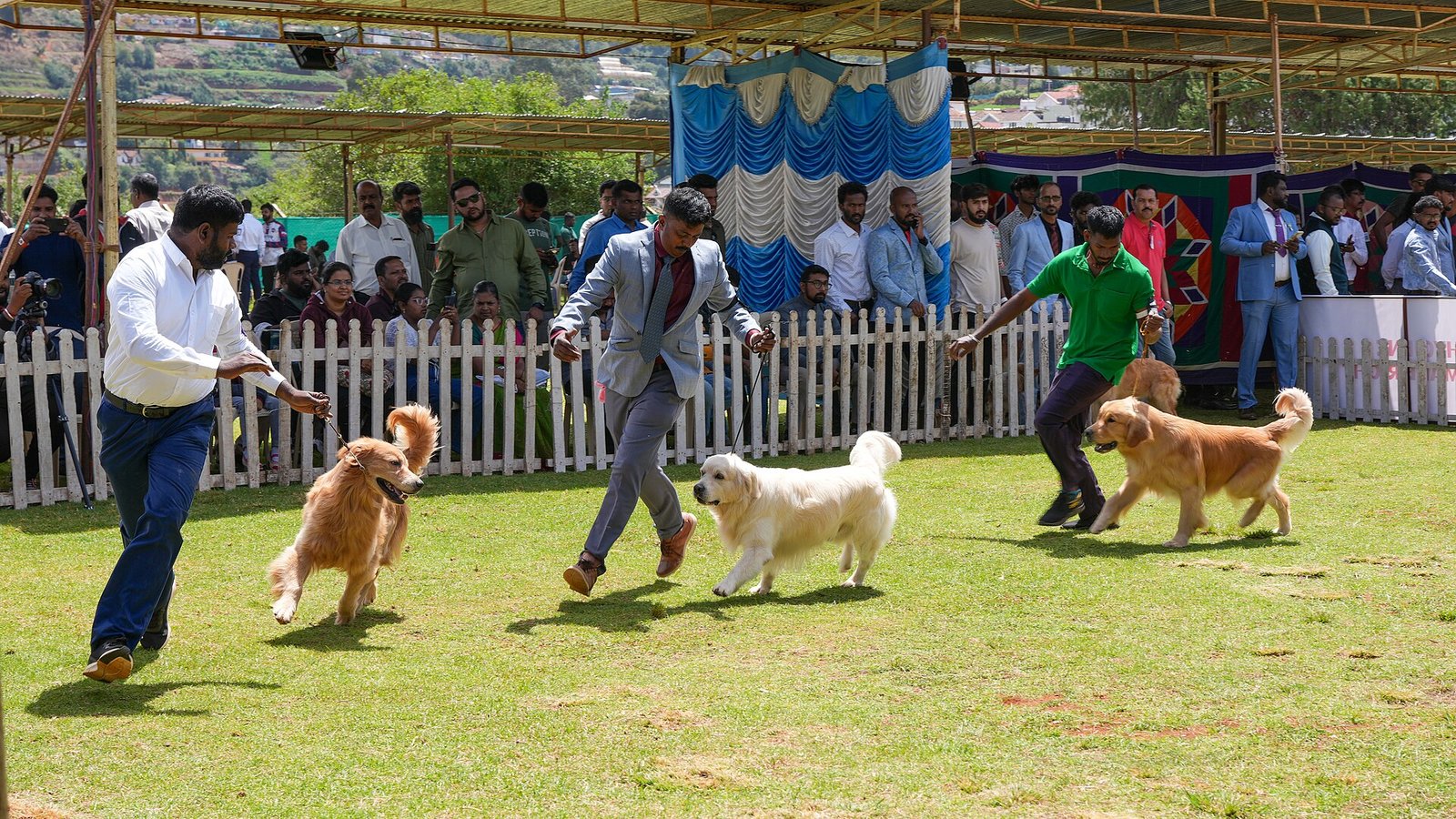
The most recent national specialty — the 86th National Specialty, September 29 to October 10, 2026 — was held at Island Grove Regional Park, 501 North 14th Avenue, Greeley, Colorado, under the theme “Peaks of Gold.” The conformation specialty ran Wednesday through Saturday, October 7–10, 2026 (AKC event 2026077414; entries opened July 22 and closed August 26, 2026). Conformation judges: Donna Ernst (Best of Breed, Best BBE, Best Puppy, Best Veteran), Collette Jaynes (regular and non-regular class dogs), and Nancy E. Talbott (regular and non-regular class bitches); Junior Showmanship was listed in the premium under Jennifer Harper, though the AKC results page lists Ms. Talbott for the junior classes — that discrepancy is unresolved. The week also held the 37th National Specialty Sweepstakes, the 15th Gun Dog Sweepstakes, the 76th Obedience Trial, the 21st Rally Trial, the 33rd Agility Trial, the 86th Field Trial, the 17th Hunting Test, the 62nd WC and 46th WCX Tests, and tracking and scent work. (Sources: DogZibit; official premium list; AKC event results.)
Entries, from the AKC event results: the Parent Specialty drew 455 entries — 221 dogs and 234 bitches; 453 competitors; 561 total entries. Junior Showmanship drew 9 entries and 8 competitors; Best Junior Handler was Trinity Lonsdale, with Reserve Best Junior Handler Alexis Coriell. The whole national drew approximately 2,400 entries, not counting parades, the Certificate of Conformation Assessment, or Top 20 entries. For comparison, the 2025 national at Purina Farms in Gray Summit, Missouri, drew 3,454 entries — the largest National Specialty to date. (Sources: AKC event results; Show Dogs Awards, GRCA profile.)
The 2026 Best of Breed winner had not been confirmed from official results as of November 2026 — this page will be updated when the official results are published, rather than naming a winner from an unverified source. The 2027 National Specialty is scheduled for October 2027 at the World Equestrian Center in Ocala, Florida (field trial at Red Dog Ranch, Madison, Florida); dates had not been announced as of November 2026. The 2028 national goes to Des Moines, Iowa, under the theme “Fields of Gold,” and 2029 to Wichita Falls, Texas. Golden Retriever Club of America →
8. Regional specialties through the year
The national is the anchor, but it’s not the only specialty. Regional Golden Retriever clubs hold their own specialties through the year, and they’re where most exhibitors actually campaign their dogs. These are the verified 2026 events:
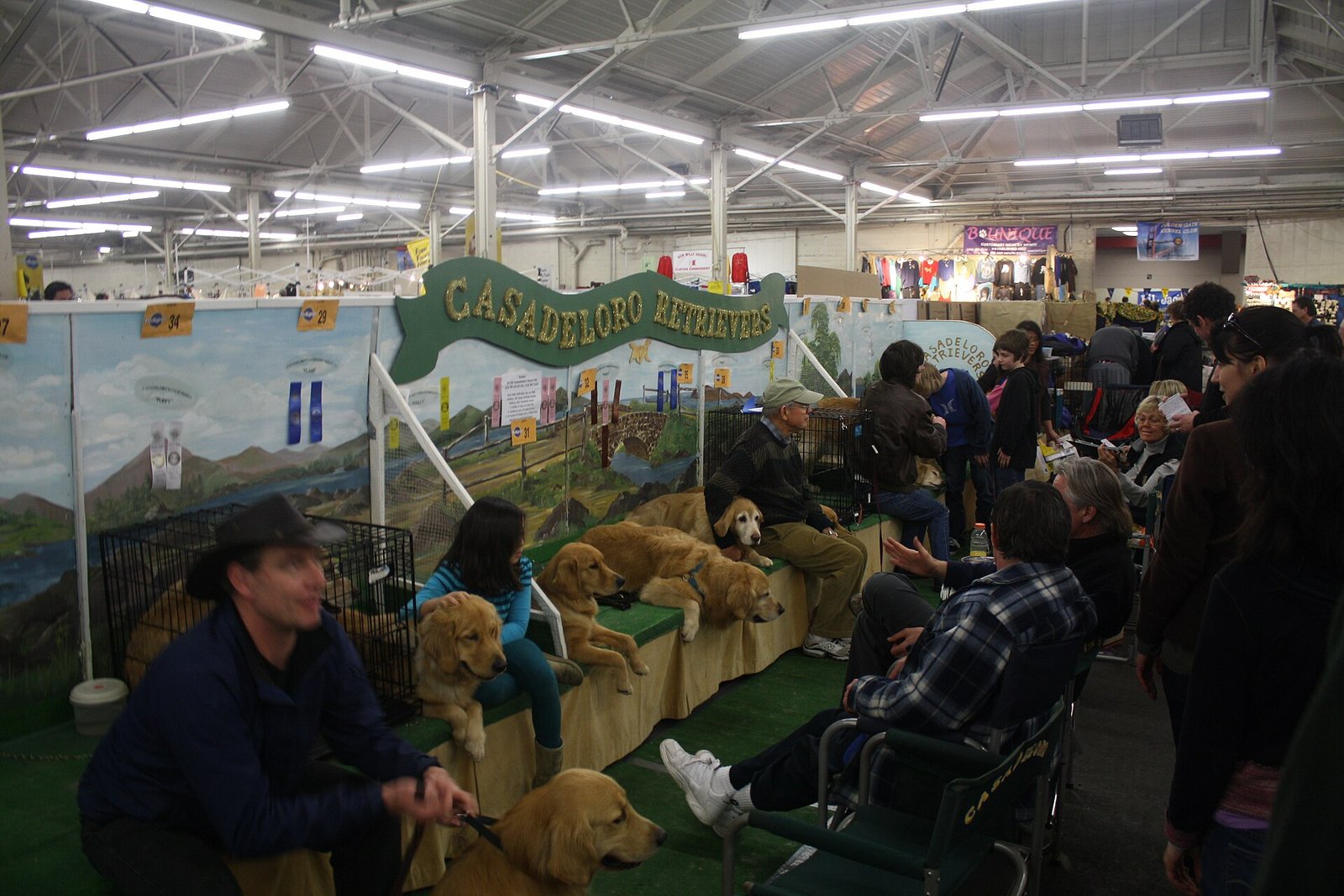
- Golden Retriever Club of Illinois — Friday, January 2, and Sunday, January 4, 2026, with the Great American Dog Show. Friday: 36 dogs / 43 entries. Sunday: 39 dogs / 44 entries. Judges across the weekend included Ms. Tonda Wright, Mr. Kelton Hatton, Ms. Judy Vandersteen, Mr. Neil McDevitt, and Ms. Ann Greenbank.
- Greater Twin Cities Golden Retriever Club — Friday, January 2, 2026, River Centre, 175 W. Kellogg Blvd., St. Paul, Minnesota. 38 competitors / 47 entries. Judge: Mrs. H. Glendinning.
- Inland Empire Golden Retriever Club — Thursday, May 21, 2026, two specialty shows. Show 1: 60 dogs / 75 entries, Judge: Ms. Barbara Madrigrano. Show 2: 51 dogs / 65 entries, Judge: Ms. Valerie Brown. Sweepstakes: Ms. Terri Brennan-Weiss.
- Des Moines Golden Retriever Club — Friday–Saturday, September 4–5, 2026, Iowa State Fairgrounds, Des Moines, Iowa. 45 entries each day. Judges: Mr. D. B. Swartwood (Friday), Mrs. E. Hardin (Saturday).
- Hudson Valley Golden Retriever Club — concurrent specialties, Saturday–Sunday, October 31–November 1, 2026, Rockland Community College. Saturday: 72 dogs / 72 entries, Judge: Ms. Pluis Davern. Sunday: 65 dogs / 65 entries, Judge: Ms. Susan Schwarz.
Other regional specialties and supported entries will be listed here as they are verified — this section is built from show data, not guesswork. Browse upcoming show weekends →
9. Clubs
- Golden Retriever Club of America — the AKC parent club, founded 1938. Breeder referral, rescue contacts, health research, the official standard, and the national specialty all live here.
Regional Golden Retriever clubs — the ones holding the specialties in section 8, from Illinois to Hudson Valley — are the working clubs of the breed. Start at the parent club’s site for regional club contacts.
10. Rescue
- GRCA CARE (Committee to Assist Rescue Efforts) — the parent club’s committee that supports a network of Golden Retriever rescues meeting published affiliation criteria, and surveys them annually to allocate Golden Retriever Foundation funding. Its page lists affiliated rescues by state.
- GRCA National Rescue Committee — coordinates Golden Retriever rescue nationally.
- Retrieve a Golden of the Midwest (Minnesota, Iowa, North and South Dakota, Wisconsin), Golden Retriever Rescue of Houston, Golden Retriever Rescue & Adoption of Needy Dogs (GRRAND) (Kentucky, Ohio, Indiana), Golden Retriever Rescue Education and Training (GRREAT) (Maryland, Virginia, DC, Delaware, Pennsylvania, West Virginia), Golden Retriever Rescue of the Rockies (Colorado and surrounding states), and Golden Retriever Rescue of Atlanta (Georgia, Alabama, North and South Carolina) — all affiliated rescues listed by GRCA CARE.
Golden rescue is a national network, not a single organization — start with the GRCA CARE list for the rescue covering your state.
11. Breeder vs. rescue: honest guidance
Want a puppy from health-tested parents with a predictable temperament? Go through the GRCA’s puppy referral — referral representatives from local Golden Retriever clubs, listed by state — and expect a responsible breeder to meet you face to face, check your home, show proof that the sire and dam are at least two years old with hips, elbows, heart, and eye clearances, provide a three-to-five-generation pedigree and AKC papers, be a GRCA or local-club member active in at least one dog sport, offer a contract, and take the dog back for life. (Source: GRCA, “Finding a Golden Retriever Puppy from a Responsible Breeder”.)
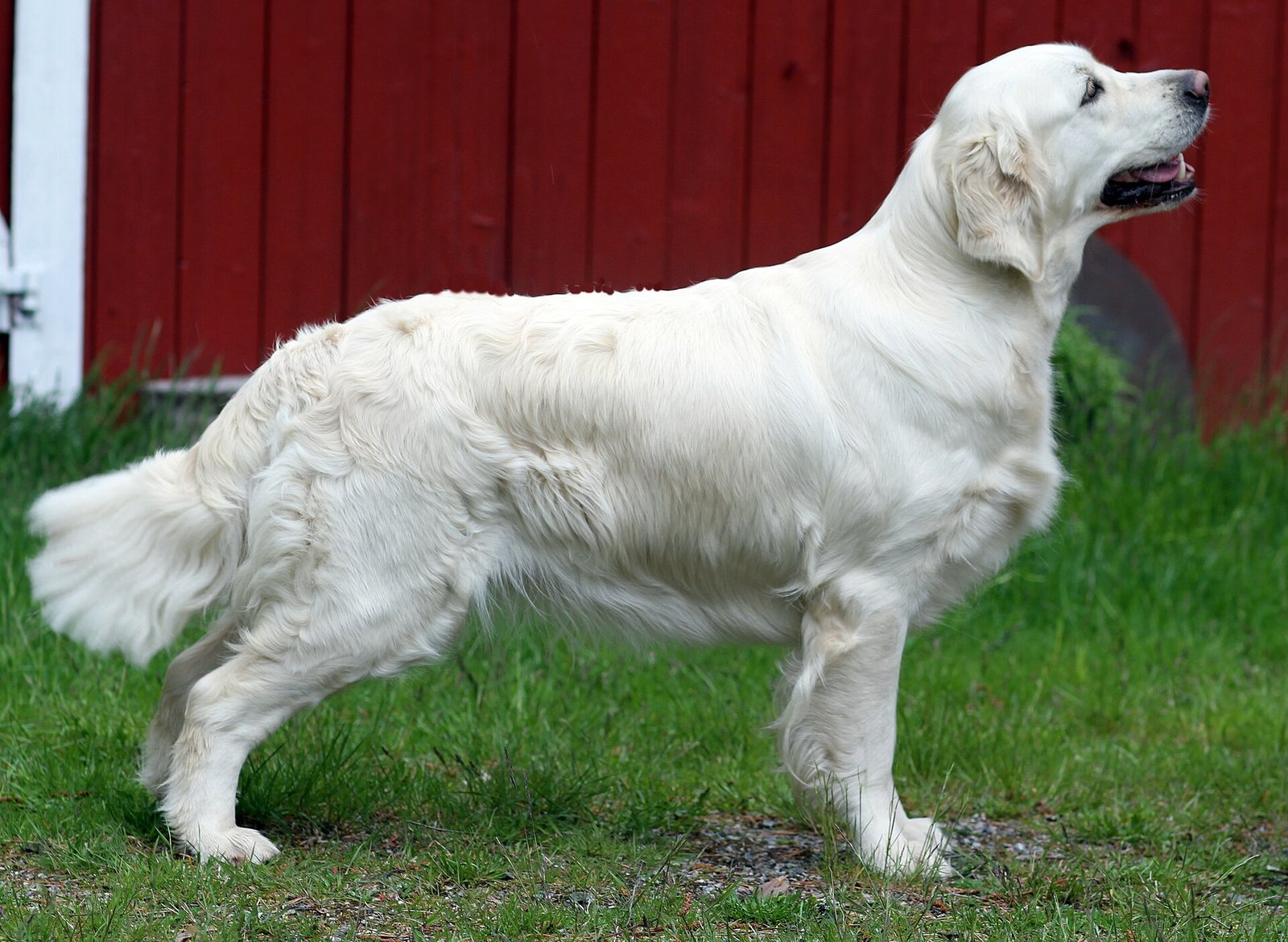
And beware the “English Cream” market. Light-colored Goldens are marketed as exceptionally rare or extremely valuable under names like “English Cream Golden Retrievers,” “Rare White European Golden Retrievers,” and “Exquisite Platinum Imported Golden Retrievers.” The parent club’s answer is plain: “There is only one Golden Retriever breed… the cream color has always been part of the full spectrum of colors found in our breed.” And: “To call the current light ones ‘English Cream Golden Retrievers’ is incorrect terminology, and in fact the majority of these dogs do not even come from England.” The UK Kennel Club standard accepts “any shade of gold or cream, neither red nor mahogany”; the AKC standard calls extremely pale or extremely dark undesirable. A very pale dog is a Golden Retriever, not a separate variety — and not a premium product. (Source: GRCA, “English Cream Golden Retrievers”.)
Open to an adult dog? A breed rescue like the ones in section 10 knows its dogs’ personalities and will match you honestly — including telling you when a Golden isn’t the right fit. Either path beats a pet store or a no-questions-asked online seller. And remember the health section above: with cancer as the breed’s defining risk, the breeder who shows you clearances and a pedigree full of long-lived dogs is the one to trust.
12. Is this your club’s breed? Claim this page.
Parent club, regional club, or rescue: this page is yours to improve. Send corrections, better history, show-grooming tips, upcoming specialty dates, or rescue updates to [email protected] and we’ll update it — with credit to your club. ThePetAdvisor is the front door, not a replacement: every page here funnels visitors to you.
Sources
- AKC: most popular dog breeds of 2025 (Golden Retriever No. 3, unchanged from 2024; full top 10)
- AKC: Golden Retriever breed page (lifespan 10–12 years; breed introduction)
- AKC Golden Retriever standard, as published by the GRCA (approved October 13, 1981; reformatted August 18, 1990; effective September 1990)
- GRCA: breed history (UK recognition 1903 and 1911; AKC registration 1925; separate variety 1932; GRCA founded 1938; standard effective 1955)
- GRCA: “The Origins of the Golden Retriever Revisited” (Nous, Belle, the 1868 litter, the Russian circus myth, the studbooks)
- Golden Retriever Club of America
- GRCA: health screenings for the parents of a litter (hips, elbows, eyes, hearts; elbow dysplasia ~10%; pigmentary uveitis)
- GRCA: “English Cream Golden Retrievers” (one breed; cream is part of the spectrum; “English Cream” is incorrect terminology)
- GRCA CARE: Committee to Assist Rescue Efforts (affiliated rescues by state)
- GRCA: puppy referral
- GRCA: “Finding a Golden Retriever Puppy from a Responsible Breeder” (responsible-breeder checklist)
- AKC: Sporting Group health-testing requirements (Golden Retriever: hips, elbows, cardiac, eyes, NCL5 DNA)
- AKC: breeds that have never won Westminster (Golden Retriever never won Best in Show)
- Canine Chronicle: Westminster 2026 Sporting Best of Breed list (Best of Breed CH Hillock’s Burl Oak Mtn; Best of Opposite Sex GCHP Rohan & Chuckanut Livin’ For The Weekend At Alloro)
- DogZibit: GRCA National Specialty (2026 dates, venue, judges, events)
- Official premium list, 2026 GRCA National Specialty (schedule, judges, entry dates)
- AKC event results, 2026 GRCA National Specialty (event 2026077414) (455 entries; 221 dogs, 234 bitches; 561 total entries; Junior Showmanship results)
- Show Dogs Awards: GRCA profile (2025 national: 3,454 entries, largest to date; ~2,400 entries in 2026)
- Purina: parent-club health initiatives (GRCA 1998–1999 national health survey: cancer 61.4% of deaths; hemangiosarcoma 1 in 5; lymphoma 1 in 8)
- Kent et al., PLOS ONE, 2018 (UC Davis necropsy study: 652 Goldens, 65.0% died of cancer)
- Labadie et al., PLOS ONE, 2022 (Golden Retriever Lifetime Study cohort profile: 3,044 dogs)
- BioEngineer: Golden Retriever Lifetime Study mast cell tumor analysis, 2026 (164 of 3,044 dogs; lifespan not shortened)
- Rau judging program, Hudson Valley Golden Retriever Club, October 31–November 1, 2026
- AKC-hosted judging program, Golden Retriever Club of Illinois, January 2 & 4, 2026
- GRCA National Rescue Committee
- Orthopedic Foundation for Animals (OFA) (public, searchable health clearances)
- OFA Canine Health Information Center (CHIC)
Photographs on this page are used under their Creative Commons licenses or are in the public domain; each caption names the photographer or source and links the license where one applies. ThePetAdvisor is an independent guide and is not affiliated with, endorsed by, or sponsored by the American Kennel Club, the Golden Retriever Club of America, or any show superintendent.