Breed profile · Herding Group · AKC’s No. 4 breed in 2025
German Shepherd Dog
One man, one dog, one idea: a herding dog built for work, not for looks — and then a century of argument over what that dog should look like. The standard’s own first line still states the case plainly: “a strong, agile, well muscled animal, alert and full of life.”
Help us improve it. This is one of ThePetAdvisor’s breed profiles, built from public sources with generous links to the people who actually own this breed’s knowledge. If something’s off or missing, the parent club can claim the page and set it straight — see the bottom of the page.
1. Breed at a glance
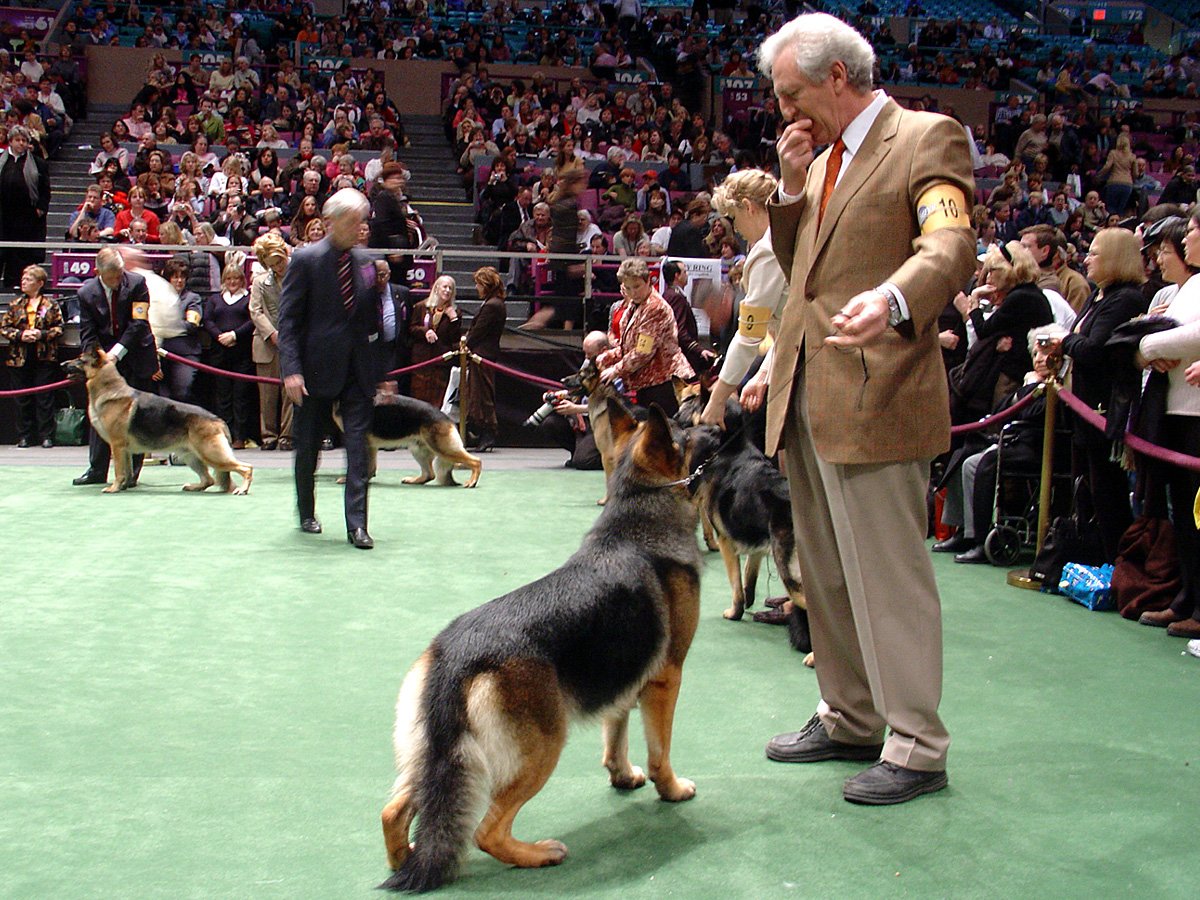
Herding — recognized since 1908
Dog: 24–26″ at the shoulder. Bitch: 22–24″. Most desirable proportion 10 to 8½, length to height. AKC lists 65–90 lbs (males), 50–70 lbs (females).
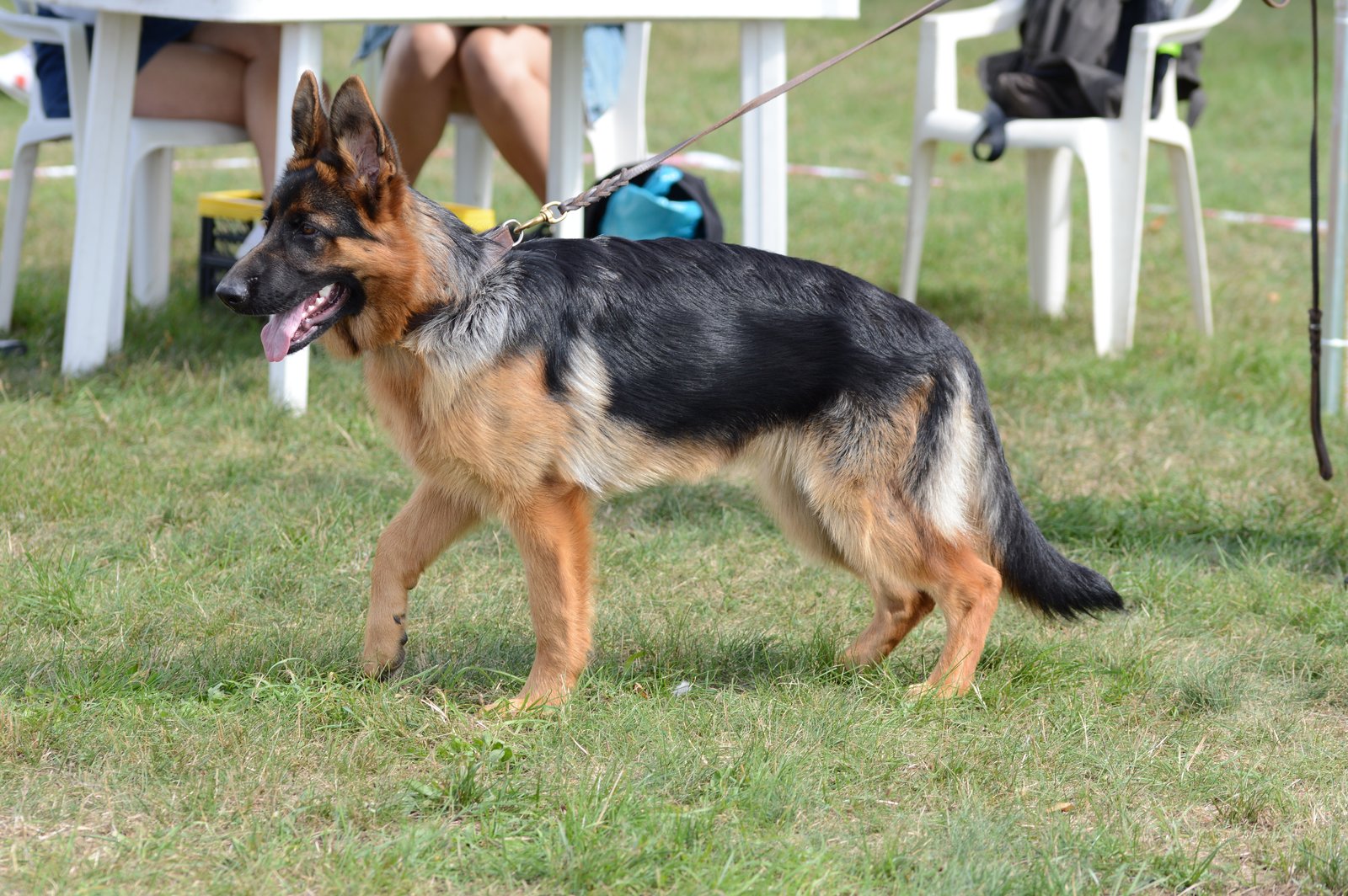
Double coat of medium length; outer coat dense, straight, harsh, lying close to the body. Most colors permissible; strong rich colors preferred.
“Direct and fearless, but not hostile… self-confidence and a certain aloofness that does not lend itself to immediate and indiscriminate friendships.”
High. A working dog that needs daily physical work and mental work — training, sport, or a real job — not just a yard.
Size, proportion, coat, and temperament facts are from the AKC standard as published by the German Shepherd Dog Club of America (approved February 11, 1978; reformatted July 11, 1994). Weight and life expectancy (12–14 years) from the AKC breed profile.
2. History
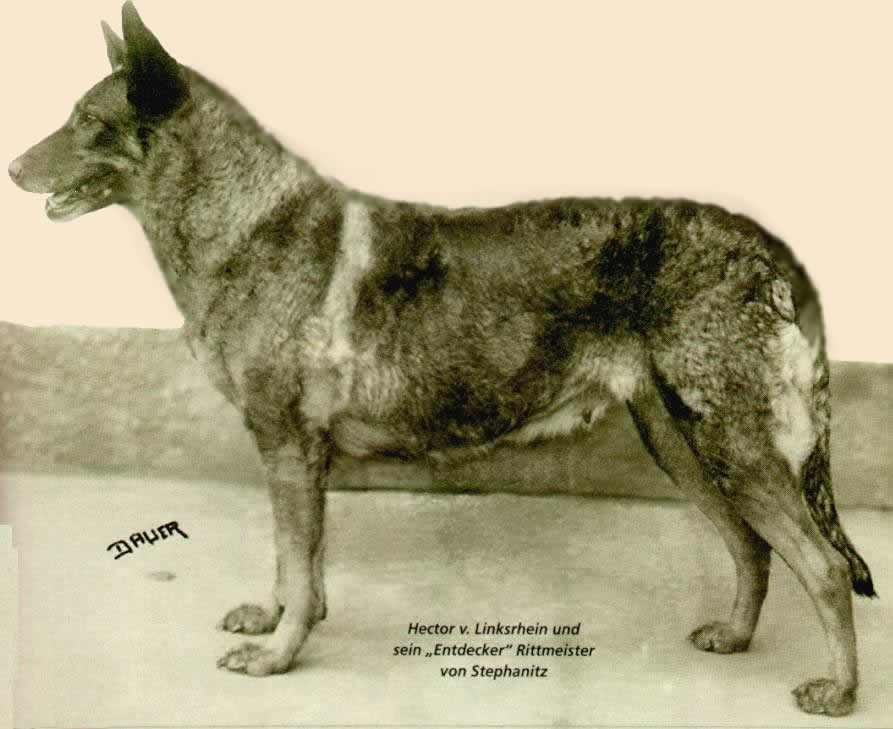
The German Shepherd Dog is one of the few breeds with a documented birth certificate. In 1899, at a dog show in Karlsruhe, Germany, cavalry captain Max von Stephanitz bought a medium-sized yellow-and-gray herding dog named Hektor Linksrhein, renamed him Horand von Grafrath, and registered him as the first German Shepherd Dog. On April 22, 1899, von Stephanitz founded the Verein für Deutsche Schäferhunde (SV) — the breed’s founding club — with Horand as the first entry in its studbook. His motto was “Utility and intelligence”: to him, beauty was secondary, and a dog was worthless if it lacked the intelligence, temperament, and structural efficiency to do its work. (Source: GSDCA breed history.)
The breed reached America quickly. The first German Shepherd was exhibited here in 1907 — Mira von Offingen, imported by Otto Gross — and the first AKC registration followed in 1908, a bitch named Queen of Switzerland. In 1913, Benjamin Throop and Anne Tracy formed the German Shepherd Dog Club of America, with 26 charter members; the club held its first specialty at Greenwich, Connecticut, in 1915, with Tracy herself judging. In 1917, when America entered World War I, the AKC changed the breed’s name to the Shepherd Dog and the club became the Shepherd Dog Club of America; in England the breed became the Alsatian. The original name was later restored. (Sources: GSDCA breed history; GSDCA purpose and incorporation.)
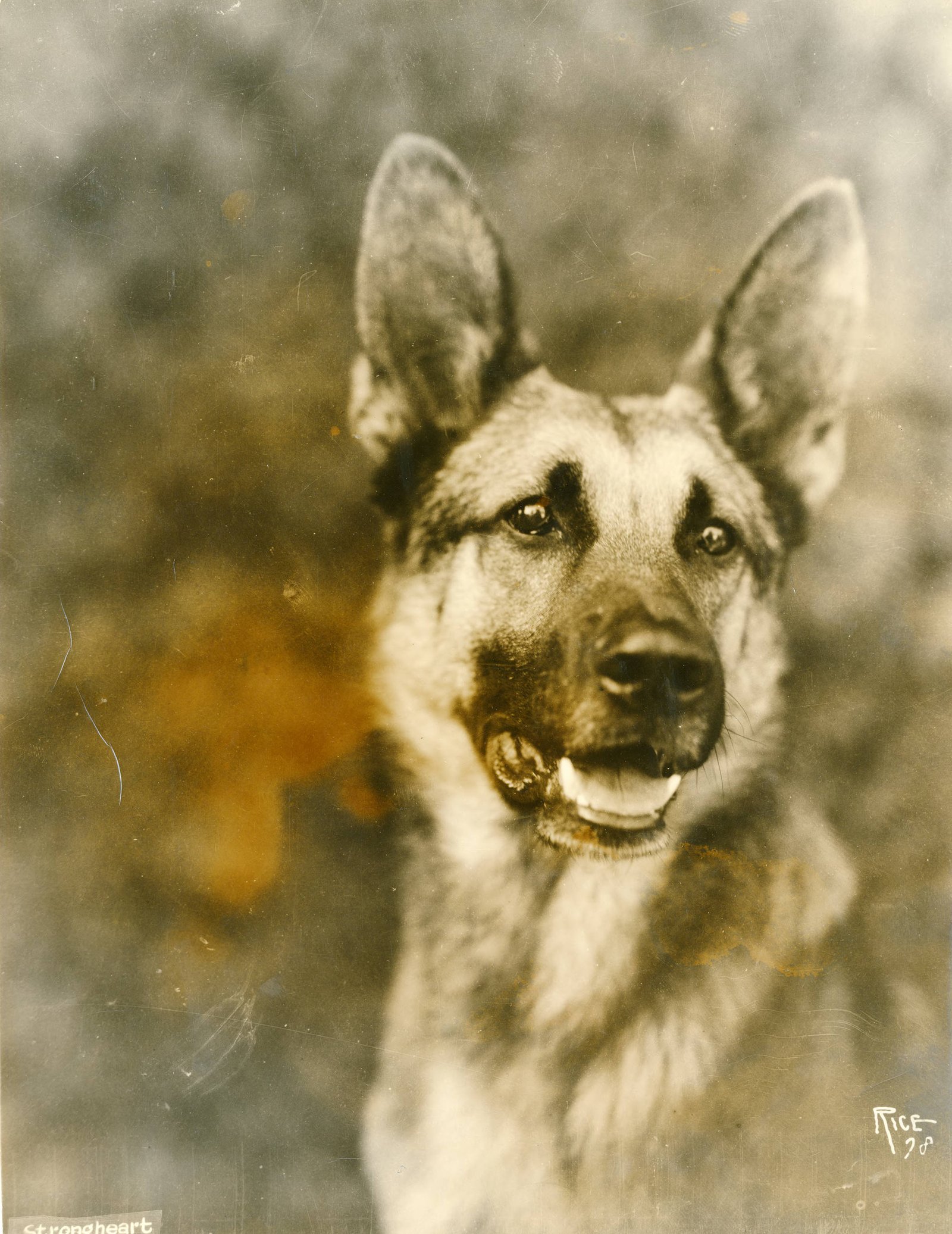
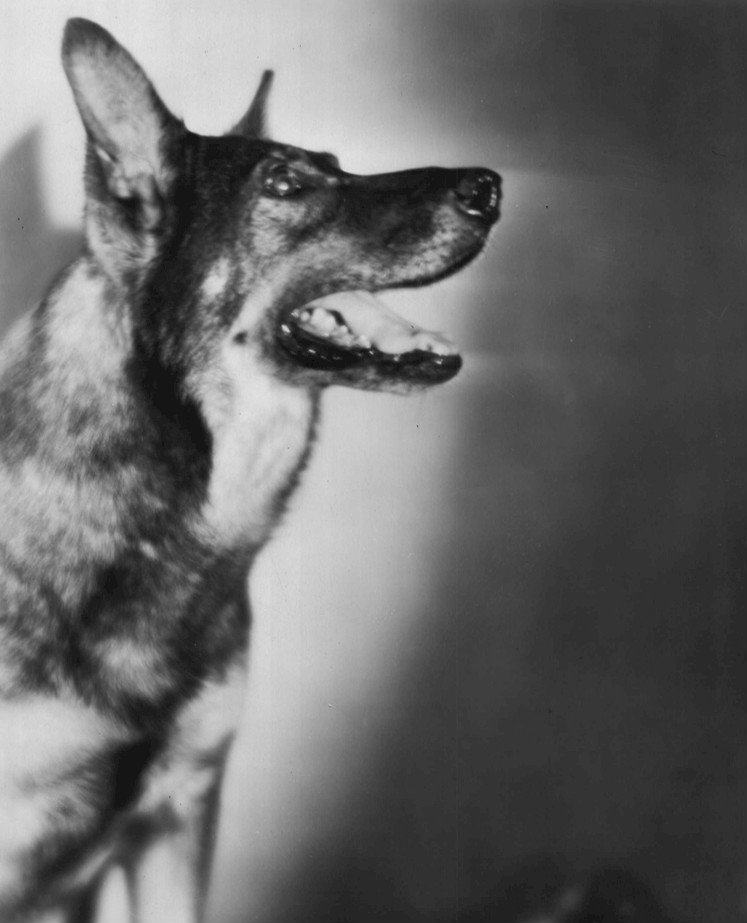
After the war, the breed exploded. Returning soldiers told stories of the German war dogs, and two film dogs did the rest: Strongheart, and then Rin Tin Tin, a puppy found in a bombed-out kennel in France, whose movies made the German Shepherd the most popular dog in America — a position it held from 1925 until 1936, by VCA’s account, and one it has never really surrendered since. The breed also found serious work: Mrs. Harrison Eustis of Fortunate Fields Kennels bred scientifically for temperament and ability, and her dogs became the foundation guide dogs of The Seeing Eye in Morristown, New Jersey. (Sources: GSDCA breed history; VCA Animal Hospitals.)
After World War II, the American and German lines diverged. The Americans built on the Pfeffer and Odin lines, and in the 1960s Lance of Fran-Jo — Grand Victor in 1967 — set the American show type: angulation, topline, and side gait, the look that still defines the American ring. The breed has won Best in Show at Westminster twice, both times a German Shepherd: “Manhattan” in 1987, and GCHP Lockenhaus’ Rumor Has It V Kenlyn (“Rumor”) in 2017 — the Herding Group’s only two Westminster Best in Show wins. Today the German Shepherd is the AKC’s No. 4 breed by registrations, a position it has held unchanged since 2024. (Sources: GSDCA breed history; AKC Westminster winners; AKC most popular breeds 2025.)
3. The standard, and why it’s written that way
Read the German Shepherd standard as a working-dog spec, and its most argued-over lines are the ones that matter most. The quotes below are from the official standard (approved February 11, 1978):
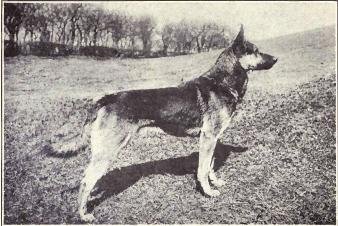
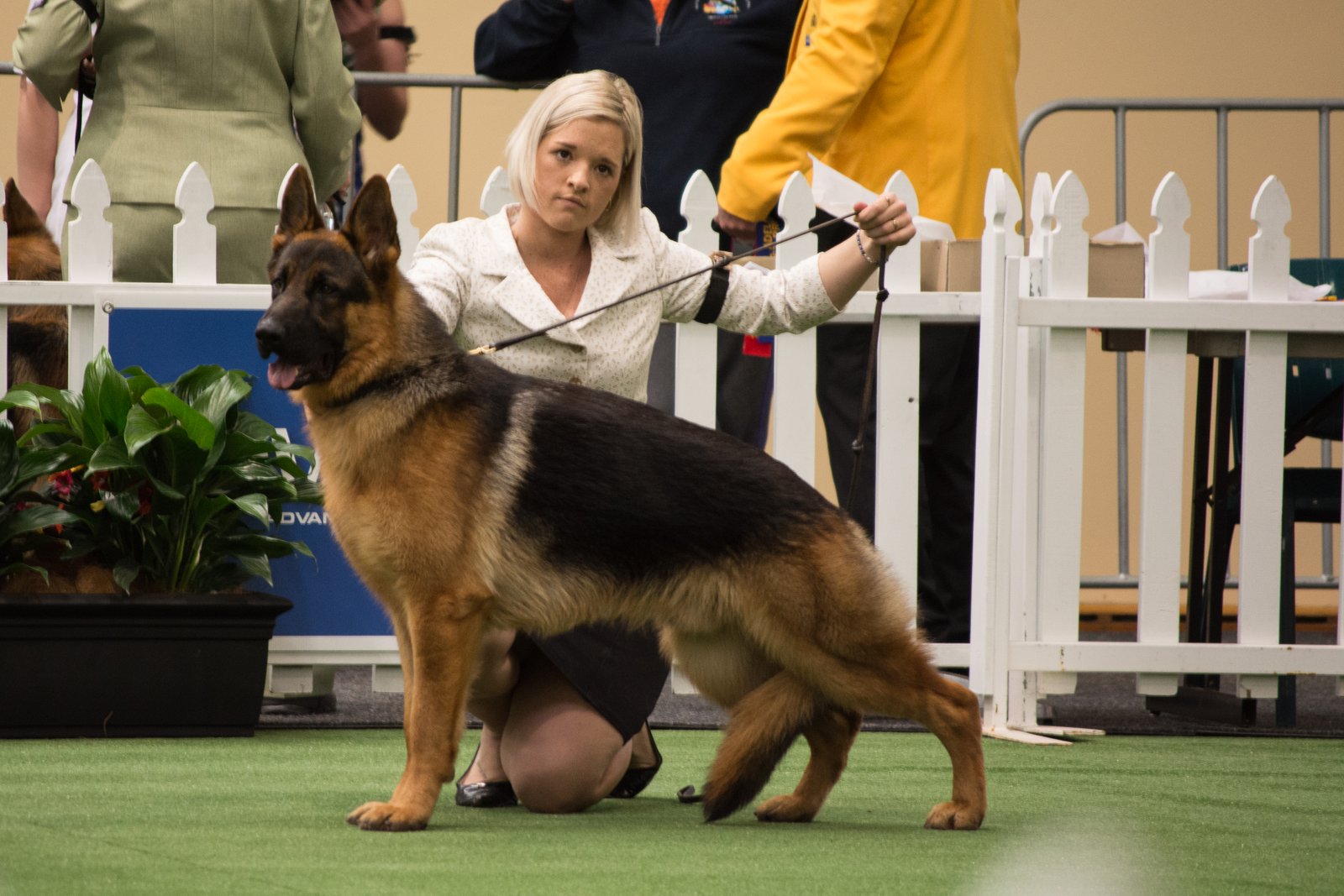
- Longer than tall, on purpose. “The German Shepherd Dog is longer than tall, with the most desirable proportion as 10 to 8½.” And: “The desirable long proportion is not derived from a long back, but from overall length with relation to height, which is achieved by length of forequarter and length of withers and hindquarter.” The length is in the quarters, not the spine.
- The back is straight. The standard says so twice. “The back is straight, very strongly developed without sag or roach, and relatively short.” And at full trot, “the back must remain firm and level without sway, roll, whip or roach. Unlevel topline with withers lower than the hip is a fault.” The croup is “long and gradually sloping” — the slope belongs to the croup, not the back.
- The angulation question, honestly. The slope a viewer sees in modern American show dogs comes from rear angulation — the angle of the stifle and hock, and the set of the pelvis — not from a curved spine. The standard never asks for the extreme rear angulation the ring has rewarded since the Lance of Fran-Jo era, and von Stephanitz himself wrote that the back should be “straight and powerful” and that spinal curvature diminishes endurance. That is the breed’s central controversy, and it is not settled: American show lines carry the most angulation and are bred for the AKC ring with no working requirement; West German show lines carry moderate angulation and must earn working titles for the breed survey; working lines — Czech, DDR, and other police and sport lines — are straighter, higher-drive dogs bred for performance. What the evidence does not show is a simple cause and effect: a sloping outline does not by itself diagnose hip dysplasia, and a level back does not guarantee sound hips. Hip health is measured by radiograph, not by photograph.
- Character is in the standard, not just the body. “The ideal dog is a working animal with an incorruptible character combined with body and gait suitable for the arduous work that constitutes its primary purpose.” Shyness is penalized as a very serious fault, pronounced shyness means excusal from the ring, and “any dog that attempts to bite the judge must be disqualified.” The temperament test in section 6 exists because the standard treats character as part of conformation.
- White is a disqualification, not a variety. “The German Shepherd Dog varies in color, and most colors are permissible. Strong rich colors are preferred. Pale, washed-out colors and blues or livers are serious faults. A white dog must be disqualified.” White German Shepherds exist and are loved as pets, but under the AKC standard they cannot be shown.
- Movement is the exam. “The gait is outreaching, elastic, seemingly without effort, smooth and rhythmic, covering the maximum amount of ground with the minimum number of steps… the steady motion of a well-lubricated machine.” The hindquarters deliver “a powerful forward thrust which slightly lifts the whole animal and drives the body forward” — and the back must stay firm and level while it happens. Faults of gait “are to be considered very serious faults.”
- The whole dog, in one line. “The first impression of a good German Shepherd Dog is that of a strong, agile, well muscled animal, alert and full of life… The ideal dog is stamped with a look of quality and nobility–difficult to define, but unmistakable when present.”
4. Temperament & living with one
The standard’s own description: “direct and fearless, but not hostile, expression, self-confidence and a certain aloofness that does not lend itself to immediate and indiscriminate friendships. The dog must be approachable, quietly standing its ground and showing confidence and willingness to meet overtures without itself making them.” The AKC puts it more plainly: “Loyal, confident, courageous, and steady.” (Sources: the standard; AKC breed page.)
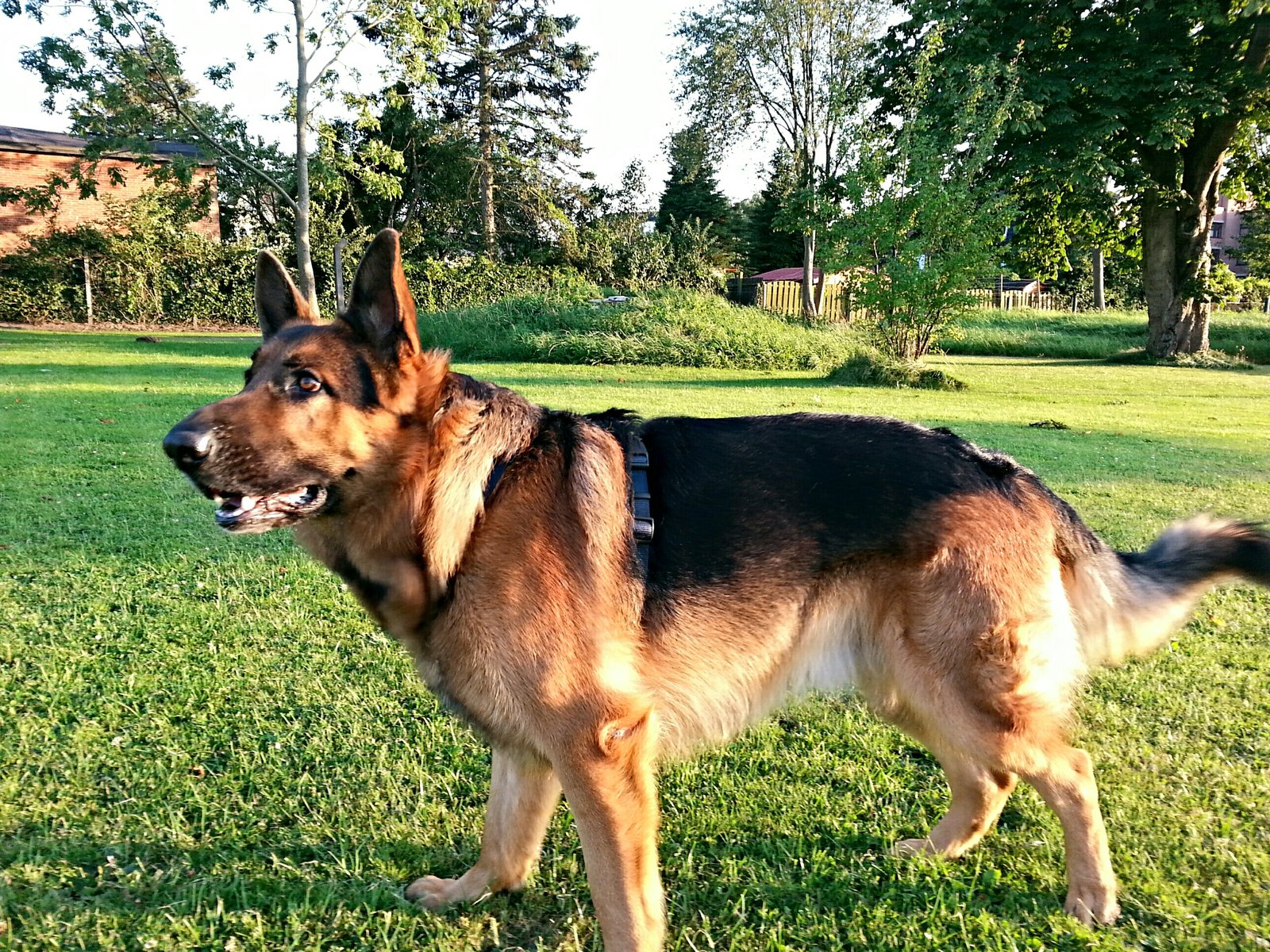
The honest version: this is a one-family dog that takes its job seriously, and the job is you. VCA’s guidance is blunt and right: “A one family dog, tending to be aloof toward and suspicious of strangers. It needs early socialization so that it willingly accepts new people” — and without dedicated training, that protectiveness can turn into overprotective or reactive behavior. They are, VCA says, “generally gentle with children, but may be overly protective.” Give them daily physical work and mental work — long walks, runs, training, obedience, agility, tracking, herding, or a sport like Schutzhund/IGP — and they are calm, alert housedogs. Leave a German Shepherd bored and under-exercised and it will find work of its own, usually work you did not want done. This is also the line question from section 3 in practical form: a working-line dog without work is a much harder pet than a show-line dog, and a show-line dog still needs far more than a yard and a pat. Buy the line that matches your life, and be honest about how much life you have to give. (Sources: VCA Animal Hospitals; the standard.)
5. Grooming: the coat sheds, and then it sheds more
The coat is the easy part and the hard part at once. The standard wants “a double coat of medium length” with a dense, straight, harsh outer coat lying close to the body — and a double coat sheds year-round and “blows” its undercoat heavily twice a year, in spring and fall. Frequent brushing manages the shedding and keeps the coat in condition; during a blow-out, daily brushing is the only thing standing between you and fur on everything you own. Bathe as needed, not on a schedule, and keep up nails and ears. There is no stripping, no clipping, no elaborate coat routine — and no way to groom your way out of the shedding. If fur on the furniture is a deal-breaker, this is not your breed. (Coat facts from the standard; care from VCA Animal Hospitals.)
6. Health testing
The honest version first: this breed’s health record is the price of its popularity, and it should not be softened. About one in five German Shepherds evaluated by the Orthopedic Foundation for Animals scores dysplastic on hip radiographs, and roughly the same share on elbows — hip and elbow dysplasia are the breed’s defining orthopedic problem, and they are why the parent club’s testing list starts where it does. (Source: OFA breed statistics.)
The rest of the list: degenerative myelopathy (DM), a progressive, incurable spinal cord disease that usually appears after age seven and takes the hind legs first — a DNA test for the SOD1 mutation identifies clear, carrier, and at-risk dogs, and because it is autosomal recessive, two carriers can produce at-risk puppies. Bloat (gastric dilatation-volvulus), the deep-chested emergency in which the stomach fills with gas and twists — fatal without emergency surgery, and the reason owners are told to know the signs (restlessness, unproductive retching, a distended belly) and to ask their vet about preventive gastropexy. Exocrine pancreatic insufficiency (EPI), in which the pancreas stops making digestive enzymes — German Shepherds carry the highest incidence of any breed; it is manageable for life with enzyme supplementation, not curable. And perianal fistula, painful draining tracts around the anus that fall mostly on this breed and need long-term immune therapy. (Sources: GSDCA Health & Research; VCA Animal Hospitals.)
The national parent club’s published testing list (per AKC’s breed-club health testing requirements) is short, and the third item is what makes this breed unusual:
- Hip evaluation — OFA radiographic evaluation (or PennHIP); final certification at 24 months
- Elbow evaluation — OFA radiographic evaluation; elbows are Normal or not
- GSDCA Temperament Test — the club’s own character assessment, submitted to OFA; character is a health-of-the-breed item here, not an afterthought
Optional additions under the CHIC program: cardiac exam, thyroid evaluation, degenerative myelopathy DNA test, and an eye exam. The club’s Health Award of Merit goes further: passing OFA hips and elbows, the temperament test, and OFA cardiac and thyroid tests, with the DM test performed and published — though because research continues, a dog’s DM result does not disqualify it from the award. (Sources: GSDCA Health Award of Merit; German Shepherd Dog Club of Atlanta, “Thinking About Getting a German Shepherd”.)
Two things a buyer should know: a CHIC number means the required tests were done and made public — it does not imply normal or passing results, so read the actual hip and elbow grades. And beware the secondary sources that list DM, cardiac, and thyroid as CHIC-required for this breed: the AKC-published parent-club list says otherwise, and the draft follows the AKC list. If a breeder cannot show you the hips, elbows, and temperament results, that is your answer. The AKC lists a 12–14 year life expectancy for the breed.
7. The specialty year: the national specialty is the anchor
Every breed has one show a year that matters most: the parent club’s national specialty. For German Shepherds, that’s the German Shepherd Dog Club of America’s national specialty — not a weekend but a full week, with herding and tracking at Purina Farms and conformation at the Illinois State Fairgrounds, and the Futurity and Maturity stakes that are the breed’s own showcase for young dogs. It draws the deepest German Shepherd entry of the year, from the most serious fanciers in the country, and the Grand Victor and Grand Victrix — best dog and best bitch in the breed class — are the breed’s highest annual honors. (Sources: GSDCA future nationals; DogZibit, 2026 GSDCA National.)
The most recent national specialty was the 113th National Specialty, Thursday, October 1 through Saturday, October 3, 2026, at the Illinois State Fairgrounds, 801 E. Sangamon Ave., Springfield, Illinois, with a pre-show specialty on Wednesday, September 30, judged by Gloria Birch. The national week ran September 24 through October 3, with herding September 24–26 at Purina Farms in Gray Summit, Missouri, and the national tracking test on Sunday, September 27. Conformation judges were James Moses (intersex), Robert Drescher (dogs), and Michel Chaloux (bitches). (Sources: DogZibit, 2026 GSDCA National; AKC event results.)
Entries, from the official AKC results: 158 dogs (68 dogs, 90 bitches) and 216 entries. Best of Breed was GCHB CH Wonderland’s Mvp Jokic V Knight’s Gambit (“Nik”), making him the 2026 Grand Victor; Best of Opposite Sex was GCH CH Seamar Peters’ Here’s Your One Chance V Raintree RN TC, the 2026 Grand Victrix. Select Dog was CH Marquis’ Don’T Worry, Blame It On Me; Select Bitch was CH Rosewood’s She’s A Rainbow V Simcar. Winners Dog was Wolf Creek Cochise V Wonderland; Winners Bitch and Best of Winners was Amber Jo-El Legacy Beyond Belief V Carlyn She-Rock. Best Junior Handler was Sophia Brown. (Source: AKC official results, event #2026009326. The GSDCA’s own Grand Victor/Victrix lists had not yet been updated past 2025 when this page was drafted; the 2026 titles above follow from the AKC Best of Breed and Best of Opposite Sex results under the club’s definitions.)
For comparison, the 112th National Specialty ran October 17–25, 2025, at the Illinois State Fairgrounds in Springfield, with herding at Purina Farms. Grand Victor 2025 was GCH Kenlyn Marquis’ Sultan Of Swing Seven Hills ROM; Grand Victrix 2025 was GCH Jimeni Eklectic Juju Of Clayfield Norberge. (Sources: GSDCA Grand Victors; GSDCA Grand Victrixes; GSDCA 2025 National Specialty.)
The next national specialty is scheduled for September 24 – October 3, 2027, at Purina Farms, Gray Summit, Missouri. GSDCA future nationals →
8. Regional specialties through the year
The national is the anchor, but it’s not the only specialty. Regional German Shepherd clubs hold their own specialties through the year, and they’re where most exhibitors actually campaign their dogs. These are the verified 2026 events:
- Grand Canyon German Shepherd Dog Club — Saturday–Sunday, December 5–6, 2026, Queen Creek, Arizona. Two regional specialties and one specialty show: Saturday morning (Ms. Kathy Field Casteel), Saturday afternoon (Mr. Robert L. Robinson), Sunday morning (Dr. Sophia Kaluzniacki). Entries close November 25, 2026.
- German Shepherd Dog Club of Reno — Friday, September 25, 2026. Two specialty shows with Beginner Puppy; morning judge Ms. Diane Collings.
- German Shepherd Dog Club of Minneapolis & St. Paul — Saturday–Sunday, May 30–31, 2026. Two specialty conformation shows, with a GSDCA Temperament Test on Saturday, May 30 (evaluator Lori Payne).
- German Shepherd Dog Club of Sacramento Valley — Saturday, March 28, 2026. Specialty show with a GSDCA Temperament Test after the PM show (evaluator Ileanna Noqueras).
Other regional specialties and supported entries will be listed here as they are verified — this section is built from show data, not guesswork. Browse upcoming show weekends →
9. Clubs
- German Shepherd Dog Club of America — the AKC parent club, founded 1913 and incorporated February 7, 1916. Breeder listings, health programs, the temperament test, the official standard, and the national specialty live here. Its regional member clubs span the country — start at the parent club’s site for the club nearest you.
Know a regional German Shepherd club we should list? Tell us — or claim the page below.
10. Rescue
- American German Shepherd Rescue Association (AGSRA) — a 501(c)(3) organization that keeps an online directory of German Shepherd rescues by state, makes grants to local rescue groups, and offers education and consultation on rescue. Start here to find a rescue near you.
The parent club itself runs no shelter — it points owners and adopters to AGSRA and the local groups in its directory. German Shepherds come into rescue for the usual reasons — a move, a divorce, a dog bought for looks that turned out to need work — and most are adults who need an owner who understands the breed, not a first-timer learning on the job.
11. Breeder vs. rescue: honest guidance
Want a puppy from health-tested parents with a predictable temperament? Go through the GSDCA’s breeder listings and ask for the hips, elbows, and temperament results in section 6 above — and read the actual OFA grades yourself at ofa.org before you pay anything. Then ask the question that matters most in this breed: which line? A working-line puppy is a different dog from an American show-line puppy, and both are different again from a West German show-line puppy. Tell the breeder honestly how you live, how much time you train, and what you want the dog to do all day — and listen when the breeder tells you a line is wrong for you.
And know what you are not buying. A white German Shepherd is a disqualification under the AKC standard, not a rare variety — white dogs are loved pets, but they cannot be shown, and anyone charging a premium for a “rare white” is charging for a fault. Blues and livers are serious faults, not rare colors. And an AKC registration does not certify that a dog meets the standard — registration records parentage, nothing more.
Open to an adult dog? A breed rescue like the ones in section 10 knows its dogs’ personalities and will match you honestly — including telling you when a German Shepherd isn’t the right fit, which, for a first-time owner with small children and no time to train, it often isn’t. Either path beats a pet store or a no-questions-asked online seller. And remember what the standard demands of the owner as much as the dog: this is a working animal with an incorruptible character, and it needs work worthy of it.
12. Is this your club’s breed? Claim this page.
Parent club, regional club, or rescue: this page is yours to improve. Send corrections, better history, show-grooming tips, upcoming specialty dates, or rescue updates to [email protected] and we’ll update it — with credit to your club. ThePetAdvisor is the front door, not a replacement: every page here funnels visitors to you.
Sources
- AKC: most popular dog breeds of 2025 (German Shepherd Dog No. 4, unchanged from 2024)
- AKC: German Shepherd Dog breed page
- AKC German Shepherd Dog standard (as published by the GSDCA; approved February 11, 1978; reformatted July 11, 1994)
- AKC: Herding Group health testing requirements (from the national breed clubs) (German Shepherd Dog: hip, elbow, temperament test)
- German Shepherd Dog Club of America
- GSDCA: breed history (1899 founding; 1913 club; 1915 first specialty; 1917 name change; Strongheart and Rin Tin Tin; Seeing Eye; Lance of Fran-Jo)
- GSDCA: purpose of the club (formed 1913, incorporated February 7, 1916)
- GSDCA: Health Award of Merit (passing hips, elbows, cardiac, thyroid, temperament test; DM performed and published)
- GSDCA: Health & Research
- GSDCA: Grand Victors (2025: GCH Kenlyn Marquis’ Sultan Of Swing Seven Hills ROM)
- GSDCA: Grand Victrixes (2025: GCH Jimeni Eklectic Juju Of Clayfield Norberge)
- GSDCA: future nationals (2026 Springfield, Sep. 25–Oct. 3; 2027 Purina Farms, Sep. 24–Oct. 3, 2027)
- GSDCA: 2025 National Specialty (112th, October 17–25, 2025, Springfield)
- GSDCA: breed rescue and AGSRA
- GSDCA: breeder/puppy ads
- DogZibit: 2026 GSDCA National, Springfield, IL (113th National Specialty, October 1–3, 2026; judges; pre-show September 30)
- AKC official results, 2026 GSDCA National Specialty (event #2026009326) (158 dogs / 216 entries; Best of Breed GCHB CH Wonderland’s Mvp Jokic V Knight’s Gambit)
- AKC: Westminster Best in Show winners through the years (German Shepherd wins 1987 and 2017)
- German Shepherd Dog Club of Atlanta: “Thinking About Getting a German Shepherd” (CHIC essential vs. optional tests; OFA ratings)
- Grand Canyon German Shepherd Dog Club premium list, December 5–6, 2026
- German Shepherd Dog Club of Minneapolis & St. Paul premium list, May 30–31, 2026
- German Shepherd Dog Club of Sacramento Valley premium list, March 28, 2026
- VCA Animal Hospitals: German Shepherd (history; temperament; exercise; grooming; most popular 1925–1936)
- OFA (Orthopedic Foundation for Animals) (hip and elbow breed statistics; CHIC lookup)
- Hill’s Pet: German Shepherd Dog breed (weight and lifespan, citing the AKC standard)
Photographs on this page are used under their Creative Commons licenses or are in the public domain; each caption names the photographer or source and links the license where one applies. ThePetAdvisor is an independent guide and is not affiliated with, endorsed by, or sponsored by the American Kennel Club, the German Shepherd Dog Club of America, or any show superintendent.