The Reading Room • Family Dog
Here’s a secret the dog show world doesn’t advertise: your dog doesn’t need to be a show dog, an agility dog, or anything special to earn real AKC titles. If your dog can sit, shake, or just be a good citizen on a walk, there’s a title with their name on it.
The AKC Family Dog Program is the on-ramp to everything the AKC does. No conformation ring, no timed courses, no competition against anyone but the checklist in front of you. Every breed welcome. Every mix welcome. Puppies welcome.

Planning to earn titles with your dog? Track your progress with a free ThePetAdvisor account — plan your training, save your titles, and find events near you.
The programs, in the order most people do them
S.T.A.R. Puppy (AKC)
For puppies under a year old. S.T.A.R. stands for Socialization, Training, Activity, Responsibility. It’s a six-week class, not a test — attend, participate, and your puppy earns the title. If your dog is past puppyhood, skip this one entirely: S.T.A.R. Puppy is puppy-only, and older dogs go straight to CGC. You haven’t missed the boat.

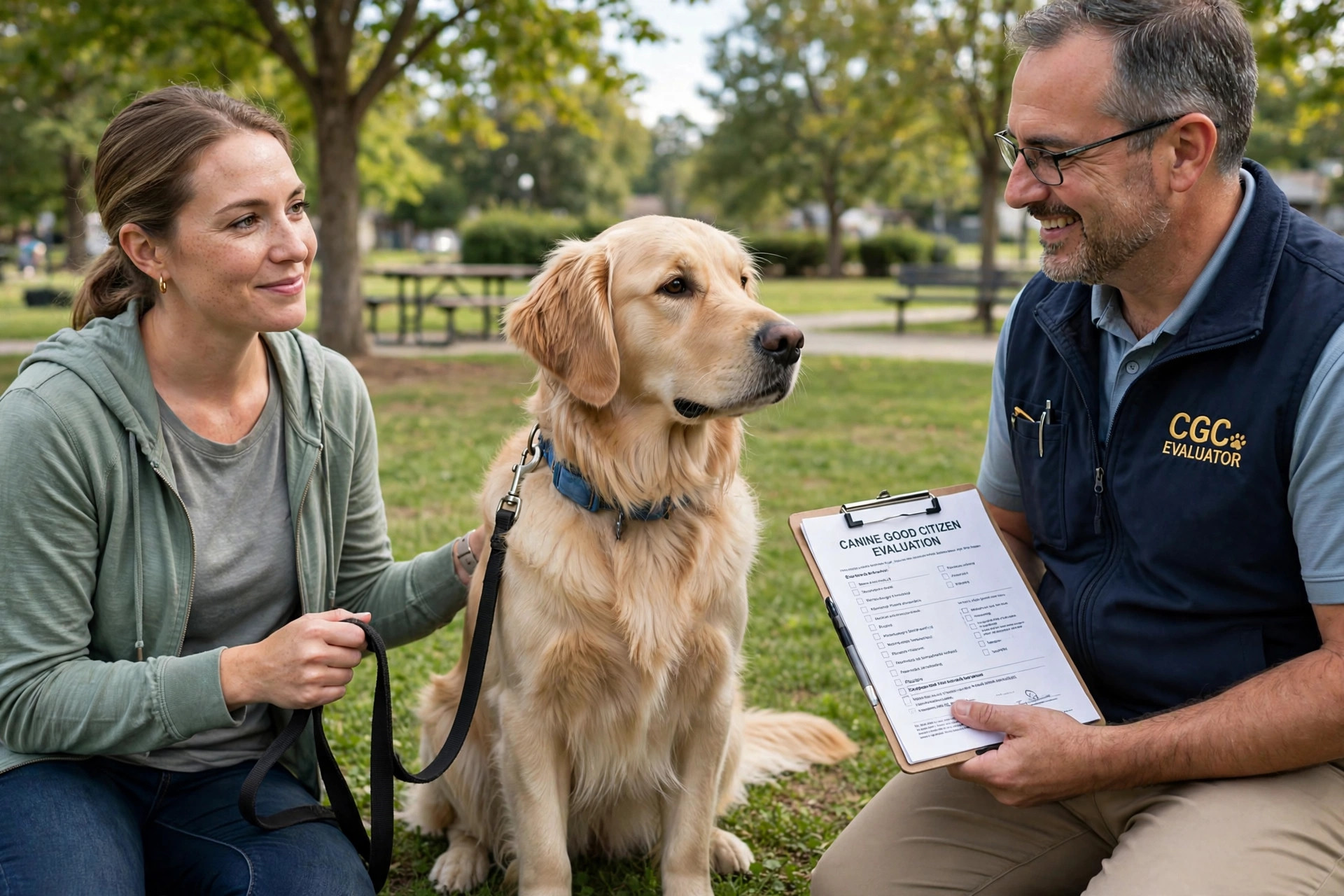
Canine Good Citizen (CGC — AKC)
The foundation of the whole program, and the most recognized title in the bunch. A 10-item manners evaluation: polite greeting, loose-lead walking, walking through a crowd, sit and down on command, recall, staying calm around other dogs, and tolerating a friendly stranger and supervised separation.
No age minimum. If your dog has basic manners, you’re probably closer than you think.
- CGCA — Advanced (Community Canine)
- The same skills, tested in real-life settings: a busy sidewalk, a park, a storefront. Thirty items across ten categories.
- CGCU — Urban
- City manners: doorways, elevators, street crossings, ignoring food on the sidewalk, riding public transportation.
Trick Dog (AKC)
The crowd favorite. Five levels, each one building on the last:
- TKN — Trick Dog Novice
- Perform 10 novice tricks: shake, spin, touch, tunnel, find it, and more. If your dog already knows a few party tricks, you may be most of the way there.
- TKI — Trick Dog Intermediate
- 10 intermediate tricks: leg weaves, balance on a wobble board, fetch a named toy.
- TKA — Trick Dog Advanced
- 10 advanced tricks: jump through a hoop, retrieve over a jump, back up in a straight line.
- TKP — Trick Dog Performer
- A choreographed routine of tricks set to a theme — your dog performs a little show.
- TKE — Trick Dog Elite Performer
- The routine again, but with props and a story the handler tells. This is the graduation.
You can even submit trick dog titles by video — no in-person evaluation required for the first three levels.
Fetch (AKC)
Four levels of retrieving games. If your dog lives to chase a ball, this is the easiest title you’ll ever earn. Novice through Advanced test distance, multiple retrieves, and retrieving specific objects.
FIT DOG (AKC)
Three levels recognizing an active lifestyle: regular walks, hikes, and fitness activities with your dog, documented over time. Bronze, Silver, and Gold.
Temperament Test (ATT — AKC)
A pass/fail evaluation of 18 items across six categories: social, auditory, visual, tactile, proprioceptive (movement), and unexpected stimulus. Taken twice under two different evaluators. It measures stability and confidence — not obedience.
Farm Dog Certified (FDC — AKC)
A 12-exercise test in a real farm environment, passed twice under two judges. No herding involved — it’s about self-control and confidence around livestock, equipment, and farm noises. City dogs welcome.
How to get started
- Find an evaluator. CGC, trick dog, and temperament evaluations happen at training clubs, dog shows, and agility trials across the country. Many evaluations run alongside events already on ThePetAdvisor — check the Events listings and look for family-dog tags on show weekends.
- Train at home first. The CGC test items and trick dog checklists are published on akc.org. Most pet dogs with basic obedience are closer to passing than their owners think.
- Show up and test. Evaluations are low-pressure by design. There’s no competition, no placements, no losing — your dog either meets the standard or gets useful feedback on what to practice.
Why it matters
A CGC or trick dog title isn’t just letters after a name — it’s what the work does to the family. Training together teaches the dog to trust and listen, and teaches everyone in the house to communicate clearly. A dog that knows what’s expected of it is calmer and happier, and owners who’ve put in the hours trust their dog more. That trust is the whole thing: a well-trained dog gets included — brought along on outings, trusted around kids and guests, welcome in more places — instead of left home or crated away when company comes over.
It also gives the family a shared project. Working toward a title means everyone practicing the same skills and cheering the same progress — and for kids, it’s responsibility with a real payoff. It turns “we have a dog” into “we do things together with our dog.” And it’s the foundation for everything else: dogs that earn CGC go on to therapy work, agility, rally, and scent work. The Family Dog Program is where a huge percentage of sport dogs get their start.
And practically? A CGC title opens doors: some landlords and insurance companies recognize it, therapy dog organizations require it, and it’s the prerequisite for the Advanced and Urban levels. It can also make everyday life easier — dogs with a CGC tend to be more welcome when you travel, and a landlord who’s hesitant about pets is more likely to say yes when you can point to a nationally recognized manners certification. It’s not a guarantee, but it carries real weight in the real world.
Where this fits
What the letters mean → What Suffix Titles Mean. CGC, TKN, ATT and every other suffix title, decoded sport by sport.
Family dog programs → The Family Dog hub. Every program in one place.
Find an evaluation near you → Events. Show weekends and trials with family-dog offerings are tagged.
Sources: AKC Family Dog Program, AKC Canine Good Citizen, AKC Trick Dog, AKC Canine Partners.
Planning your season? Create your free ThePetAdvisor account — track your dogs’ titles and find evaluations near you.
Frequently asked questions
What is the AKC Family Dog program?
The AKC Family Dog Program is a set of entry-level AKC titles open to every dog — purebred or mixed breed, any age. It includes S.T.A.R. Puppy, Canine Good Citizen (CGC), CGC Advanced, CGC Urban, Trick Dog, Fetch, FIT DOG, Temperament Test, and Farm Dog Certified.
Can mixed breed dogs earn AKC Family Dog titles?
Yes. Mixed breeds enroll in the free AKC Canine Partners program, which makes them eligible for every Family Dog title plus agility, obedience, rally, Fast CAT, scent work, and more.
What are the AKC Trick Dog titles?
Five levels: TKN (Novice, 10 tricks), TKI (Intermediate, 10 tricks), TKA (Advanced, 10 tricks), TKP (Performer, a choreographed routine), and TKE (Elite Performer, a routine with props and a story).
How old does my dog need to be for CGC?
There is no age minimum for the Canine Good Citizen test itself. Puppies under a year start with S.T.A.R. Puppy; when they finish, they can test for CGC at any age.
How do I start with the AKC Family Dog program?
Find an AKC-approved evaluator near you through a local training club or the AKC's event search. Many CGC and trick dog evaluations happen alongside conformation shows and agility trials — check ThePetAdvisor's event listings.
Earning titles with your dog?
Record every title on your dog's ThePetAdvisor profile — track progress toward the next one, and find evaluations near you.